The ‘Why?’ Cruise, continued

by Bob Sparrow

Alcatraz
Kezar Stadium today

Well, no jumping overboard for me – Alcatraz is too close! Fortunately, there was no need to jump as the trip was ready to get more interesting. Wednesday morning, we woke up in San Francisco Bay, opened the curtains in our cabin and looked out on the best view I’d had all week: the Golden Gate Bridge, Coit Tower and Alcatraz. It was overcast, but what did we expect in San Francisco? However, temperatures were in the 70s, which for this time of year in ‘The City’ is ‘HOT’! We walked over to Pier 39 and Ghirardelli Square then decided to take the hop-on-hop-off bus around the city. It was awesome! We never hopped off but just enjoyed the views from the open upper deck of the bus, of places like North Beach, the Golden Gate Bridge, Union Square, Haight-Ashbury, the Financial District (Where Suzanne used to work) and Golden Gate Park, where we drove past old Kezar Stadium, where at somewhere around 8 years old, I watched my first 49er game. It was also the place where I played my last game of college football. The whole tour was very enjoyable and very nostalgic. We got off the bus at Fisherman’s Wharf and had an awesome dinner at Fog Harbor Fish Houseclam chowder, Linda had lobster, and I had crab and just to stay with the theme of the cruise we both had some California wine. I have to say ‘The City’ looked awesome, and Newsom didn’t even know I was going to be there!

Kezar Stadium in the 60s
Teammate and roommate Ken Poulsen and me at our last game in Kezar Stadium

The ship’s entertainment was generally pretty good; the program I enjoyed the most was an interview with Taj Jackson. No, I didn’t know who he was either, until I did a little research before going to his on-stage interview. He is the first of three sons of Tito Jackson, member of the Jackson 5 and brother of Michael and Janet. Taj and his two brothers formed a group years ago called 3T, (All their first names start with ‘T’ – Taj, Taryll and Tito Jr.). They were mentored by Uncle Michael. Taj says that the group is more popular in Europe than here, but they are still touring and selling lots of music here. We had a chance to personally meet Taj after the show, and he is one of the nicest people I’ve ever met. He took time with everyone to answer questions (mostly about Michael) and was just a super person. I’m not familiar with their music, but I’m definitely going to give them a listen.

With Taj Jackson

Meanwhile, it’s another day at sea as we head down to San Diego. We did get to watch the 49er-Ram Thursday night game on TV – Yay 49ers!!! We had such a good experience in San Francisco with the hop-on-hop-off bus that we decided to try it in San Diego. But don’t call it a hop-on-hop-off bus, it’s a ‘trolly’! While the venues weren’t as memorable or nostalgic for me as San Francisco, we did hit the high spots of San Diego, which were interesting – Gaslamp Quarter, Coronado Island and the Del Coronado Hotel, Balboa Park, Little Italy and Old Town, where we got off to have a delightful Mexican lunch . . . complete with margarita! We decided that since we live so close, we need to get to San Diego more often and spend some time at some of these fun and interesting places!

Back on the boat for our final night and the short cruise up to L.A. (that took all night). So, our plan of flying to Vancouver and taking a boat ride home turned out to be surprisingly good, once we got to San Francisco.
DON’T LEAVE THEM LAUGHING

By Suzanne Sparrow Watson

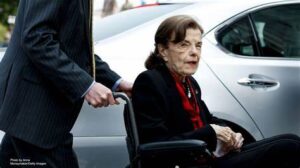
I was listening to a late-night talk show a couple of weeks ago when the host said, “Diane Feinstein died today.  How could they tell?”  The audience, primarily composed of young people, roared with laughter.  Of course, given her recent cognitive and physical health issues, their perception of her was of an older, feeble woman.  But I remember someone quite different.  Back in 1978 I was working in the financial district of San Francisco when George Moscone and Harvey Milk were assassinated.  This was long before shootings became an everyday occurrence, so everyone in the community was shocked.  Diane Feinstein was the president of the Board of Supervisors, so she became the acting mayor that day.  She immediately took charge of the situation; she was a steady hand on the tiller, bringing calm and order to the ensuing days and weeks.

Feinstein at Stanford

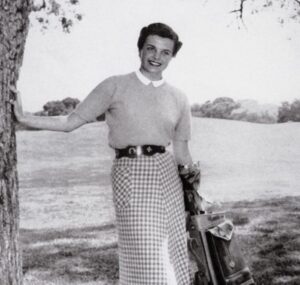
Feinstein was well-suited to the task; she had plenty of experience in navigating rough waters.  She was the daughter of a prominent surgeon and she and her two sisters enjoyed the privileges of an upper-class lifestyle. But unbeknownst to anyone outside the family, her mother, Betty, suffered from an undiagnosed brain disorder and was prone to angry — even violent — outbursts. She once tried to drown one of the girls in the bathtub. Feinstein later said that she and her sisters lived on tenterhooks throughout their childhood.  Feinstein eventually graduated from Stanford with a degree in History and began work at a non-profit foundation. She also married during this time and had a daughter, but the marriage was short-lived.  In 1960 Governor Pat Brown appointed her to the California Women’s Parole Board, on which she served until 1966.

A lost bet

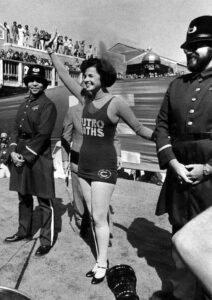
In 1969 she was elected to the San Francisco Board of Supervisors, a position she held until her ascension to mayor that sad day in 1978. Prior to becoming mayor, her most flamboyant act was to appear at the opening of Pier 39 in a bathing suit.  As Board president she had been dismayed by the lack of progress on the project.  The developer assured her it would open on time, to which she replied, “If it opens on schedule, I’ll wear a bikini to the ribbon cutting.”  To her chagrin, the project did open on schedule, although only half of the attractions and restaurants were completed.  So, her compromise was to wear a one-piece suit to the ceremonies.


The cable car restoration

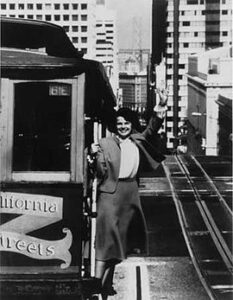
Just a few months after the Pier 39 opening the assassinations took place and Feinstein was all business. She was the first woman and the first Jewish person to hold the position.  The all-male power structure in The City didn’t know quite what to make of her, but she forged ahead.  In 1979 she won the mayoral race by a slim majority and began to systematically work on improving the quality of life in the city.  Her accomplishments were significant.  In 1979 the historic cable car system in San Francisco, so symbolic of the city, was shut down for repairs.  By 1982 the system had to stop operations entirely.  Feinstein lobbied vigorously for Federal money and raised private funds to restore the system.  She instituted the modern Fleet Week, a celebration of Navy shipbuilding and Blue Angel air shows.  She and her husband, Richard Blum, donated a herd of twelve bison to Golden Gate Park to keep the “bison tradition” alive.  By the time she ran for reelection in 1983 she garnered 80% of the vote.

After leaving the mayor’s office she ran unsuccessfully for governor in 1990, and then in 1992 became the first of two women (Barbara Boxer being the other) elected as Senator from California.  She had a long – too long – career in the Senate.  Which brings me to my point.  The younger people who laughed at the late-night host’s joke about her only think of her as old and doddering.  They would not recognize the Diane Feinstein I remember when she was vital and accomplished.  The truth is, she stayed on stage too long.  One wishes that if she lacked the ability to retire, that someone close to her would have persuaded her to do so.  The same can be said for a lot of politicians.  I wish more would take the position of Mitt Romney, who said the following when he announced that he would not run for re-election: “I spent my last 25 years in public service of one kind or another. At the end of another term, I’d be in my mid 80s. Frankly, it’s time for a new generation of leaders.”  Romney realizes that it’s not always a good thing to leave them laughing.