November Brings the Holiday Spirit

by Bob Sparrow

Few months offer the interest and complexity of November.  Most love the month as it unofficially opens the ‘holiday season’ as we come down from a sugar high from Halloween, then salute our veterans and finally devour some turkey. Additionally, there are lots of good football games to watch for those with a proclivity for such things. I’ll not mention the election days that kick off November as we try to avoid politics here at ‘From A Birdseye View’.

Spinster L.M. Alcot

First, some detractors of the month of November. Author of Little Women, Louisa May Alcott, was not a fan, saying, “November is the most disagreeable month in the whole year.” But one must consider that Ms. Alcott lived in the northeast where Novembers can be rather harsh and she had no one to cuddle with on those fridged winter evening, as she never married. Emily Dickinson wasn’t much a fan of November either, saying, “In November the noons are more laconic and the sunsets sterner. November always seemed to me the Norway of the year.” Having never left New England, I assume Ms. Dickinson imagined Norway as a cold and foreboding place. To her point, it can be – Northern Norway’s average high temperature in November is between 28-35 degrees Fahrenheit!       

     That’s hard to imagine as we here in Orange County had high 80s, even low 90s in the first week of November this year. I’m sure Louisa May Alcott would have found it most disagreeably hot. The name November itself is a bit of a novelty as it takes its name from the Latin word novem, which means nine, as it was the ninth month in the Roman calendar. But then those pesky Gregorians came along with their own calendar and added two more months, January and February, making November the eleventh month. I understand that none of the above is probably going to help you get into the ‘Holiday Spirit’, although living in someplace other than northern Norway during this time of year, may help.

King Tutankhamun

If you haven’t gotten into the ‘holiday spirit’ yet, here are some alternative events that perhaps you could celebrate.

  • For those into ‘boy kings’, King Tutankhamun’s tomb was discovered in November of 1922. King Tut assumed the throne as a nine-year-old and died when he was 19, only a couple years sort of drinking age, but we can raise some spirits to him. Those who like Egyptians, boys or kings can now celebrate this.
Stray dog, Laika – last photo alive
  • For those pet fans, you can celebrate ‘Laika’ (which means ‘barker’ in Russian), a stray dog, who became the first animal in space as she was launched by Russia in November 1957. Unfortunately, she died just hours into the launch as insulation in the capsule tore and she overheated. If you’re surprised at hearing she died during the mission, it’s because the Russians claimed that she survived the entire trip. Celebrate your pet, or a pet near you, this month.
  • Spanish conquistador Hernan Cortes first meets with Aztec emperor Montezuma II in November of 1519. Cortes kept the meeting friendly, but several days later he took Montezuma hostage. Celebrate famous explorer and conqueror, Cortes, or Montezuma’s Revenge.  
  • Sadie Hawkins Day. While it technically was last week (November 13) not too many people know that so you can still celebrate this ‘holiday’. It was created in the Li’l Abner comic strip in 1937, where unmarried women would chase bachelor men and if they caught him, they would get married. Today, if the lady catches the man, she asks him to do the laundry.

Yeah, this is the kind of stuff you get from me when I’m not traveling. Hopefully it will give you more things to celebrate this month, or tell us what you celebrate in this ‘Norway of the year’.
‘The Tape’ – Chapter 5 Meeka’s Revenge

by Bob Sparrow

(As a refresher, as well as for those new to the blog, the links below are to the previous chapters of ‘The Tape’, an allegorical tale of searching, with cameo appearances from beyond from my dear departed friend, Don Klapperich

(Jan 2014)  Chapter 1 ‘The Tape’                   https://fromabirdseyeview.com/?p=2454

(Jan 2014)  Chapter 2  ‘The Tape’  –  Searching for Xoon        http://fromabirdseyeview.com/?p=2500

(May 2014)  Chapter 3  ‘The Tape’  –  A Visit with Chief Chuckwalla    https://fromabirdseyeview.com/?p=2776

(July 2014)  Chapter 4  ‘The Tape’ – Oh Where the Trap Door Leads        https://fromabirdseyeview.com/?p=2807


Coachella-Valley

Coachella Valley

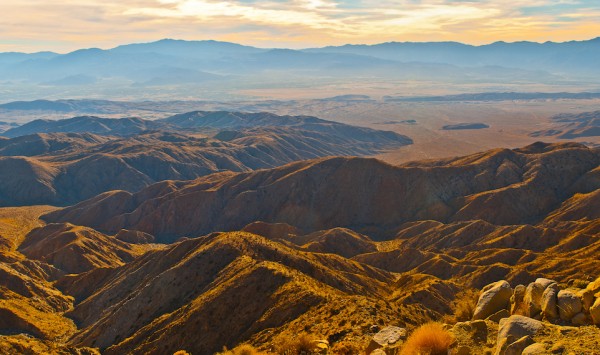
Chief Chuckwalla, with moist eyes, seemed a million miles away as he continued to stare out into the valley, trying to decide exactly where to begin to tell this story.

He finally began, “Everyone knows the story of slavery in America’s south, the slave traders gabbing black men and women from Africa and bringing them to America to sell; the cruelty that took place on the plantations and the attendant racism. But few people know of the slavery that took place right here long before America was ever colonized. It began when the Spanish conquistador, Cortez defeated the Aztecs in the early 1500’s which allowed the Spanish to rule what is now Mexico and the southwestern part of the United States for the next 300 years. The Spanish not only took our land, but they enslaved the Inviatim people to work it for them. The Spanish rancheros were the predecessors to southern plantations. They told us that our gods and beliefs were all wrong, that Christianity was the only true religion. In fact they used the word ‘Cahuilla’ to describe our tribe – a word that means heathen. We were told that we would suffer if we didn’t convert. And they made us suffer.

(Don: Ahhh, don’t ya just love organized religion?”)

The chief continued, “Those who either refused to work on the rancheros or refused to convert to Christianity were beaten, blindfolded, tied up and dragged behind horses to this place and imprisoned. Many of them died here, including my great, great grandmother.

“So those were their remains in the cells?” I said.

Palkara

Palkara

“No.” the chief replied, I could see he was struggling to get the story out. “My great, great grandfather, Palkara and their daughter, Meeka, managed to escape from this Hellhole. Several days after his escape, Palkara formed a posse and, now knowing the location of this secret underground prison, returned in the dead of night and attacked and killed the guards and freed hundreds of prisoners. Unfortunately he was killed in the attack. The Inviatim prisoners, who were released, moved south and established their village by what is now the Salton Sea, but at that time was a beautiful freshwater lake fed by the Colorado River.

Meeka, who was only about 10 when she and her father escaped, grew to be a very independent and strong-willed woman, who was determined to find a way to get back at the Spanish for killing her mother and father. As she grew older, she would often returned to this place just to remind herself of what happened here and to keep her resolve for revenge. She ultimately decided that she was going to use this Hellhole to exact that revenge. She convinced a small but courageous group of Inviatim tribe members to join in her crusade.

Meeka

Meeka

“It was in the late 1700s and the white man was now just starting to push the Spanish and Mexicans out and take over more and more of the southwest region. Most, if not all, of the Spaniards who took the Inviatim’s land and imprisoned and killed their people were now dead or gone. But Meeka’s desire for revenge needed to be quenched. She painstakingly found the names of those leaders responsible for imprisoning her people and killing her parents. She then located their children, or children’s children, many of whom were still living in the area and were now adults. Systematically, one by one, she kidnapped and imprisoned them here, locked the place up tighter than a drum and left them to die. It is their bones that remain down there now.”

I sat silently for a long time, in awe of the story I had just heard and finally said, “That is an amazing story; so what happened to Meeka?”


To be continued . . .