The Resolution Elephant in the Room

by Bob Sparrow

We have stuffed ourselves since we knowingly bought more candy than we knew we were going to need for those two trick-or-treaters that come at Halloween.  We’ve foolishly thought that we’d really ‘try to watch it’ this year during the ‘Holiday Season’ – we didn’t. So now we’re at a place where we’ve been almost every year – time to get serious about exercise, losing some weight, eating healthier and OK maybe drinking a little less going forward. We’re thinking like this because we’re finally going to put this year behind us and get a new lease on life at the beginning of a new year. We’re thinking, “New Year, New Me.” Even though we know we’re going to bring that same old ‘me’ into another new year.

     But hope springs eternal, so we go through the exercise of either mentally making or actually writing down, some “New Year’s Resolutions”. Perhaps, like me, you just think casually about a few things that you could improve and rely on ‘hope’ to somehow make this new year different.

     So, I would be the last one to give you tips on how to make better resolutions or how to accomplish those that you did or may have already made or are thinking about making. No, I’m just going to offer some observations that I’ve found about resolutions and hope we can all get a good laugh at this way-too-frequent fruitless exercise.

  • On “Healthy Eating”:
          A friend of mine once vowed to “eat clean” starting January 1. On January 2, she proudly meal‑prepped grilled chicken and broccoli… then rewarded herself for her discipline with a slice of cheesecake. By January 4, she was meal‑prepping cheesecake.
  • The Gym Membership
         A guy I know signed up for a gym membership on January 1 with the enthusiasm of a motivational speaker.
    He went once.
    He spent the rest of the year referring to the monthly charge as his “charitable contribution to fitness.”
  • The “Read More Books” Resolution
         A lady decided she’d read a book a week.
    She bought 12 books on January 1.
    By February, she had read… the receipts.
  • The Minimalist Makeover
         A woman decided she’d declutter her entire house.
    She started with her closet, found a sweater she forgot she owned, tried it on, loved it, and spent the rest of the day online shopping for clothes that would “match the sweater’s vibe.”
  • The Meditation Journey
         A man downloaded a meditation app and promised to meditate every morning.
    Day 1: “This is so peaceful.”
    Day 2: “I think I’m doing it wrong.”
    Day 3: Fell asleep and woke up late for work.
    Day 4: Deleted the app because “it was stressing him out.”
  • The Sugar Detox
         A guy swore off sugar for the whole month of January.
    On January 3, someone brought cookies to the office.
    He ate one.
    Then he ate six more to “get rid of the temptation.”

You may have your own ‘Resolution Responses’, whether you set yourself up for failure or have an unusual ‘success story’, we’d love to hear it.

Either way, we wish you a most happy and healthy 2026.

LONGING FOR NOSTALGIA

By Suzanne Sparrow Watson

As Christmas approaches this week and we prepare for the holidays, it’s easy to find yourself swept up in a wave of nostalgia. At Christmas, nostalgia is everywhere: in the music, the movies, the recipes passed down through generations. We seek out the flavors and rituals of our childhoods, hoping to recapture the magic of simpler times. We remember sticky fingers from candy canes, the glow of tree lights, and the anticipation of gifts. Or if you were like me, you’d already peeked at your gifts and couldn’t wait to officially receive them. Today, nostalgia is a cherished part of the holiday season, a gentle ache for times gone by. But did you know that, centuries ago, nostalgia was considered a dangerous illness—one that could land you in the infirmary, or worse?

The word “nostalgia” was coined in 1688 by Swiss physician Johannes Hofer, who combined the Greek words nostos (“homecoming”) and algos (“pain”). Back then, nostalgia wasn’t just a wistful longing for the past—it was a serious medical diagnosis, closer to what we now call “homesickness.” Hofer observed the condition most often in young people far from home: soldiers, servants, or children sent away to the countryside. The symptoms were dramatic: melancholy, loss of appetite, disturbed sleep, even heart palpitations and, in extreme cases, suicide. Autumn, with its falling leaves, was considered especially dangerous, as it stirred memories of home. Hofer’s cure was simple: send the patient home. Until that was possible, treatments ranged from vomiting and mercury to opium—remedies that sound more like punishments than comfort. Swiss soldiers feared that singing traditional cowherd songs could trigger nostalgia, so performing these songs was reportedly punishable by death. Wow – even the America’s Got Talent buzzer isn’t that draconian!

Fast forward to today, and nostalgia is no longer something to die from—just something to sigh about. And studies show that people between the ages of 20-30 suffer the most from it. Perhaps because they are at the age where the “magic” of the Christmas season is either swept away by the grind of a full-time career or they are responsible for creating memorable Christmases for their own children. But why does Christmas, in particular, evoke such powerful feelings of nostalgia? The answer lies in the holiday’s traditions. Christmas is a time when families gather, stories are retold, and memories are made and revisited. The sights, sounds, and smells of the season—gingerbread baking, carols playing, pine needles underfoot—act as triggers, transporting us back to moments of warmth and belonging. Not to mention childhood, when Christmas meant we just showed up, and everything was wonderous.

It’s remarkable to think that what was once seen as a weakness or even a disease is now recognized as a source of strength. In the 19th century, nostalgia faded as a formal diagnosis, absorbed into broader concepts like melancholy and trauma. Today, psychologists see nostalgia as largely beneficial—a resource that can boost mood, inspire optimism, and strengthen social bonds. So, as you hang ornaments on the tree or sip hot cocoa by the fire, let yourself feel nostalgic. Remember those who are far from home, as well as those who are no longer with us. Reach out to friends and family, share stories, and create new memories.

Nostalgia, once feared as a deadly disorder, is now a gift—a way to honor the past while embracing the present. This Christmas, let’s celebrate the bittersweet beauty of memory, and let it bring us closer together.

As I have done for the past ten years, I am sharing one of our family’s most nostalgic memories – Pop’s Christmas Ice Cream Fizz recipes. Enjoy!

POP’S CHRISTMAS ICE CREAM FIZZ

Fill a blender 1/4 full of ice cubes

Add 6 jiggers of gin

Add 4 scoops of French Vanilla ice cream

Add 1 small bottle of soda water (the size you get in a 6-pack)

My brother Bob adds an egg, so the white adds some froth, brother Jack doesn’t add an egg.  Personally, I’d add it just because you can then claim it’s a protein drink.

Just blend it well and – voila – you have a concoction sure to put a positive spin on everyone and everything!

Our mom served them in a wine glass with a dash of nutmeg.  As we got older, we would conspire with Pop and ditch the wine glass for a chilled beer mug from the freezer. Saved having to go back for seconds…or thirds.

My brother and I wish all of our readers a very happy holiday season, blessed with all the presence you could ask for.

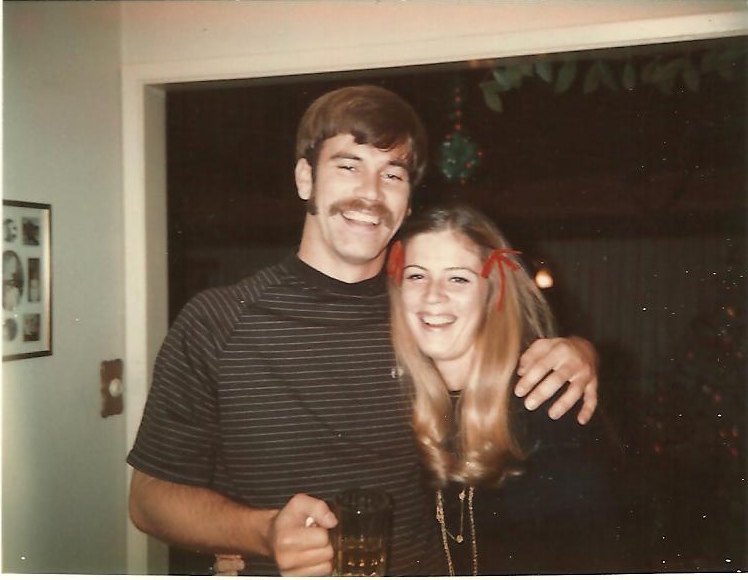
Your authors, Christmas 1972

What Happened to College Football?

by Bob Sparrow

2025 College Football Playoff Bracket

I can appreciate the fact that college-age kids must like what’s currently going on in college football. Recent changes have provided them with more choices as to where to play and, best of all, financial reward for playing. Let’s look at what’s happened over just the last few years . . .

The Portal – In 2018, the portal debuted as a compliance tool to manage college athletes’ transfers more transparently. The portal allowed student-athletes to change schools after playing at one school, but the athlete would have to sit out for a year before becoming eligible to play. In 2021 that rule changed allowing transfers to play immediately, which opened the flood gates. There are a number of examples of players playing for a different team each year of their college career: Eyabi Okie-Anoma played at five different four-year schools – Alabama, Houston, UT Martin, Michigan and Charlotte. Chandler Morris played at four schools – Oklahoma, TCU, North Texas and Virginia, and Robby Ashford played for Oregon, Auburn, South Carolina and Wake Forest.

Curt Cignetti

I’m concerned that the next step might be to give the player more freedom (and money) and allow them to transfer during the season?

How has the portal affected this year’s college teams? Indiana University, this year’s #1 team, had a 3-9 record in 2023, and then hired Curt Cignetti. In his first year, 2024, they went 11-2 and this year they went 13-0. Don’t get me wrong, Cignetti is a great coach, but he knew he needed better players, so last year alone, Indiana added between 20-23 players to their roster through the portal. One of those players was quarterback and this years’ Heisman Trophy winner, Fernando Mendoza, who played two years at Cal, then was given $2.6 million (more on NIL in a moment) to play for Indiana this year. He still has one year of eligibility left, but he’ll be in the pros next year.

How the portal works today has dramatically changed college football . . . it may be better for a few select individuals, but, in my opinion, not for the game – the rich will get richer.

NIL – In 2019 California passed the first state law allowing athletes to get paid by the colleges for the use of their Name, Image and Likeness, now referred to as NIL. A year later, the state of Florida passed a similar bill. In 2021, in a unanimous decision, the Supreme Court affirmed that the NCAA violated antitrust laws by restricting student-athletes’ compensation for education-related benefits. So, paying a player for his/her NIL became legal, and is now being practiced in every state. Some payments are made all up front, others can be annual installments and still other can be for appearances or wearing certain athletic gear.  

18-Year Old Millionaire, Cooper Flagg

Some of today’s top NIL deals:

  • Cooper Flagg – Duke basketball player, $28 million. He’s 18 years old
  • Arch Manning, Texas quarterback – paid $5.3 million
  • AJ Dybantsa, BYU basketball player – $4-$5 million. He’s 18 years old
  • Jeremiah Smith, Ohio State, wide receiver – $4.2 million
  • Livvy Dunne, LSU, gymnast, $4 million
  • Carson Beck, Miami quarterback – $3.1 million

There are plenty of other young ‘Million Dollar Athletes’ and there are many who are getting a mere $4-$500,000 to play.

Where does all this money come from you ask? It can come from several sources, such as third-party endorsements from apparel companies, social media promotions, appearances, autographs, boosters and businesses – I’m thinking mostly from school boosters/wealthy alumni and local businesses!

Will the ‘Empty Bowl’ turn into the ‘Toilet Bowl’?

The other thing that is happening to college football is the lack of emphasis on bowl games, except for the national championship tournament. The national champion used to be determined by a vote by sports writers and football coaches, so every game was looked at, especially the bowl games where top teams were usually playing against other top teams. This year the national champion will be determined by a 12-team playoff. So a number of teams, who are not in the tournament, have decided not to play in a bowl games. Here’s a few: Notre Dame, Iowa State, Kansas State, Baylor, Auburn, Florida State, UCF, Rutgers, and Temple. Why? Some because it’s not for the national championship, some because their coach has already left for another job, and some because too many players are opting out of the game and/or are looking to go to another school next year.

Even for the teams that are participating in a bowl, many of their 18 – 20-year-olds, who are making millions as a collegiate athlete, are deciding not to participate in a post-season bowl game, unless it’s for a chance to win the national championship. Why? Because the millions they are making as college athletes doesn’t compare to the millions they could make over their lifetime as a professional athlete, so they don’t want to risk an injury in a meaningless bowl game that could jeopardize a lucrative pro career.

The answer to the headline question: It turned pro.

DECORATING – THE UNOFFICIAL SPORT OF THE HOLIDAYS

By Suzanne Sparrow Watson

The turkey knows he’s yesterday’s news

It’s a truth universally acknowledged that, as September rolls into October, while some people still haven’t taken down last year’s Christmas lights, others are meticulously plotting the precise moment their inflatable Santa will make his triumphant lawn debut. In recent years, the race to decorate for Christmas has become its own quirky, competitive sport—one that seems to start a little earlier every year. Forget the “Twelve Days of Christmas;” we’re headed for the “Twelve Weeks of Christmas,” and the starting pistol fires long before the turkey is even thawed. Apparently, Halloween is the new Christmas Eve. As the last trick-or-treater scurries home and the candy wrappers settle, you can practically hear the distant jingle of sleigh bells…or maybe just your neighbor testing his light-up reindeer. For many early birds, November 1st is the official kick-off: skeletons down, snowmen up, and peppermint-scented everything invading Target. Gone are the days when Christmas decorations politely waited until after Thanksgiving.

Halloween and Christmas cohabitating

In our family we always put the Christmas tree up on December 14th. Why? Because that is Bob’s birthday (and a happy birthday to my fun/great/fabulous brother this week!). But frankly, I think he got shortchanged. Rather that anticipating the celebration of his birthday, we were excited to see the Christmas tree go up and, more importantly, the presents underneath it. These days, December 14th is considered so late it might as well be the 4th of July. So, why do people start so early? Is it pure excitement? A desperate bid to outshine the neighbors? Or perhaps a coping mechanism for the shorter days and longer nights? Some experts suggest that early decorating is linked to happiness; apparently, those who string up lights sooner tend to be cheerier. That’s probably because they get a double dose of holiday cheer, plus bonus time for complaints about tangled cords. Retailers, of course, fan the flames with relentless holiday displays that pop up sometime between Labor Day and the first pumpkin spice latte. Walk into any store in early fall, and you’ll find candy canes elbowing aside cornucopias, and Santa glaring at a stack of Halloween costumes. It’s enough to make a person question the space-time continuum. Somewhere, a calendar weeps in confusion.

25,000 lights!

If you live in suburbia, you know that Christmas decorating isn’t just a tradition—it’s a competitive sport. There’s always that one house that goes full “National Lampoon’s Christmas Vacation” by November 2nd, leaving the rest of the block scrambling to keep up. The result? A dazzling, blinding display that can probably be seen from space, and several confused delivery drivers who now need sunglasses for evening package drops. This escalation leads to what I call “The Glitter Wars.” You start with a tasteful wreath, and by mid-November, you’re frantically googling “giant inflatable penguin with top hat.” The winner isn’t declared until New Year’s Day, when the last blinking snowflake finally burns out in a blaze of post-holiday glory. Of course, not everyone is on board with this early decorating craze. There’s always that one neighbor who stands guard, ready to issue a stern “It’s too soon!” as you hang your first bauble. But really, isn’t part of the magic in getting swept up in the ridiculousness? Besides, if you can’t beat them, join them—grab a mug of cocoa (or pumpkin spice, we’re not judging) and bask in the glow of a thousand LED icicles.

In the end, the answer to “How early is too early?” is: Who cares? Life’s short, and if hanging up a Christmas star on November 1st makes you happy, go for it. Just be sure to warn the neighbors before you plug in your display—they might want to buy blackout curtains.

Can Sophomoric Humor Cure Writer’s Block?

  by Bob Sparrow

   Sometimes I have plenty of time to construct a decent blog on a subject that many people can relate to. Not so this week. Actually, I did have time, but sometimes no matter how much time I have, ‘writer’s block’ can make it difficult to say anything intelligently. This week I’ve ended up saying things not so intelligently. So, I’m offering this warning; if you have something better to do, which should be easy to find, do it!

Let’s begin with the pretext that you have someone on your Christmas list that is very difficult to buy something for, either because they already have everything or you’ve drawn a name in a ‘Secret Santa’ of a person you don’t really know or relate to. So, here’s some suggestions that center around what the Brits call the loo or water closet. When I think about it, there are lots of names for what we euphemistically call a bathroom, even though we’re hard pressed to find a bath in many bathrooms now-a-days. Other names include, restroom, where no one really go to rests; John, supposedly named after the guy who invented the flushed toilet; head, if you’re on a boat; privy, an abbreviation for private; outhouse, if it’s outside; toilet, from the French word toilette, referring to a cloth covering a dressing table (I don’t understand it either – it’s French!). Let’s not forget potty, for those who actually have a pot to piss in.

     OK, I think I went to see a man about a horse and forgot to come back. I seem to have forgotten that we’re here to highlight some gifts that keep on giving and could finalize that diverse Christmas list of yours. So here you go . . .  

  • These ‘Novelty Mugs’ in the form of portable out houses, will be a hit at your holiday party. The tops open to let the aroma of the drink inside fill the nostrils of the drinker.
  • If the Novelty Mugs seem a little crass for you, you can dignify your shot glasses by bringing them indoors with the ‘Gag Mugs’ – shot glassses that lets the liquid flow right out of the toilet into your mouth. Surely a hit at any holiday party.

Is that person on your list that’s so hard to buy for someone who likes to learn? If so, we’ve got just the thing, the book that Einstein always read while relaxing on the ‘thrown’, Poop and Learn.

For the golfers on your list who are bored when on the pot or just like when they’re playing golf, they take too much time over a putt – ‘Potty Putter’ may be the answer.

If after reading this, you’re feeling like you need a drink or a shower, you don’t have to decide, you can have both with The Shower Margarita Machine; yes, you can sip that tequila treat while taking a shower – salt optional.

I apologize for being a little blocked up this week (that’s ‘writer’s block’!!), but now that I’ve posted this, I feel relieved!

The obvious answer to the headline question: No!