Day 7 – Nepal Diary: In Search of that Religious Experience

DSC01245

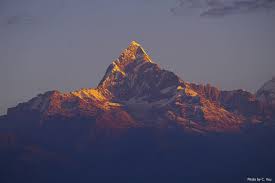
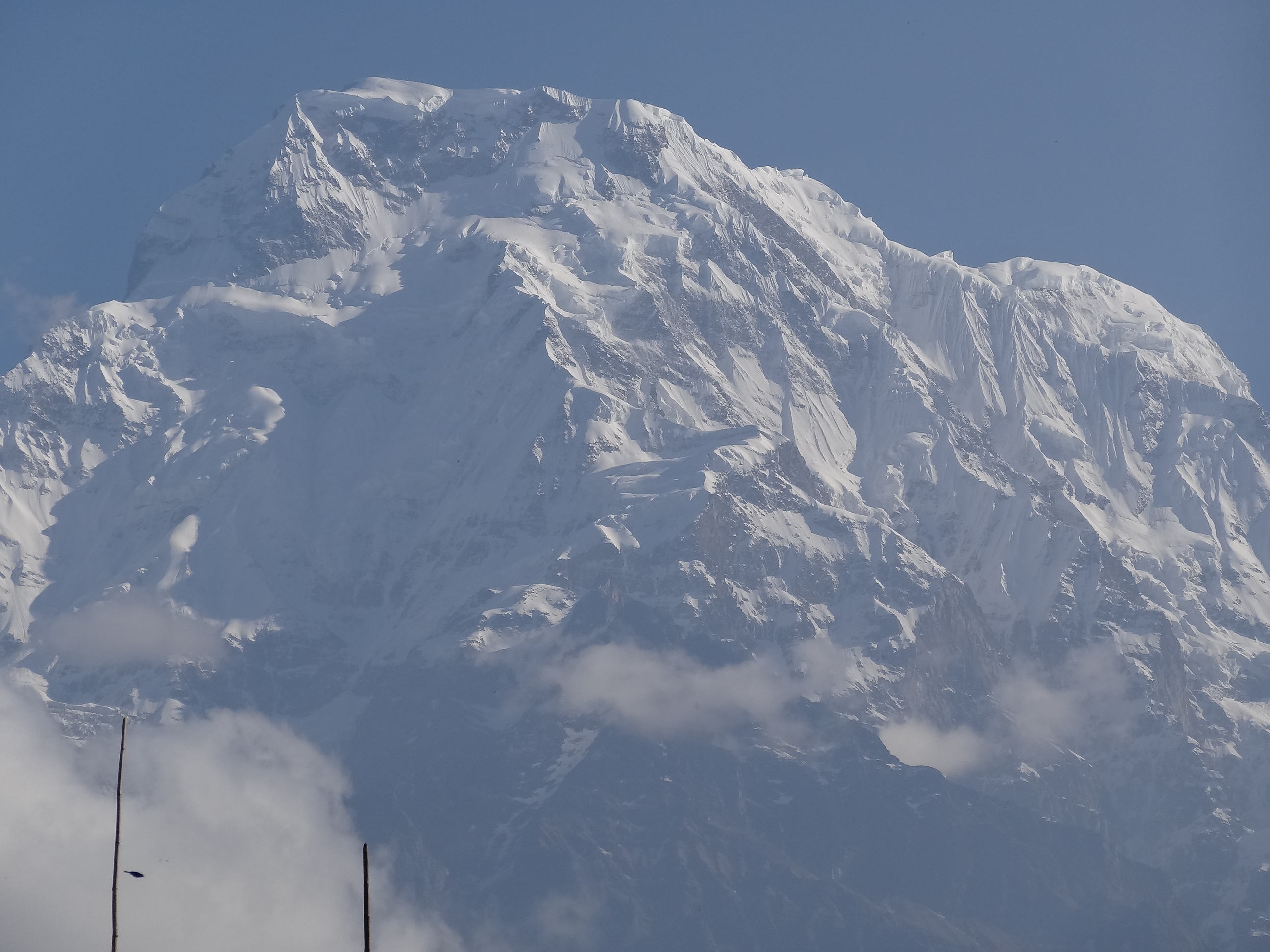
Annapurna I

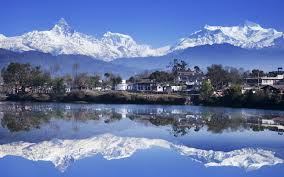
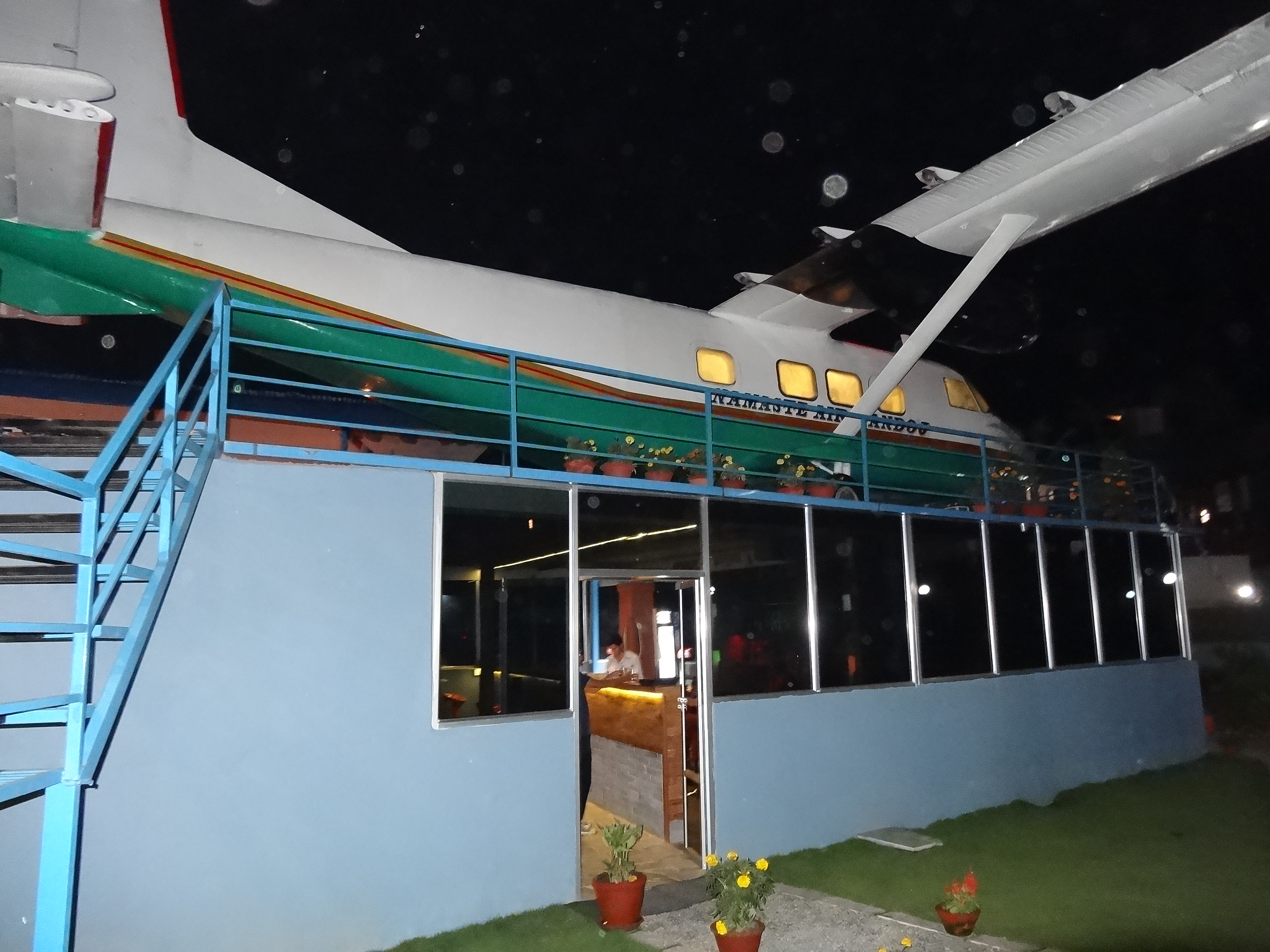
As we left Tolka, the innkeeper told us that she had a brother who owned an ‘airplane restaurant’ in Pokhara, that we should stop in and see him and have dinner. We said we’d try and headed off to the next village, but not before I got this great photo of the sunrise on Annapurna I. We trekked about 6 miles, on mostly what they refer to in Nepal as flat, a little up and a little down (the little ‘up’ was 1200 feet and the little ‘down’ was 1700 feet). The great views that we thought we were going to get by going this route were obscured by a heavy cloud cover.  We thought we’d stay in the village of Dhampus, but when we got there we were told there was no power and no wifi, so after having lunch, we continued down the mountain for another 3 miles and thousands more of those stone steps. There just seems to be no redeeming quality to those stone steps, they exhaust you if you’re going up, and pound your knees if your going down and they keep you from seeing anything else around you as your total focus must be on you next step or you’ll be doing a face plant in one of them. When I get home, I’m taking out the stone steps I have in the back yard – they’re flat, but I just don’t want the reminder!  We reached the village of Phedi at the bottom of the mountain and there was actually a road and we see moving vehicles for the first time in 6 days. At the bottom we have a decision to make; our goal is to get to the village of Sarangkot at the top of the next mountain. People from all over the world come to Sarangkot to view the spectacular sunrise over the Himalayas. They say it is like a religious experience.

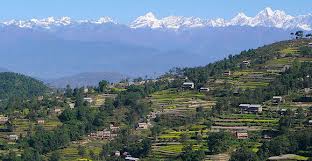
Village view

Dhampus

It would indeed be a religious experience for me, because if I attempted to go that extra 8 miles, straight up, I would be meeting my maker. Dom looks at Sarangkot then looks at me and says, “Are you ready?” Then breaks out laughing and says, “We’re taking a cab to Sarangkot”. Who knew that a cab could be part of the whole trekking experience? Where were the cabs on Days 1-2?

The cab ride was an experience in itself. Four of us, plus the driver and all our gear crammed into a car the size of a refrigerator. I got to sit, knees in my face, up front with the driver, whom, I’m guessing hadn’t showered since February . . . 2013. Of course after trekking for the last 7 hours I wasn’t exactly a bouquet of roses myself. The fact that they drive on the ‘other’ side of the road didn’t help the white-knuckle experience of going up the mountain. The cabbie ultimately let us off about a half mile from the village as the road was too rutted and muddy for him to go any further. We happily walked the rest of the way in the fresh air.

Sunrise2

Sunrise from Sarankot

Sarankot offers a great view of the city of Pokhara and Lake Phewa Tal, it was a little hazy, but still a great view and a great resting place. After a cold beer and dinner we watched a movie on my computer, Into Thin Air – the story of death on Everest. Not exactly a musical-comedy, but everyone seemed to enjoy it. We settle in early and set our alarms for 5:00 a.m. so we could wake up then walk up to the observation point and watch the spectacular sunrise over the Himalayas. The alarm went off and I looked outside and I could barely see the dog that was right outside our window barking all night – everything was socked in. No spectacular sunrise today. No religious experience. I rolled over and went back to sleep.


Day 6 – Nepal Diary: Room, Board and a Himalayan Cremation

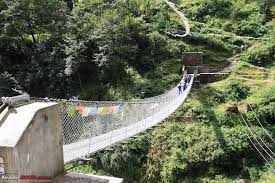
BridgeRoom

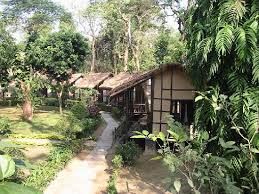
The teahouses that we stay in are all very similar, there are anywhere from 8 – 20 motel-style rooms; there is a main kitchen and dinning hall and a sitting area typically overlooking a spectacular view. The rooms are Spartan-like, 12 x 12, two single beds with a mattress that is about three inches thick (although I must admit, fairly comfortable) and usually one electrical outlet that typically doesn’t work. We always get a room with bathroom, most rooms don’t have one, but the bathroom is also very Spartan-like. It is about the size of a small closet and consists of only a toilet and a spout coming out of the wall, which is the shower; no sink and no mirror (thank god) and a drain in the middle of the room. Because there is no separation, no curtain, no anything except the spout, you could actually take a shower while you’re going to the bathroom. (Nope, haven’t tried it yet). There is one light in the bedroom about the size of a golf ball and it doesn’t work during the day when the power is shut off. There is usually a clothesline outside your door so that you can wash and rinse out the cloths you wore all day and hang them out to dry. The ‘deluxe’ room, the one with the shower, also has a Spartan-like price; on average about $6.50 a nigh!. But you don’t get a mint on your pillow, in fact sometimes you don’t get a pillow.

Board

Every food looked so foreign to us that we really couldn’t figure out what to try, so we’d order something that we thought looked good from the Beerpictures on the menu. When our food came, Dom and Kirin’s food always looked better, so next time we’d order what they had at the last meal and they’d order something different . . . that looked better than ours. One of their favorites is Dal Bhat, a combination of rice, lentil soup, potatoes with curry, chili peppers, throw in some chicken or other meat and viola! What’s interesting is they eat it with their hands – remember they don’t attend too many black-tie dinners. There is virtually the same menu throughout the Himalayas and they try to do a little bit of everything, Italian, Korean, Mexican, Japanese, Indian and American – most of the Asian dishes are the best. Some of the unusual items on the menu include:

Pie

Not your mother’s apple pie

Porridge, I thought that word died with Goldie Locks and the Three Bears. Goat cheese and Yak cheese – Patrick says, with a smile and a twinkle in his eye (which means he’s bull shiting), that he can taste the difference. Curry everything, Momo (pot stickers), Chicken lasagna, I actually tried this one and it was pretty good, although it tasted nothing like lasagna or chicken for that matter. Another fine Italian dish I tried was Tuna Pizza; don’t hold your breath waiting for is one to come to the states! any time soon.  I couldn’t bring myself to try the Himalayan burrito (who knows what’s in there?). Most of our meals, even breakfast, have some sort of noodles in them, and every place serves apple pie, although it looks nothing like apple pie – but very good. The most expense item on the menu is in the $4 range.

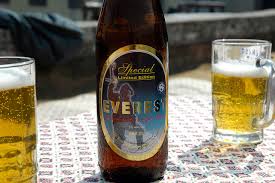
On the beverage side, you can get about 50 varieties of tea as well as Coke, Sprite and Orange Fanta in a bottle. Of course I had to try the local beers, two main brands, Nepal Ice, which has an alcohol content of 7%; combine that with the thin air and you’re buzzed before you’re half finished. The other beer, my favorite, is Everest, it taste really good, but what I really like is their they great marketing slogan: “Our beer is colder than your ex-wife”.

The Himalayan Cremation

glasses

R.I.P.

When we reached Tolka I discovered that I was missing my prescription glasses. I looked all through my pockets and pack and they were nowhere to be found. I remember having them the night before while reading in bed and then setting them on the window ledge next to the bed. While reaching for my watch or flashlight during the night I must have knocked them off and they ended up under the bed and out of sight. In Tolka, the lady who owned the teahouse where we stayed, called back to the teahouse in Jhinu and asked if they found the glasses. Kirin had volunteered to go back early the next morning and get them – that’s just a quick 16 miles before breakfast! I think he has lungs that could breathe on Mars. Fortunately for Kirin, but unfortunately from me, when the lady hung up the phone, she said, “They found the glasses, but they were broken, they threw them in the trash and they have already burned the trash today.”  So my glasses have been cremated and the ashes have been scattered in the Himalayas – so I guess I’ll always have that going for me.


Day 5 – Nepal Diary: The Trail

DSC01224Today we got an early start out of Jhinu with a sharp decent (more of those damn stone stairs) to the Maudi River. We then followed the river down to the town of Tolka, about 8 miles. For me it was the best day of hiking, not just because we didn’t have a lot of ‘stairways to hell’ to climb, but because we got to enjoy some beautiful scenery without breathing so hard. Sharply inclined, lush mountains on each side of the river valley, terraced rice fields, spectacular water falls (with ice cold water coming off the Himalayas), and Annapurna South peering over our shoulder. It was a great hike. The only down side was the 6-7 leaches that Dom spotted on my ankles while walking behind me. He flicked them off with a stick, but not after I gave a quart or two of blood, and I didn’t even get a little carton of orange juice or a blood-drop pin that said, ‘I Gave Blood’.

As I mentioned earlier, the path that we travel is ‘Main Street’ of the villages that it runs through and it is thus the key transportation artery that links village to village. We therefore see all kinds of thing going up and down the mountain. It is not unusual to have a team of 10-12 burros coming down the trail at us hauling supplies to a village or garbage away from it. We constantly run into a herd of goats or sheep and often have to go to one side of the path to get around a cow taking a nap or make sure we don’t step in a ‘road apple’ left by a horse. There is always a good supply of chickens running around as well as some beautiful Burmese Mountain Dogs – friendly and looking like this is where they belong. We see women speed by us going up hill with incredibly large baskets of produce or something on their heads. Men are hauling lumber or have huge bags of corn or rice strapped to their heads and act like they’re just wearing a hat.

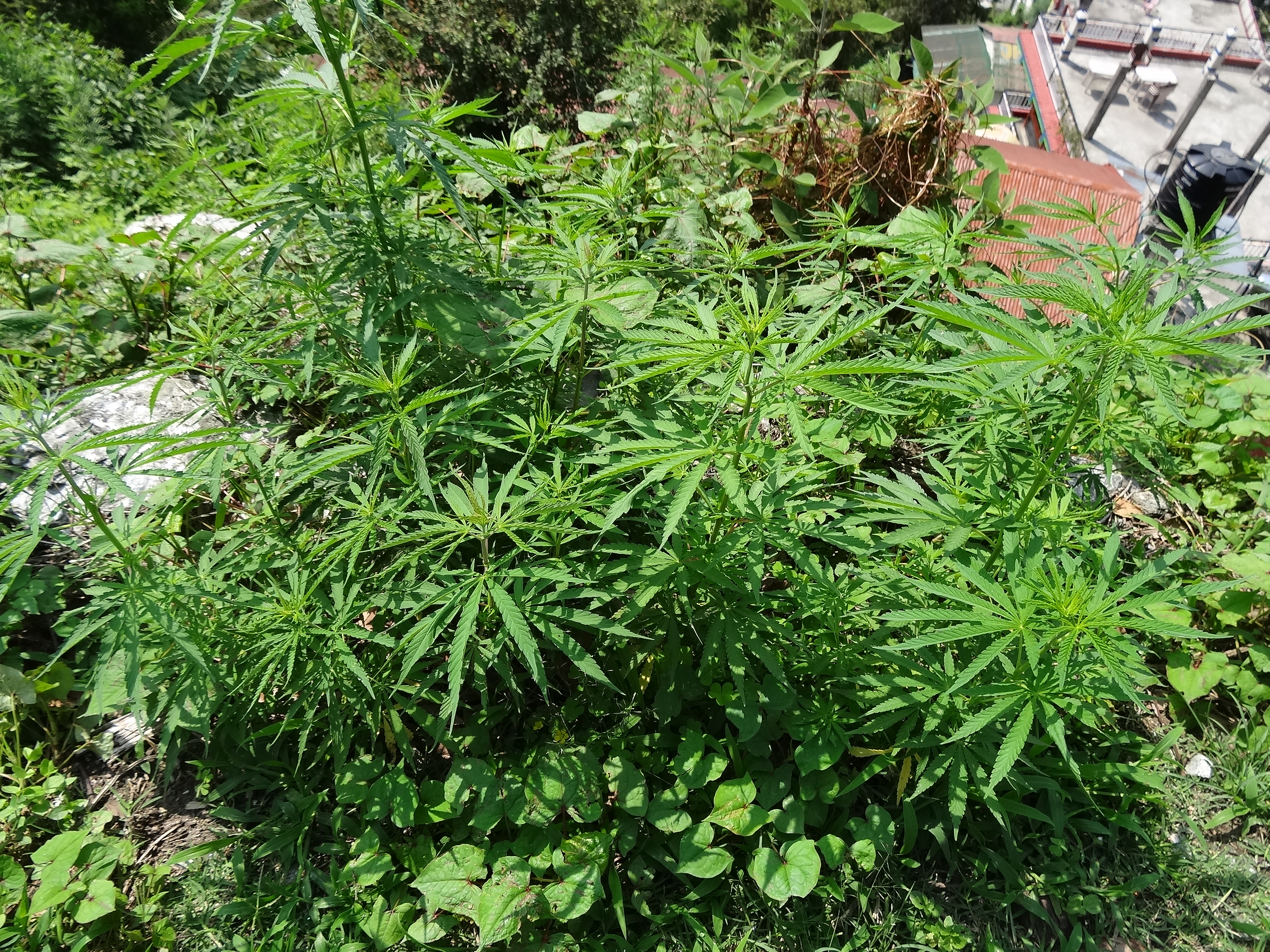
DSC01227Another thing we find on the trail, or just off the trail is marijuana plants growing in the wild – in abundance. I’m sure they use it just for medicinal purposes, although this may be why these people have so little and are yet so happy. The Himalayan High has the Rocky Mountain High beat three ways to Sunday. Pot is illegal in Nepal, but I don’t think they can get a squad car up here to haul anyone away.

Even though the trail has been a little wet from the previous night’s rain, we have been very lucky with the weather. We’re typically up early and hike 5-6 hours in beautiful weather and then settle into the next village’s tea house just in time to watch the afternoon monsoon come in with a vengeance.

A final thing that we run into on the trail, even though it is the off-season, is other trekkers from all parts of the world. I have found that they all have two characteristics in common: 1) They all speak English, and 2) THEY ARE ALL UNDER 30!!!

Old guys definitely DO NOT RULE here in the Himalayas.


Day 4 – Nepal Diary: Let Me Introduce the Boys in the Band

(No connectivity in last location so I’m a day late and a couple of Rupees short)

First, thank you for all the wonderful responses I’ve received from those who are following this adventure. I feel I have your company as I travel to places unknown.

2014-06-02 17.47.25

Annapurna South

We leave Chomrong, but not before getting this great photo of a sunrise over Annapurna South – simply awe-inspiring.

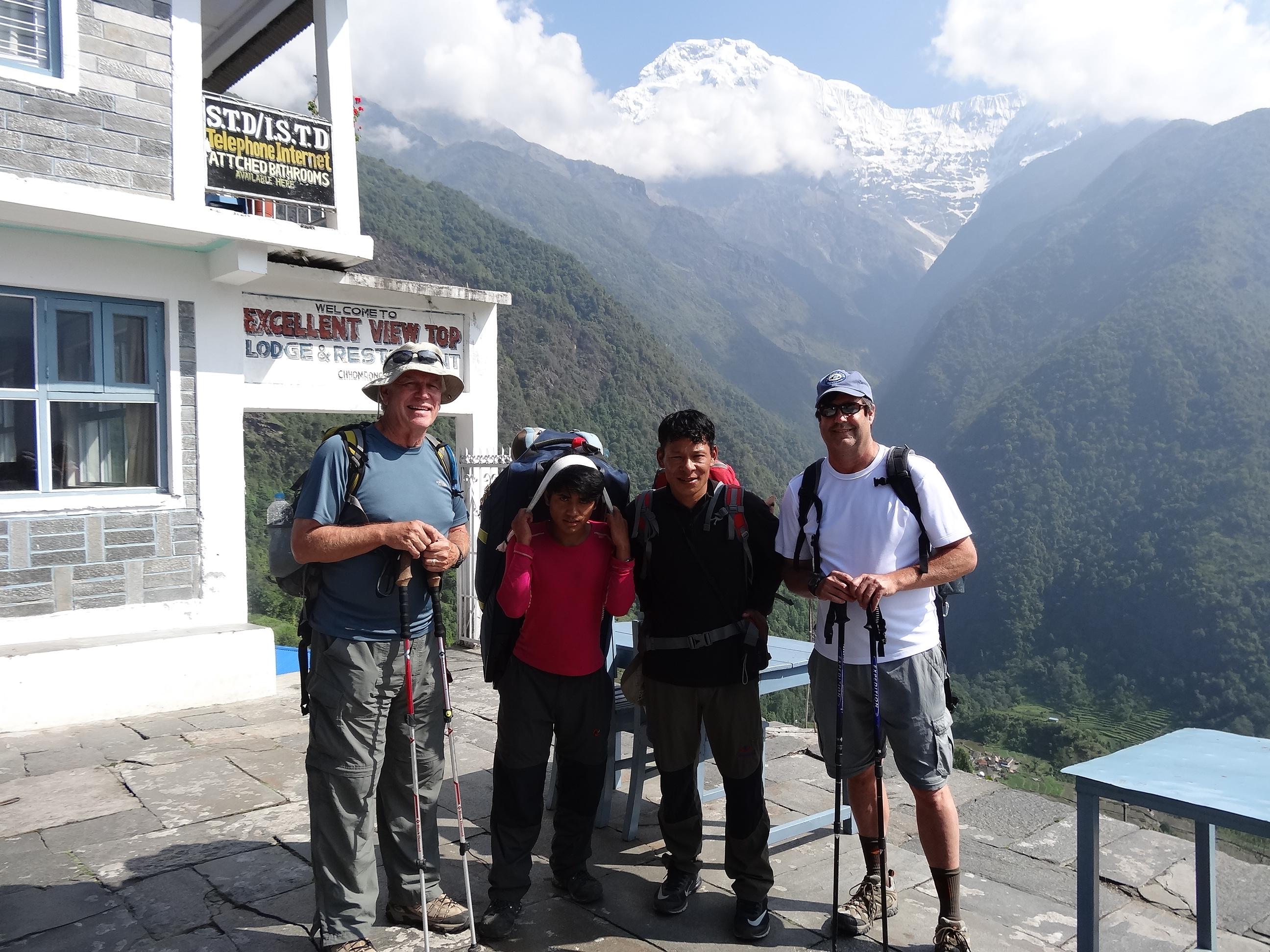
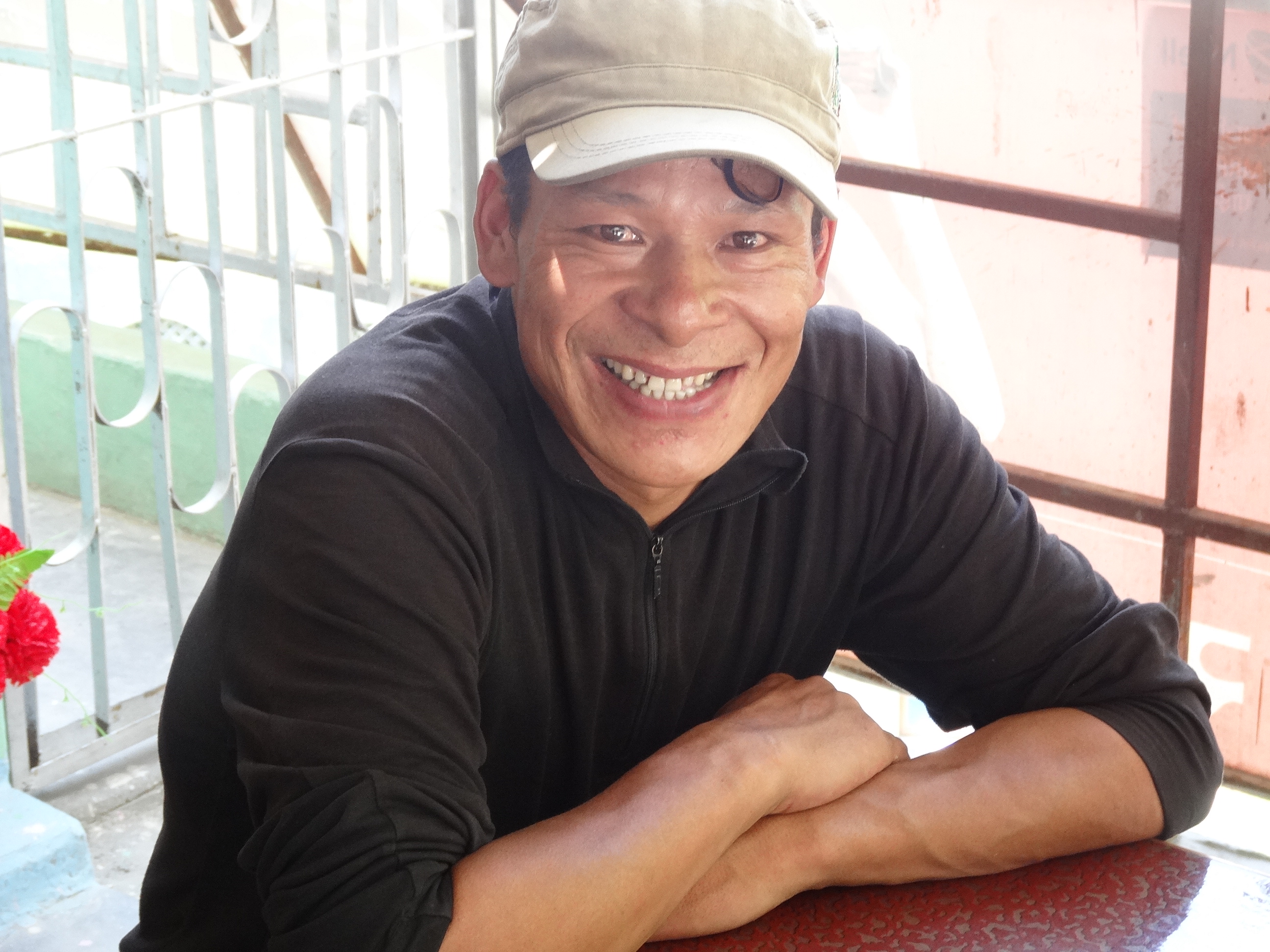
Let me officially introduce our crew, hopefully with pictures that heretofore I’ve not been able to upload. Dom our guide, I have come to find out, is not a Sherpa. Sherpa is an ethic group from high in the Himalayans. Dom is a Tamang, which is a group from the Himalayan foothill region; he speaks very good English and has been a guide in the Himalayan for 15 years, doing many treks around Everest, although he has not summited it yet. He is extremely accommodating and a really good guy. He is 35 years old, married with 2 children who live in Kathmandu. His parents live in eastern Nepal and in order to see them he must take a bus that takes all day to get relatively close and then he must walk for another full day to get to their home. So they don’t stop by for Sunday dinner that often. We have nicknamed him, ‘El Hefe’ – the boss.

2014-06-01 23.15.59

Dom

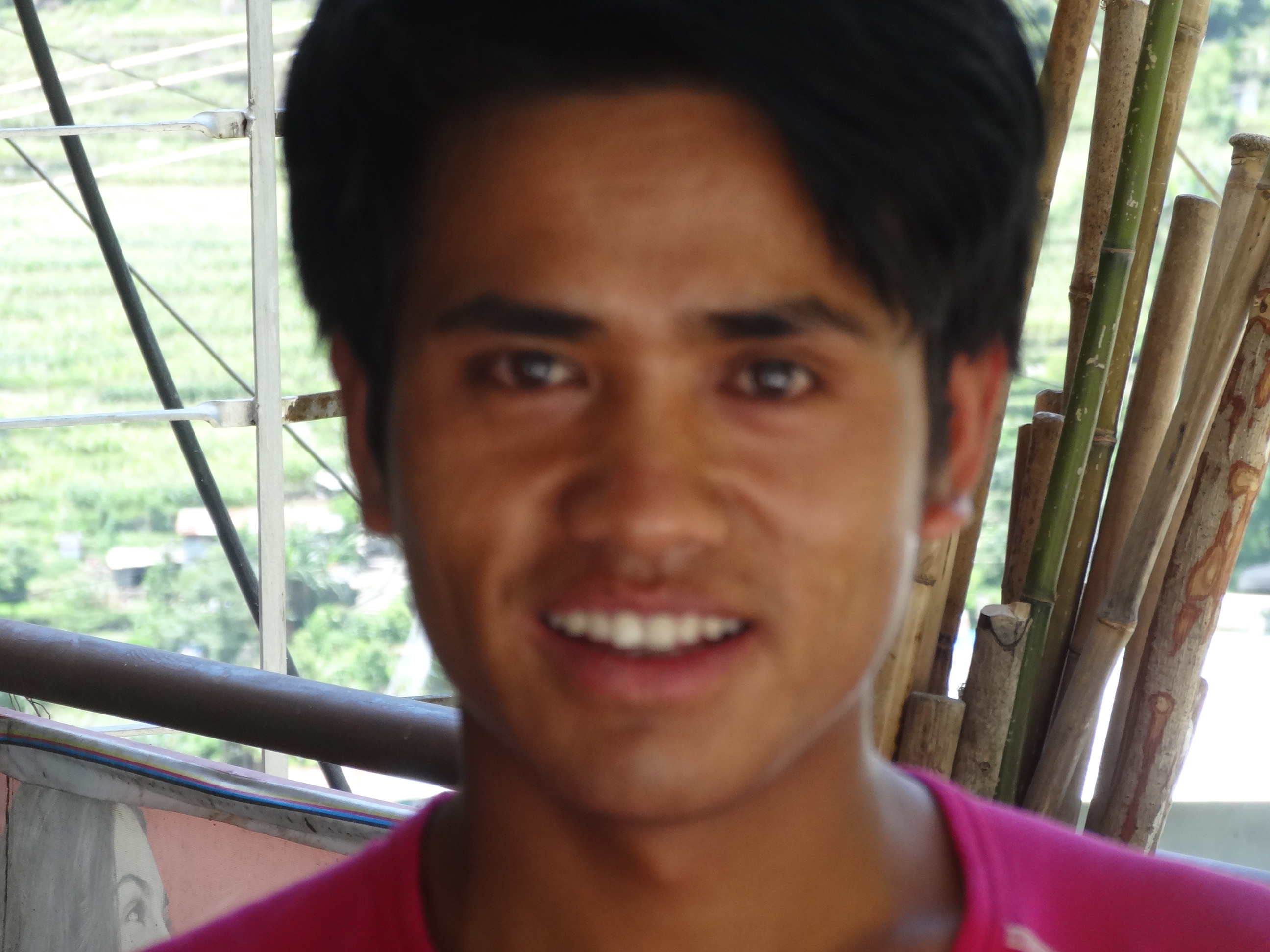
Our porter, Kirin is 25, married with one child and they also live in Kathmandu. He is Magar, another ethnic group from the Himalayan foothills. Both Magar and Tamang are Tibetan influenced and Buddhist by religion. Kirin is about 5’3” and honestly does not weight more than 110 pounds, yet he is carrying a huge pack with most of our stuff in it weighing between 60-70 pounds with only a strap he places on his forehead. He is amazing; we have nicknamed him, ‘The Stud’.    

Today was a short trek, as we went almost straight downhill from Chomrong to Jhinu, a distance of only a couple of miles, all on thousands of stone steps, not great for old football knees. I was thinking if Linda would have given me this trip for my 80th birthday she probably could have same money and bought that one-way ticket.

2014-06-01 23.16.11

Kirin

After lunch we headed to some hot springs that are adjacent to the Maudi Chola (river) about a half mile away. Large rock pools have been built to trap the natural hot water coming up from the ground. The warm water felt good on some tired muscles and sore knees. On our hike back to our ‘tea house’ (which is what they call the small hotels we stay in) it started to rain. Then it started to really rain – we experienced our first monsoon. We sat outside our room, had a Nepal Ice beer and watched the rain. In bed by 7:30 . . . again.


Day 2-3 – Nepal Diary: In the Mountains

Tuesday, June 3 – A Change of Itinerary

When we awoke this morning, the clouds had cleared and we had an amazing view of Annapurna I. I’ll have pictures at some point, but they won’t do it justice. We left Ghandruk at 7:30 this morning feeling better than we should have. I liked Ghandruk a lot; it is a small village built on the side of a mountain. The trail we are on, which is a 5 foot wide stone path, would be considered ‘Main Street’ here. There are no cars, no motorbikes, no motor anything. There is a school somewhere in the village, but other than that, no central gathering place. Many of the homes that line the path offer food and drink for sale for hikers. While their life seems dull and meager to us, every villager I saw had a smile on their face. As we traveled out of the village we ran into young kids coming down the path we were going up, headed for school. They were neatly dressed in uniforms and I watch a group of boys about 9-10 years old stop along a creek and were laughing and having the greatest time throwing rocks a something in a tree. Not a bicycle or video game in sight. They walk 2-3 miles, one-way, to school everyday . . . with smiles on their faces.

We received our second dose of ‘ass-kicking’ today as we left around 7:30 and trekked for 7 hours with some significant ups and downs, the ups being more significant than the downs. I’ve come to understand the real definition of ‘trekking’ here in Nepal. What Patrick and I have done is ‘hiking’, we tend to meander, our trails up a mountain have switchbacks to lessen the degree of incline. In Nepal there is no lessening the degree of incline, when they build a path they use the ‘shortest distance between two points is a straight line’ theory and build a stone ‘stairway to hell’.

Exhausted (again), we ended our trek today in Chumrong, an even smaller village than Ghandruk and even closer to the Annapurna mountains. After we arrived we got a short thunderstorm and thus the clouds have covered our view, so we’re hoping that the morning is clear.

Due to the last two ‘ass-kickings’ we’ve received, we asked our Sherpa, Dom how these first couple of days compare to what is ahead. The news was not encouraging, the trail gets steeper and the air gets thinner. Dom tells us that we can actually get better views if we take a different route down the mountain rather than continuing up. That was his way of saying, “There’s no frickin’ way you guys are making it to Annapurna Base Camp and I don’t want to be carrying one of you out of here on my back (I felt him looking right at me!). We concluded that the views were the most important thing and who were we to argue with a Sherpa. Whew!!! So we changed our itinerary to something that we think will be more fun and less . . . life threatening.

We awoke this morning to beautiful views of the sun rising over the Annapurna Mountains, and with smiles on our faces we head DOWN the mountain.

Day 1 – Nepal Diary: The Ass-Kicking

By Bob Sparrow

Nepal: Monday, June 2, 2014

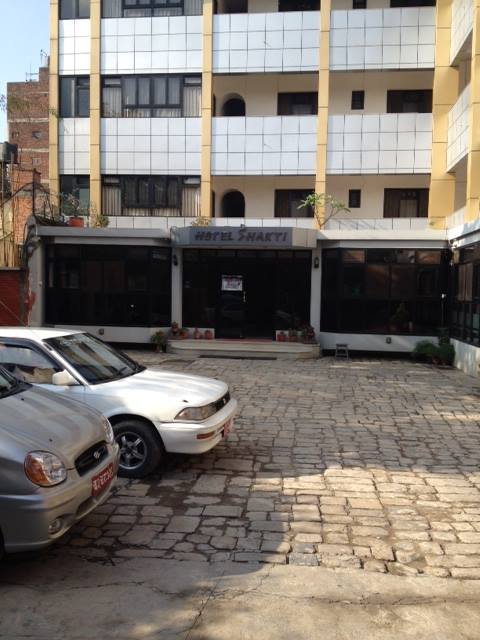
NOT the Four Seasons

NOT the Four Seasons

It was a long day yesterday, I guess it was two days, but we arrived on time and in one piece. The Kathmandu airport was strangely bustling at 10:00 last night. After clearing customs we looked for ‘our ride’ outside – it’s strange to see your name on a sign half way around the world, but there it was. It was not raining, but it had been most of the day, so the streets were muddy and filled with potholes. Our hotel, The Shakti Plus would not be mistaken for the Four Seasons. We climbed to the fourth floor (no elevator) and settled in to our small room. The bed had all the comfort of a pool table, which one might have slept on during college when over-served, not that I could relate to that. Given the cacophony of noise coming up from the street outside and the squadron of dive-bombing mosquitoes on the inside, sleep didn’t come. But reclining and closing my eyes was a relief from those cushy airline seats. After a hot, invigorating shower, OK cold showers are also very invigorating; we’re back to the airport for more flying. Oh boy!

We board a twin-engine prop Shirik Airline plane – I think Shirik is Nepalese for Rickshaw. The flight is actually quite smooth as we pass the Himalayan Mountains on our right. This is the first that we’ve seen them and they are magnificent! We land in Pokhara and are met by our Sherpa guide (Dom) and our porter (Kirin). We are then driven through the lakeside village of Pokhara and head up into the foothills. The scenery changes from bustling ‘city-life’ to one of spreading farms. We see cows, horses, goats, chicken, corn and lots of dry rice fields waiting for the monsoons to fill the patties terraced on the hillside. In about an hour and a half we reach our trailhead town of Nayapul.

We ‘saddle up’ our packs and the ass-kicking begins. The first part of this hike is basically straight up for about 7 miles using rock steps. Did I mention that it was ass-kicking? Six hours later we wearily stumble into the village of Ghrandruk with a spectacular view of the Annapurna mountains. Patrick and I agreed that we had never been on a more exhausting hike, not Half Dome, not Whitney – this was serious!

We get nice accommodations, for the area, take a shower and our plan was to get something to eat, but we both laid down and didn’t get up until morning to the crowing of a rooster at 3:30 – I resolved to have chicken for dinner that night.


Going to Kathmandu

by Bob Sparrow

“If I ever get out of here, I think I’m going to Katmandu”                                                                                                

                        Katmandu, Bob Seger

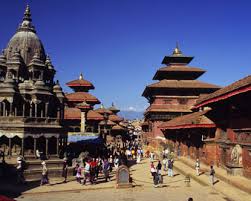
Kathmandu

Kathmandu

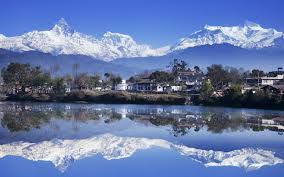
If Saturday’s Air Canada Flight 55 out of Los Angels to Vancouver was on time, I will indeed be ‘out of here’ and in Kathmandu by the time you’re reading this. No, LA to Vancouver didn’t seem like the most direct way to me either, but it actually was the first leg of the shortest (time-wise) that I could find . . . and afford – 26 hrs 33 mins (My back hurt just writing that). From Vancouver to Guangzhou, China (which is about 95 miles northwest of Hong Kong) and from there into Kathmandu, Nepal. Why Kathmandu, you ask? It was a 70th birthday gift from my wife. No, it was not a one-way ticket! Like most things she buys, she got a ‘deal’ on Groupon – a 12-day trip for two to Nepal, which included a 5-day trek into the Himalayas. Not being a hiker herself, she is not part of the ‘for two’. So I’m with my hiking buddy, who I’ve done lots of hikes with, including Mt. Whitney and Half Dome, Patrick “Trail Boss” Michael. He’s a good friend & neighbor, a good hiker with a quick smile and an engineer by trade, so we have checklists for our checklists. We had both been looking forward to this trip for several months, when after we told a 70+ lady our itinerary, she said that she and several of her friends did that same trip last year. We thought, ‘This may not be quite the adventure we were looking for’, so I contacted our travel agent and asked if there was a little more challenging trek we could take. She answered in spades. We’re now spending 8 days trekking in the Himalayas, with a Sherpa guide and a porter (we’re not sure if that’s a person or an oxen) and reaching altitudes of just under 14,000 feet.Pokhara We should have arrived in Kathmandu around 10:30 Sunday night and be flying out of Kathmandu early Monday morning (because we needed some more flight time!) into the city of Pokhara (photo at right) where our trekking will begin that afternoon. Over the next several days we will be working our way up to Annapurna Base Camp at an elevation of 13,500 feet. Annapurna, at 26,545 feet is the 10th highest mountain in the world, but ranks #1 as the most dangerous to climb – it has a summit-to-fatality ratio of 38% (By contrast, Mt. Everest has a 9% ratio). That’s only one of the reasons we’re only going to Base Camp, no fatalities there unless it’s from the dal-bhat-tarkari soup. We’ll also be visiting the beautiful Chitwan National Park, doing some river rafting, taking an elephant ride safari, where we hope to see the elusive Bengal Tiger as well as traveling by ox cart through an elephant breeding camp to our hotel. I’ll be used to the oxen’s pace having driven in LA commute traffic.

Tiger

Bengal Tiger

Nepal is 12 hours and 45 minutes ahead of Pacific Daylight Time (Yes, 45 minutes, just another oddity of this part of the world), so I’ll try to sum up my activities at the end of my day and post so you’ll get it that morning. I’ve read that wifi can be very dodgy over there, so if you don’t hear from me I probably just can’t connect . . . or had a very boring day. We’re crossing our fingers that the monsoons don’t come earlier than expected . . . oops, wait a minute, I just checked the 10 day forecast for Nepal: Rain and thunderstorms everyday for the first week.

It’ll be an adventure!

The Tape Chapter 3 – A Visit with Chief Chuckwalla

(If you have not been following the story of ‘The Tape’ or need a refresher, you can read Chapters 1-2 by going into our archives and looking under ‘January 2014’.)

by Bob Sparrow

While at our timeshare at the Marriott Desert Springs a few weeks back, I decided to take advantage of being near the home of the Cahuilla Indian tribe and follow up on the information given to me by Matt at Chapman University and pay a visit to the tribe. I had contacted Chief Chuckwalla and made arrangements to meet him in a coffee shop in Palm Springs. With The Tape in my hand and Don in my head, I walked into the coffee shop looking for the Chief. I stood at the entrance surveying the small, sparsely populated room when a voice came from my left saying, “Are you looking for a guy in a headdress and war paint?”

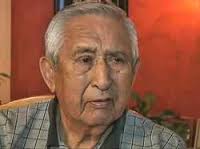
chief2

Chief Chuckwalla

Embarrassed that I probably was, I turned to meet Chief Chuckwalla, who was wearing a plaid sports coat.

“Good morning, I’m Bob, we talked on the phone”

“Yes, I’m Chuck”

“Oh, so it’s Chief Walla, your first name is Chuck?

“No, my first name is Mark.”

“So it’s Mark Chuckwalla?”

“No, I just use Chuckwalla because it’s the last remaining Inviatim word left in the English language, so I’m holding on to it. You can call me Chief.”

“So are you the current chief of the Cahuilla tribe?”

“No”

I felt like I was part of the Abbott and Costello Who’s On First routine.

Nonplused, I decided I would try to impress the chief with the fact that I’d done my homework on his tribe, by using a Cahuilla greeting. I smiled and said, “Yee-Makh-weh”

He stared at me just long enough to make it uncomfortable and said, “I think you mean Mee-Yakh-weh, which is how the Inviatim Indian would greet a friend. You, on the other hand, just called me a grapefruit!”

“Sorry.” I guess I never was much good with homework.

I continued, “I notice you use the word Inviatim rather than Cahuilla when you talk about your tribe, why is that?

“Cahuilla is the name that the Spanish gave to our tribe; it would be like calling the Italians ‘Wops’ or the Puerto Ricans ‘Spicks’.

(Don echoed in my head: “How’s this going for you so far, you’ve screwed up his name and now you’ve insulted his entire tribe?”)

I doggedly pressed on, “I don’t know how much Matt told you, but I have a tape that a dear friend sent me years ago in a language or various languages that I’m trying to translate, Matt believed part of it was in the Cahuilla, er Ivia language.”

(Don: “I was wondering when you were going to bring me into the conversation, are you going to tell him that I’m dead?”)

Chief: “Matt has done much to help the Inviatim cause. What is this tape?”

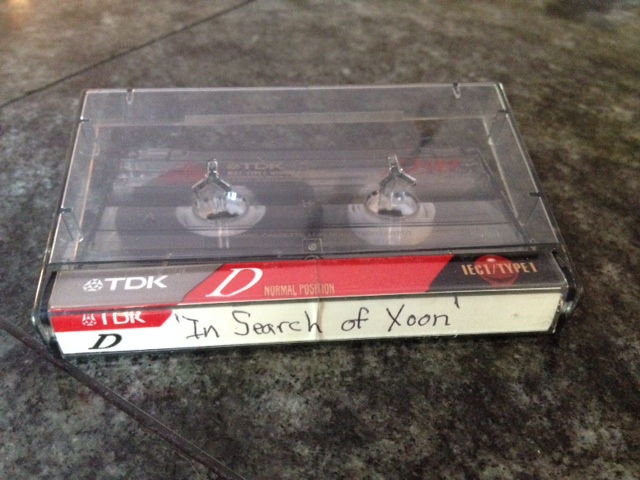
The Tape

The Tape

I held up it up and the chief stared at it

Chief: “Why did your friend send it to you?”

I told him I wasn’t sure.

Chief: “What does your friend say it says?”

(Don: “See I told you you should have told him I was dead!”)

“I actually got the tape in ’95 or ‘96, but when I asked him about it at the time and on several occasions after that, I couldn’t get a straight answer from him, so I just forgot about it. When he passed away a couple of years ago my curiosity was raised again.”

(Don: A couple of years ago, gosh, it just seems like yesterday – where does the time go?”)

The Chief and I sat down in a corner booth where it was relatively quiet and I pulled out my cassette player and popped in The Tape.   We both fell silent as I watched the Chief listen. His expression changed from dutiful to curious to interested, to visibly shaken when he stopped the tape and stared at me trying to decide what to do next.

Finally he stood up from the table and said, “You need to see something.”

shack

Entrance to ‘Sec-he’

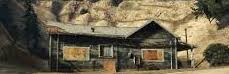
I followed him outside and got into his dusty Jeep Wrangler and we headed for the nearby foothills. After a few miles we left the main road for a seldom-traveled dirt road which, after a few more miles, turned into no road at all, until we were deep in the Santa Rosa Mountains. After about twenty minutes, we came to a narrow opening which revealed a boarded up, washed out ranch-style dwelling tucked in the back of a canyon behind an outcropping of granite boulders. As we neared the structure, we passed under a weathered wooden archway entry gate with a name carved in it that was barely legible; as we passed under it I read it aloud: “Sec-he”.

I asked Chief what it meant.

“Sec-he is the name the Inviatim gave to this whole desert area, it means ‘boiling water’; when the Spanish took over they changed the name to ‘Agua Caliente’, meaning ‘hot water’. Then the white man came and decided that neither of those names would help them sell memberships to private golf clubs or luxury homes for celebrities, so they changed the name to Palm Springs”.

Chief drove under the archway and parked the car in the shade of a Palo Verde tree in front of the gray wooden structure. He slowly pushes open the shack2front door that had neither locks nor hardware. The wooden floor creakes beneath our feet as I followed the chief to a small room off the main living area that had only a crude wooden desk and chair sitting on a dingy brown rug. Chief moves the desk and chair off the rug and slides the rug over several feet revealing a trap door. The hinges squeak as he slowly opened it. There is a narrow wooden staircase that leads into darkness. I notice for the first time, a kerosene lantern hanging on the wall next to the trap door, as the Chief pulls it down, lights it and heads down the stairs motioning me to follow.

To be continued  

The Road Past Hana

by Bob Sparrow

Welcome to Hana

Hana, Maui

As I pulled onto main street in ‘downtown’ Hana; OK, there is only one street in downtown Hana, actually there is barely even a downtown Hana, I dropped off Kristen and headed down to Hana Bay to eat the picnic lunch that I had packed.  As I gnawed on some dead chicken and gazed at the picturesque crescent beach, I started turning over in my mind the story that Kristen had told me about Carly Scott’s disappearance and put together another scenario of why Kristen was out on the road hitchhiking.  Perhaps Kristen had been seeing Carly’s old boyfriend, Steve Cabobianco, and when she learned that Carly was carrying his baby and feared they might be getting back together again, she . . . made her disappear.  So now I wondered if I had aided and abetted a criminal and was now a ‘person of interest’ in the on-going investigation.  Either that or someone had put a hallucinogenic in my chicken.  On further contemplation, the hallucinogenic chicken theory makes more sense.

Hamoa Beach

Hamoa Beach

My first couple of stops heading out on the ‘road passed Hana’ were at two spectacular beaches – Koki and Hamoa – they were un-crowded and pristine, right out of South Pacific; in fact James Michener, called them the most beautiful beaches in the south Pacific even though they are in the north Pacific.

7 Pools

Seven Pools with Hippos

 Haleakala is the 10,000-foot dormant volcano, which from the top several years ago my daughter, Dana and I saw a beautiful sunrise and then bicycled down the mountain.  Haleakala State Park goes from the peak down to the beautiful shoreline in front of me, where numerous waterfalls and the Seven Pools are located.  Actually they used to be called the Seven Sacred Pools until no one could answer the question as to why they were sacred.  To me they looked like a hippo watering hole at feeding time as the pools were filled with large, over-weight tourists detracting from the otherwise beautiful waterfalls and pools.  I quickly moved on.

 Next stop was famous American aviator, Charles Lindbergh’s gravesite, located just up the road on the beautifully jagged Kipahulu coast.  When faced with cancer in 1968, rather than take treatment on the mainland, Lindbergh chose to live out his remaining years here – he died in 1974.

Just passed Lindbergh’s gravesite the road changes from a narrow, single lane, partly paved, bumpy, unmaintained road to unpaved road to Hanaa narrow, single lane, unpaved, unmaintained, crushed lava carriageway.  It was here I was expecting to see the ‘Dead End, Turn Around’ and No Rental Cars Permitted Beyond This Point’ signs but, “Honestly officer, I never saw them.”  If you came across another car coming from the other direction, which I did only once, I had to back up to the nearest wide spot in the road so they could pass.  As reward for the demanding drive, the scene in front of me of black lava, contrasting with the green vegetation and the blue water crashing against the coastline was so amazing.

Kaupo Gen Store

Kaupo General Store

After several miles, where the only building I saw was a solitary church, I got back to what is termed as ‘rough paved road’ and ‘civilization’ which consisted only of Kaupo General Store, sitting all by itself along this desolate road.  I purchased a pineapple-coconut shave ice and stood alone on a small rise next to the road and looked at the miles of grassland, actually grazing farmland for horses and cattle, all the way down to the black lava coastline where there were several energy-producing windmills.  If you’re ever looking for peace, quiet and solitude, this is the place.

As the crushed lava trail I was traveling on turned into a paved two-lane road, I saw two cars ahead of me and several tourists standing by the roadside posing for pictures and I knew the adventure on and passed the road to Hana was over.

Update: As of this writing there is still no new news on the whereabouts of Carly Scott, missing now for 30 days.

Murder on the Road to Hana?

by Bob Sparrow

'Road to Hana'

I know that title sounds like a 48 Hour Mystery headline, and it just might be one day, but it’s the lead in to this week’s blog subject.  Two weeks ago Linda and I were on the island of Maui with three other couples, mostly to play golf, drink pina coladas and watch sunsets – I figured I needed a break from my hectic retirement schedule!  To add a little adventure to my relaxation, I decided to rent a Jeep and ‘do’ the road to Hana.  I had attempted this once before about 20 years ago with Linda and three small children in tow, but after a dizzying ride through 25 miles of multiple twists and turns with Linda and the kids tuning green, we reached a shave ice stand with a sign that read, ‘Halfway to Hana’, “Halfway!!”, came the cries from the back seat.  I got out to get some shave ice in hopes of buoying the troop’s spirits, but by the time I got back, the Jeep had been commandeered and was facing the other way – the message was clear.

halfway to hana

Halfway?!!!

When I told our group this year that I was going to finish that journey and asked for any passengers, I heard crickets.  I was not going to just do the road to Hana, I had planned to do a complete circumnavigation of the southern part of the island and ignore any signs past Hana that said, ‘Dead End’ or ‘No Rental Cars Beyond This Point’, so it was just as well that I had no volunteers to accompany me on my illicit and operose odyssey.

road to hana2I set out at 7:00 a.m. and I have to admit, the road does have a few turns in it – 617 so I am told, and although driving doesn’t allow you to observe much scenery, there are plenty of places to pull over and enjoy the water falls, hiking trails, lava caves and spectacular shoreline – which I did.

   Because of the early hour, there was very little traffic on the road, although surprisingly, I did pull over twice to allow police cars to go around me.  When I stopped to observe the beautiful Keanae Peninsula I saw what I thought was a sightseeing helicopter, but tuned out to be a police helicopter.  I wondered what was going on.  I briefly wondered if Linda had called and asked them to keep an eye on me.  I didn’t think much more about it until I was about 6 miles from Hana when I came upon a young lady standing on the narrow roadside, flagging me down.  I would normally not pick up a hitchhiker, especially in a strange place, but she seemed to be a damsel in distress, I had room and I was on an adventure, so I stopped.  She jumped in and said “Thanks”.  I asked her where she was headed.  She looked at me as if I was from a village that was missing its idiot and said, “Hana?”  It hit me that there really was no other place to be going.  Feelingcarly scott stupid, I wanted to show her that she was dealing with someone who could ask astute, insightful questions, so I continued with, “What’s your name?”  I knew I didn’t know the answer to that one.  “Kristen”, she replied and I think she felt bad about her first response so she felt obliged to tell me ‘her story’.  She had just been out with her boyfriend and a couple of other guys, who were wild pig hunters, to search for a friend, Carly Scott, who had been missing for three days (At this writing she is still missing after nearly a month).  I asked her why she left the search party.  She said these pig hunters really knew the terrain well and she was afraid they were going to find Carly and it wouldn’t be a pretty sight.  So she decided to leave the group and head back to town.  I asked about the circumstances around Carly’s disappearance and she told me that Carly was 5-months pregnant and was last seen with her ex-boyfriend, Steven Capobianco, the night before she disappeared.  She went on to tell me that Carly’s car had been found torched and left in a ravine, parts of her clothing were also found along with her dog, Narla – Kristen said that Carly never went anywhere without her dog.

Here is a link to an early news release on the story:

http://www.kitv.com/news/hawaii/Search-continues-on-Maui-for-missing-pregnant-woman/24498394

I asked Kristen if the boyfriend was a ‘person of interest’ and she indicated that she and her friends concluded that morning prior to setting out on the search that they thought he was the primary suspect.  It was believed that she was carrying his child, he was the last one to see her under strange circumstances the night before her disappearance, and he failed a lie detector test given by the police.  That’s why I’ve used the word ‘Murder’ in the headline; I don’t pretend to be judge, jury and executioner, but it’s hard to go missing for a month on an island as small as Maui.  I check the Internet everyday for up-dates, but nothing new for the last two weeks.

koki beach

Koki Beach

You can Google ‘Missing Woman on the Road to Hana’ to see new info as it becomes available.

Next time: I’ll conclude my journey ‘On the Road Passed Hana’ which includes the beautiful Koki and Hamoa Beaches.

Do you read our blog but don’t subscribe?  Subscribe, it will make us feel better; and if we feel better perhaps we will write better . . . it could happen.