A Country Built on Great Stories

by Bob Sparrow

I had just written a blog about our annual backyard Margaritaville party last weekend to post this week, when I remembered that this is the week of our nation’s 250th birthday and that certainly deserves my attention. So, Margaritaville can wait.

Most of you are probably not familiar with the name, Lydia Darragh, I know I was not prior to this week, when I went looking for unusual stories about the birth of our nation.

In 1777 Lydia was a 48-year-old, Irish immigrant Quaker, pacifist, mother of five, living in British-occupied Philadelphia, who became a Patriot spy. The British had occupied her home and sat in her living room and planned an attack on Washington’s troops. This attack, if successful, could have very well meant the difference between winning and losing the Revolutionary War and us remaining under British rule. For a final meeting to plan the attack, the British officers tell Lydia and her husband to remain in their bedroom – their children have already been sent away to stay with relatives. After the officers start their meeting, Lydia sneaks into a nearby closest where she can hear them planning the details of the surprise attack. Their plan includes using 5,000 men, 13 canons, several baggage wagons and 11 boats on wheels. Eleven boats on wheels??? Yes, this was a unique feature that Lydia remembered and helped those she told the story to, to believe her. The boats were going to be used to cross rivers in their attack.
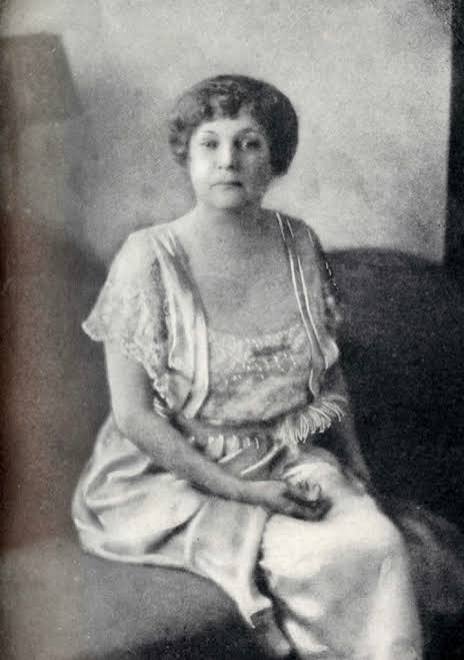
Spy Lydia Darragh

She overhears and remembers every detail of the attack, so the next day she asks the British officers, living in her home, if she can visit her children, who are at relatives’ home and stop to pick up a bag of flour to feed her children. She is granted a pass from the British officer who believes this is a harmless woman just trying to provide for her family. She has to walk several miles on a cold December day to visit her children. To complete the cover, she does go to pick up flour and dropping it off for the children, but then continues down the road to The Rising Sun Tavern, which was an informal message hub for the colonists. Once there, she finds a soldier she knows and trusts and tells him of the British battle plans. Because of the specifics of the plan and the details that she remembered and conveyed, her story was very credible.

The information was quickly passed on to General Washington, who now had plenty of time to prepare. The British, who thought they were surprising the colonists, walk right into a trap and were soundly defeated by Washington’s troops.

When the British commanders later analyzed the events of the battle they realized it had not been a surprise, and assumed that there was a leak in their ranks. They could not imagine that the information that lead to their defeat came from an unassuming female Quaker pacifist spy.

The British were pushed out of Philadelphia within the next year.

As I searched and read several interesting stories about the founding of this great country, it helped me realize that, yes, we seem to be a divided nation today, but we’ve been through worse and got through, and we will get through this.

Suzanne and I hope you all have a great 250 year celebration of the independence of this amazing country.

LET’S TAKE THE HIGH ROAD

By Suzanne Sparrow Watson

Every few years, the world unites in a grand celebration of football. Or as we in the U.S. like to say, soccer. Half of Americans’ experience with soccer begins and ends with 7-year-olds on a field, clueless about the game but excited about the sliced oranges at the break. The other half thinks FIFA is a type of allergy medication. But this year, something magical is happening: the Tartan Army and other international fan groups are pouring into the U.S. for the World Cup, ready to turn American cities into temporary outposts of global football culture. And America had absolutely no idea what was coming.

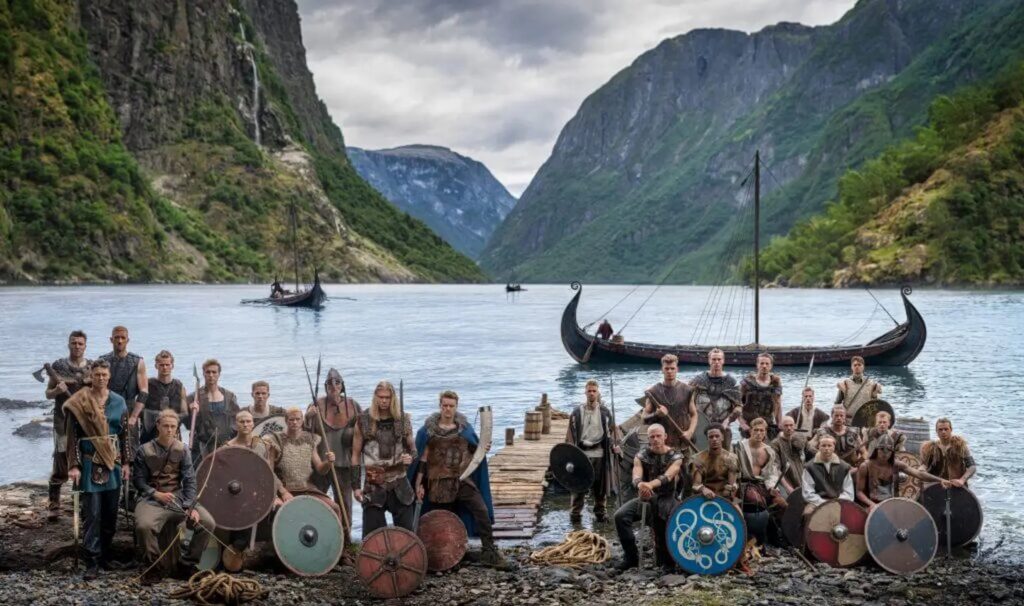
The Brazilians arrived radiating sunshine, samba, and the kind of confidence that comes from supporting a team that actually wins things. They immediately attempted to teach Americans how to dance, only to discover that many locals move like malfunctioning shopping carts. The English fans, who are thrilled to discover cheeseburgers and Ranch Dressing, enjoyed explaining—loudly, repeatedly, and to anyone within a five‑mile radius—that this will be their year. (It will not be their year.) The Norwegians came loaded for bear, having posed for their teamphoto as vanquishing ancient Norsemen. They have done “the row” (as if in the boat) at the stadium and more ingeniously, sitting on the “up” escalator at the Boston airport. The Germans showed up with precision, efficiency, and laminated itineraries. They are the only fan group that reads the stadium rules in advance. They are also the only ones who will arrive at the match three hours early “just to be safe.” I have some German lineage and I can attest that this is true.

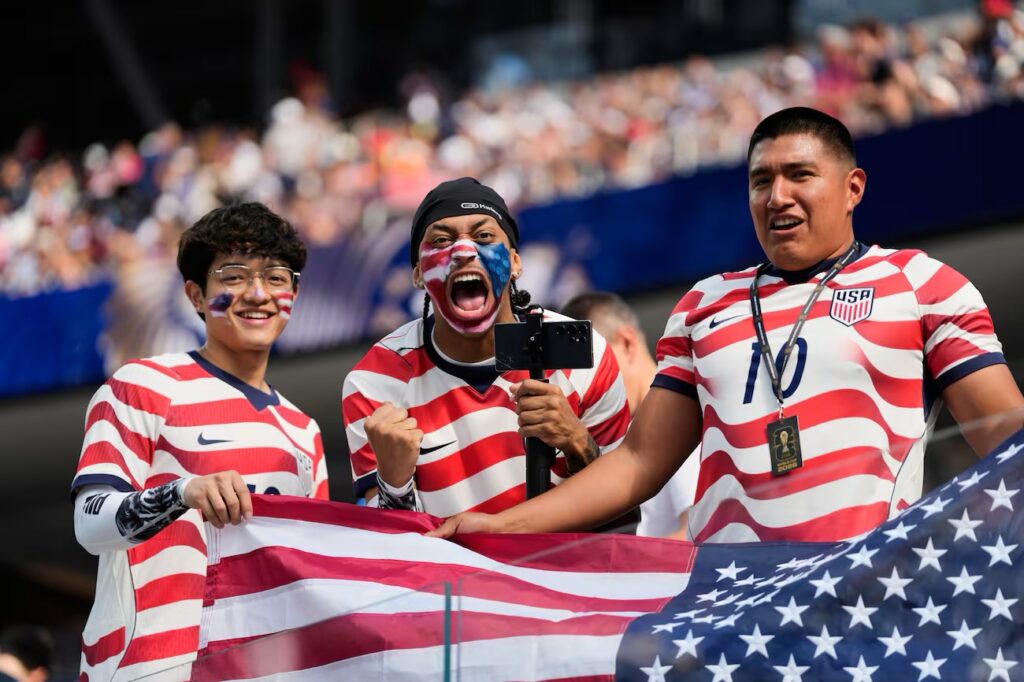
The Argentinians arrived with Messi flags, Messi shirts, Messi tattoos, and at least one person who has named their firstborn “Messi.” They are prepared for glory. They are also prepared to argue passionately with anyone who suggests another player might be better. And meanwhile, we Americans are trying our best. We’ve decorated stadiums with red, white, and blue. We’ve Googled “how to chant like Europeans.” We’ve even practiced saying “nil” instead of “zero,” though it still sounds like we’re ordering a latte. But we learn quickly. After the win against Australia the U.S. fans sang “Country Roads” in unison, and people who were there said it was the most unified they had felt since 9/11. I wish John Denver was alive to hear how healing his song has become.

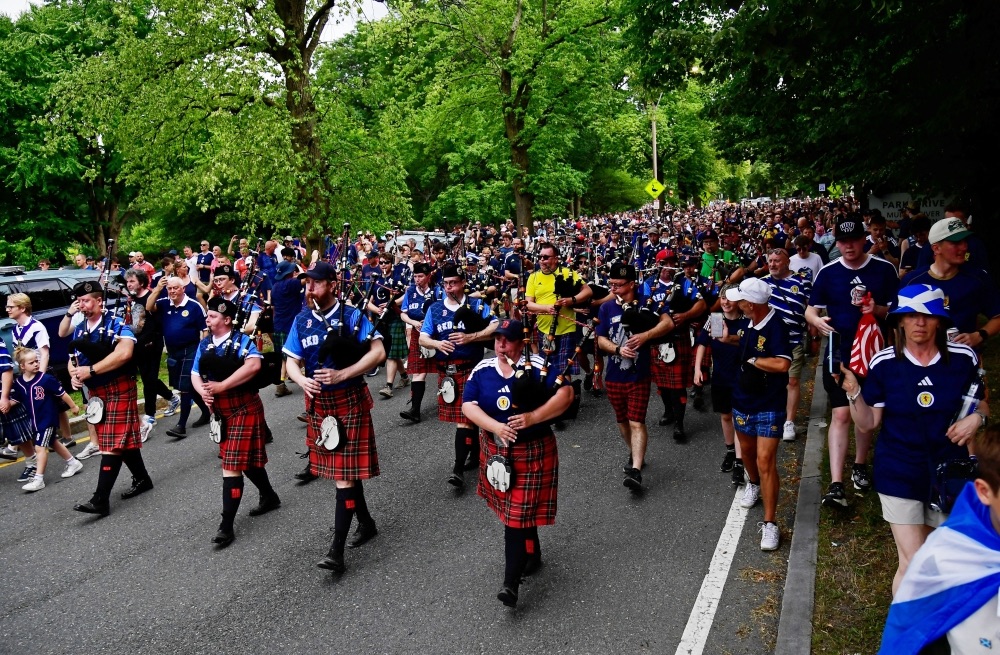
But let’s face it, it’s the Scots who have stolen the show. The Tartan Army has been Scotland’s most enthusiastic export after whisky and passive-aggressive weather. They arrived in full tartan regalia, kilts swishing proudly in the breeze, armed with bagpipes, optimism, and a deep, ancestral understanding that their team may not win—but by heaven, they will out‑party everyone. As they say, “No Scotland, no party!” They discovered that American beer is often served cold. Despite this, they still drank Boston dry. Many bar owners said they’d had to make emergency orders, having significantly underestimated how much the average Scot can drink. They also learned that some statues in the U.S. are quite tall, making it hard to place a traffic cone upon the top of it (long story – look it up). But just to show how charming the Tartan Army is, in Providence, R.I. the city maintenance workers gave a lift to a Scotsman in their cherry picker so he could complete the mission.

We Americans quickly learned that the Tartan Army is loud, joyful, and unstoppable. They sing in the streets. They sing in the stadiums. They sing in hotel elevators, which is confusing for guests who thought they were stepping into a quiet ride to the lobby and instead find themselves in a mobile Highland ceilidh. And yet—Americans fell in love with them. Because the Tartan Army, like all great football fans, brings something the U.S. can’t resist: pure, unfiltered, wholehearted enthusiasm.

They also brought manners and grace. A woman bartender in a Boston restaurant was the only person on duty when hundreds of the Tartan Army entered. She worked as quickly as possible to get them all drinks. When her shift ended, she told a local news reporter that to a person, they were polite, respectful and fun. The Scots had a party in a Boston park with over 2,000 people. Only one maintenance worker was scheduled to work the next day (I’m beginning to think Boston didn’t realize that FIFA was in town). Anyway, he said the park was so clean when he came to work, he just had to pick up the bags of trash the Scots had piled up for him. Finally, the Tartan Army was so overwhelmed by the friendliness and warmth of the Americans that they donated $30,000 to local charities as a thank you for welcoming them. And then they collected more money, giving $10,000 to a children’s cancer charity, $6,500 to a program to teach kids how to play the bagpipes, and $10,000 to a program that teaches underprivileged kids to play soccer. The Tartan Army reminded everyone that sport isn’t just about winning. It’s about belonging. It’s about joy. It’s about wearing a kilt in 105‑degree heat because tradition matters more than comfort. They’ll go home sunburned, dehydrated, and hoarse from singing—but proud. Because they didn’t just come to watch football. They came to conquer America, and they did. With kilts and kindness.

And we learned something about ourselves in hosting all of the international fans. In 11 host cities across the U.S., foreign tourists and ordinary Americans have created diplomacy that puts professionals to shame. And we got the wake-up call we needed: we are not our politicians or the media. We are good-hearted people who have more in common than we have differences. We love to gather together, laugh and sing. Now we just need to figure out a national chant.

The Queen of ‘Minnesota Nice’ Turns 100

by Bob Sparrow


       I have just returned from a most wonderful time in the state of Minnesota to celebrate the 100th birthday of my favorite mother-in-law, Phyllis Barnes.  I know the state of Minnesota has received some bad press lately due to political issues and the influx of some corrupt Somalians, but I’m here to tell you that Phyllis and all of her relatives still exhibit ‘Minnesota Nice’. Phyllis is not just amazing for making her 100th trip around the sun, but she has done it with class and grace, and she remembers it all, as she is still sharp as a tack.

          Wife, Linda, left for Minnesota last Tuesday, then daughter, Stephanie and her daughter, Emma, daughter, Dana and her daughter, Addison, and son Jeff and his wife Pam and their daughter, Brooklyn, and I left last Thursday for a magical weekend in Rochester, Minnesota. People came from Texas, Alabama, Oklahoma, New York, Washington, Arkansas and I’m sure other places that I can’t remember.

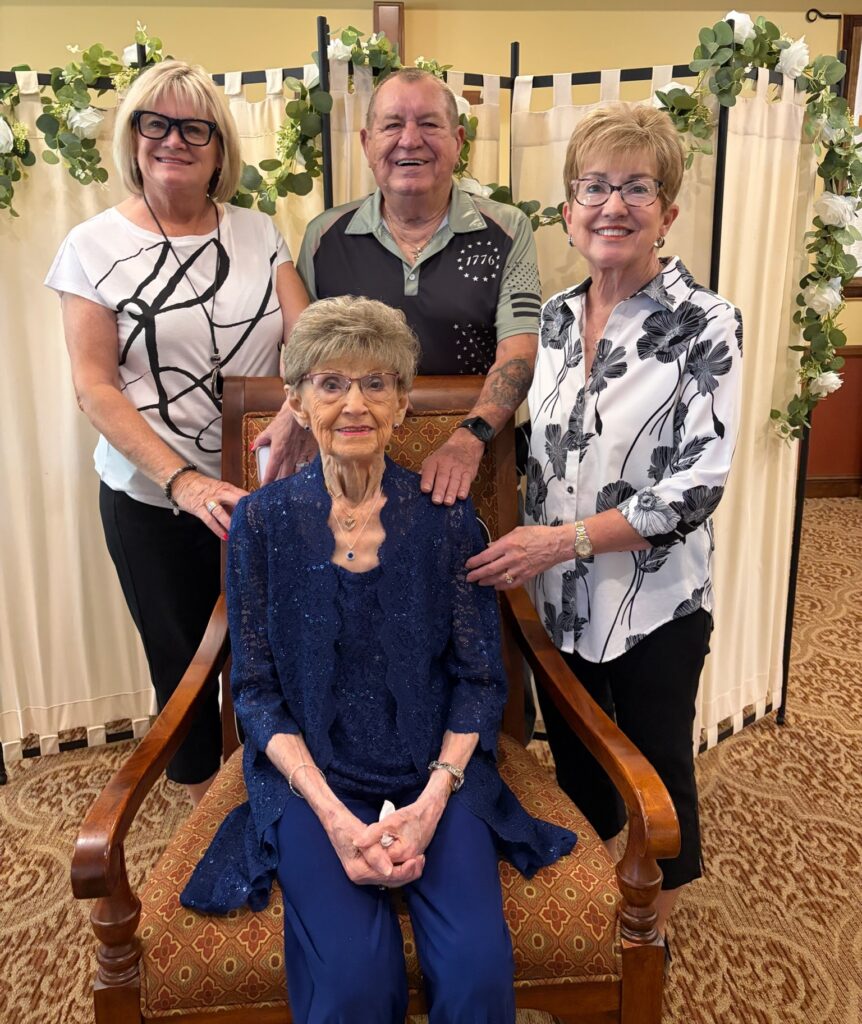
Phyllis’s kids, Linda, Dale, Starlet

          Each night, Thursday through Saturday, we met and celebrated at a different venue as the party grew in numbers each night. Thursday night we met at the VFW in Rochester – there were about 15 of us. On Friday night more people rolled into town, and we met at great- grandson Will’s apartment rooftop recreation room in Rochester – there were about 25 of us there. I started to try and put everyone’s name in the blog, but by the time I got to second cousins, once removed, who should have been removed twice, it got too confusing, so maybe these numbers will help you understand the numbers that attended this Century Birthday – Phyllis had 3 children, 14 Grandchildren, 31 Great-Grandchildren and 8 Great-Great Grandchildren, which includes Dale’s long-lost son – but that’s a whole other story.

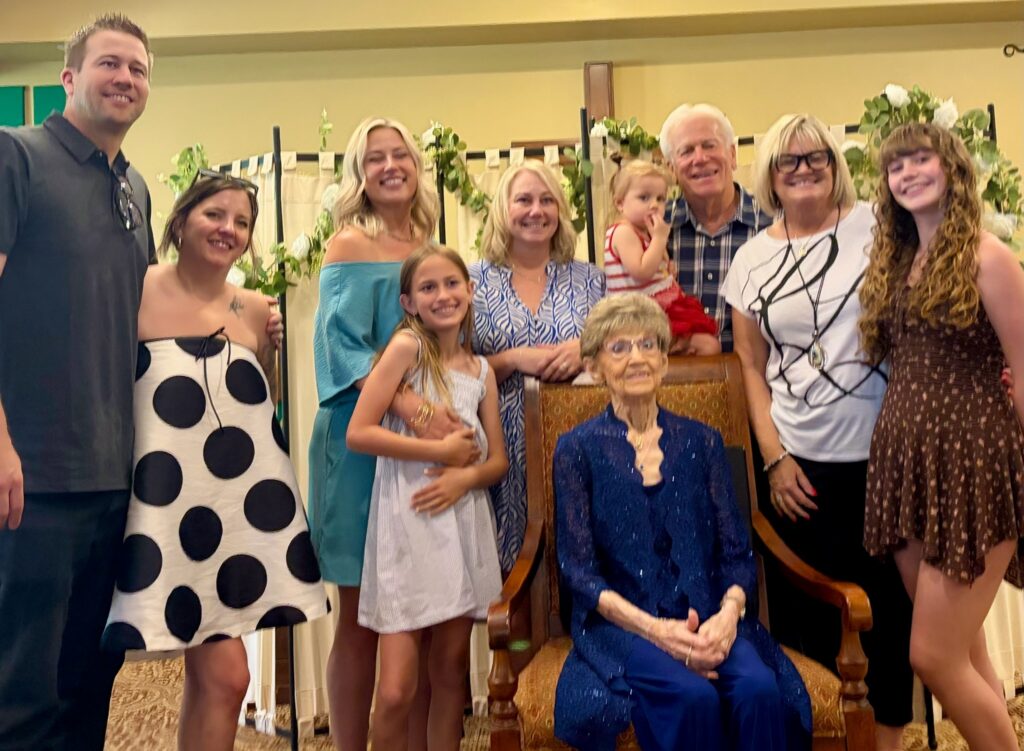
Sparrow family: Jeff, Pam, Dana, Addison, Stephanie, Brooklyn, me, Linda, Emma around Phyllis

          Saturday was the date of the official birthday party, which took place at Phyllis’s senior living center where there was a nice meal served and plenty of beer and wine. There was a very good accordion player who sang some fun songs. Among other speakers, Phyllis’s three children, who performed as singers growing up under the name of The Barnes Trio, did not sing, but told some very entertaining stories about growing up on a farm in Minnesota. There were somewhere between 65-70 people in attendance – mostly all related in some way.

After that party, about 30 of us adjourned to Starlet’s daughter, Denise and husband, Gene’s, beautiful five-acre home and garden in the rolling hills of Rochester. It was the perfect finishing touch on a wonderful weekend dedicated to a most amazing lady.

WE NEED A GOOD JINGLE

By Suzanne Sparrow Watson

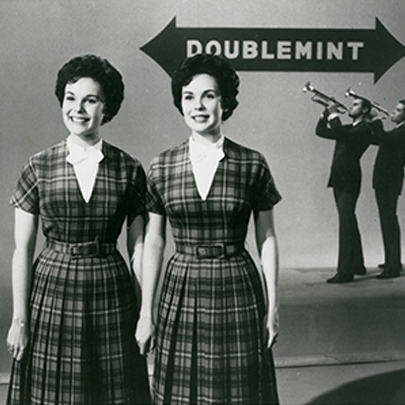
The Doublemint twins

“Double your pleasure, double your fun”, “A little dab’ll do ya”, “Snap, Crackle, Pop.” If you’re of an age where you’re receiving Social Security those phrases will bring back fond memories. In fact, most of us can probably sing the entire verse. They are advertising jingles, of course, and were the mainstay of entertainment when we were growing up. Before the advent of recording devices, or even a clicker, we were forced to sit and watch the advertisements on television. I’m sure our parents thought they were annoying, but looking back, some of them were downright entertaining. It’s been a long time since an ad has captured the public’s attention, primarily because we’re all watching something different – different shows, on different devices, and on different streaming or cable outlets.

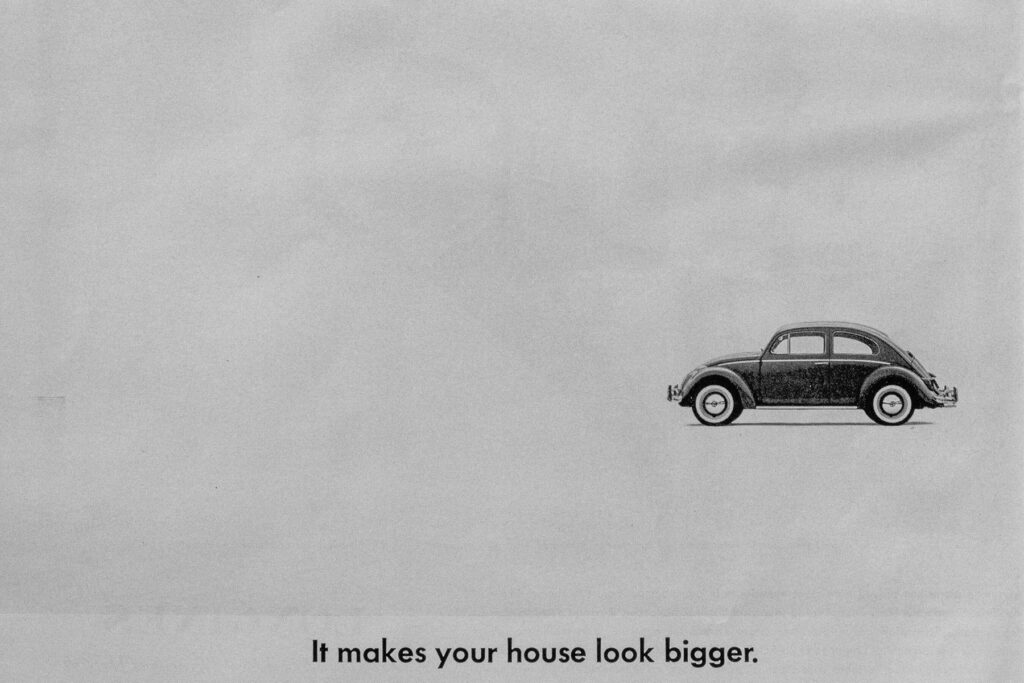
But back in 1959, the ad execs on Madison Avenue viewed television as a vehicle for unlocking new forms of storytelling. It was an era of bold ideas, increasingly large budgets, and even bigger personalities — a time when advertising was seen as glamorous and ads were focused on post-war consumerism. Sometimes they were devised to change perception. Take the ad for Volkswagen, for example. In 1959 Americans were buying cars out of Detroit and vehicles were getting bigger and flashier. Remember those fins?? DDB, one of the premier ad agencies, was contracted to promote the German-made Volkswagen Beetle in the United States. The problem was, Volkswagen’s strong link to Nazi Germany made it a tough sell in the U.S. The challenge called for an unconventional approach. Rather than attempting to duplicate the advertising style of American-made cars, the creative team behind Volkswagen’s campaign went in the opposite direction. The first ad, “Think Small,” featured a small black-and-white image of a Volkswagen Beetle against a backdrop of white space. The now-iconic ad encouraged consumers to look at the car in a new light, from being able to “squeeze into a small parking spot” to having small insurance payments and small repair bills. I’d guess that for those of us around in the 60’s we all knew someone who owned a “Beetle”. My brother, Jack, bought one in 1965 and a year later was generous/foolish enough to teach me how to drive a clutch in it. He can vouch that the repair bills, at least for a clutch, were indeed reasonable.

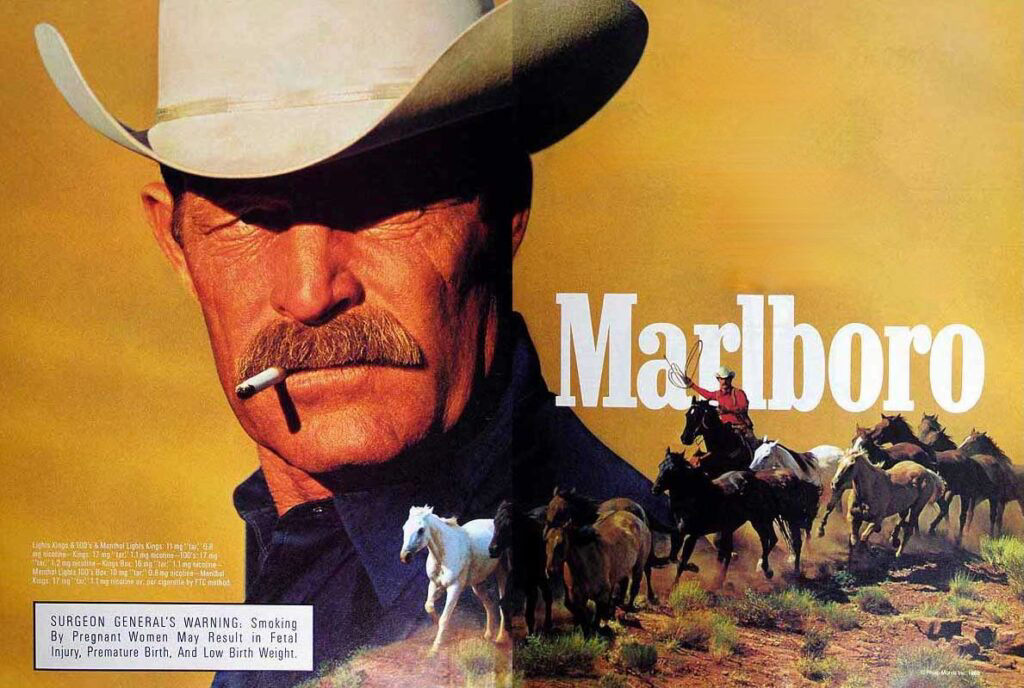
Ads were not always so light-hearted, especially in hindsight. Cigarette ads come to mind when thinking about the dark side of advertising. One of the most successful advertising campaigns in history was that for Marlboro cigarettes, one of the first cigarettes to add a filter. During market research in the 1950s, men indicated that while they would consider switching to a filtered cigarette (then considered “feminine”), they were concerned about being seen smoking a cigarette marketed to women. New campaigns featured rugged men doing rugged jobs. In 1963 ads began to feature cowboys, and the “Marlboro Man” was launched. In 1954, before the campaign began, annual sales were approximately 18 million cigarettes. By 1955, after the national rollout of the cowboy-themed advertisements, sales surged to 6 billion cigarettes, and by 1957, sales were at $20 billion. Five men played the “Marlboro Man” over the years, including the grandfather of NFL quarterback, Sam Darnold. All five eventually died of smoking-related illnesses. God only knows how many people succumbed to the lure of being a “Marlboro Man” and suffered similar fates.

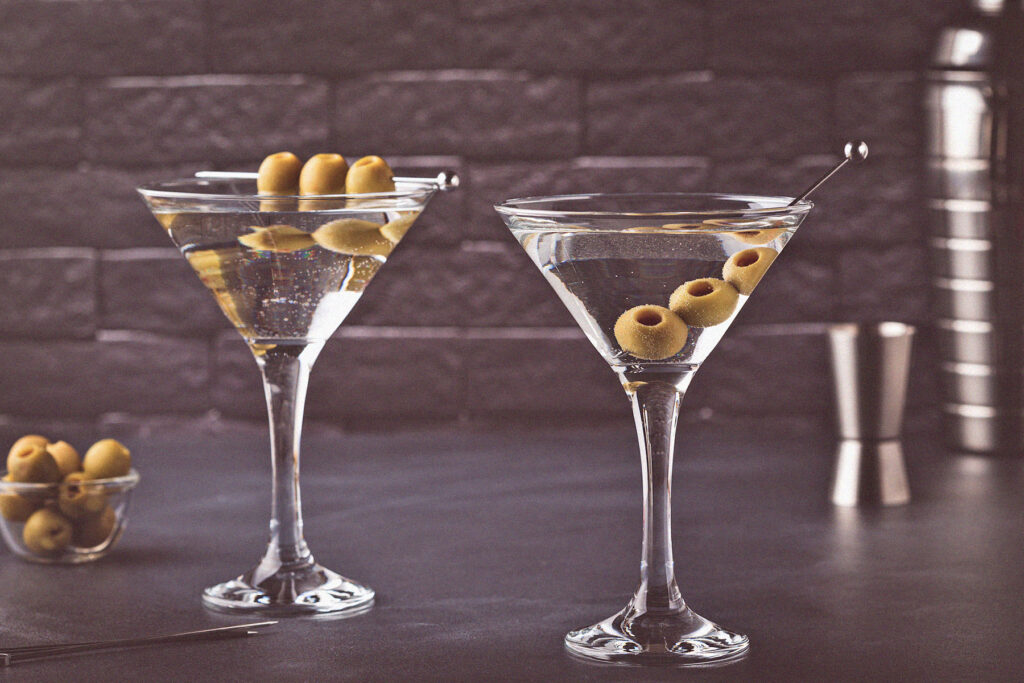
Cigarette ads aside, there were some extremely clever ads with memorable jingles during the heyday of television advertising. No doubt, the creative juices were let loose during lunch, when drinking was not only acceptable, but expected. The famous “three martini lunch” was deductible on expense accounts, and thus, was perceived as a symbol of success. Today, so much has changed with regard to ads, not to mention drinking at lunch. As mentioned previously, depending on what you watch and how you watch it, you may not know anyone who has seen the same ad as you. The only common experience we have is with ads shown during the Super Bowl. Some of our most popular cultural touchpoints started as Super Bowl ads, such as Wendy’s “Where’s the Beef?” promotion that launched a phrase into the lexicon that is still in use today. And maybe that’s why people look forward to Super Bowl ads so much – the opportunity to re-hash the best, worst and funniest with our friends.

Most of the ads I see are for drugs to fix age-related conditions. That’s called “targeting advertising” and I suppose it’s more cost-effective for the sponsors, but I can never remember the products. Maybe they need to bring back the Don Draper’s of the ad world to create a catchy tune or jingle to jog our memories.

Historic and Not-So-Historic Events of the Week

by Bob Sparrow

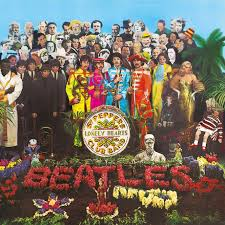
Sgt. Pepper’s Lonely Hearts Club Band

I’m sorry, but I can’t take you to someplace new EVERY two weeks, so I’m staying home and recognizing some historical and some not-so-historical personal events that took place this week. 

  • June 1, 1967: Sgt. Pepper Released: The Beatles released their groundbreaking album Sgt. Pepper’s Lonely Hearts Club Band in the United States.

On June 1, 1961: I was first pepper sprayed for getting too fresh on a first date

Birthday wishes today go out to Marylin Monroe and Brigham Young – a great couple!

  • June 2, 1953: Coronation of Queen Elizabeth II: Following her accession in 1952, Queen Elizabeth II was officially crowned at Westminster Abbey, marking the first coronation to be televised.

On June 2, 1968: I graduated from Westminster College and was crowned the ‘most likely to embarrass himself in a job interview’, which I did, but it was thankfully not televised.

Many of you sickos will be wishing Marquis de Sade a Happy Birthday today, but I’m going to wish my granddaughter, Addison Sparrow Borrelli a happy 9th birthday!   

Astronaut Ed White, Space Walking
  • June 3, 1965: First US Spacewalk: Astronaut Ed White became the first American to walk in space during the Gemini 4 mission, lasting 22 minutes.

On June 3,1971: It took me 22 minutes to complete a sobriety field test walk of ten feet. I may have not been walking in space, but I was feeling spaced as I walked.

Another birthday today for anti-Civil Right leader Jefferson Davis – Confederate President

  • June 4, 1942: Battle of Midway Begins: A pivotal naval battle in the Pacific Theater of WWII began, shifting the advantage to the United States.

On June 4, 2000: I lost the battle searching my mid-drift for my naval at the Pacific gym as I weighed in at 240 pounds, shifting the advantage to expansive underwear.

It is the king we fought in our Revolutionary War’s birthday today, King George III – “The British Are Coming”; (But they won’t stay for dinner.)

  • June 5, 1967: Six-Day War Begins: Conflicts began between Israel and its neighbors (Egypt, Jordan, and Syria).

On June 5, 1986: the beginning of the six-day battle with three neighbors over which dog left his ‘greeting card’ on my front porch.

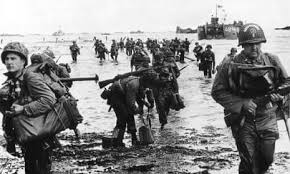
D-Day

Fall asleep tonight with some soft alto saxophone music on Kenny G’s birthday

  • June 6, 1944: D-Day (Operation Overlord): Allied forces launched a massive invasion of Normandy, France, during WWII, opening the Western Front.

On June 6, 2003: Operation Overbearing was launched when I had to listen to some French woman talk about her Western Front – I reminded her that she’d be speaking German if not for us.

The Dalai Lama is 91 today – Namaste

Gauguin’s ‘Road in Tahiti’
  • June 7, 1929: Vatican City Recognized: Vatican City became a sovereign state following the exchange of documents ratifying the Lateran Treaty. 

On June 7, 1966: I was recognized as a ‘person of interest’ in a sorority panty-raid, when I was caught with said garmet on my head.

French Post-Impressionist painter, Paul Gauguin’s birthday party today, he won’t be attending – he died in 1903

Yeah, I know; I hope I’ll be traveling somewhere soon too!