By Suzanne Sparrow Watson
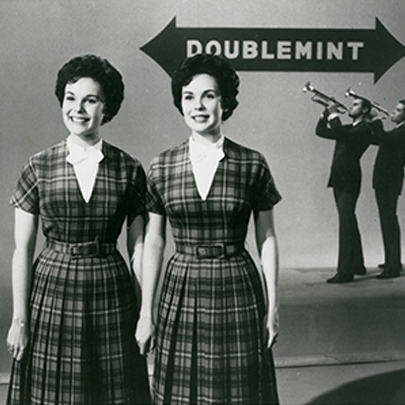
“Double your pleasure, double your fun”, “A little dab’ll do ya”, “Snap, Crackle, Pop.” If you’re of an age where you’re receiving Social Security those phrases will bring back fond memories. In fact, most of us can probably sing the entire verse. They are advertising jingles, of course, and were the mainstay of entertainment when we were growing up. Before the advent of recording devices, or even a clicker, we were forced to sit and watch the advertisements on television. I’m sure our parents thought they were annoying, but looking back, some of them were downright entertaining. It’s been a long time since an ad has captured the public’s attention, primarily because we’re all watching something different – different shows, on different devices, and on different streaming or cable outlets.
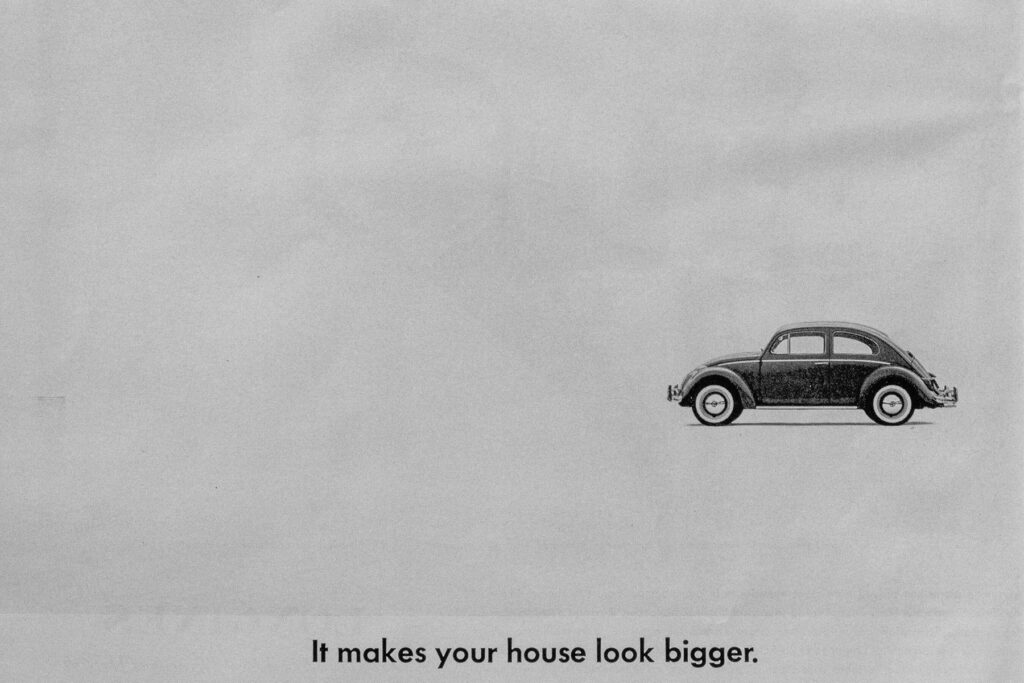
But back in 1959, the ad execs on Madison Avenue viewed television as a vehicle for unlocking new forms of storytelling. It was an era of bold ideas, increasingly large budgets, and even bigger personalities — a time when advertising was seen as glamorous and ads were focused on post-war consumerism. Sometimes they were devised to change perception. Take the ad for Volkswagen, for example. In 1959 Americans were buying cars out of Detroit and vehicles were getting bigger and flashier. Remember those fins?? DDB, one of the premier ad agencies, was contracted to promote the German-made Volkswagen Beetle in the United States. The problem was, Volkswagen’s strong link to Nazi Germany made it a tough sell in the U.S. The challenge called for an unconventional approach. Rather than attempting to duplicate the advertising style of American-made cars, the creative team behind Volkswagen’s campaign went in the opposite direction. The first ad, “Think Small,” featured a small black-and-white image of a Volkswagen Beetle against a backdrop of white space. The now-iconic ad encouraged consumers to look at the car in a new light, from being able to “squeeze into a small parking spot” to having small insurance payments and small repair bills. I’d guess that for those of us around in the 60’s we all knew someone who owned a “Beetle”. My brother, Jack, bought one in 1965 and a year later was generous/foolish enough to teach me how to drive a clutch in it. He can vouch that the repair bills, at least for a clutch, were indeed reasonable.
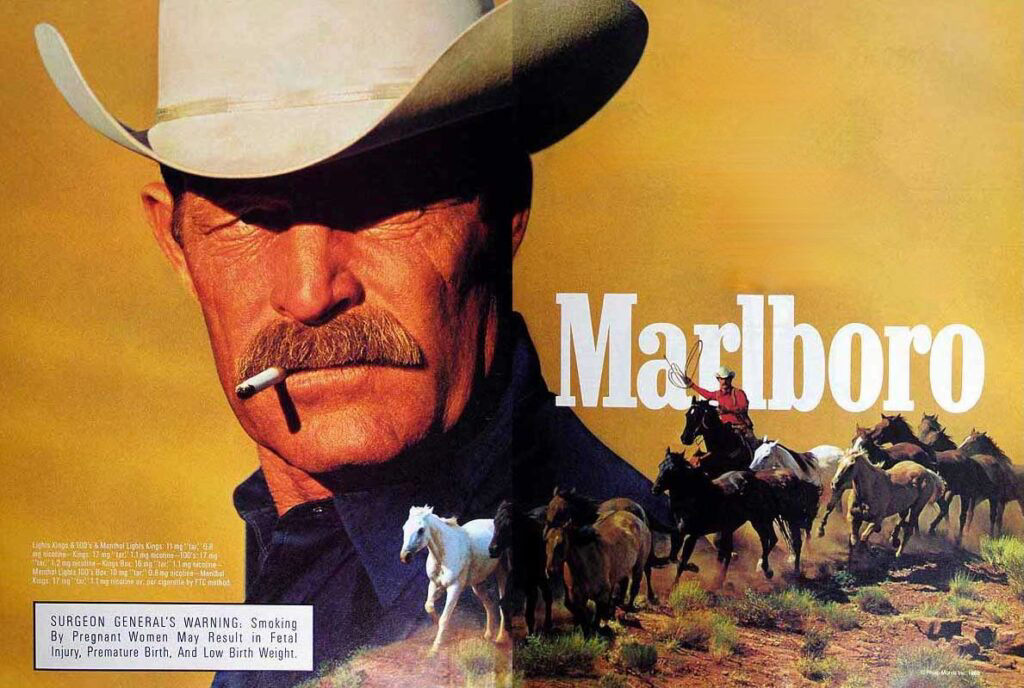
Ads were not always so light-hearted, especially in hindsight. Cigarette ads come to mind when thinking about the dark side of advertising. One of the most successful advertising campaigns in history was that for Marlboro cigarettes, one of the first cigarettes to add a filter. During market research in the 1950s, men indicated that while they would consider switching to a filtered cigarette (then considered “feminine”), they were concerned about being seen smoking a cigarette marketed to women. New campaigns featured rugged men doing rugged jobs. In 1963 ads began to feature cowboys, and the “Marlboro Man” was launched. In 1954, before the campaign began, annual sales were approximately 18 million cigarettes. By 1955, after the national rollout of the cowboy-themed advertisements, sales surged to 6 billion cigarettes, and by 1957, sales were at $20 billion. Five men played the “Marlboro Man” over the years, including the grandfather of NFL quarterback, Sam Darnold. All five eventually died of smoking-related illnesses. God only knows how many people succumbed to the lure of being a “Marlboro Man” and suffered similar fates.

Cigarette ads aside, there were some extremely clever ads with memorable jingles during the heyday of television advertising. No doubt, the creative juices were let loose during lunch, when drinking was not only acceptable, but expected. The famous “three martini lunch” was deductible on expense accounts, and thus, was perceived as a symbol of success. Today, so much has changed with regard to ads, not to mention drinking at lunch. As mentioned previously, depending on what you watch and how you watch it, you may not know anyone who has seen the same ad as you. The only common experience we have is with ads shown during the Super Bowl. Some of our most popular cultural touchpoints started as Super Bowl ads, such as Wendy’s “Where’s the Beef?” promotion that launched a phrase into the lexicon that is still in use today. And maybe that’s why people look forward to Super Bowl ads so much – the opportunity to re-hash the best, worst and funniest with our friends.
Most of the ads I see are for drugs to fix age-related conditions. That’s called “targeting advertising” and I suppose it’s more cost-effective for the sponsors, but I can never remember the products. Maybe they need to bring back the Don Draper’s of the ad world to create a catchy tune or jingle to jog our memories.