COMFORT AND JOY WITH A TERRORIST

By Suzanne Sparrow Watson

His first day home

One year ago today I brought my new puppy home. I named him Dashing Doolin, which was a nod to my former dog, Dash, and Doolin, one of my favorite towns in Ireland. I nicknamed him Dooley, which I thought sounded very playful and cute. Cavalier King Charles Spaniels are known as the “comfort spaniels”, bred to sit quietly and lovingly by their owner. So, I envisioned a similar experience to that which I had with Dash the Wonder Dog – mellow, lots of naps (him), endless amounts of time to live a normal life (me). I was wrong. Very wrong. I swear Dooley is part Jack Rusell Terrier. Right from the jump he required lots of activity and almost all of my attention. My idea of keeping him occupied was to throw a ball. His was to nip my arms, toes and ear lobes. Or chew on the throw pillows. Or scratch the front window, begging to go chase birds, bunnies and every errant leaf that blew by. Although he had some of the same lineage as Dash, it soon became apparent that Dooley is a very different dog.

The “convict”

I’d like to say that the last year has been one of happiness and fun. But I’d be lying. What was I thinking getting a puppy in my mid-70’s? I have been frustrated, tearful and ready to give up more times that I can count. I jokingly referred to him as “the terrorist” because my life was dictated by him. In truth, it wasn’t such a joke. At least once a week I gave serious consideration as to whether he might be better placed with a young family with a very large backyard. For six months I enrolled him in training classes, in which he excelled. He was the perfect student and his instructors remarked about how quickly he caught on to commands. But turns out I had a little Eddie Haskell on my hands – a kiss-up around other adults and a complete menace at home. For Halloween last year I dressed him up as a convict for our community’s pet costume contest and several people mentioned how appropriate his outfit was. In other words, he had a “rep”. His saving grace was that he loves to “smoosh”, an activity where he jumps up and practically smothers me while laying his head on my head. It’s his version of a hug and although he doesn’t know it, that gesture kept him in my good graces.

Finally, when I was truly at my wit’s end, my friend Joan referred me to her trainer, Tammy Verhas. I took him for lessons twice and at the end of the second session she said, “You know, I think he might benefit from boot camp.” I think when a professional tells you your dog needs to go to military school it’s best to listen. So, the first week of November he went to “camp” for three weeks. I was able to get him home a couple of days before Thanksgiving and at first, I thought she’d switched out dogs on me. The dog she brought me was a perfectly behaved, obedient dog. Surely this couldn’t be Dooley?! Tammy and I had a long talk about his behavior. Turns out I was leading with affection, versus establishing some element of respect. I guess I had a “rep” too. In my defense, she told me he was the most intelligent and high-energy Cavalier she’d ever trained.

It’s been almost perfect since then. He is definitely smarter than me and knows when I’m in a weakened state and not up to being as strict as I should. That’s when he decides to pull on the leash or jump up on visitors. But generally, he is now a really good boy. And I have to say that at night, when he is snuggled up next to my pillow or curled up next to my stomach, there isn’t a better feeling in the world. Now, I don’t know what I’d do without him to keep me company. As Tammy told me, sometimes we get the dog we need, not the dog we want. As I’ve found out, it’s even better when we get both.

THE HEART OF COMPROMISE

By Suzanne Sparrow Watson

I fixed their logo

As you read this post you may think that I’m trying to eke out one more story about football, but really, I consider this a public service announcement. When the hoopla of the Super Bowl died down last week, sports journalists who were not covering the Olympics began to focus on next year’s Super Bowl. While they speculated about next year’s favorites (the Rams, Seahawks, Bills and Eagles) they skipped the most salient fact: next year the Super Bowl will be played on Valentine’s Day. If you think that is unusual, you’re right. The Super Bowl has never been on Valentine’s Day. The closest the game has ever come to wrecking relationships around the world was in 2022, when Super Bowl LVI was played on Feb. 13. But next year, due to the expanded schedule, the season has been extended one week, which is going to cause a lot of problems in households where one member is a fanatic, and one only watches the broadcast to see the commercials.

After all, Valentine’s Day is considered to be one of the most romantic days of the year. It is the busiest day of the year for florists, while candy and card sales go through the roof. Many a spouse has been given the cold shoulder if the day is not commemorated. To illustrate just how romantic the day is viewed, in the United States alone an average of 220,000 people get engaged every year on Valentine’s Day. It is thought to be the perfect day on which to propose, and many young people go to great lengths to tie the Valentine’s theme into popping the question. Somehow, I think next year’s proposals may lose some of the romance usually associated with “popping the question”. It will have to occur between downs but not interfere with a commercial, while trying not to drop the ring in the guacamole dip. I’m not sure any young woman grows up thinking that she will be competing with a Budweiser commercial for the most heartfelt moment of her special day.

To further complicate the situation, there are approximately 15-20,000 weddings that take place each year on Valentine’s Day. Forget about the fact that forevermore those couples will have to fight for dinner reservations and will be subject to overpriced fixed-prix menus on their anniversaries. The specific problem next year lies not with the bride and groom, who let’s face it, would not have scheduled their wedding on Super Bowl Sunday if they were fans. The problem is the cascading one faced by the invitees, especially if their favorite team is playing. People will be scrambling for excuses as to why they can’t attend, or perhaps there will be a lot of married people who attend alone while their spouse is at home watching the game, hands clutching a beer, perplexed as to why anyone would schedule a wedding on such an important day. I foresee a lot of arguments about “priorities” in the offing.

The only silver lining in the Super Bowl being pushed back a week is that next year it also coincides with President’s Day weekend. The day after the Super Bowl has long been one of the least productive days in the workforce so the good news is that next year everyone will officially be able to take off work on Super Bowl Monday. Perhaps that will give them time to look up the name of a good marriage counselor. I have a feeling a lot of people are going to need one. Just don’t say I didn’t give you plenty of warning.

WE CAN PUT A MAN ON THE MOON…

By Suzanne Sparrow Watson

…but we can’t find a cure for the common cold? How long have we been saying that? Probably since July 20,1969, when the Lunar Module Eagle first touched down on the Sea of Tranquility. After that monumental achievement every other goal seemed like it should be easily solved. Thus, the phrase, “we can put a man on the moon, but we can’t (fill in the blank)” began to be used for every frustrating problem we seemed incapable of conquering. You don’t hear that phrase so much anymore, most likely because we’ve conquered many of those problems. Or maybe we feel confident, or scared, that AI will soon do it for us. But this past week I harkened back to the “common cold” lament because, like so many others, I was brought down by the latest virus going around.

I haven’t felt like doing much and felt sick as a dog. Ironically, I was also dealing with a sick dog, which required me to dress up in something akin to a hazmat suit and take him to the vet. All the while, I wondered that with all the medical miracles that seem to happen on a daily basis, I’m laid low by the same malady that has plagued humankind for hundreds of years. I think there must be a lot of people down with the cold virus right now because last week The Washington Post published an article pondering the same question. Turns out, I guess not surprisingly, that finding a cure is just not that simple. There are more than 200 different viruses that can lead to cold symptoms, with rhinoviruses being the most common. That diversity makes it hard to develop a single vaccine or treatment that would effectively cover all strains.

According to the Post, last week the Yale School of Medicine published the results of a study in the journal Cell Press Blue (you subscribe, right?) about their research into the common cold. They cultivated miniature models of nasal airways to try to understand how upper respiratory viruses unfold, why they can be so variable, and how to make them less miserable. I’m all for that! The details of the study are a little gross, so I’ll forego that in case you’re eating breakfast. The upshot is that after examining thousands of individual cells, the researchers found that it’s not the virus, but the intricacies of the response in thousands of nasal airway cells, that determines whether a cold is quickly quelled or explodes into something more serious. The study showed that the quick production of a protein called interferon by the infected cells kept the rhinovirus in check, allowing it to infect fewer than 2 percent of the cells. When they suppressed interferon, about a third of cells became infected and the rhinovirus proliferated. A different immune sensor kicked in, and molecules related to inflammation increased, mucus production went into overdrive, and the nasal cilia slowed their pulsing. There’s a lot more technical stuff, but that’s the basic gist.

They concluded that there’s a reason that the cold is such a challenge to solve: disentangling immune responses to know which ones are beneficial, which ones help control an infection, and which ones contribute to severity of symptoms, is not straightforward. The lead researcher commented that if the common cold was an easy problem to solve, it would have been solved a long time ago. No kidding. Generations of people have been waiting. Maybe AI will finally be the key to the finding an answer. Clearly, it’s beyond the ken of we mere mortals. As skeptical as I am of AI, I will gladly hail its presence if it can keep me out of the Cold and Cough aisle at Walgreens. In the meantime, I’m going to fix more tea and get drunk on Nyquil.

SWEDISH DEATH CLEANING MAY KILL ME

By Suzanne Sparrow Watson

Procrastination is a wonderful thing. Living in suspended reality allows you to blissfully go about your daily life in joyful ignorance. But eventually that “long arm of the law”, reality, catches up. For me, reality hit home last week. I have been giving some thought to moving within the next two to three years. My house and yard have become more burdensome, the people moving into my community are young enough to be my children, and frankly, I know I need some new horizons. But first, my current horizon needs some clearing out. Mind you, I am the furthest thing from a hoarder you could find. I like clear countertops and alphabetized spice racks. My filing cabinet is color-coded and sorted by subject . Some might call me obsessive/compulsive. I prefer to think of myself as extremely organized. But still, I’ve lived in this house for almost 26 years and things do accumulate. So, my New Year’s resolution was to pretend I’m moving next month and then go through all of my belongings and discard accordingly. Sounded easy. It’s not.

Gosh, we were young!

To gain some inspiration I re-read The Gentle Art of Swedish Death Cleaning, by Margareta Magnusson. In essence, she encourages people to clean out their crap before their kids have to after they die. She extols the virtues of embracing minimalism and doing it with humor along the way. Okay, I can get on board with the minimalism, but I found the process to be anything but humorous. Except for the photos of my brothers and me from over 50 years ago. That brought a good chuckle. Especially my outfit which, in retrospect, resembles a cheap shag rug. Anyway, I started in my craft closet, which may sound like a weak place to start but I assure you it was the most over-crowded, full-of-junk, space in the house. I was motivated to start there because it hadn’t been painted in 26 years. Through five major remodels I always managed to avoid clearing out that closet because it was too daunting. It is a rather large walk-in space where I threw things in with abandon. I used to work in a yarn store where I got yarn at wholesale prices. I took advantage of that. Maybe too much advantage. Although the yarn and notions were all in bins that were sorted and labeled, it was still overwhelming. Add to that I had a huge table for my sewing machine, stacks of fabric, and a long shelf of crafting books. I kept a big box of photos and other memorabilia in there, including my second runner-up trophy from the 1968 Junior Miss Contest. And, oh yeah, it also contained all of the exercise equipment that I was certain I would use every day. Somehow that never worked out. And neither did I. In any event, I finally scheduled painters to come this week to spruce it up.

But last Friday morning my contractor called and said the painters had a cancellation and would be coming to my house in two hours. I know better than to turn down a contractor when they’re available, so I rushed into my craft closet and began to work. I harkened back on my lessons from Swedish Death Cleaning. I had to get very realistic about what I would keep and what I would donate. After all, when I do move it will be into a much smaller space, so I resolved to start downsizing now. I put more than half of my crafting materials into the “donate” pile. I did not let myself get stuck in sentiment – yarn that I bought on my magical trip to Ireland eight years ago will now be magical in someone else’s stash. My trophy from 1968 is finally where it belongs – in the trash pile. I took pictures of pictures and then discarded the originals. With steely resolve, I got it all cleared out and sorted before the painters arrived.

It’s amazing what you can get done with a figurative gun at your head. I think Margareta exaggerated the “joyful” part of this, but I will say it feels good to have this major task behind me. I’m thinking that I need to schedule some sort of work to be done in my office and the kitchen. But first I have to recuperate – this death cleaning may be the death of me…or my back.

Finding Unity in Everyday Acts of Kindness

by Bob Sparrow

I think like many of you, I have grown increasingly tired of all the discussing political rhetoric from both sides, spewing from every media outlet imaginable. Through effort, I have found myself paying less attention to the loud, often crude clips we all get exposed to daily. Through more effort, I am purposely paying more attention to quiet, personal conversations. The ones that happen in grocery store aisles, in neighborhoods and over coffee. They don’t make headlines, but I believe they feel more representative of the country we live in than the noise from our politicians that dominates the airwaves.

There’s no denying that America feels divided right now, thank mostly to our politicians and the media that supports them. There just doesn’t seem to be accurate, balanced reporting of any event, it’s always seems to be slanted based on what media you’re listening to or watching. Even in personal conversations, people must choose their words carefully or sometimes avoid certain topics altogether, based on their audience. We must be a good judge of the audience before we mention anything that could be interpreted as politically slanted. But alongside that tension, there’s something else happening, something steadier and far less dramatic, and certainly far less publizied. People are still showing up for their lives. They’re going to work, caring for family members, coaching kids’ teams, volunteering, creating things, fixing things, and trying, in their own imperfect way, to do right by the people around them. Unfortunately, the people who have the spotlight on them are the politicians, and I sincerely believe that something happens to a person when they get into politics. It seems that it’s not about what’s good for the people they represent, it’s about what’s good for their political party and not cooperating with the other side of the aisle, but taking every opportunity to defeat and demean them.

Conversations over coffee

In the previous year alone, I’ve personally seen neighbors help each other through tough times, strangers hold doors and conversations open a little longer than necessary, and small businesses adapt with creativity and grit that deserves more attention than it gets. These moments don’t erase disagreements, but they remind me that disagreement isn’t the whole story. It has never been.

One of the enduring strengths of this country is its capacity for everyday problem-solving. Americans have always been practical at heart. When something breaks, we patch it. When plans change, we improvise. When the road gets bumpy, we complain a little—and then keep going. That instinct seems alive and well, even now and needs to be used to ‘fix’ this divide.

There’s also a quiet generosity that persists beneath the surface. It shows up in donation jars, shared meals, patient teachers, exhausted healthcare workers, and people who check in on one another without expecting anything in return. These gestures may not feel grand, but collectively they form the connective tissue of the nation.

What gives me hope isn’t the idea that everyone will suddenly agree, or that complexity will magically disappear. Hope comes from watching common people navigate uncertainty with resilience and humor. It comes from the understanding that a country isn’t defined solely by its political arguments, but by how its people live between them.

Mixing Red & Blue makes a beautiful color . . . and country

After fifteen years of writing this weekly blog, I’ve learned that the most meaningful stories, which are mostly written by my sister, are rarely the loudest ones. They’re steady, human stories about persistence, kindness, curiosity, and simple desire to make tomorrow a little better than today.

America, for all its contradictions, is still full of people trying. And in times like these, that effort counts for more than we sometimes realize.

A Year of Diet, Socialization, Exercise and Pumpkin Pie

By Suzanne Sparrow Watson

As my brother pointed out last week, this is the time of year when we are full of resolutions. We strive to eat better, drink less, lose ten pounds, limit social media, and be kinder to everyone. To be honest, I don’t think I can do all that. At this point in life, I have to make choices…and face reality. I’ve made the same resolution to lose the same ten pounds for the past thirty years. In 2026 I’m not even going to try. In fact, as I’ve watched countless friends whittle away to bare bones due to the “miracle” of GLP-1, I’ve consoled myself that those extra ten pounds will serve me well if I ever get sick. Basically, they serve as my cushioning in more ways than one. I have rounded third base, and though I hope it will be a while before I slide into home plate, I intend to do so clutching a big piece of chocolate cake.

I actually do eat a healthy diet except for the occasional sweet. Okay, maybe more like a daily sweet, but always in moderation. Except when I buy the pumpkin pie at Sprouts and consume the whole thing in four days. But pumpkin is very healthy for you, and it is seasonal, so I have to take advantage while I can. So… I have the eating part of things figured out. I also don’t drink much these days. I love the socialization that usually is entwined with it, but the waking up at 1 a.m. part? Not so much. I can’t have a one-year-old puppy and drink at the same time. I simply don’t have the energy.

Being kinder to people is an admirable trait – one that I strive to exhibit. I try to remember that you never know what people are going through so everyone deserves some grace. Except for the people who tailgate me in a 45 MPH zone, then zoom around me and give me the finger because I was only going 50 MPH. I don’t think that person deserves my kindness, but in 2026 I will try not to flip them off in return.

Social media usage has become a problem throughout our population in general, and for me specifically early in the morning because I find catching up on dog videos and recipes preferable to the news. I fix myself a big cup of coffee, turn on Good Morning Football or ESPN, and peruse Facebook and Instagram. So, you can imagine my annoyance when people take to social media platforms to “school” me on the latest political events. I get it from both sides, but one person in particular posts at least five times a day, alerting me to Trump’s every movement. I actually am insulted by these people – do they assume that I am so uncurious and ill-informed that BUT FOR THEM I would wallow in total ignorance? I worry about people who spend so much of their time thinking about what to post. The phrase, “get a life”, springs to mind. So, I will save some time spent on social media in 2026 because I plan to block them. Nothing gets between me and my dog videos.

I DO intend to exercise more. I recently finished the book, Outlive, by Dr. Peter Attia. He specializes in helping people have a long health span, vs a long life span. After all, what’s the use of living to be 100 if you have been confined to a bed for ten years? One of the staples of Dr. Attia’s program is to increase strength as you age. He acknowledges that it’s more difficult to build muscle mass after age 70, but not impossible. I have saved about 50 exercise reels on social media platforms. I even created a folder on each one and carefully filed each reel away for future reference. So far, my only exercise has been whatever energy is expended by my index finger to move to reel to my files. But today – TODAY! – I am starting with a trainer at the gym, who also read Outlive and we are going to set up a program to help me live healthily to 100. I’m good with that as long as I don’t have to give up my pumpkin pie.

LONGING FOR NOSTALGIA

By Suzanne Sparrow Watson

As Christmas approaches this week and we prepare for the holidays, it’s easy to find yourself swept up in a wave of nostalgia. At Christmas, nostalgia is everywhere: in the music, the movies, the recipes passed down through generations. We seek out the flavors and rituals of our childhoods, hoping to recapture the magic of simpler times. We remember sticky fingers from candy canes, the glow of tree lights, and the anticipation of gifts. Or if you were like me, you’d already peeked at your gifts and couldn’t wait to officially receive them. Today, nostalgia is a cherished part of the holiday season, a gentle ache for times gone by. But did you know that, centuries ago, nostalgia was considered a dangerous illness—one that could land you in the infirmary, or worse?

The word “nostalgia” was coined in 1688 by Swiss physician Johannes Hofer, who combined the Greek words nostos (“homecoming”) and algos (“pain”). Back then, nostalgia wasn’t just a wistful longing for the past—it was a serious medical diagnosis, closer to what we now call “homesickness.” Hofer observed the condition most often in young people far from home: soldiers, servants, or children sent away to the countryside. The symptoms were dramatic: melancholy, loss of appetite, disturbed sleep, even heart palpitations and, in extreme cases, suicide. Autumn, with its falling leaves, was considered especially dangerous, as it stirred memories of home. Hofer’s cure was simple: send the patient home. Until that was possible, treatments ranged from vomiting and mercury to opium—remedies that sound more like punishments than comfort. Swiss soldiers feared that singing traditional cowherd songs could trigger nostalgia, so performing these songs was reportedly punishable by death. Wow – even the America’s Got Talent buzzer isn’t that draconian!

Fast forward to today, and nostalgia is no longer something to die from—just something to sigh about. And studies show that people between the ages of 20-30 suffer the most from it. Perhaps because they are at the age where the “magic” of the Christmas season is either swept away by the grind of a full-time career or they are responsible for creating memorable Christmases for their own children. But why does Christmas, in particular, evoke such powerful feelings of nostalgia? The answer lies in the holiday’s traditions. Christmas is a time when families gather, stories are retold, and memories are made and revisited. The sights, sounds, and smells of the season—gingerbread baking, carols playing, pine needles underfoot—act as triggers, transporting us back to moments of warmth and belonging. Not to mention childhood, when Christmas meant we just showed up, and everything was wonderous.

It’s remarkable to think that what was once seen as a weakness or even a disease is now recognized as a source of strength. In the 19th century, nostalgia faded as a formal diagnosis, absorbed into broader concepts like melancholy and trauma. Today, psychologists see nostalgia as largely beneficial—a resource that can boost mood, inspire optimism, and strengthen social bonds. So, as you hang ornaments on the tree or sip hot cocoa by the fire, let yourself feel nostalgic. Remember those who are far from home, as well as those who are no longer with us. Reach out to friends and family, share stories, and create new memories.

Nostalgia, once feared as a deadly disorder, is now a gift—a way to honor the past while embracing the present. This Christmas, let’s celebrate the bittersweet beauty of memory, and let it bring us closer together.

As I have done for the past ten years, I am sharing one of our family’s most nostalgic memories – Pop’s Christmas Ice Cream Fizz recipes. Enjoy!

POP’S CHRISTMAS ICE CREAM FIZZ

Fill a blender 1/4 full of ice cubes

Add 6 jiggers of gin

Add 4 scoops of French Vanilla ice cream

Add 1 small bottle of soda water (the size you get in a 6-pack)

My brother Bob adds an egg, so the white adds some froth, brother Jack doesn’t add an egg.  Personally, I’d add it just because you can then claim it’s a protein drink.

Just blend it well and – voila – you have a concoction sure to put a positive spin on everyone and everything!

Our mom served them in a wine glass with a dash of nutmeg.  As we got older, we would conspire with Pop and ditch the wine glass for a chilled beer mug from the freezer. Saved having to go back for seconds…or thirds.

My brother and I wish all of our readers a very happy holiday season, blessed with all the presence you could ask for.

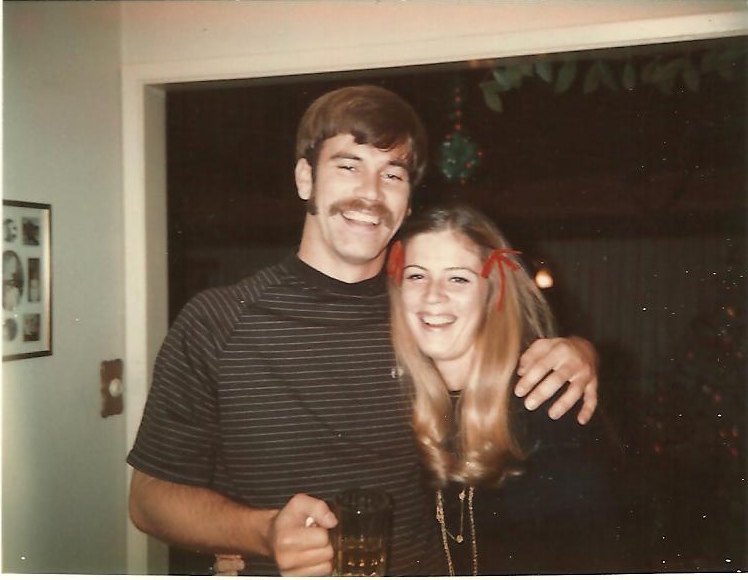
Your authors, Christmas 1972

What Happened to College Football?

by Bob Sparrow

2025 College Football Playoff Bracket

I can appreciate the fact that college-age kids must like what’s currently going on in college football. Recent changes have provided them with more choices as to where to play and, best of all, financial reward for playing. Let’s look at what’s happened over just the last few years . . .

The Portal – In 2018, the portal debuted as a compliance tool to manage college athletes’ transfers more transparently. The portal allowed student-athletes to change schools after playing at one school, but the athlete would have to sit out for a year before becoming eligible to play. In 2021 that rule changed allowing transfers to play immediately, which opened the flood gates. There are a number of examples of players playing for a different team each year of their college career: Eyabi Okie-Anoma played at five different four-year schools – Alabama, Houston, UT Martin, Michigan and Charlotte. Chandler Morris played at four schools – Oklahoma, TCU, North Texas and Virginia, and Robby Ashford played for Oregon, Auburn, South Carolina and Wake Forest.

Curt Cignetti

I’m concerned that the next step might be to give the player more freedom (and money) and allow them to transfer during the season?

How has the portal affected this year’s college teams? Indiana University, this year’s #1 team, had a 3-9 record in 2023, and then hired Curt Cignetti. In his first year, 2024, they went 11-2 and this year they went 13-0. Don’t get me wrong, Cignetti is a great coach, but he knew he needed better players, so last year alone, Indiana added between 20-23 players to their roster through the portal. One of those players was quarterback and this years’ Heisman Trophy winner, Fernando Mendoza, who played two years at Cal, then was given $2.6 million (more on NIL in a moment) to play for Indiana this year. He still has one year of eligibility left, but he’ll be in the pros next year.

How the portal works today has dramatically changed college football . . . it may be better for a few select individuals, but, in my opinion, not for the game – the rich will get richer.

NIL – In 2019 California passed the first state law allowing athletes to get paid by the colleges for the use of their Name, Image and Likeness, now referred to as NIL. A year later, the state of Florida passed a similar bill. In 2021, in a unanimous decision, the Supreme Court affirmed that the NCAA violated antitrust laws by restricting student-athletes’ compensation for education-related benefits. So, paying a player for his/her NIL became legal, and is now being practiced in every state. Some payments are made all up front, others can be annual installments and still other can be for appearances or wearing certain athletic gear.  

18-Year Old Millionaire, Cooper Flagg

Some of today’s top NIL deals:

  • Cooper Flagg – Duke basketball player, $28 million. He’s 18 years old
  • Arch Manning, Texas quarterback – paid $5.3 million
  • AJ Dybantsa, BYU basketball player – $4-$5 million. He’s 18 years old
  • Jeremiah Smith, Ohio State, wide receiver – $4.2 million
  • Livvy Dunne, LSU, gymnast, $4 million
  • Carson Beck, Miami quarterback – $3.1 million

There are plenty of other young ‘Million Dollar Athletes’ and there are many who are getting a mere $4-$500,000 to play.

Where does all this money come from you ask? It can come from several sources, such as third-party endorsements from apparel companies, social media promotions, appearances, autographs, boosters and businesses – I’m thinking mostly from school boosters/wealthy alumni and local businesses!

Will the ‘Empty Bowl’ turn into the ‘Toilet Bowl’?

The other thing that is happening to college football is the lack of emphasis on bowl games, except for the national championship tournament. The national champion used to be determined by a vote by sports writers and football coaches, so every game was looked at, especially the bowl games where top teams were usually playing against other top teams. This year the national champion will be determined by a 12-team playoff. So a number of teams, who are not in the tournament, have decided not to play in a bowl games. Here’s a few: Notre Dame, Iowa State, Kansas State, Baylor, Auburn, Florida State, UCF, Rutgers, and Temple. Why? Some because it’s not for the national championship, some because their coach has already left for another job, and some because too many players are opting out of the game and/or are looking to go to another school next year.

Even for the teams that are participating in a bowl, many of their 18 – 20-year-olds, who are making millions as a collegiate athlete, are deciding not to participate in a post-season bowl game, unless it’s for a chance to win the national championship. Why? Because the millions they are making as college athletes doesn’t compare to the millions they could make over their lifetime as a professional athlete, so they don’t want to risk an injury in a meaningless bowl game that could jeopardize a lucrative pro career.

The answer to the headline question: It turned pro.

DECORATING – THE UNOFFICIAL SPORT OF THE HOLIDAYS

By Suzanne Sparrow Watson

The turkey knows he’s yesterday’s news

It’s a truth universally acknowledged that, as September rolls into October, while some people still haven’t taken down last year’s Christmas lights, others are meticulously plotting the precise moment their inflatable Santa will make his triumphant lawn debut. In recent years, the race to decorate for Christmas has become its own quirky, competitive sport—one that seems to start a little earlier every year. Forget the “Twelve Days of Christmas;” we’re headed for the “Twelve Weeks of Christmas,” and the starting pistol fires long before the turkey is even thawed. Apparently, Halloween is the new Christmas Eve. As the last trick-or-treater scurries home and the candy wrappers settle, you can practically hear the distant jingle of sleigh bells…or maybe just your neighbor testing his light-up reindeer. For many early birds, November 1st is the official kick-off: skeletons down, snowmen up, and peppermint-scented everything invading Target. Gone are the days when Christmas decorations politely waited until after Thanksgiving.

Halloween and Christmas cohabitating

In our family we always put the Christmas tree up on December 14th. Why? Because that is Bob’s birthday (and a happy birthday to my fun/great/fabulous brother this week!). But frankly, I think he got shortchanged. Rather that anticipating the celebration of his birthday, we were excited to see the Christmas tree go up and, more importantly, the presents underneath it. These days, December 14th is considered so late it might as well be the 4th of July. So, why do people start so early? Is it pure excitement? A desperate bid to outshine the neighbors? Or perhaps a coping mechanism for the shorter days and longer nights? Some experts suggest that early decorating is linked to happiness; apparently, those who string up lights sooner tend to be cheerier. That’s probably because they get a double dose of holiday cheer, plus bonus time for complaints about tangled cords. Retailers, of course, fan the flames with relentless holiday displays that pop up sometime between Labor Day and the first pumpkin spice latte. Walk into any store in early fall, and you’ll find candy canes elbowing aside cornucopias, and Santa glaring at a stack of Halloween costumes. It’s enough to make a person question the space-time continuum. Somewhere, a calendar weeps in confusion.

25,000 lights!

If you live in suburbia, you know that Christmas decorating isn’t just a tradition—it’s a competitive sport. There’s always that one house that goes full “National Lampoon’s Christmas Vacation” by November 2nd, leaving the rest of the block scrambling to keep up. The result? A dazzling, blinding display that can probably be seen from space, and several confused delivery drivers who now need sunglasses for evening package drops. This escalation leads to what I call “The Glitter Wars.” You start with a tasteful wreath, and by mid-November, you’re frantically googling “giant inflatable penguin with top hat.” The winner isn’t declared until New Year’s Day, when the last blinking snowflake finally burns out in a blaze of post-holiday glory. Of course, not everyone is on board with this early decorating craze. There’s always that one neighbor who stands guard, ready to issue a stern “It’s too soon!” as you hang your first bauble. But really, isn’t part of the magic in getting swept up in the ridiculousness? Besides, if you can’t beat them, join them—grab a mug of cocoa (or pumpkin spice, we’re not judging) and bask in the glow of a thousand LED icicles.

In the end, the answer to “How early is too early?” is: Who cares? Life’s short, and if hanging up a Christmas star on November 1st makes you happy, go for it. Just be sure to warn the neighbors before you plug in your display—they might want to buy blackout curtains.

HOME FOR A HERO

By Suzanne Sparrow Watson

It’s not often that we get to witness the sacrifice of our wounded veterans up close. But two weeks ago, I was honored to attend a ceremony where the Gary Sinise Foundation turned over a custom-built home to a local veteran, Brad Ivanchan. Brad is a 37-year-old Marine who lost both legs in an IED explosion in Afghanistan. His journey through injury, multiple surgeries and recovery exemplifies the courage and resilience we honor this week on Veteran’s Day.

A little about Brad: he was deployed to Iraq in 2009, serving as a turret gunner and providing escort security for an explosive ordinance disposal team. He went on to become a machine gun team leader in Southeast Asia before earning the rank of Corporal in 2012. He became a squad leader serving in Afghanistan, carrying out combat foot patrols across Helmand Province, one of the most dangerous regions. On the night of June 13, 2012, Brad’s squad of 10 men and an interpreter were conducting a night patrol when Brad stepped on an IED. The explosion amputated Brad’s right leg below the knee and shredded his left leg to his lower thigh. His left arm and hand were also mangled. After his immediate care in Germany, he was flown to Balboa Naval Hospital in San Diego for further surgery and recovery. Brad endured six surgeries to rebuild his left hand and treat multiple bacterial infections in both legs. And that is also where fate stepped in, in the form of Gary Sinise.

Brad was in the section of the hospital reserved for servicemen injured in the Afghanistan/Iraq wars. It was a crowded ward back in 2012. One day as Brad was recuperating, Gary Sinise walked into his room and said, “I’m just here to see how you’re doing.” When Brad related that story, he noted how sincere Gary was and how much time he spent with him learning about his injury, recovery plans and what his interests were. Brad took comfort from Gary and from the other wounded veterans who had forged a new life, despite devastating injuries. He started walking just three months after he stepped on that IED. Five months after that he became the first double amputee in history to summit the highest mountain in South America, Mount Aconcagua—at over 22,800 feet. That astonishing accomplishment meant one very important thing to Brad – it proved that his life would not be defined by his injuries.

Still, his everyday existence was filled with challenges. Three years after his initial operation, Brad had to go undergo another surgery that further amputated his right leg, this time above the knee. By then, the war had wound down, and Brad found himself to be the only veteran at the Naval Hospital who had served in the Afghanistan/Iraq wars. And yet, even though he was the singular inhabitant of the ward, Gary Sinise arrived at the hospital to visit him again. He had heard that Brad was undergoing more treatment and wanted to check on him and provide support.

Despite Brad’s incredible resiliency, his life at home was a constant battle. He lived in a small house not suited to his needs. To make matters worse, not only was the home inaccessible to his wheelchair, but it was also built on an uneven lot, so it was filled with many stairs. He fell several times, and during periods when he could not use his prosthetics, he was not able to leave the house. And that is when Gary Sinise stepped in again. Through his foundation’s R.I.S.E. (Restoring Independence Supporting Empowerment) program, Brad was selected to receive a custom-built, mortgage-free home designed to meet his specific needs.

Brad’s home was built near me and as a long-time supporter of the Gary Sinise Foundation, I was asked to attend the dedication ceremony. The event was one of the most uplifting moments I’ve ever experienced. Brad was escorted to his new home by a squadron of police and fire personnel. When he stepped out of the van with his dog, Roscoe, he began the walk down his new driveway, which was lined by American flags and vociferous supporters. A few leaders from the Gary Sinise Foundation spoke and not only praised Brad for his perseverance and fortitude but cited the dozens of companies and contractors who donated their time and materials to make that home possible. I sat next to the young owner of the cabinet company that made all of the custom-built cabinets for the house. He was so proud to have donated to the creation of the home and welled up when he saw Brad’s reaction to them. The director of the R.I.S.E. program said this home was the 98th they have completed and noted how heart-warming it is to see so many people anxiously contribute to their efforts. He said in conclusion, “All who help build these homes, and do so with open hearts, are the real America. Don’t listen to the news – there are a lot of good people out there.”

I think everyone left the ceremony that day feeling inspired and optimistic. Many years ago, my husband and I decided to consolidate our gift-giving and chose the Gary Sinise Foundation. In all of those years I have never felt that my money was wasted or spent on frivolous junkets. Meeting some of the foundation’s executives in person, hearing them speak, and seeing the work they do first-hand confirmed that they are good people doing good work for the military and first responders who do so much for us. As Gary says, “while we can never do enough for our nation’s heroes, we can always do a little more.”

That is a good sentiment to keep in mind tomorrow as we commemorate Veteran’s Day.