Has Betting Reached a New Low?

Caveat: Before you read this blog, I need to go on record stating that I go out to Las Vegas 2-3 times a year usually for golfing but also to see good live shows. While there I will play craps, blackjack and/or slots, but I’m not a big gambler, I’ve never won big and I’ve never lost big – and that’s the way I’d like to keep it (OK, maybe I could handle winning big one time!). It just seems that lately gambling is everywhere, so I decided to look a little deeper.

What I found was . . .
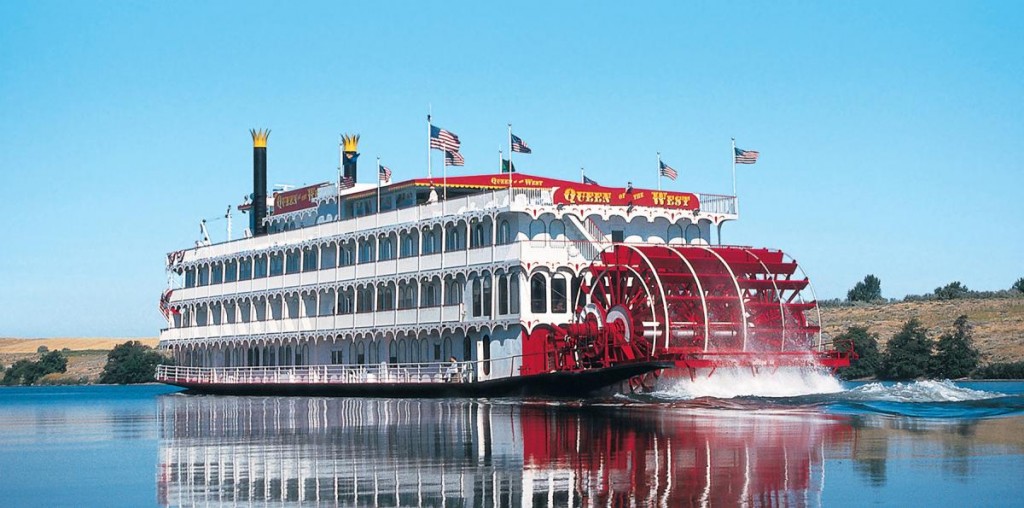
New Orleasn Gambling River Boat owned by Willie Nelson

Gambling in the U.S. was established early on, like in the colonial days, where the upper class bet primarily in lotteries or on horses, with New Orleans emerging as the national leading gambling center with gambling taking place in the city and on river boats. Later, the increased population of California brought on by the gold rush in 1849, moved the gambling capitol from New Orleans to San Francisco. Sports betting in the U.S. spread to other western cities that were the end of cattle trails like Deadwood, South Dakota and Dodge City, Kansas or major railway hubs like Kansas City and Denver. By the turn of the century, cities like New York and Chicago got heavily into the now-illegal gambling scene by paying off the police.
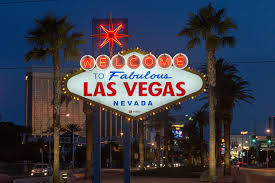
U. S. Gambling Capitol

Then, in an effort to overcome the effects of The Depression, Nevada legalized gambling in 1931. While gambling was still going on in much of the U.S. illegally, stricter law inforcement drove people, particularly ‘the mob’ to Las Vegas – which, through the 50s and 60s became the ‘Gambling Capitol of the U.S.’

All was pretty normal until May 2018 when the U.S. Supreme Court struck down the Professional and Amateur Sports Protection Act and thus allowed 40 states to offer gambling to the public. Then gambling as a business surged from a $7 billion business in 2018 to $167 billion last year. The dramatic growth was not only attributed to the fact that now 40 states allow gambling, but rather that betting became something you could do on your phone. It’s now handier than ever to lose money.

Issues with gambling: Debt, health, relationships, stress

Anyone that’s paying attention can see that gambling has increased its awareness significantly over the last few years. Ads on television constantly promote it and television commentators often quote odds of something happening during the game.  The Super Bowl is known for it’s ‘prop bets’ that range from everything from, will a field goal kicker hit the crossbar with the ball – commonly known as a ‘doink’, to what color Gatorade will the winning coach be drenched with. It seems light and fun and in fact, it can be an enjoyable social event among friends. But the ‘serious’ gambler can expect some of the following downsides:

  1. Severe financial ruin (debt, bankruptcy, loss of assets)
  2. Mental health crises (depression, anxiety, suicide)
  3. Strained relationships due to lying or theft
  4. Significant stress (insomnia, hypertension)

So, gambling has got that going for it!

For me, gambling reached a new low last week when I saw that companies like Polymarket and Kalshi, boasting trades of $500 million, offer bets on the war in Iran – like, how many U.S. casualties, timing of a ceasefire, when the regime will change, when the Strait of Hormuz will open, etc. Disgusting!

FYI: I’ll be in Vegas in a couple of weeks looking for that ONE BIG WIN!  
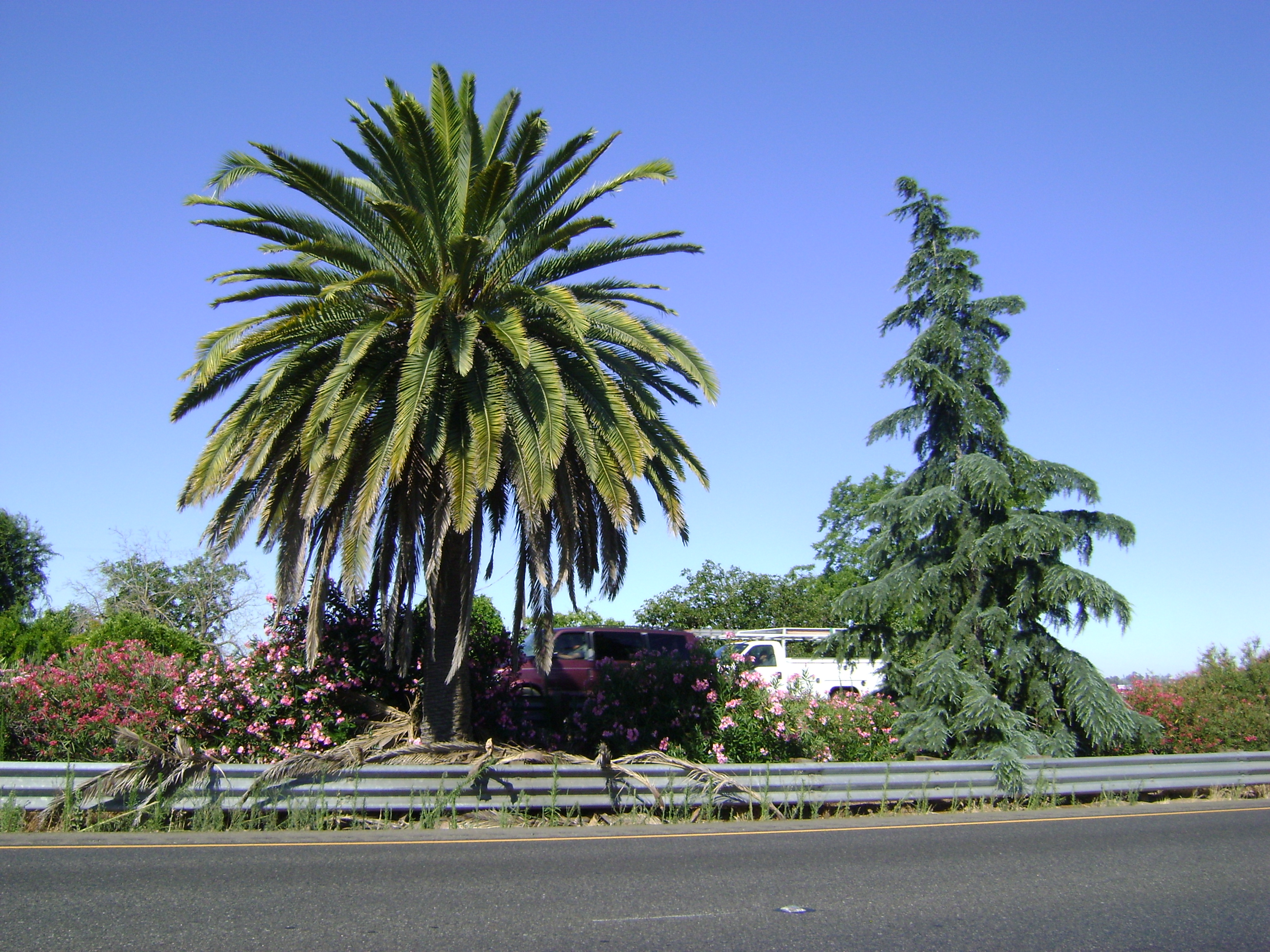
The Palm & The Pine – A California Story Part II

     So, what about the trees in the picture?  Glad you asked.  If you travel on Highway 99, which goes north-south through the heart of California, about 10 miles north of Fresno, if you look carefully, drive slowly, very slowly, you will see a palm tree and a pine tree together in the meridian.  Nothing else, no grassy park, no plaques, no mention of this being a landmark, no special entrance, in fact, no entrance at all, just rows and rows of oleanders along the meridian, then the trees, then more oleanders, all protected by the freeway guard rails.  Don’t look for a place to pull over to see the trees, there isn’t one. 

     The history of how the trees got there is fuzzy at best.  Most historians suspect they were put there by agricultural students from Fresno Normal School (now Fresno State University – they had to take the word ‘Normal’ out because . . .  it’s Fresno!), around 1915.   We know they were there before 1926 when Highway 99 was under construction.  It was then workers from the Department of Highways (later to become CalTrans) were ready to cut down the trees to make way for the highway, when a crew member (one of California’s first “tree-huggers”) suggested that the highway go on each side of the trees, which it did.

     I was challenged to take pictures of the trees as I drove by (in both directions . . . several times!) window rolled down, one hand on the wheel, one hand on my camera.  As I checked out the pictures that I’d taken I found that they were all a little blurry.  So to get a good look, or rather a good picture, like the one shown here, one would have to illegally pull off to the side of the highway and hope the CHPs are still back at the Dunkin’ Donut cleaning the contents of a jelly roll from their uniform.  Not to be denied a good picture, I got a bright idea.  On my next trip around I pulled off to the shoulder of the highway across from the trees, popped my hood and pretended to be looking under it (which is a fairly common occurrence on many of my road trips), but really I was taking pictures.  Three people slowed down to offer help, but I gave them a big ‘OK’ sign and they moved on; perhaps they didn’t want to get involved with someone who was seemingly taking a picture of his motor.

     The two trees have special meaning for me.  I was born and raised 28 miles north of ‘The City’ (San Francisco) in Novato, and then a teaching job brought me to what my northern friends call ‘the dark side’ and have now spent the past 40 years in ‘The O.C.’ (Orange County) in southern California; so I feel eminently qualified to ponder and pontificate on the state of the two halves of the state.    I have observed this: If you talk to Northern Californians they may refer disparagingly to a number of things in the south, nothing personal, just things like, “How do you stand . . . ‘all the smog?’, ‘all the traffic?’, ‘all the people?’, ‘all the fake boobs?’ And then add, ‘and stop stealing our water!’.  If you ask Southern Californians about the north and those remarks, they say, ‘Chill dude, whatever . . . wait a minute, what did you say about boobs?’  An objective observer might say the ‘North’ is a little up-tight and the ‘South’ a little too laid back.  As the self-proclaimed expert on these things, I have seen these traits exhibited as well as some other differences, but I actually see so many more similarities that it’s not conceivable to me that the state will ever be divided.  When I think of California I don’t think north and south, I think of things like our beautiful coast line, Yosemite, Lake Tahoe, Palm Springs, the wine country, the San Joaquin Valley, where nearly every crop known to man can be grown.  I think of the creativity in Silicon Valley as well as in Hollywood.  I think of the history of the Missions and of the Gold Rush.  I think of those great writers who lived in and wrote about California, John Steinbeck, Jack London, John Muir, Mark Twain and one of my favorites, Herb Caen, although he had no use for the southern part of the state.  I think of the fact that no matter where you live in California you’re just a few hours (and sometimes just a few minutes) from the mountains, the desert, and the ocean.

     So I think the palm and the pine tree are indeed special, not because they create a ‘border’, but because they’ve existed peacefully, side-by-side for so many years.

EPILOGUE

     The two trees were supposedly planted in the exact middle of the state, but actually they’re about 25 miles off, not sure which way.  Incidentally, the palm tree is a Canary Island Date Palm and the pine tree is not a pine at all, but a Deodar Cedar; neither is indigenous to California, but then most Californians aren’t.  Viva La Difference!