This annual Memorial Day post is written in remembrance of the soldiers from my high school who died in the Vietnam war. I first published this in 2014, and each year since then I hear from people who relate similar stories about the losses suffered in their hometowns or, worse, their families. This weekend, as you commemorate the holiday, please take a moment to remember all of the brave young men and women we’ve lost in conflict.
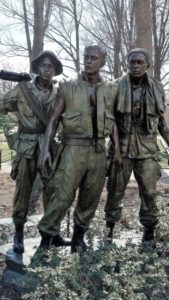 Five boys from my high school were killed in the Vietnam War. For a small town like Novato, that was an enormous number. We were such a close-knit community that even if we didn’t know one of them personally, we knew a sibling or friend. So when I planned my trip to Washington D.C. last month, I scheduled time to visit the Vietnam Veterans Memorial to see their names on “The Wall”.
To refresh my memory, I pulled out my high school yearbooks and found them all – smiling for a formal portrait or posing for a team picture. Each image reflected a boy, fresh-faced and full of hope, his life stretching out before him. I looked at those young faces and found it hard to believe that their lives ended so soon after the bucolic days captured in the photos. None of them reached the age of 22, their dreams extinguished on the battlefield. While we, their classmates, lived long enough to enjoy the internet, smart phones and streaming movies, most of them didn’t live long enough to see color television.
I reflected on the stories I’ve read of WWII vets who speak so reverently of the “boys who didn’t come home”. As I perused the yearbooks, I finally understood their sentiment. It is only when looking back through a 50-year lens that one can appreciate just how young these soldiers were and how many of life’s milestones they missed. So, on this Memorial Day, I’d like to pay tribute to “The Boys from Novato”.
Robert Johnson
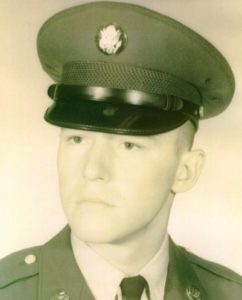 Bob Johnson joined the Army in the fall of 1965, in what would have been his Senior year in high school. I remember him as a very nice, quiet guy. Before he enlisted, he asked his high school sweetheart to marry him – they wanted something to hang on to while he was gone. His entry into the service occurred just as the war was escalating. He was sent to Vietnam in March of 1966 and three weeks later he was killed by enemy gunfire during “Operation Abilene” in Phuoc Tuy Province. As his former classmates excitedly anticipated their Senior prom and graduation, Robert had already made the ultimate sacrifice. In the 1966 yearbook, where his senior portrait would have been, his mother placed this photo of him in uniform along with a tribute. He was the first Vietnam casualty from Novato.
Mike Tandy
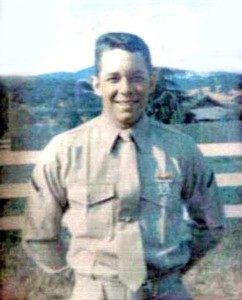 Mike Tandy graduated from NHS in 1965. His sisters, Sue and Sarah also attended NHS. Mike was a good student, who participated in the first swim team our high school fielded. He was an Eagle Scout and according to his friend Neil Cuzner, “he was highly intelligent, a great guy and an excellent scout. He was in the Senior Patrol and a young leader of our troop. He led by example”. After graduation Mike joined the Marine reserves and was called up in January 1966. He was sent to Vietnam shortly after that. On September 8th he was on patrol in Quang Nam with another soldier when his footfall detonated a landmine. He was killed instantly. He had celebrated his 19th birthday just five days prior. His classmates had moved on – either to college or working – but the Tandy family was left to grieve the loss of their son and brother. In 2005 Sarah posted to the virtual Vietnam Wall: “Thanks to all of you who come here and remember Mike. All of our lives were changed, and I thank you for not forgetting.”
Allan Nelson
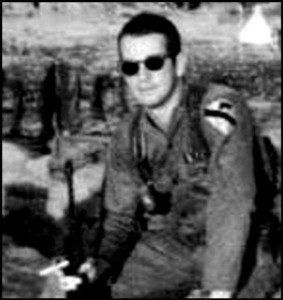 Allan Nelson played football at College of Marin with my brother, Bob. Allan’s sister, Joanne, was in Bob’s class in high school and his brother, Steve, was in mine. So we were well aware when Allan was drafted into the Army and sent to Vietnam in July 1966 at the age of 20. Five months later, on December 1, we were devastated to learn he had been killed by gunfire during a battle in Binh Dinh Province. I still remember the day Steve came to school after Allan’s death; red-faced with tears streaming down his cheeks. He had always been such a happy guy but was now changed in ways that were hard for his 16-year-old friends to understand. As I look back now, I can’t imagine what it must have been like for him to go home from school each day, to face parents who were shattered by grief. Joanne posted the following on a memorial page and perhaps sums it up the best: “Allan was my brother, not just a brother, he was my best friend. All I know is December 1, 1966, was the saddest time for me and my family. My family loved each other so much, but when Al was killed the joy died in my family. Allan had his whole life planned. He had just turned 21 on Oct. 20th. When we were young, he couldn’t wait to be 21. I am so sorry for all the families that lost a son and a brother. It will be 33 years in Dec. The everyday sad feelings of loss are gone but on special days it still hurts.”
Jim Gribbin
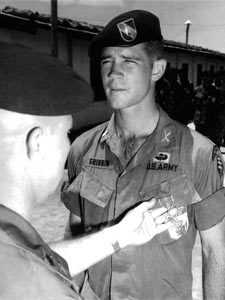 Jim Gribbin graduated from NHS in 1966. He was on the football team, very active in school clubs and was well-liked by everyone he met. He joined the Army Reserves and when called up, became part of the Special Forces, where he rose to the rank of Captain. He served two tours of duty in an elite MIKE unit. In March 1970 his unit was on a night defensive mission in Kontum Province when they were ambushed by enemy troops. Jim sacrificed his own safety by running into open territory – twice – to aid and retrieve wounded soldiers under his command. He was shot both times and taken to a rear medical facility where he died from his wounds. Ironically, for this affable Irishman, he succumbed on St. Patrick’s Day. He was awarded the Silver Star and the Bronze Star for Valor. Jim’s dad was a veteran of WWII. When he died in 2011, he requested that he be buried in Jim’s grave, with his name and vitals carved on the back of Jim’s headstone. One can only imagine the grief that he carried all those years. Hopefully he is at peace now that they are forever reunited.
In 2018 I was contacted by a woman in New York who signed up for a grueling physical event that honors Vietnam veterans. She chose to represent Jim and wanted to know more about him. You can read my post about her and the event here: https://fromabirdseyeview.com/?p=7111
Wayne Bethards
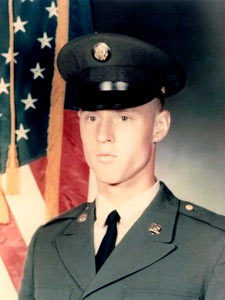 Wayne “Ed” Bethards was in my graduating class, but I didn’t know him well. His family moved to Novato just before the start of our senior year. His mother, Betty Bethards, was the author of the international best-seller, “The Dream Book”. Again, Neil Cuzner has provided a bit more insight: “Wayne was a good person. He had a great love of baseball and had actually started a small league while over in Nam. He was sharing his love of baseball with the Vietnamese children.” Cuzner went on to say that Wayne was a religious person and did not want to kill anyone; he struggled greatly with his deployment. He was drafted into the Army and was sent to Vietnam in October of 1970. In January 1971, he was killed while on patrol by the accidental detonation of a mechanical device in Quang Tin Province. He was the last boy from Novato High School to die in the war.
Jerry Sims
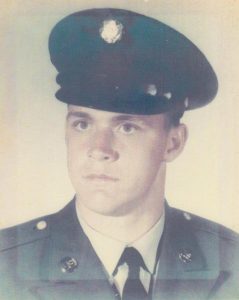 In April 2017, I heard from a former schoolmate, Dennis Welsh, about Jerry Sims, a boy who died in the conflict whose hometown was listed as Novato. I found in my research that sometimes the Novato “hometown” designation was for those affiliated with Hamilton Air Force Base, not graduates of Novato High School. Since there were no records of Jerry at NHS, I assumed he was from Hamilton, but that was not the case. Dennis told me that Jerry moved to Novato from Texas in the Spring of 1966 to live with his sister. He tried out for the football team during spring training and made the squad. But despite that automatic inclusion into a social group, he was unhappy living in California and being the “new kid” going into his Senior year. Dennis said that he never saw him again after football tryouts and didn’t learn of his fate until he spotted Jerry’s name on “The Wall”. After some research I learned that after Jerry left Novato in June 1966, he joined the Army and was sent to Vietnam in November. On February 6, 1968, he and several others in his unit were killed by small arms fire in Gia Dinh province. Jerry was 19 years old. His former platoon leader said this on his memorial page: “I was Jerry’s platoon leader on the day he died. He didn’t have to be there, since he had a job elsewhere in Vietnam, but he requested a transfer. He had already spent a year with the Wolfhounds, but for reasons all his own, he wanted to come back to this unit. He died doing his job as a squad leader in my platoon.” It would seem Jerry finally found his home – and some peace – with his Army brethren.
Jim Wright
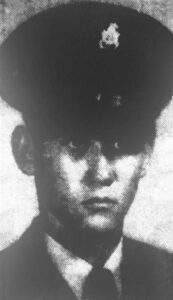 Update May 2022: Each year this annual tribute receives a lot of viewings around Memorial Day. This year I was fortunate to hear from Bill Sauber, a 1966 graduate of NHS, who told me of another NHS connection: Jim Wright.
Jim celebrated his 18th birthday in January 1966 and was drafted into the Army shortly thereafter. I suspect that he had dropped out of school, as he was in his sophomore year in the spring of 1966, so would not otherwise be eligible for the draft. After basic training he was sent to Vietnam in May as part of the 27th Infantry, known as the Wolfhounds. On November 5, 1966, he was killed by enemy gunfire in Darlac province. He posthumously received a Silver Star. His official records indicate that by the time Jim died, his father was not living in Novato, his mother could not be located, and he had married a woman named Linda. It is hard to imagine that in the space of one year Jim celebrated his 18th birthday, was drafted, married, and ultimately, killed. As with Bob Johnson and Jim Gribbin, he lies at rest in Golden Gate National Cemetery. I am hopeful that someone reading this post knew him and can provide more insight into his time at Novato High School.
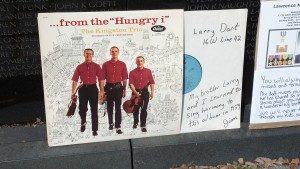
When I visited “The Wall” I found the boys from Novato, each name etched on that long expanse of granite. I thought about their families and the sorrow they endured. It was overwhelming to realize that sorrow had been replicated 58,286 times. Each of the names on that black, shiny surface represent a family forever destroyed. As I walked along the pathway, I looked at all of the mementos that were left as tributes to the fallen – notes, flowers and flags mostly. But then I spotted something different – a tribute from Jim Dart to his brother, Larry. It was a Kingston Trio album, along with a note about the good times they shared learning the guitar and singing songs together. I was overcome with emotion reading Jim’s note. My brother, Bob, owned that same album. He and his best friend, Don, often entertained our family playing their guitars and singing songs from that record. Bob was a Naval officer in Japan during the Vietnam war and was safely returned to us. I wept as I stood looking at the album, realizing that but for the grace of God – and military orders – how easily it could have been Bob’s name on that wall and me leaving a Kingston Trio album in his memory. I can’t imagine our family without his presence all of these years. I ached for Sue and Sarah and Joanne and Steve and all the other siblings who never got to see gray hair on their brothers’ heads; their family gatherings forever marred by a gaping hole where their brothers should have been. When I stooped down to take the photo, I noticed that several other visitors had stopped to look at it too. As I glanced at those who were of a certain age, I could see my own feelings reflected in their eyes. We know how much of life these boys missed. We mourn their loss – and ours.
 Here we are…the week of the 4th of July where thoughts turn to our country’s independence. Right about now I’m guessing most people desire some independence from our politicians, but this being an election year I think we’re stuck with four more months of campaign ads and robo calls. Hopefully no more debates. But that’s a subject for another week. This week I want to focus on an important part of any July 4th celebration – the dessert. Last week I was looking for some ideas for a 4th of July cake and found most every food site suggests a cake with fruit on it – ideally in the shape of the American flag. Fruit on cake??? Pies or tarts, yes, but not cake! Cake and frosting should contain sufficient amounts of sugar and butter that you stay just this side of diabetes and clogged arteries. I went down a rabbit hole looking for unique dessert ideas and discovered that people are quite weird – or desperate – when coming up with a proper dessert. Here’s just a sampling of what I found:
 The Tomato Soup Cake – this is wrong on so many levels. The recipe dates back to 1922, and some accounts say the dessert was popular among Irish immigrants in New England. Personally, I think they should have stuck with Guinness. It is said that the tomato soup produces a moist red-orange cake that doesn’t taste like tomatoes at all, thanks to the cinnamon, cloves, and nutmeg in the mix. I’ll take their word for it. The cake was popular through the 1930s and 1940s, when Depression-era and wartime shortages called for culinary creativity. People sought out affordable substitutes that could stand in for pricier ingredients (such as tomatoes) without sacrificing flavor. In the 1940s, the Campbell Soup Company began experimenting with variations on the tomato soup cake recipe and, in 1960, printed a version on its tomato soup label — the first recipe to appear on a soup can. I don’t know who thought of putting tomatoes, fresh or in soup form, in a cake, but I would venture it was someone who never had a slice of Death by Chocolate.
 Carrot Pudding – first, the word pudding is used in the British sense, loosely meaning dessert. Carrot cake has been around for a while and in a pinch, it isn’t bad (especially if there is pineapple rather than raisins). But before there was carrot cake, there was carrot pudding. A recipe in the 1591 English cookbook describes carrot pudding as a savory pudding made of chopped liver, breadcrumbs, spices, dates, and sugar that is then stuffed inside a hollow carrot. By the 18th century, carrot pudding had evolved into a sweet dessert baked in a pastry shell, similar to pumpkin pie. Another variation, called steamed carrot pudding, was made with shredded carrots and potatoes and steamed in a gelatin mold. In my opinion no good dessert contains the words “gelatin mold”. Regardless of its preparation, carrot pudding sounds like something you might serve to people you never want to come to dinner again.