I’VE GONE BANANAS!

By Suzanne Sparrow Watson
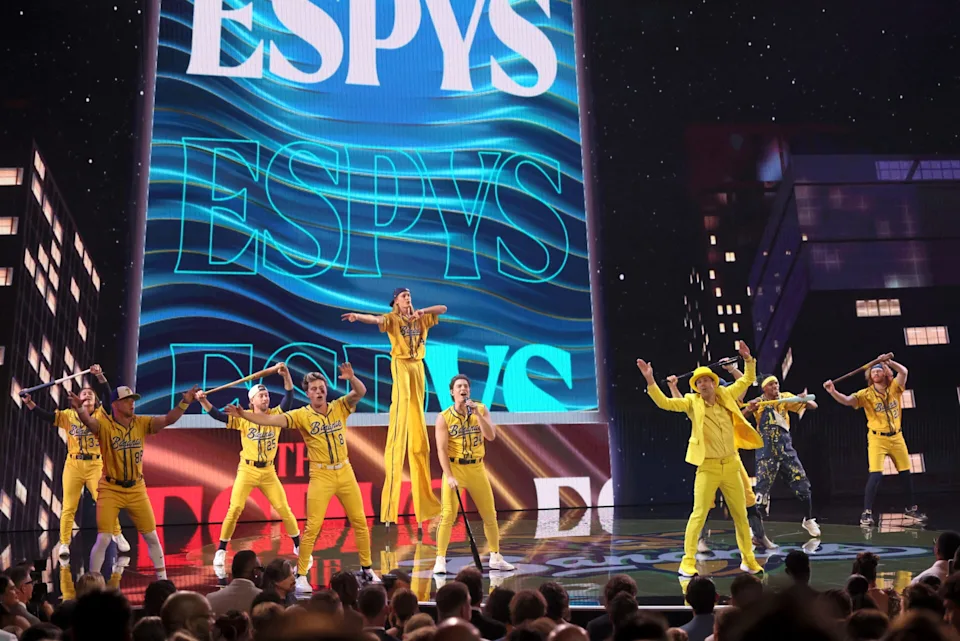
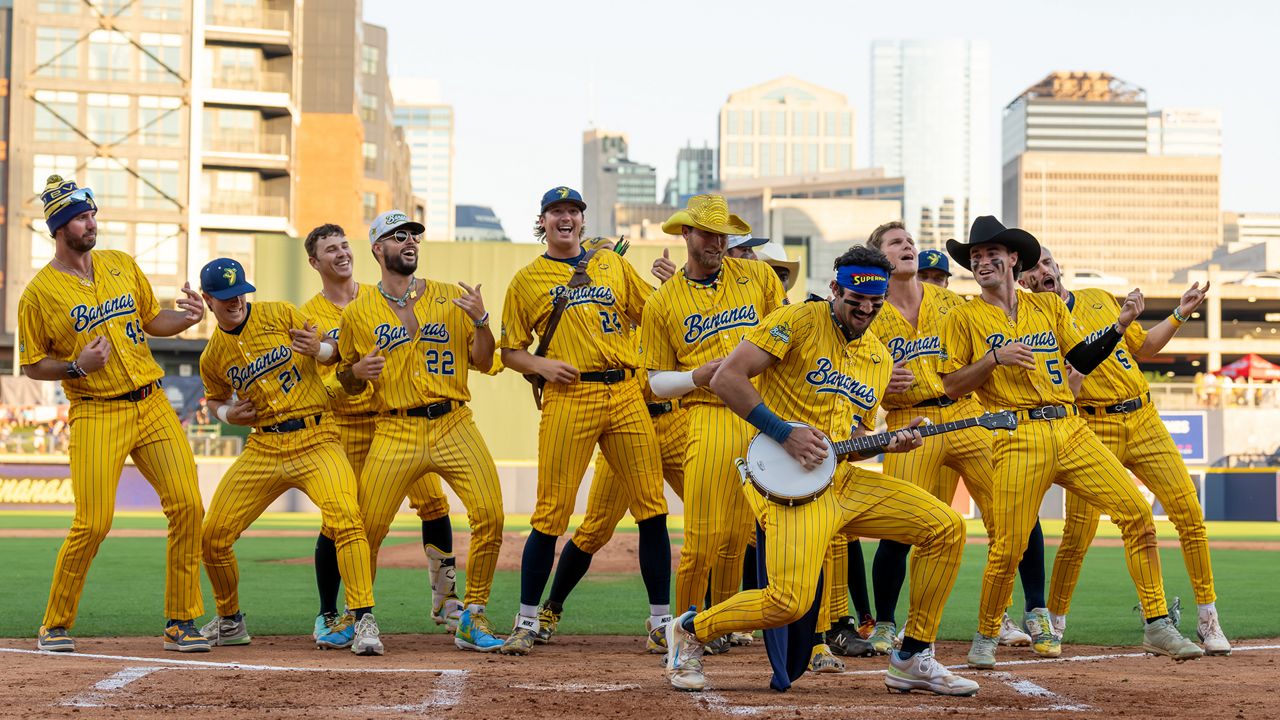
Like so many people these days, I’m in a never-ending quest to avoid watching much news. Since I subscribe to five streaming services, I can always find something that produces less stomach acid. And sometimes, I find something truly worth watching. Such was the case when I watched an ESPN+ program on the Savannah Bananas. They opened the ESPY’s show this year, but in case you haven’t heard of them, let’s just say they are the Harlem Globetrotters of baseball – a little sport and a lot of entertainment. The background of the team – and its owners – is actually one of the more heart-warming stories in sports. And God knows I could use that since I’m flailing in both of my NFL pools (really, Packers? You couldn’t beat the Falcons???). In any event, in the off chance that you could also use a feel-good story this morning I present a bit about the Savannah Bananas.

In October of 2015, the team arrived in Savannah as a college summer team with a goal in mind: make baseball fun. That’s a big enough task, but they also wanted to bring fans back to Savannah’s historic Grayson Stadium. The stadium had been home to a minor league team, the Savannah Sand Gnats, for 90 years. The team’s owners wanted Savannah to build a new, more modern, stadium. In September 2015, when the city denied their request, the Sand Gnats packed up their sand and moved to Charlston. You would think the good people of Savannah would be happy to get rid of Sand Gnats and welcome a college summer team, but that was not the case.

In the first few months, they sold only a handful of tickets. By January of 2016, just months before their first game, the team’s finances were in the red. The owners, Jesse and Emily Cole, were forced to sell their home to keep the team and their dream going. But on February 25, 2016, they announced a name change to the “Savannah Bananas”, and everything changed. The announcement created massive attention locally and nationally, covered by CBS, NBC, and Sports Illustrated. They were even featured as SportsCenter’s “Logo of the Year”. They played in the Coastal Plain League, a summer collegiate league, for seven seasons. They won three Petitt Cup Championships during their collegiate team reign and had over 35 players drafted into MLB across the seven years of play.
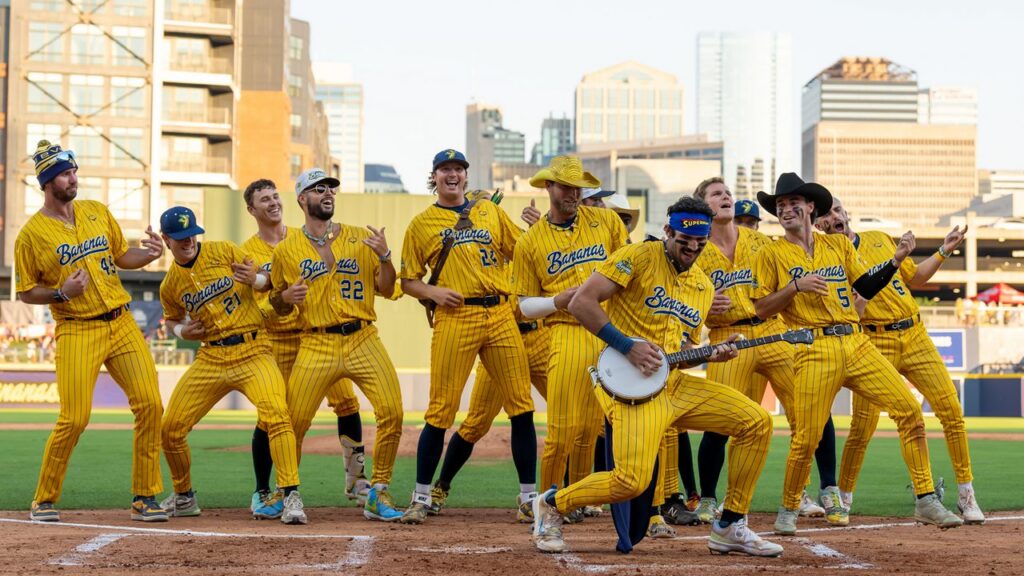
Just your average base hit

But in 2022, the Bananas announced that they were leaving the Coastal Plain League to play Banana Ball year-round. No one had heard of Banana Ball. But they soon would. Banana Ball was born out of the idea and goal of making baseball more fast-paced, entertaining, and fun.  And it certainly met the goal! Every game includes singing, dancing and engaging with the crowd. Their walk-ups are legendary. Bananas may be escorted to the plate by a musical star, make a dramatic entrance drenched in rain or, my favorite, sing a Broadway hit. When they score a run they have special celebrations, from running through the crowd to performing fully choreographed dances. And the Bananas can also boast that they have the World’s Tallest Hitter and Pitcher with Dakota “Stilts” Albritton, who stands 10 feet tall. Recently Derek Klena, a former baseball star at UCLA and Broadway Tony nominee, joined the club. So, they have street cred, to say the least.
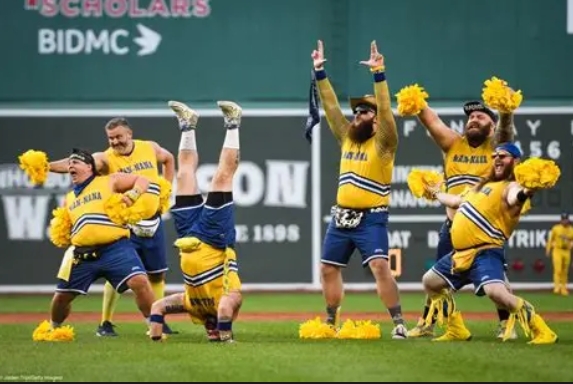
The Man-Nana’s

But it’s not just the players who entertain. Jesse Cole wears a yellow tuxedo and bowler hat at every game. He is literally the ring master of the Banana circus. They have the Banana Nanas (a senior citizen dance team), the Man-Nana’s, (their Dad Bod Cheerleading Squad), and the Banana Splitz (a youth dance team). Their umpire is the world’s only Dancing Umpire, who will bust out the robot, hit the quan, or twerk it out on any (and every) strike three call.  The coach on first base is a breakdancer.
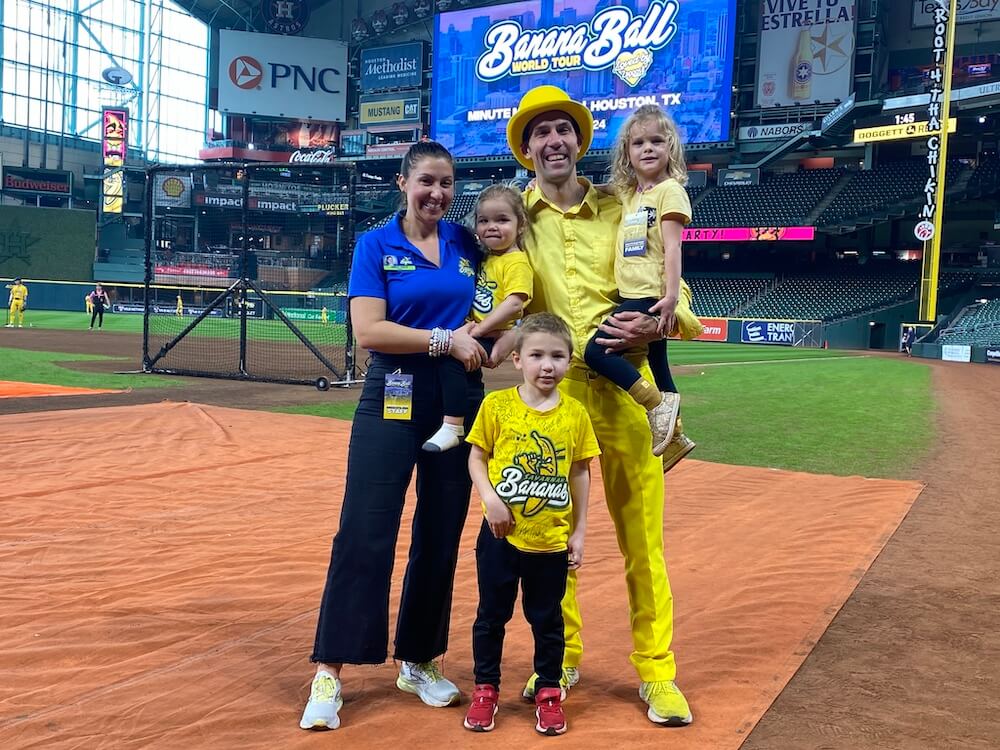
The Cole family

But there’s more to life than baseball and Jesse and Emily Cole put their fame to good purpose. In 2020, while in lockdown with their one‑year‑old son Maverick, they decided to get licensed as foster parents after seeing how many children were struggling without school and mentors. They were inspired by the idea of providing a supportive home until children could be reunified with their biological families or adopted, so they started a non-profit that promotes foster care. The name of their organization? Bananas Foster, of course. They currently have adopted two girls who they fostered and work tirelessly to spread the word about the benefits of becoming a foster family.

So, if you find yourself searching for something entertaining to watch on TV, I highly suggest watching a Banana Ball game. You might even be inspired to do a little breakdancing in your living room!

A Visit with a Navy Seal

by Bob Sparrow

Navy Seal Ray ‘Cash’ Care

            I recently had the pleasure of attending a presentation at the Nixon Library in Yorba Linda, given by Ray “Cash” Care, a former Navy Seal.

            I don’t have the writing ability to adequately express my admiration and gratitude to Navy Seals. Of course, I don’t have the writing ability to do a lot of things, but when it comes to Navy Seals – they have my full attention and utmost respect.   

            Let’s start with the name. It comes from SE A L  –  SEa, Air, Land as they are trained to fight in all three of these major environments. But if you thought the name came because they are like the unique marine mammals, well, that could be true too.

            Seals, the marine mammals, can drive to extreme depths (nearly 8,000 feet), they can track prey with ultra-sensitive whiskers which allow them to hunt at night, and some can hold their breath for two hours!

            The name is fitting for arguably the toughest combat team in the world.

            So let’s talk about the Navy Seals.

            First of all, becoming a Navy SEAL is very tough.  Here’s the basic training:

            It is called BUDS (Basic Underwater Demolition/SE A L) and it has three phases:

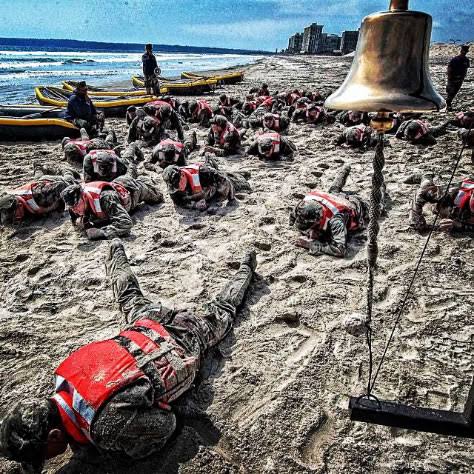
BUDS training – just ring the bell and you can go home
  1. Basic Conditioning – 8 weeks of focus on physical conditioning, water competency and teamwork. This includes what is called ‘Hell Week’ where candidates get a total of about four hours of sleep – THAT’S FOR THE WHOLE WEEK!                             
  2. Dive Phase – 8 weeks of combat diving, underwater navigation and open and closed-circuit dives
  3. Land Warfare – 9 weeks of small unit tactics, land navigation, marksmanship, rappelling and explosives

            The dropout rate for BUDS is around 80-85%!  

            When our speaker, Ray was asked what the toughest part of the training was for him, he said that, oddly enough, he was not a very good swimmer, but he had to hold his breath and swim underwater for 75 yards!

            He spent eight years as a Navy Seal and then twelve years in the CIA. He said he got to visit every ‘hell hole’ in the world during those years.

            Like most of the Navy Seals I’ve met, he is not a big, bruiser of a man; he’s 5’7” and weighs about 165 pounds. What you don’t see when you look at him is his willpower, his burning desire to succeed at whatever he does, his never give up attitude and his ability to consistently perform at a high level.

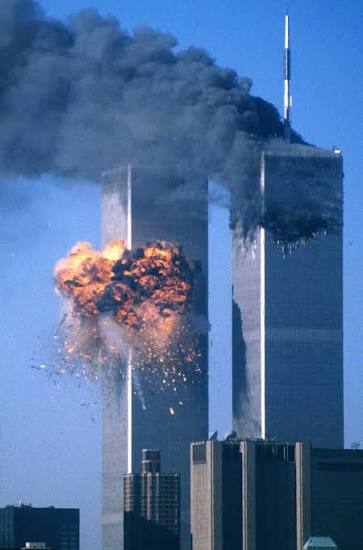
Sept. 11, 2001

            Ray now does motivational speaking. His presentation at the Nixon Library was just prior to the 25th anniversary of 9/11. And he talked about that for a bit, but interestingly enough, the focus of the presentation was on 9/12.

            Yes, 9/12. He said that that was a time when he saw the nation most united as the embodiment of the resilient American spirit where people put aside differences, flew their flags, and stood united. He contrasted that with today’s societal divisions that we see growing worse every day.

            I’ll leave you with a couple of Navy SEAL sayings:

            “The only easy day was yesterday,” representing a mindset of continuous growth and rising standards

            “Get comfortable being uncomfortable,” meaning growth happens outside your comfort zone

THE MUSEUM OF SADNESS AND STRENGTH

By Suzanne Sparrow Watson

Note:  I am publishing this post from 2016 in honor of the 25th anniversary of 9/11.

There is a quietness about the September 11th Memorial and Museum that starts before you walk through its doors.  As we queued at the entrance, we were all lost in thought. Trepidation is etched on everyone’s face – do we really want to re-live that horrible day?  And yet we all file in, bracing ourselves for what we know will be a difficult and emotional visit.  The museum offers three options for viewing the exhibits; we chose a guided tour led by one of the volunteers.  Our guide was a young man from New Jersey who lost neighbors in the terrorist attack. For him, this museum is personal.  He told us that if we saw a guide wearing a tan vest, that person is a family member of a victim.  Some of them come every day as a way to work through their grief and talk about their loved one. I reflected that we are fortunate in our generation to be guided by such people; future generations will experience it from a more distant perspective.

Our guide started the tour at the bottom of the museum, in Foundation Hall,  where the famous “slurry wall” stands.  When the Trade Center was built in the mid-1960’s,  the slurry wall held back the Hudson River, which lapped at the side of the building.  After the attack on 9/11, when the site was being excavated, the workers were astounded to find that the slurry wall had survived.   Daniel Libeskind, the architect who led the redevelopment of the site, pushed to keep a portion of the slurry wall in place.  He proclaimed that it was a testament to the determination and resilience of a nation; a document “as eloquent as the Constitution itself”.

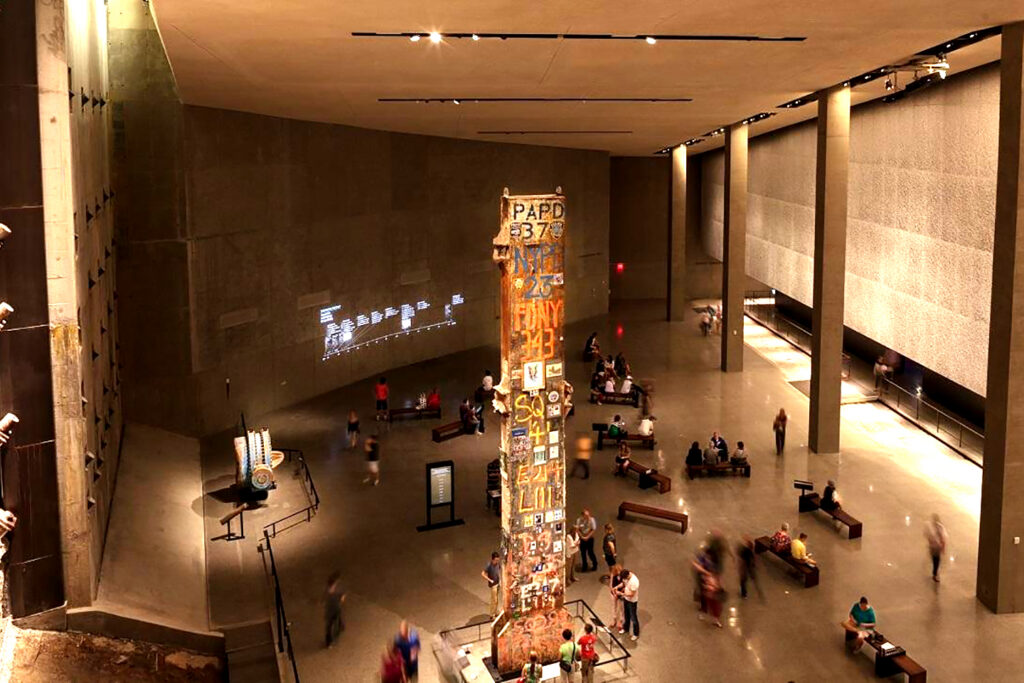
Also in Foundation Hall is the “Last Column,” a 36-foot girder that was the last to be removed from the site, marking the end of the recovery effort.  During the excavation it quickly became a makeshift memorial, plastered with Mass cards, rosary beads, flags, photos of missing innocents, and patches from fire and police units.  When it was finally cut down, it was laid on a flatbed truck, draped in black, with an American flag over it, and escorted by first responder honor guards to a place of safekeeping.  It was brought back to Foundation Hall and erected as a physical reminder of our resilience and hope.

There are many displays that feature recovered portions of the buildings – bent beams, the only remaining glass window and the “Survivor’s Staircase”, used by many to escape the burning towers. But I suspect that the main reason most of us come to the museum is to pay tribute to the people who were lost that day.  After seeing massive beams bent and misshapen by the impact of planes and the heat of the fires, it gives new perspective to what the people trapped in those structures experienced.  I recall one of the shell-shocked firemen who survived the collapse of the towers saying, “How bad must it have been up there that people thought jumping out of a window from the 100th floor was the better alternative?”

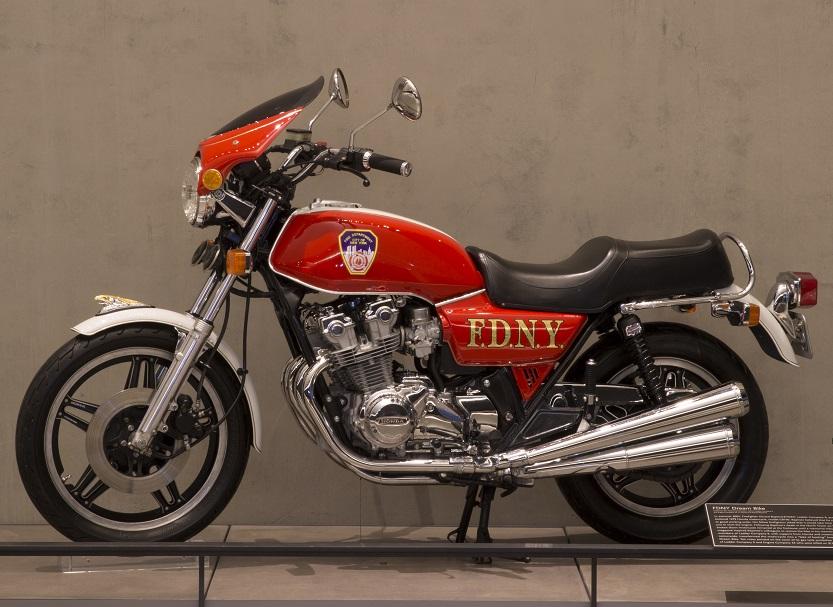
One particularly poignant display is of the motorcycle that belonged to Gerard Baptiste, a firefighter with Ladder 9 in Lower Manhattan.  Two weeks before 9/11 he bought a broken-down 1979 Honda motorcycle off the street for $100.  It wouldn’t start so he had to roll it to the firehouse.  The guys ribbed him endlessly about buying a worthless piece of junk.  Baptiste died at the Trade Center and shortly afterward, the surviving members of his firehouse decided to restore the bike in his honor.  With the help of Honda, some motorcycle shops and private donors, they were able to transform it into what is now known as “The Dream Bike”.  The bike was auctioned, with proceeds donated to the education fund for the children of firefighters from Ladder 9 who were lost on 9/11.  The winning raffle ticket, selected by Baptiste’s mother, went to a woman from California who donated the bike to the museum so everyone would know its story.

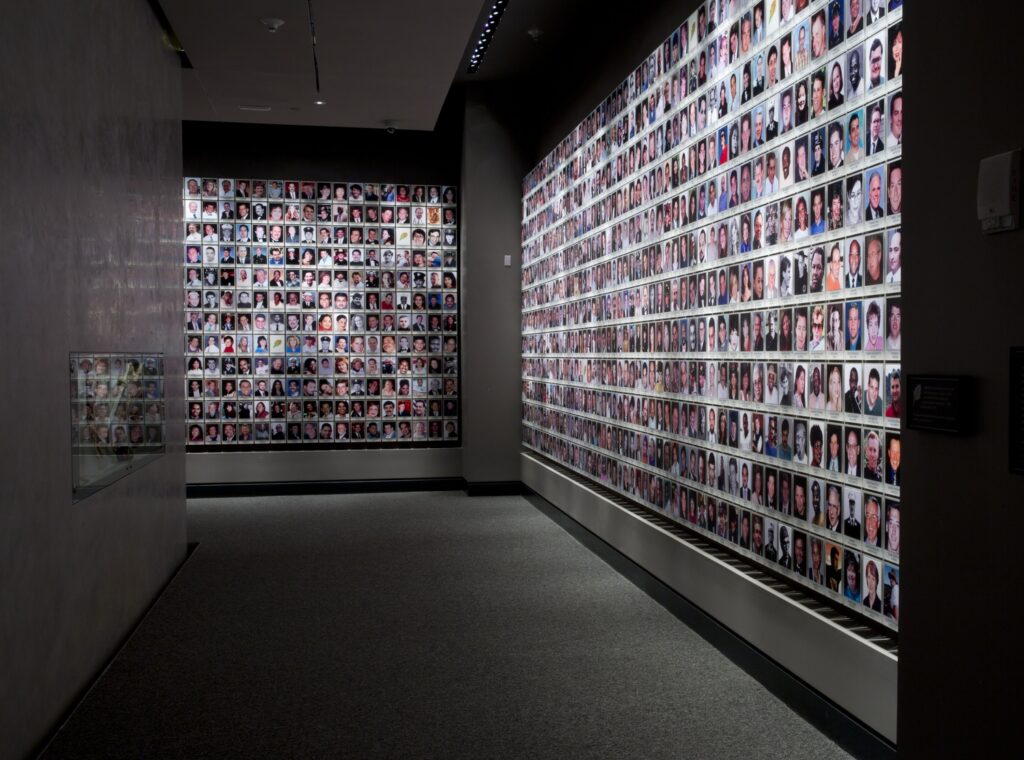
There is a room called “The Wall of Faces” filled with pictures of the victims.  It is hard see their smiling faces, knowing that their lives would end so tragically.  They are the faces of people who, on a gloriously sunny Tuesday morning,  kissed a loved one good-bye, walked out their front door, and were never seen again.  Down the hall from the “Wall of Faces” is an alcove, a small space with black walls and four benches.  On each of the four walls is a projection of video remembrances of the victims.  Each person who died is remembered with a picture and a bit of personal background information.  For most of them there is also an audio remembrance from a family member or friend.

I sat in the video room for a while, as the images and voices streamed past.  It was heartbreaking to hear a young woman talk about how much her children miss their dad, and a father describe how proud he was of his lost son.  One woman remembered her husband through the story of a Thanksgiving dinner when they got into a spat because the gravy was missing from the dinner table.  They argued and both stalked off to the kitchen.  She said they imagined that all of the relatives thought they were in there fighting but, in fact, they were kissing.  She said “that’s just who we were”.  Some voices were very emotional as they described their loved one, some sounded wistful, and others like the woman with the gravy story, chose to remember a lighter moment.  No matter the emotion, the remembrances brought the victims back to life and made the violent nature of their death all the more jarring. 

I should note that there is a small portion of the museum that describes the rise of Al Qaeda and the planning of the 9/11 attacks.  There are photos of Osama bin Laden and the 19 hijackers, along with a video description of how they carried out their plot.  The photos of the hijackers are placed very low on the wall, much below eye level, so you can easily walk past them without having to look at their faces.  After what I had seen prior to that exhibit, my instinct was to give those pictures a swift kick.  I questioned why we had to acknowledge them at all in a place of reverence and dedication.  But on further reflection, I realized what the museum designers intended – future generations will not recall the events of 9/11 from personal experience, they will need to learn about it from history books and places like the September 11th museum.   So the “who”, “why” and “how” need to be included to present a complete picture.

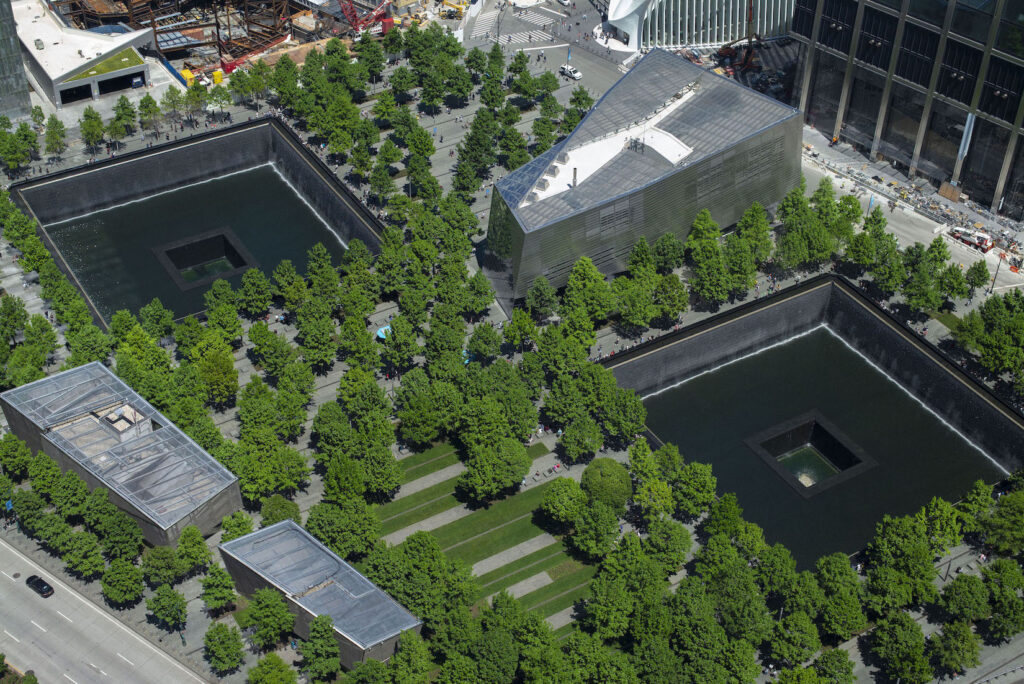
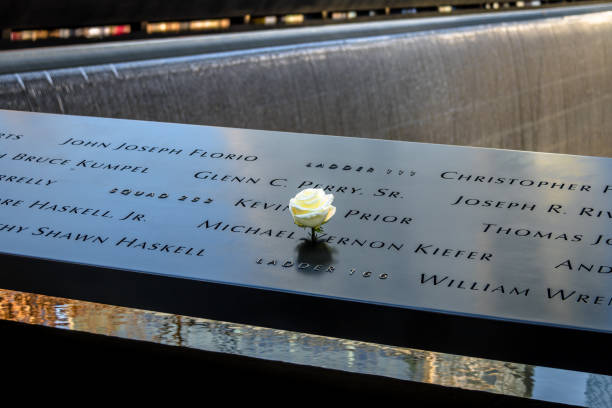
We finished our tour of the museum and went outside to visit the memorial plaza and the two reflecting pools, where the names of the victims are carved into the steel that surrounds them.  The pools are built on the former foundations of the two towers and are symbolic of the sadness one feels there.  One person has described the water cascading over the four sides of the pools as the endless tears shed over the victims.  Perhaps the most touching sight I saw all day were the single white roses stuck sporadically into the carvings of names.  I had assumed that family members laid those flowers on the names of their loved ones.  But in fact, each morning the staff of the museum places a white rose on the name of any victim who would have celebrated a birthday that day.  I found that to be such an elegant gesture and thoughtful beyond words.

We left the museum and went for a very long walk back to our hotel, reflecting on the gamut of emotions we experienced on the tour.  I picked up a copy of USA Today in the lobby; the front-page headline blared “US Military Families to Evacuate Turkey” due to possible attacks.  Sadly, the beat goes on.  But thankfully, so do we.  The new One World Trade Center, also known as the Freedom Tower, is now complete and other buildings are going up where once the ground was but a scar.  Would I recommend going to the 9/11 Museum?  I guess that depends on your perspective.  One of the guest services workers at our hotel said he couldn’t go – that it is still too soon.  For me, it was well worth the visit; it is a place where we can reflect, mourn and vow to move forward.

SMALL MOMENTS – 25 YEARS LATER

By Suzanne Sparrow Watson

This week, as we approach the 25th anniversary of 9/11, I am posting the memorial I wrote on the 10-year anniversary, with updates on a surreal encounter and a promise kept.

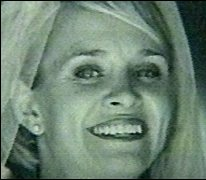
Melissa Harrington Hughes died at the World Trade Center on September 11, 2001.  She didn’t work there; she was on a business trip for her San Francisco-based technology firm. She was an extremely accomplished 31-year-old, who had a passion for life and adventure.  Melissa married her sweetheart, Sean Hughes, just a year prior to her death.

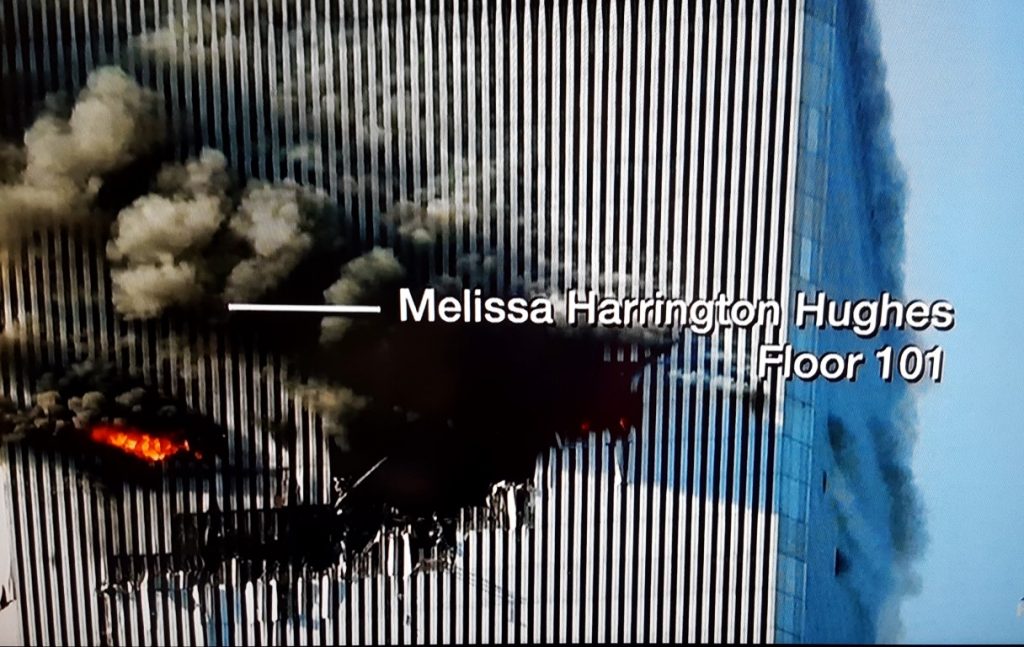
On that fateful morning of September 11 she was attending a meeting on the 101st floor of the North Tower when the first plane struck just six floors below her.  Many people remember her for the harrowing voicemail she left for Sean minutes after the building was struck.   In that voicemail she said, “Sean, it’s me. I just wanted to let you know I love you and I am stuck in this building in New York. A plane hit or a bomb went off – we don’t know, but there’s a lot of smoke and I just wanted you to know I love you always.”

Amongst the overwhelming tales of tragedy on September 11, Melissa’s final words resonated with a lot of people; thousands wrote on her memorial website.  Her phone message to Sean was played on news casts numerous times in the weeks following 9/11.  Each time I heard it I teared up.

In her voice I could sense so many of her emotions: fear, panic, bewilderment.  But mostly, in her final minutes on earth, she wanted Sean to know that she loved him.  I thought about her, and all of the people that died that day, who went off to work as they normally did.  Kissing a spouse or child good-bye, grabbing a cup of coffee, making plans for the weekend ahead.  And none of them came home.  Plans and hopes and dreams were gone in an instant.  Sean Hughes said that he and Melissa were excited about their future and talked about all the things that newlyweds do: moving to a new home, getting a dog, having children.

There were thousands of sad stories that day about love lost and children orphaned. The bank where I worked lost three of our employees that day.  So why did Melissa’s story, above all the others, resonate with me?  I think it was partially due to some life experiences we had in common.  I had also made business trips from San Francisco to the North tower at the World Trade Center.  I remember navigating its Byzantine elevators and escalators as I rushed to early morning meetings, just as Melissa must have done that morning.  Melissa’s wedding photo also brought back memories for me; she and Sean were married in Napa, California, close to where I grew up, so I knew she also appreciated that beautiful part of the country.  But it was more than the similar business trips and her wedding venue that stayed with me; it was her voicemail to Sean that was seared into my brain.

Her final words to Sean started me thinking about my own life.  My husband had taken early retirement in 1996.  By 2001 he was anxious to travel, spend time with our new grandson, and enjoy time with friends.  I wanted to continue working.  But I kept thinking about Melissa’s message.  What if that had been me?  Is that how I would want to die, without ever having enjoyed the life my husband and I had worked so hard to build?

The weeks following September 11 were frightening and incredibly busy for me.  My division of the bank received bomb threats in our major office buildings around the country and we were constantly on alert. Of course, all of the threats were false, but that didn’t lessen the hysteria of my employees who were in those buildings.  I understood – my office was on the top floor of our Los Angeles headquarters and I jumped every time I heard a plane or helicopter fly by.  After a month or so, I began to hope that the turmoil would pass and that my life would get back to “normal”.   But then I thought about Melissa.  Life doesn’t get scripted.  I knew that the odds of being killed in a terrorist attack might be low, but there were no guarantees against a car accident or a terminal illness.

So the first week of November, after the initial frenzy died down, I told my boss that I wanted to resign.  We negotiated that I would stay until March, which I did.  I have never regretted that decision and would not trade all of the memories and experiences I’ve had since then for any amount of successful projects or compensation I gave up.

The author Judith Viorst once wrote that it is the small moments in life that make it rich.   Melissa made me realize that I needed to grab the small moments while I could; that sitting with my husband every morning, sipping coffee and watching the news, is a gift not to be squandered or go unappreciated.

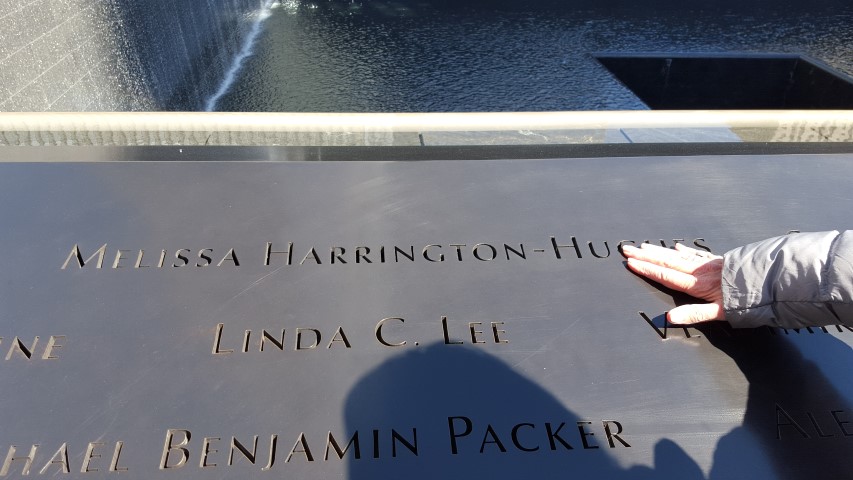
So to Melissa Harrington Hughes: thank you.  Someday I hope to get back to the new September 11 Memorial where I will touch the steel engraving of your name.  And in the hollows of those letters, we will finally be connected.

2016 Update:  This past March I went to New York with my niece and her two daughters.  Visiting the National September 11 Memorial and Museum was the highlight of the trip.  When I was planning our visit I read that it was preferable to purchase tickets in advance,  so on February 24 I ordered ours from their website.  On that same day I received a message that I had a new comment on my 2011 post about Melissa.  I thought that was a coincidence – that maybe something that I had typed when researching the September 11 Memorial had caused an old comment to be recirculated.  But it wasn’t an old comment  – it was this:  “I came across your blog after my son and I just prepared a required oral presentation for his English class about a life event of mine that had great impact. I think of Melissa almost every day –  I was her best friend since childhood.  She was a shining light and people were drawn to her. I miss her and the memories are still clear with detail. Thank you for seeing how her passion, love for life, and love for her husband and family was that shining light, even if it was her last words. She called her Dad and Mom and Sean from that burning building because she loved them deeply. She is well remembered and will never be forgotten.”  I still get chills when I read this note and think about the timing of it.  There are no coincidences in life, of that I am sure.

On March 30 I was able to fulfill the promise to myself that I would visit Melissa’s engraving at the Memorial.  Her name is carved into Panel N-22 on the large reflecting pool that stands in the footprint of the former North Tower.  I put my hand on her name and thanked her once again for all that she has meant in my life.  May she rest in peace.

Note: On Friday, September 11, I will publish my piece about the September 11 Memorial and Museum.