IN THE FOOTSTEPS OF MOZART – SALZBURG

By Suzanne Sparrow Watson
Mirabell Gardens
The “Favorite Things” statue

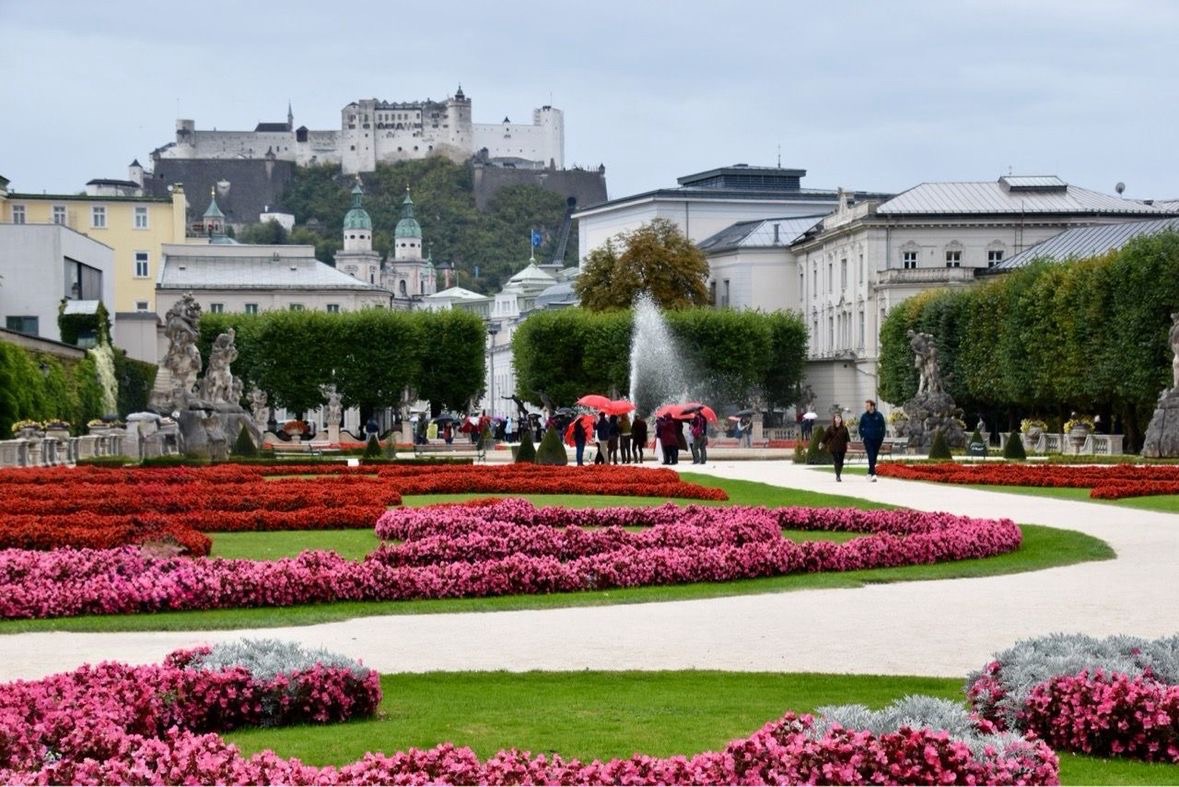
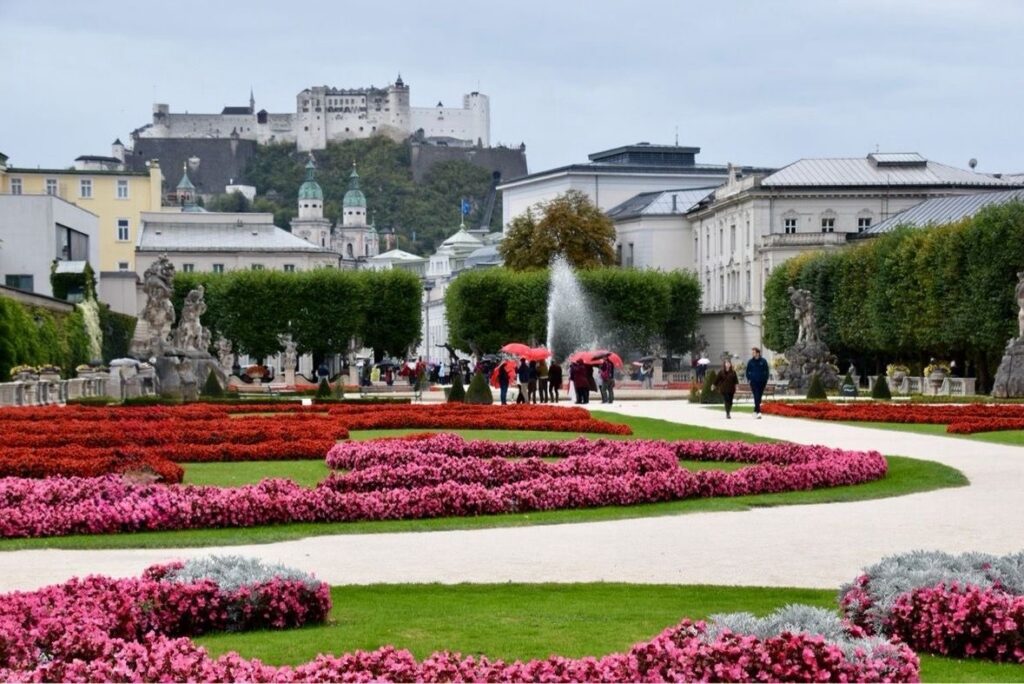
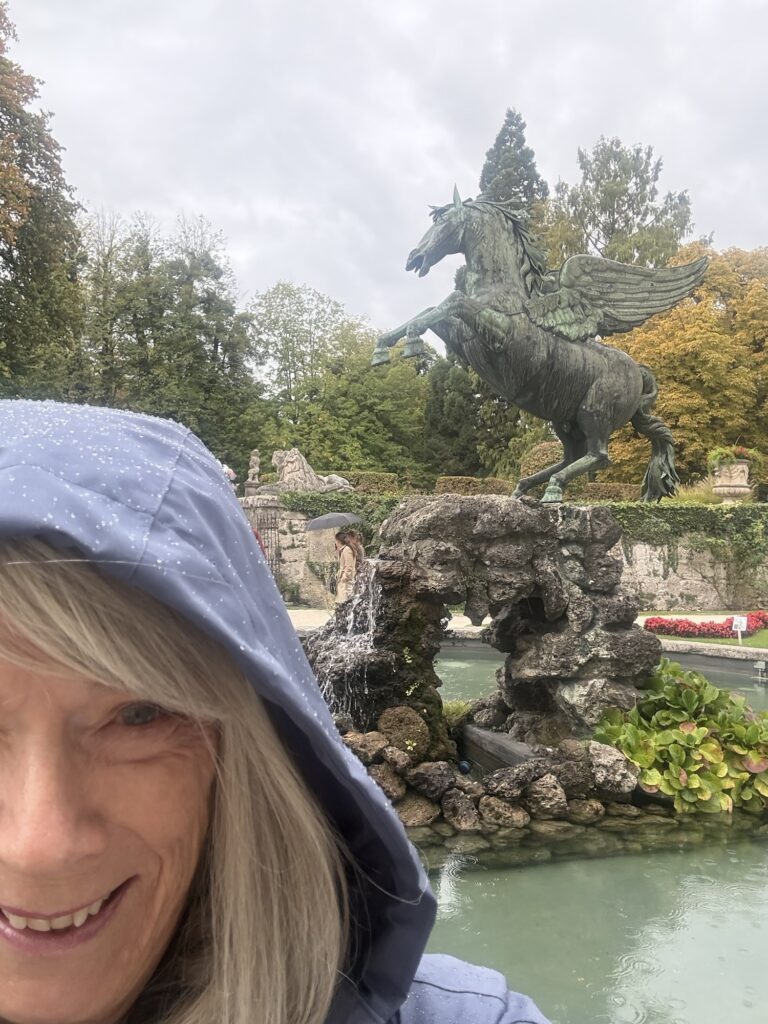
I have to admit, when I saw that the trip included Salzburg I did not think of Mozart. Instead, I conjured up images of Julie Andrews frolicking her way through The Sound of Music. So I was excited to follow in her footsteps, and frankly, was not above bursting into song. Alas, the only bad weather we encountered on the whole trip was our first day in Salzburg. It poured rain almost the entire day. Still, our guide took us to many of the spots where the movie was filmed, including the beautiful Mirabell Gardens. She told us that the movie was three months behind schedule because of the bad weather in Salzburg. I believed her.
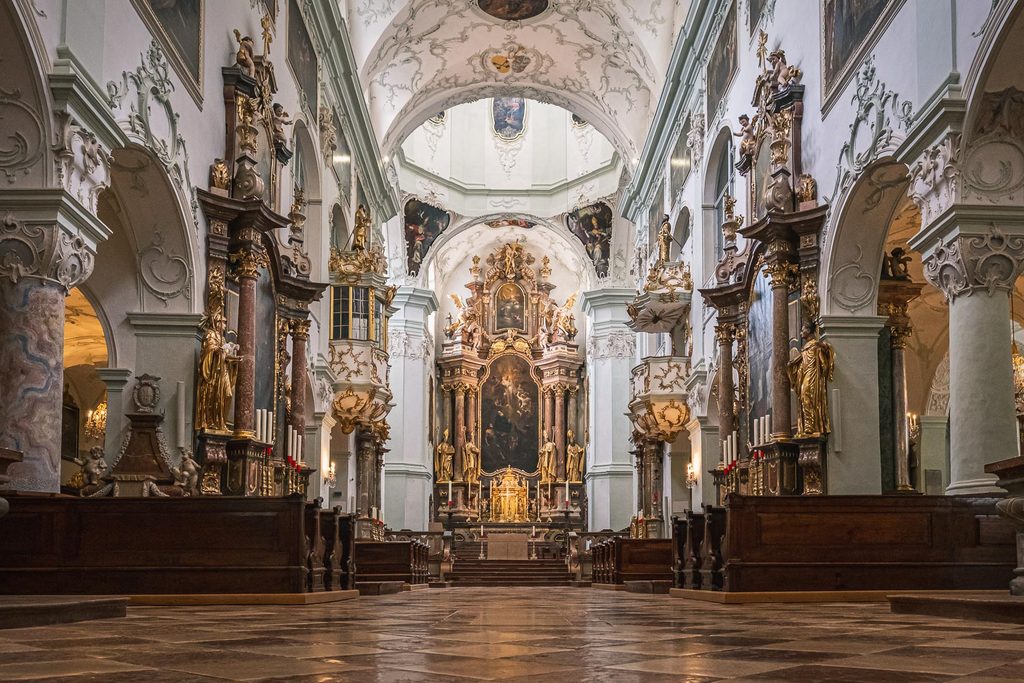
Salzburg Cathedral
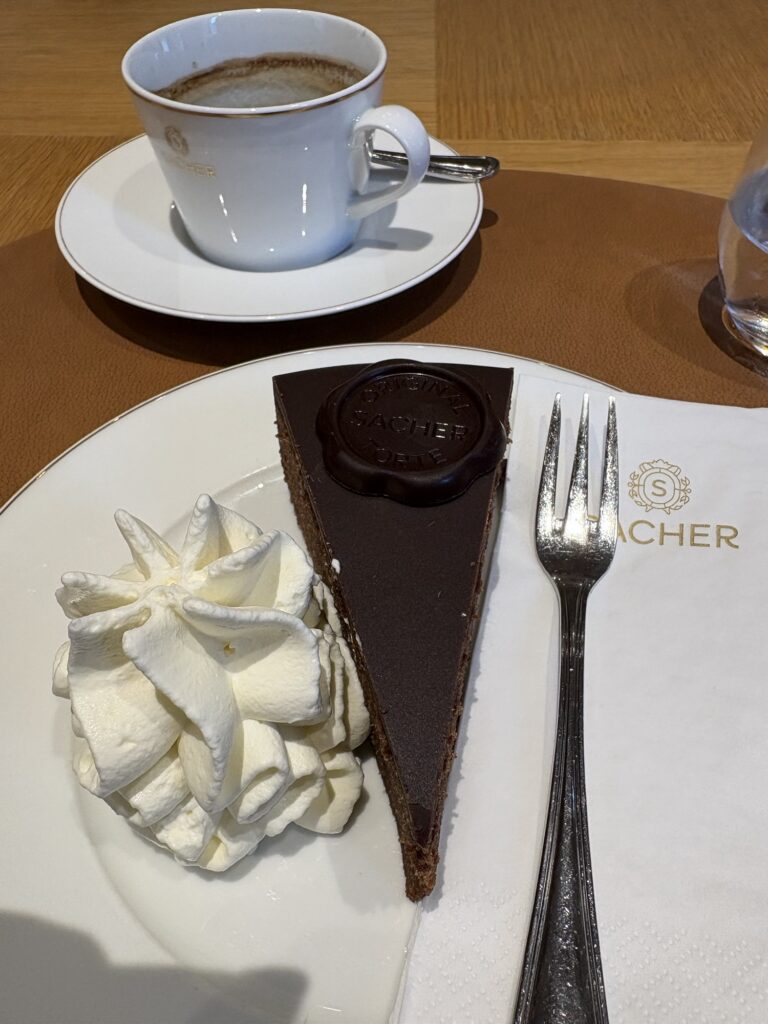
The Sacher Torte

We toured the Old Town, St. Peter’s Abbey, the magnificent Salzburg Cathedral, and then the famous building where Mozart was born, the Geburtshaus. Once the tour was over, I decided to seek shelter from the rain and went to the Hotel Sacher for lunch. Julie Andrews stayed there when filming the movie, so I was still hoping to pick up on some of her vibe. And let’s face it, for a cake lover like me, going to the home of the Sacher Torte is almost a requirement. I was not disappointed. The dining room is elegant and quiet. I ordered the pumpkin soup only because I thought I should eat something nourishing before delving into cake. I was seated next to a family that brought not one, but two, terriers into the dining room. I later found out that dogs in general are allowed most everywhere because the Austrians take great pride in having well-trained dogs. It was a lovely way to spend an hour, and I enjoyed a little alone time before rejoining the group.

That night the group went to a student concert at a local church. I had read about it before we embarked on the trip and it didn’t get a glowing review. So, I opted to stay at the hotel, where I ate a delicious dinner in their intimate dining room. That night, I finally got some much-needed sleep. I think it was due to the Sacher Torte at lunch and the Agustiner beer at dinner.
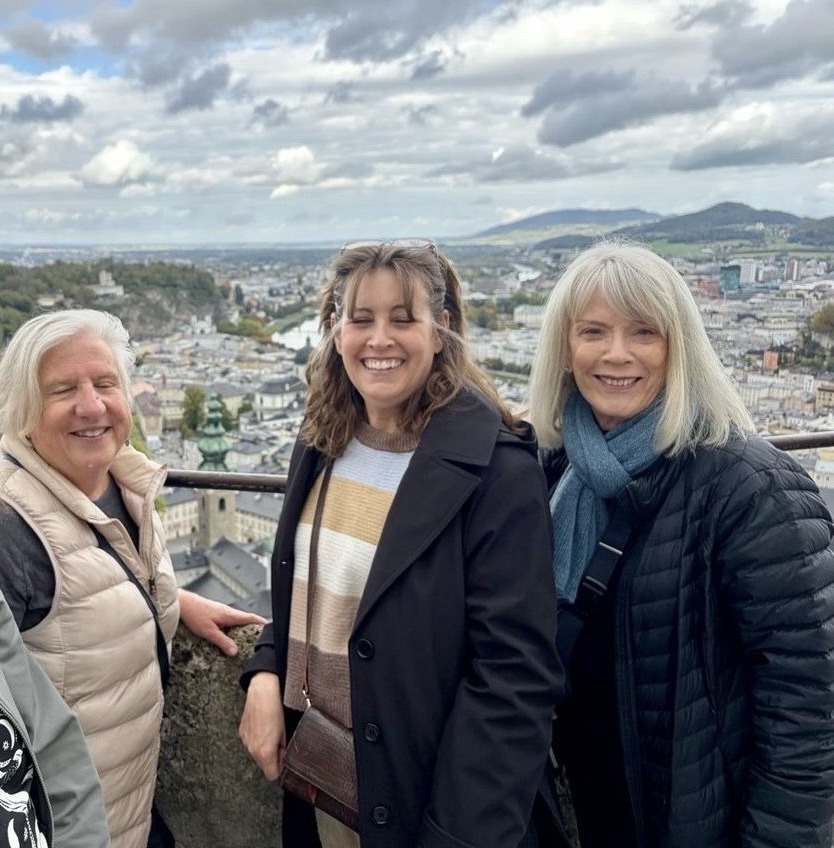
Atop Hohensalzburg Fortress

The next day dawned with cloudy skies but no rain so we were off for more touring. We spent a great deal of time at the home where the Mozart’s lived for the majority of their time in Salzburg. Mozart’s father was the original stage dad, and it was fascinating to hear about how he used his son’s genius from a young age to advance the family’s position in society. Kris Kardashian could learn a thing or two from him. Two of the pianos Mozart used to compose his works are still on display, along with some of the family’s furniture and personal belongings.
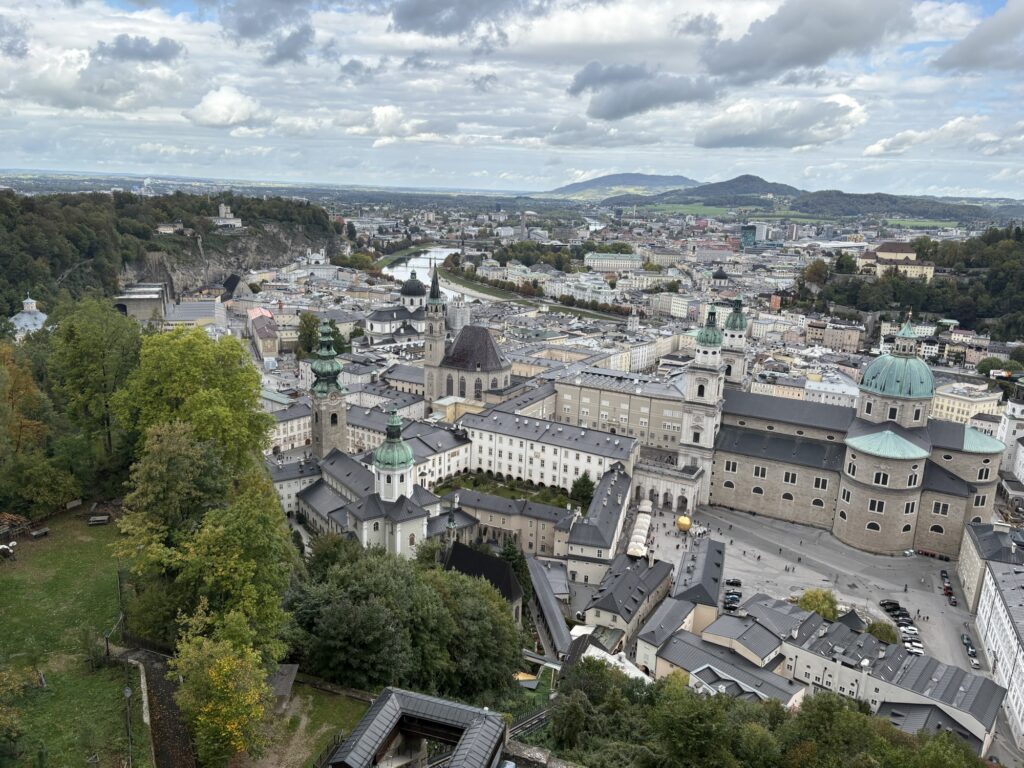
The view from the Fortress

Next, we hopped on the funicular for a ride up to the Hohensalzburg Fortress. The original fortress was built in 1077, and was expanded several times, most notably during the Thirty Years War. Finally, it was abandoned as a military outpost in 1861 and turned into a tourist site in 1892. It is a spectacular compound and is all the more amazing when you think about how hard it was to build such structures without modern equipment and having to haul everything up to its highest point at 1660 feet.
St Peter Stiftskeller

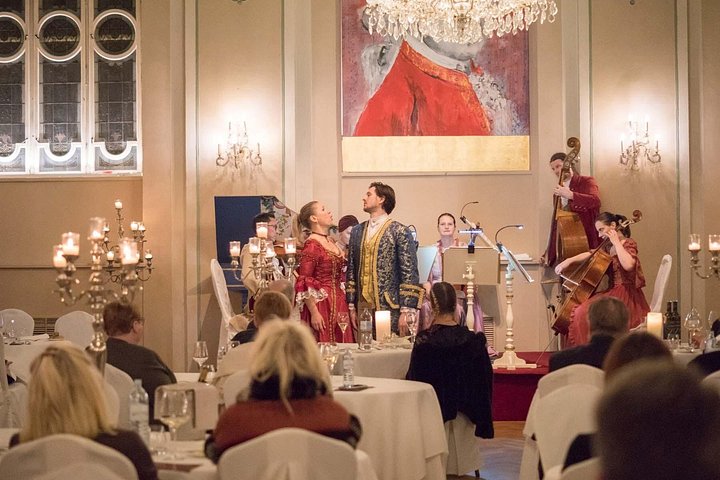
That night we were treated to a Mozart concert and dinner at St. Peter Stiftskeller, which claims to be the oldest restaurant in Europe. It is a grand hall and today hosts dinners that feature music and opera composed by Mozart between each course. It was a magical evening and the perfect way to conclude our time in Salzburg.

Next Monday, Vienna!
IN THE FOOTSTEPS OF MOZART – MUNICH

By Suzanne Sparrow Watson

A couple of years ago I started taking classes through the ASU Osher Lifelong Learners program. It’s a wonderful way to learn about a subject without the specter of tests and grades. In January as I was perusing the Spring catalog, I noticed that they also offer travel programs. Long story short, I signed up for a trip to Munich, Salzburg, Vienna and Prague to study the life of Mozart. I’m really not a classical music aficionado, but those are cities I have always wanted to visit so I figured I could go and learn something along the way. I returned from the trip last week and it truly was a magnificent experience. I learned a lot about music, Mozart, and myself. This week I’ll write about Munich and Salzburg, next week about Vienna and Prague.

Munich

Me with an Augustiner

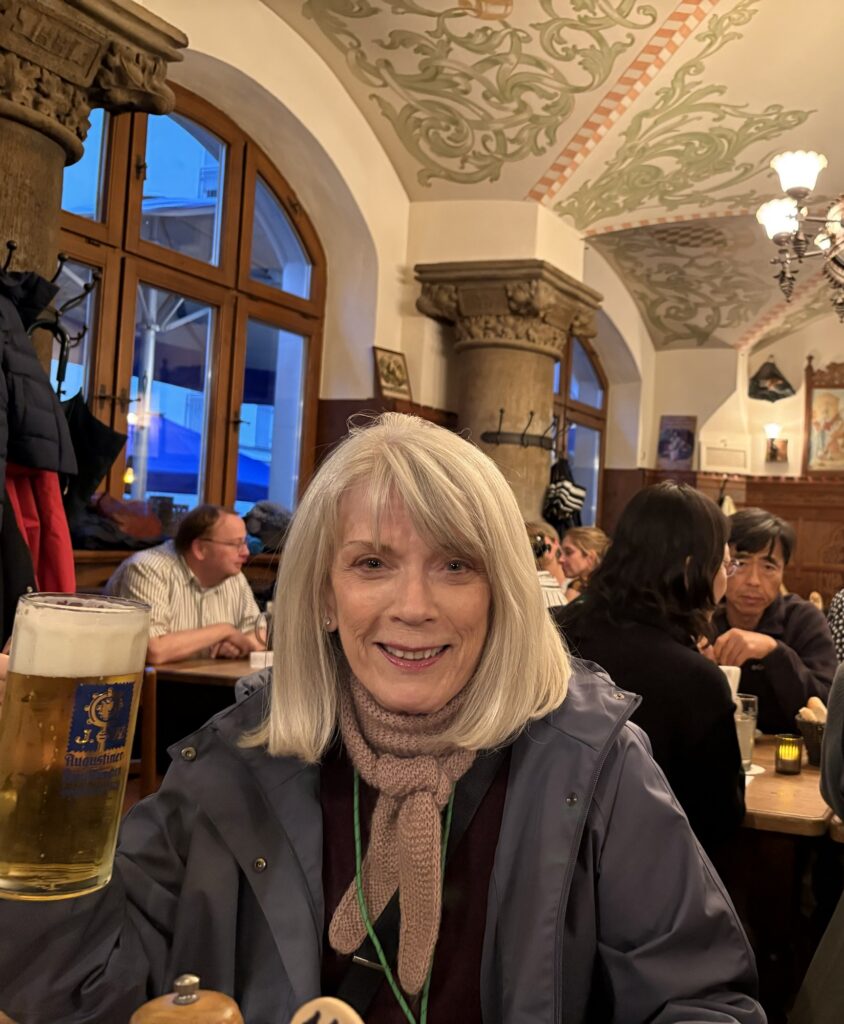
There were 14 people on the tour, eight leaving from Phoenix and the others coming from their summer locations. Those of us from Phoenix were the first to arrive – at 6:30 am! It was a very long and sleepless flight. Take my word for it – the Delta One “lie flat” experience is like lying in a narrow MRI tube, with the added attraction of turbulence that makes it seem you are sleeping in a Vitamix. Unfortunately, we could not check in to our hotel until three. Everything I read about jet lag suggests that sunshine and movement are key to overcoming it, so I ventured off with three other members of the group to walk the neighborhood. Much like London, there are numerous enclaves of homes and businesses centered around community parks. We sought out a local pub, ate lunch, walked some more, and finally dragged ourselves back to the hotel around two, in hopes they would let us in early. No luck. But by then the other six members of the group had arrived so we all sat in the bar and got to know one another. Even at our crankiest, we were a congenial group. Once in our rooms we had time for a quick shower before we gathered for a meeting and then on to dinner. Our tour director for the trip, Joselyn, was a British woman who has lived in Munich for 15 years. She took us to one of her favorite haunts for dinner, Tattenbach pub. We were treated to a typical German meal – sausage, sourcrout, potatoes, and apple strudel. We also drank Augustiner beer, which we learned donates a great deal of their profits to restoring art and cultural icons in Europe. I’ve never felt so virtuous drinking a beer.

The Residenz dining hall
The Glockenspiel

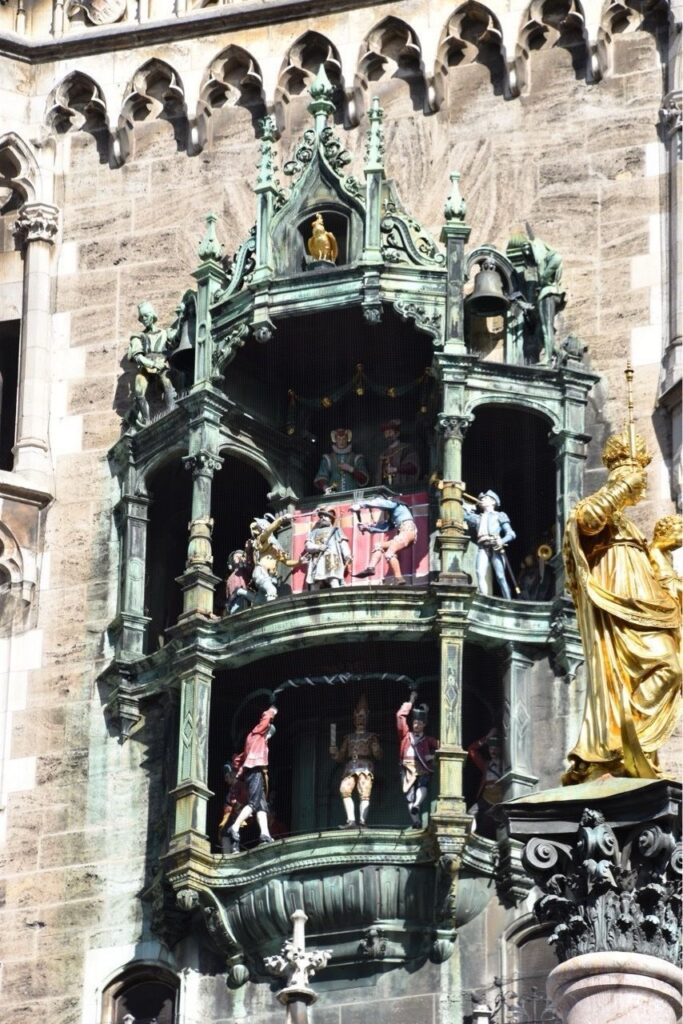
The next day we spent the morning with a guide touring the highlights of the city. Munich was actually an add-on to the trip, since we all had to fly into the city as our starting point, so we only had one day to see the sights. But we covered a lot of territory: The Englischer Garten, the bohemian art district, and the Residenz, a museum that housed the Wittelsbach dukes of Bavaria. As a WWII buff, I knew that Munich had been the heart of the Nazi movement, and I wondered if the guide would touch on that. She did. She pointed out all of the former Hitler offices and museums and explained how they have been re-purposed. For example, Hitler hated jazz, so his concert hall is now the home of jazz music in Munich. He also hated contemporary art, so the magnificent building that held his art collection is now the Contemporary Art Museum. In this way, she said, rather than destroying beautiful buildings, they have simply taken away their power. She told us that before they graduate, every student must visit one of the concentration camps, and any citizen who denies the Holocaust is arrested. We ended the tour with a visit to the medieval heart of Munich, the Marien Platz, where we got to see the famous Glockenspiel clock.

My Schnitzel

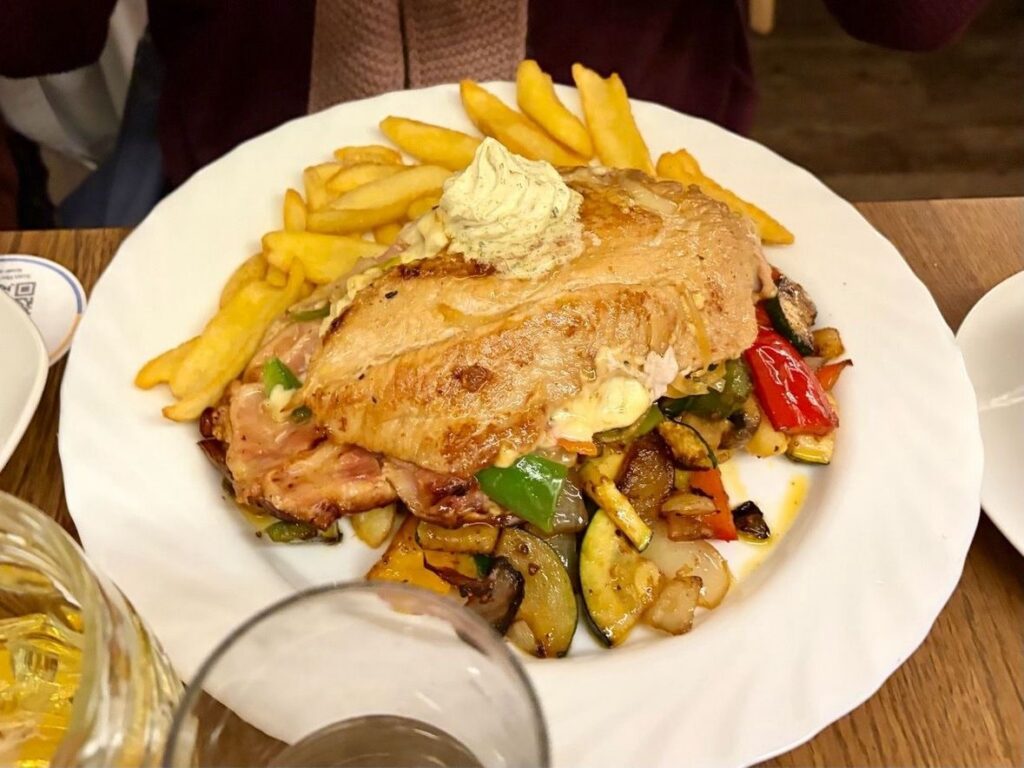
Next, it was off to lunch at a nearby restaurant. And here is where I want to address the criticism we often hear about portion sizes in America. I suggest that anyone who thinks we “eat big” needs to spend some time in Germany. Not only is the food heavy, but the servings are huge. One of my fellow travelers ordered the pig’s knuckle and it looked like a large beehive had landed on his plate. My order of schnitzel could have fed an army, assuming they were hungry. The good news is that, at least in our case, we didn’t need any dinner. Several of us gathered in the lounge back at the hotel where we shared some fruit, cheese and wine. And a lot of laughs. It was the perfect ending to our stay in Munich.

Next up on Thursday – Salzburg!

Las Vegas – Bad Golf, Good Food, Great Show

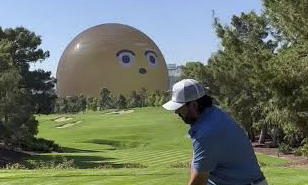
I could have even lost a ball that big!

          Well, this is a switch, Suzanne is traveling the world (actually she just returned home safely on Sunday) and I’m here writing another blog. I could tell you about the exciting places she has been, but I assume that’s what she’s going to do next week. You’ll love it! As for me, I have nothing to write about, although . . .

          I was on a ‘boys golf trip’ to Las Vegas last week, (and in spite of what goes on in Vegas stays in Vegas, I’ll reluctantly tell you about it.) Believe me, my golf was nothing to write home, or anywhere else, about. In fact, concerning money lost, if you count the green fees, golf bets and the number of balls lost, I could have saved money if I’d just stayed at the casino and gambled all day.

          As I did finally discover a new ‘system’ for making money on the craps table – don’t play!

          Anyone who has read my blogs before knows I love South Point Hotel and Casino, which has 11 restaurants and I have eaten in all of them except the Steak ‘n Shake – basically a hamburger joint. So, it was time to check that one off my list, as the boys had a very nutritious dinner of hamburger and milk shakes. Yes, I went off my diet!

OK, I was never on a diet.

          We had our last supper at the Sunset Station Hotel and Casino – we had eaten there every year of the ‘boys trip’ for the last three years. Two years ago, we all claimed that we had the best Ribeye steak of our lives. We went back last year and had the Ribeye steak again and judged it as ‘good, but maybe not the best steak ever. We went back again this year, and the steak was somewhere between the best steak ever and last year’s steak. Still very good.

          The Sunset Station is one of 22 hotels and casinos owned by the Fertitta family, five Station casinos as well as Red Rock Casino and Resort, Green Valley Ranch Resort and Durango Casino. They clearly know where their next meal is coming from.

          The Fertitta family made a nice investment when they bought the UFC (Ultimate Fighting Championship) in 2001 for $2 million and sold it in 2016 for $4 billion!

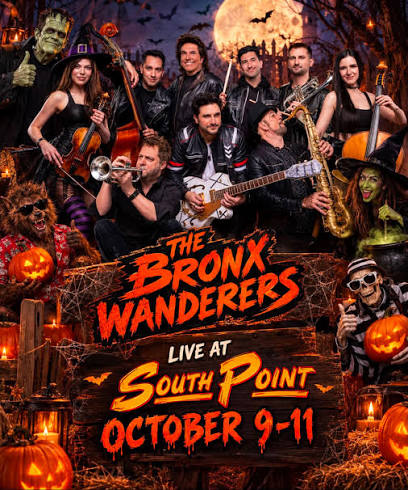
          But we didn’t need anywhere near that kind of money to enjoy the Bronx Wanderers at the South Point Casino and Hotel – me for the seventh time! Tickets for this fabulous show are still only $45. By far, the best value in Vegas!

          While we were there, South Point was hosting the 50th Annual Indian National Finals Rodeo – so there were a lot of cowboys and Indians roaming through the casino last week – they seemed to be getting along now.

          Hopefully next week we’ll hear all about Suzanne’s fabulous trip.

A Conversation With October

by Bob Sparrow

October is an unusual month. I love it, as football is in full swing, the World Series takes place, which is the only time I have patience enough to watch baseball; hocky is underway and basketball starts this month, The fall weather is usually perfect – summer heat is gone and the winter chill has not yet arrived. This year, however, the summer heat decided not to go, as we here in Southern California, are experiencing near-100-degree weather . . . in OCTOBER! But I digress – for all it’s good attributes, October seems to have gotten the short end of the stick in many regards.

Here is an imagined conversation between October and the Calendar Guy . . .

Oct: “Hey, I’m the eighth month, remember ‘oct’ means eight, then you push me back a couple of months? What’s the deal?”

Calendar Guy: “Yes, you were eighth in the old Roman calendar, but they added two months, so you got pushed back.”

Oct: “What do you mean ‘they added two months’, did the earth slow down on it journey around the sun?”

Calendar Guy: “No, originally the first 60 or so days of the calendar weren’t counted because it was the rainy season, bad weather, and nothing happened during that time, so they just didn’t count it. But eventually, they did add January and February, thus pushing you back two months. Sorry.”

Oct: “So why did I get screwed on the holidays?”

Calendar Guy: What do you mean?

Oct: The other months have Christmas, New Years, Valentine’s Day, Independence Day, St. Patrick’s Day, Memorial Day, Thanksgiving, just to name a few. You gave me a day where everyone dresses up in stupid or scary costumes and goes from house to house begging for candy. I feel like the red-headed step-child!”

Calendar Guy: “I gave you Columbus Day?”

Oct: “Yeah, thanks for that! You gave me a day to celebrate a guy who did not discover America because millions of Indigenous people already lived there, and other Europeans had visited centuries earlier. AND he actually landed on islands in the Bahamas and other islands in the Caribbean, mistakenly believing until his death, that he had reached the East Indies and Asia. Aside from being cruel, he was stupid!

Calendar Guy: But . . .

Oct: “No buts, here’s a guy that forced the indigenous people into slavery. And in fact, eliminated many of them through warfare, mistreatment, and the introduction of fatal European diseases. AND, when he went back to Spain, he was arrested by Spanish authorities for the way he treated people! And you gave me Columbus Day to celebrate this jerk?!!!”

Calendar Guy: “Well, I later gave you ‘Indigenous People Day’ too, so people can celebrate either holiday.”

Oct: “Thanks a lot! Indigenous People Day didn’t even become a national holiday until 2022! Many people today don’t even know what an indigenous person is! OK, forget the holidays, what about Octoberfest?”

Calendar Guy: “What about it?”

Oct: “Octoberfest ends on the first Sunday of October, so I could get 7 days, or I could get one day!! September always gets over two weeks. Shouldn’t Octoberfest mostly be in October?”

Calendar Guy: “The weather is better in September.”

Oct: “You don’t need good weather to drink German beer!”

Calendar Guy: “You should just be grateful for what you have, ‘International Coffee Day’ and ‘National Pumpkin Spice Day’.”

Oct: “Bite me!”

Hoping you all are having a happy October.

TRUCKIN’ ALONG

By Suzanne Sparrow Watson

Back in the dark ages when I was in my 20’s, a girlfriend and I took a ski trip up to Lake Tahoe. We had planned on a fun-filled weekend. What we didn’t plan for was running out of gas. In her hurry to get us out of town, she had forgotten to fill up her tank. So, just east of Auburn on Highway 80 we sputtered to a stop. It was still twilight and as we stood by the car wondering what to do, a nice truck driver pulled up and offered to take us to the next gas station. We were so grateful and relieved that we hopped in the cab without a second thought. Looking back on it, we were very foolish (in more ways than one) and also very lucky. But the thing is, back then, most truck drivers were employees of a company. Which means they were in a union, had good benefits, and limits on how many hours a day they could drive. They were considered the best drivers on the road. Today, an increasing number of truck drivers are independent contractors and are paid by the job. The faster they deliver, the more jobs they can complete, and thus, earn more money. For those of us who have driven on major freeways the past decade or so, we have seen an increase in unsafe truck drivers. It’s almost like they’ve made a sport of terrorizing passenger cars. I’ve been tailgated, forced to change lanes, and had to slam on the brakes when a maniac truck driver is on a mission not only to deliver his goods, but to run down anyone who gets in his way.

So it was with some interest that I saw a segment on a news program the other day about driverless trucks. In May 2025, Aurora launched regular commercial driverless deliveries between Dallas and Houston, using heavy-duty trucks without a human driver behind the wheel. Now there are a handful of competitors who are also testing the concept. When you think about it, long-haul routes involve thousands of relatively predictable highway miles. There are no crowded city streets or parallel parking required. The Aurora model uses a hub-to-hub model: people handle loading, local streets and customer delivery, while an automated truck covers the long middle section on the highways. The business case is pretty compelling. For corporations with truckers on the payroll the current system is constrained by driver schedules and hours-of-service rules. A driverless vehicle could spend more time moving, helping carriers use expensive equipment more efficiently and making delivery times more predictable. Automation may also add capacity on routes that are difficult to staff. For shippers, that could mean fewer disruptions and more consistent service; for consumers, it could eventually help stabilize the cost and availability of goods.

Of course, like the ongoing discussion about AI taking over jobs, there is the question of how driverless trucks might impact employees. But human workers will still be needed for first- and last-mile driving, inspections, maintenance, loading, and customer interaction. New roles are also emerging in fleet supervision, remote assistance and autonomous-vehicle service. Over time, some long-haul positions may shrink or change, but new jobs will be created. All of this doesn’t solve the problem of the independent contractors, paid by the job, who cause the majority of traffic accidents, but at least it’s a start.

There’s still a lot to figure out before we see wide-spread use of driverless trucks. But recent studies comparing the driverless Waymo cars with human drivers in Phoenix showed that Waymo has 62% fewer injury crashes than humans. Which, in part, tells you just how bad the drivers are here. But that’s a subject for another day. We can only hope that those same positive results are possible with trucks. In the meantime, I’m having my car fitted with bubble wrap next time I take to the highway.