By Suzanne Sparrow Watson
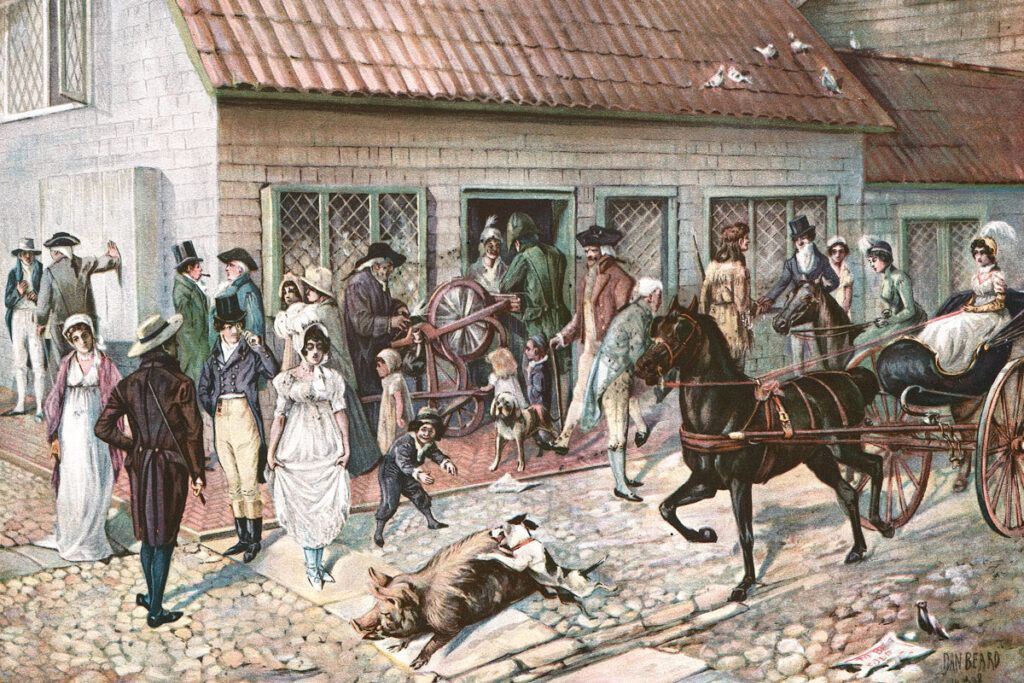
Hopefully you all had a wonderful Independence Day celebration. Because this was the 250th anniversary of our Declaration of Independence there has been a lot written in the past few weeks about those early days. It got me to wondering – since the population of the American colonies was largely British, and the English language became the predominant language throughout what is now the eastern U.S., why do we not speak with British accents? When did we evolve from speaking the King’s English to our own version of the language? Did it change early in our history or did the likes of George Washington, Benjamin Franklin, and Abigail Adams sound like King George III, William Wordsworth, and Jane Austen?
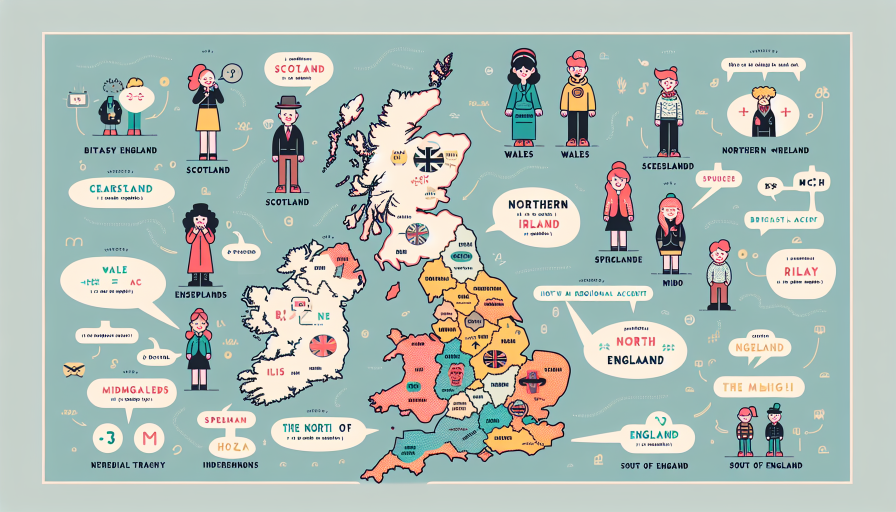
It turns out that the answer is almost certainly no. “American English” had come into common use by the time our Founding Fathers declared independence. But how? It is logical to assume that because Britain is extraordinarily rich in accents, one of those versions would have prevailed in the New World. In fact, in the Old World you only have to travel a few hours for the accent, and often the dialect, to change in very notable ways. Back in colonial times, as now, someone from London sounded quite different from a person from Yorkshire, Devon, or Liverpool — and accents were even more distinct in Scotland, Wales, or Ireland. And because people didn’t travel very far from home, many people spent their entire lives hearing just their local accent.
But when people from all regions of Great Britain began landing in the American colonies, they started mixing with each other. What resulted is a phenomenon known as “dialect leveling”. Dialect leveling is a phenomenon that occurs when a variety of different ways of speaking come into contact with one another, and the features that are most common — including accent and pronunciation — tend to overtake others. The outcome is a smoothing out of differences, thus eliminating distinct regional or social linguistic elements and creating a more standardized form.
In America, the leveling process was quick. Within a generation, Americans born in settlements such as Jamestown in the early 1600s, were already speaking differently than their parents. Yes, teenage rebellion existed even back then. And it wasn’t only the British mixing with one another. The early colonists came into contact with other European settlers speaking Dutch, Swedish, French, and Spanish, as well as Indigenous languages and, later, the languages of enslaved Africans — all of which contributed to the creation of early American English.
Visitors from the Old World were surprised when they heard American English. They had expected all kinds of accents to have developed, given the hodgepodge of dialects and languages spoken by the ragtag Americans. But instead, they were surprised by how uniform and standard the speech had become across the colonies, regardless of regional or class background. What is striking is that no one planned or imposed a common way of speaking. Settlers in the New World didn’t adopt any one group’s accent. Instead, they invented something new: a blended, democratized form of English. So, within one generation early Americans had forged their own speech, decades before independence. That said, one can reasonably argue that we have our own distinct regional accents, but that’s a story for a different day.
Our American version of English sets us apart. Which explains why we sometimes have trouble understanding people who speak in the “mother tongue”. When I am watching programs on Britbox I struggle to follow the dialogue and often turn on the subtitles. And don’t get me started on the Scottish, Irish, or God forbid, the Welsh, versions of English. I swear the Celts invented their own language just to irritate the English.