THEY WERE SOLDIERS ONCE, AND YOUNG (2025)

By Suzanne Sparrow Watson

This annual Memorial Day post is written in remembrance of the soldiers from my high school who died in the Vietnam war.  I first published this in 2014, and each year since then I hear from people who relate similar stories about the losses suffered in their hometowns or, worse, their families. This Memorial Day please take a moment to remember all of the brave young men and women we’ve lost in conflict. 
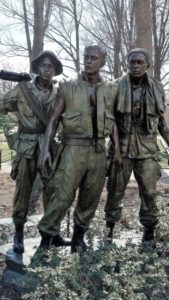
Five boys from my high school were killed in the Vietnam War. For a small town like Novato, that was an enormous number. We were such a close-knit community that even if we didn’t know one of them personally, we knew a sibling or friend. So when I planned my trip to Washington D.C. last month, I scheduled time to visit the Vietnam Veterans Memorial to see their names on “The Wall”.

To refresh my memory, I pulled out my high school yearbooks and found them all – smiling for a formal portrait or posing for a team picture. Each image reflected a boy, fresh-faced and full of hope, his life stretching out before him. I looked at those young faces and found it hard to believe that their lives ended so soon after the bucolic days captured in the photos. None of them reached the age of 22, their dreams extinguished on the battlefield. While we, their classmates, lived long enough to enjoy the internet, smart phones and streaming movies, most of them didn’t live long enough to see color television.

I reflected on the stories I’ve read of WWII vets who speak so reverently of the “boys who didn’t come home”. As I perused the yearbooks, I finally understood their sentiment. It is only when looking back through a 50-year lens that one can appreciate just how young these soldiers were and how many of life’s milestones they missed. So, on this Memorial Day, I’d like to pay tribute to “The Boys from Novato”.
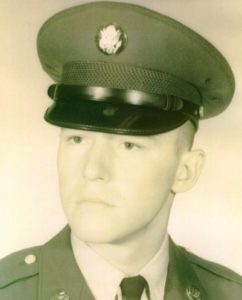
Robert Johnson
Bob Johnson joined the Army in the fall of 1965, in what would have been his Senior year in high school. I remember him as a very nice, quiet guy. Before he enlisted, he asked his high school sweetheart to marry him – they wanted something to hang on to while he was gone. His entry into the service occurred just as the war was escalating. He was sent to Vietnam in March of 1966 and three weeks later he was killed by enemy gunfire during “Operation Abilene” in Phuoc Tuy Province. As his former classmates excitedly anticipated their Senior prom and graduation, Robert had already made the ultimate sacrifice. In the 1966 yearbook, where his senior portrait would have been, his mother placed this photo of him in uniform along with a tribute. He was the first Vietnam casualty from Novato.

Mike Tandy
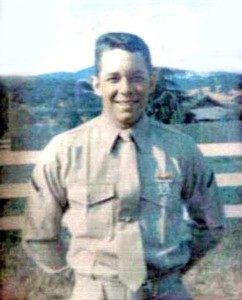
Mike Tandy graduated from NHS in 1965. His sisters, Sue and Sarah also attended NHS. Mike was a good student, who participated in the first swim team our high school fielded. He was an Eagle Scout and according to his friend Neil Cuzner, “he was highly intelligent, a great guy and an excellent scout. He was in the Senior Patrol and a young leader of our troop. He led by example.” After graduation Mike joined the Marine reserves and was called up in January 1966. He was sent to Vietnam shortly after that. On September 8th he was on patrol in Quang Nam with another soldier when his footfall detonated a landmine. He was killed instantly. He had celebrated his 19th birthday just five days prior. His classmates had moved on – either to college or working – but the Tandy family was left to grieve the loss of their son and brother. In 2005 Sarah posted to the virtual Vietnam Wall: “Thanks to all of you who come here and remember Mike. All of our lives were changed, and I thank you for not forgetting.”

Allan Nelson
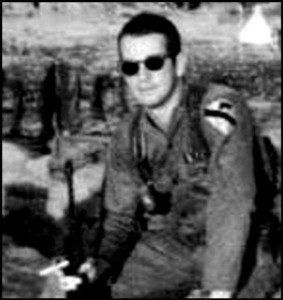
Allan Nelson played football at College of Marin with my brother, Bob. Allan’s sister, Joanne, was in Bob’s class in high school and his brother, Steve, was in mine. So we were well aware when Allan was drafted into the Army and sent to Vietnam in July 1966 at the age of 20. Five months later, on December 1, we were devastated to learn he had been killed by gunfire during a battle in Binh Dinh Province. I still remember the day Steve came to school after Allan’s death; red-faced with tears streaming down his cheeks. He had always been such a happy guy but was now changed in ways that were hard for his 16-year-old friends to understand. As I look back now, I can’t imagine what it must have been like for him to go home from school each day, to face parents who were shattered by grief. Joanne posted the following on a memorial page and perhaps sums it up the best: “Allan was my brother, not just a brother, he was my best friend. All I know is December 1, 1966, was the saddest time for me and my family. My family loved each other so much, but when Al was killed the joy died in my family. Allan had his whole life planned. He had just turned 21 on Oct. 20th. When we were young, he couldn’t wait to be 21. I am so sorry for all the families that lost a son and a brother. It will be 33 years in Dec. The everyday sad feelings of loss are gone but on special days it still hurts.”
Jim Gribbin
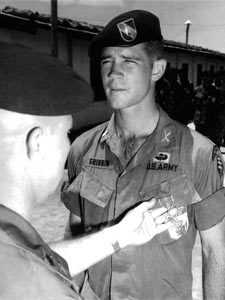
Jim Gribbin graduated from NHS in 1966. He was on the football team, very active in school clubs and was well-liked by everyone he met. He joined the Army Reserves and when called up, became part of the Special Forces, where he rose to the rank of Captain. He served two tours of duty in an elite MIKE unit. In March 1970 his unit was on a night defensive mission in Kontum Province when they were ambushed by enemy troops. Jim sacrificed his own safety by running into open territory – twice – to aid and retrieve wounded soldiers under his command. He was shot both times and taken to a rear medical facility where he died from his wounds. Ironically, for this affable Irishman, he succumbed on St. Patrick’s Day. He was awarded the Silver Star and the Bronze Star for Valor. Jim’s dad was a veteran of WWII. When he died in 2011, he requested that he be buried in Jim’s grave, with his name and vitals carved on the back of Jim’s headstone. One can only imagine the grief that he carried all those years. Hopefully he is at peace now that they are forever reunited.

In 2018 I was contacted by a woman in New York who signed up for a grueling physical event that honors Vietnam veterans.  She chose to represent Jim and wanted to know more about him. You can read my post about her and the event here: https://fromabirdseyeview.com/?p=7111

Wayne Bethards
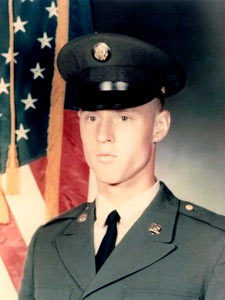
Wayne “Ed” Bethards was in my graduating class, but I didn’t know him well. His family moved to Novato just before the start of our senior year. His mother, Betty Bethards, was the author of the international best-seller, “The Dream Book”. Again, Neil Cuzner has provided a bit more insight: “Wayne was a good person. He had a great love of baseball and had actually started a small league while over in ‘Nam. He was sharing his love of baseball with the Vietnamese children.” Cuzner went on to say that Wayne was a religious person and did not want to kill anyone; he struggled greatly with his deployment. He was drafted into the Army and was sent to Vietnam in October of 1970. In January 1971, he was killed while on patrol by the accidental detonation of a mechanical device in Quang Tin Province. He was the last boy from Novato High School to die in the war.

Jerry Sims
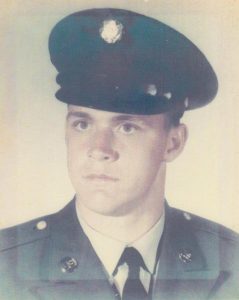
In April 2017, I heard from a former schoolmate, Dennis Welsh, about Jerry Sims, a boy who died in the conflict whose hometown was listed as Novato. I found in my research that sometimes the Novato “hometown” designation was for those affiliated with Hamilton Air Force Base, not graduates of Novato High School. Since there were no records of Jerry at NHS, I assumed he was from Hamilton, but that was not the case. Dennis told me that Jerry moved to Novato from Texas in the Spring of 1966 to live with his sister. He tried out for the football team during spring training and made the squad. But despite that automatic inclusion into a social group, he was unhappy living in California and being the “new kid” going into his Senior year. Dennis said that he never saw him again after football tryouts and didn’t learn of his fate until he spotted Jerry’s name on “The Wall”. After some research I learned that after Jerry left Novato in June 1966, he joined the Army and was sent to Vietnam in November. On February 6, 1968, he and several others in his unit were killed by small arms fire in Gia Dinh province. Jerry was 19 years old. His former platoon leader wrote this on his memorial page: “I was Jerry’s platoon leader on the day he died. He didn’t have to be there, since he had a job elsewhere in Vietnam, but he requested a transfer. He had already spent a year with the Wolfhounds, but for reasons all his own, he wanted to come back to this unit. He died doing his job as a squad leader in my platoon.” It would seem Jerry finally found his home – and some peace – with his Army brethren.

Jim Wright
Update May 2022: Each year this annual tribute receives a lot of viewings around Memorial Day.  This year I was fortunate to hear from Bill Sauber, a 1966 graduate of NHS, who told me of another NHS connection: Jim Wright.

Jim celebrated his 18th birthday in January 1966 and was drafted into the Army shortly thereafter. I suspect that he had dropped out of school, as he was in his sophomore year in the spring of 1966, so would not otherwise be eligible for the draft.  After basic training he was sent to Vietnam in May as part of the 27th Infantry, known as the Wolfhounds. On November 5, 1966, he was killed by enemy gunfire in Darlac province. He posthumously received a Silver Star. His official records indicate that by the time Jim died, his father was not living in Novato, his mother could not be located, and he had married a woman named Linda.  It is hard to imagine that in the space of one year Jim celebrated his 18th birthday, was drafted, married, and ultimately, killed.  As with Bob Johnson and Jim Gribbin, he lies at rest in Golden Gate National Cemetery. I am hopeful that someone reading this post knew him and can provide more insight into his time at Novato High School.
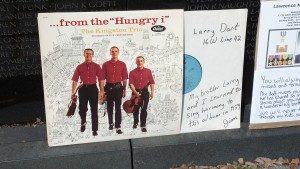
When I visited “The Wall” I found the boys from Novato, each name etched on that long expanse of granite. I thought about their families and the sorrow they endured. It was overwhelming to realize that sorrow had been replicated 58,286 times. Each of the names on that black, shiny surface represent a family forever destroyed. As I walked along the pathway, I looked at all of the mementos that were left as tributes to the fallen – notes, flowers and flags mostly. But then I spotted something different – a tribute from Jim Dart to his brother, Larry. It was a Kingston Trio album, along with a note about the good times they shared learning the guitar and singing songs together. I was overcome with emotion reading Jim’s note. My brother, Bob, owned that same album. He and his best friend, Don, often entertained our family playing their guitars and singing songs from that record. Bob was a Naval officer in Japan during the Vietnam war and was safely returned to us. I wept as I stood looking at the album, realizing that but for the grace of God – and military orders – how easily it could have been Bob’s name on that wall and me leaving a Kingston Trio album in his memory. I can’t imagine our family without his presence all of these years. I ached for Sue and Sarah and Joanne and Steve and all the other siblings who never got to see gray hair on their brothers’ heads; their family gatherings forever marred by a gaping hole where their brothers should have been. When I stooped down to take the photo, I noticed that several other visitors had stopped to look at it too. As I glanced at those who were of a certain age, I could see my own feelings reflected in their eyes. We know how much of life these boys missed. We mourn their loss – and ours.

Old Friends, Mansions and Amazing Scenery

by Bob Sparrow

Dinner with the McKinley’s at Soby’s

A wide-eyed “Wow” was my most-used word last week on our trip to South Carolina, where we visited old friends and previous next-door neighbors, Dave & Sharon McKinley. The McKinley’s moved next door to us in 1986 and moved out in 1990; I guess it took them a few years to realize that moving next to us was a big mistake. Dave, now retired, was a brilliant business leader who dressed for success and was very, very successful!  He is someone that anyone would want to work for or with – just a standup guy!  Sharon was a stay-at-home Mom to Jocelyn and Dusty , and is now the ‘Hostess with the Mostess’ and a gourmet cook.  They are both trim and fit. Early Saturday evening, they picked us up at the airport and took us to downtown Greenville; its name is well deserved as there is greenery wherever you look.  The fact that they get 51 inches of rain a year, might be a factor.  We even experienced a little of that while we were there.  It was my first time in this bucolic Southern city, which the Reedy River runs through in spectacular fashion; and because it was a Saturday night, the main downtown street was cordoned off so that merchants could set up their tents and offer their wares – everything from masterpieces to moonshine.  A street band was playing some great music as we walked to dinner.  We ate at a restaurant called Soby’s, where I acted like I belonged there and ordered a combo plate of grits, shrimp, corn and crabcake along with a local brew. Actually I just ordered what Dave ordered.

McKinley house – back
McKinley house – front

My first real ‘Wow’ came when we arrived at the McKinley Mansion in 6 Mile, South Carolina. It is spectacular! It is built on a forested lot on man-made Lake Keowee. Actually, it could have been built on two lots as they bought the one next to them so no one would build there and spoil their view.  Their home is a little over 8,000 square feet, 12,000 if you count the covered porches on both levels of the home.  The kitchen has every modern convenience imaginable and there is a ‘grandkids bedroom’ with bunk beds and amenities that would make any grandkid want to move in permanently.  The recreation room has a pool table, a shuffleboard table, a big screen TV and lots of comfortable couches. There’s another bedroom on the third floor which also houses Dave’s art studio; he’s quite an artist. Oh yeah, I forgot to mention that the house has an elevator and a bookshelf that opens into a hidden ‘safe room’. I’m sure I missed lots of stuff, but you get the idea. The home is elevated from the lake, so there is a beautiful, winding stone path, past a sitting area with a circular stone firepit, to their dock and boat.  It is a spectacular property! 

Lake Keowee – see small arrow left of the compass to locate McKinley house

Sunday morning we got on their boat (I don’t know boats very well, so I can’t tell you the make and model, but, surprise, it was very nice!)  We did a tour of the lake, well, only a partial tour, it’s 26 miles long!  Dave said that we would be embarrassed to come back to their home once we saw the really spectacular homes on the lake.  We obviously weren’t embarrassed, but I have to say, it provided me with my next several “Wows!”  I’ve seen a lot of magnificent lake homes in my day, both here and abroad, and in my opinion, no place could match this.  I suppose that’s part of the reason why people like golfers Jack Nicklaus and Matt Kuchar, and Oprah Winfrey, Kevin Costner, ex-NFL quarterback, Dan Marino, Darius Rucker, Bill Murray and many other celebrities are all rumored to have property on this lake.

Whitewater Falls

We retuned home for lunch (delicious!) and drove to a park with amazing walking paths, one of them leading to my favorite type of scenery in nature, waterfalls.  I think I’ve mentioned how magnificent the greenery is around here, but . . . yes, lots of “Wow!” moments occurred as we reached Whitewater Falls (the photo doesn’t do it justice).

We returned home in time to get ready to go to the club house of one of the seven golf course they belong to, for Mother’s Day dinner.  Not surprisingly, the views of the golf course and surrounding greenery was amazing and the food was delicious!

Biltmore Estate

Monday was supposed to be a day to play golf, but the weatherman said we were going to get some of those 51 inches of liquid sunshine.  So, Plan B was to visit the Biltmore Estate in Asheville, North Carolina, about a 90-minute drive from 6 Mile.  The Biltmore was built by George Vanderbilt in 1897, after he purchase 125,000 acres to create a country estate that would include a working farm.  It is the largest privately owned home in America at 178,926 sq. ft. of floor space.  Paintings by Renoir, Whistler, Monet and many other artists are displayed in this four-story plus basement home.  It remains one of the most prominent examples of Gilded Age mansions, and provided lots of “Wows” throughout our several hours tour of the home and grounds.  I could go on and on, I’ll just say if your ever back that way – go see it!

Back to McKinley’s humble abode for another of Sharon’s gourmet dinners and a delicious dessert that I had not only had never had, but had never heard of, Semifreddo. “Wow! I got the recipe!

It was a most amazing trip to a beautiful place to reconnect with great old friends.  I have reported back to the neighbors who knew the McKinley’s when they lived here, that they seem to be doing just fine!

LOST IN SPACE?

By Suzanne Sparrow Watson

Several days ago, I caught the virus that has been circulating for months. I had dodged the dreaded “flu” since last fall and was convinced that my immune system was ironclad. Apparently, I was wrong. For the first few days I chalked it up to allergies – after all, I just had allergy testing that showed I am allergic to pretty much everything that is in bloom right now. But when my throat began to look like raw hamburger and my chest felt as if an elephant had taken up residence, I knew it was more serious. I know the drill – lots of fluids and rest. The fluids’ part was easy but trying resting with a four-month-old puppy. Both Dooley and I reached the limits of our patience in the last week. I’m sure he was wishing he had been adopted by a hardy twenty-something.

Nevertheless, because I needed my energy during the day, my goal was to get as much sleep at night as possible. I looked in the medicine cabinet and saw I still had some NyQuil, but probably not enough to last more than a day or two. So last Monday I did what one does when you’re sick and live alone…I ordered cough medicine from Amazon, with same-day delivery before 4 pm. I tracked the delivery mid-afternoon and saw that the delivery person was in the neighborhood across the road. The app indicated I was blessedly just five stops away. I waited for the package…and waited…and waited. When I checked the app again it said, “We have lost communication with our delivery person but don’t worry, your package is still on the way.” Okay, cell service can be sketchy in my area, so I didn’t think anything of it. But by 6 pm, when there was still no package, and the same message appeared, I began to suspect that my Mucinex was not coming. Thankfully, I dug around in my medicine cabinet and found an unopened box of NyQuil that miraculously was not out of date. By 9 pm the app indicated that something had gone wrong and I could cancel the order if I wished. How about you deliver the package, Amazon???

By Tuesday afternoon there was still not a whisper from Amazon as to where my package was or whether they were sending a replacement. So now, I don’t feel well and frankly, I am not pleasant when I’m sick, so I go on the Amazon app and ask them to call me. Five minutes later a customer service rep calls me, and I relayed my problem. I can barely speak and coughed like a seal in her ear, so she could tell I was someone who definitely needed medicine. Although she might have thought Xanax was a better choice after listening to my rant. In any event, she tells me she is on the case…and then puts me on hold. She came back after about ten minutes and said that the package had been lost in transit. LOST??? It was across the road and five stops away!!!! Was the driver highjacked? Did an Amazon Blue Origin Spaceship come down and spirit it away?

She calmly explained to me that she was only a front office person and really couldn’t tell me exactly how my package was lost. She placed another order for me and told me she would schedule it for overnight delivery. I asked that she not do that, as I can’t begin to count the landscape lights that have been victim to Amazon drivers trying to navigate out of my twisty driveway. “No problem,” she said, “I’ll schedule it for tomorrow mid-day.” Of course, I woke up Wednesday morning at 5:30 to find the package at my front door.

Maybe Bezos should spend a little less money sending celebrities into space and a bit more in delivery efficiency. As you can tell, I’m still crabby.

The Fall of Saigon and The Greatest Beer Run

by Bob Sparrow

North Vietnamese tank at the Presidential Palace

Last week, April 30th marked the 50th anniverary of the North Vietnamese tanks crashing through the gates at the Presidential Palace in South Vietnam’s capital, Saigon; ultimately marking the end to the twenty-plus year Vietnam War.   It’s hard to even think about that day and that war, without so many emotions being stirred; heartache for those lost or mentally or physically affected on both sides, sadness for all the chaos and ruin it brought to a beautiful country, as well as, for those around my age, all the turmoil and division it caused in our country.  For those younger, who think our country is divided now, I have to say I believe it was more divided back then, between those supporting the war and those protesting against it.

Kent State shooting

Soldiers returning to the states after their tour in Vietnam were encouraged not to wear their uniforms for fear of being spit on or physically accosted by those protesting the war.  On the other side, last Sunday marked the 55th anniversary of the Ohio National Guard firing into a crowd of student protestors on the Kent State University campus, killing four students and injuring nine more.  Americans protesting the war were burning draft cards, faking physical injuries to avoid the draft or moving to Canada.  An interesting aside relative to the Vietnam draft is that our three Vietnam ‘draft-elegible’ presidents all claimed student deferments and/or physical disabilities that precluded them from being drafted; Clinton, said he was joining the National Guard, but didn’t and continued his education and student deferment, Trump used a student deferment, then cited a bone spur in his heal, and Biden used a student deferment, then cited a childhood asthma condition.

Most people around my age know a name on this wall

In the end, the protestors were right, we were in a war we couldn’t win and it costs us 58,220 American lives, with many, many more affected by both physical and mental issues.  There are also nearly 1600 Americans that are still unaccounted for from that war. The total number of all deaths from the Vietnam War range up to 3,000,000!  Not to mention, depending on how you’re counting, the $176 to $352 billion it cost the American taxpayers.  Probably another thing that made that war so unpopular and repulsive was the fact that the horrors of it were televised into our living rooms, in living color, via the news every evening.  Aside from all the military losses, my tour last November through the Vietnam War Museum in Saigon brought home the brutal reality of all the physical and mental devastation that was suffered by the local civilian population.  We all certainly hoped that we had learn from the many mistakes made during the Vietnam War, but Afghanistan and Iraq would seem to indicate otherwise.

An interesting story to come out of the Vietnam War is a book, made into a 2022 movie, called ‘The Greatest Beer Run Ever’ by John “Chickie” Donohue. He is a Marine Corp veteran, who, in 1967 learned of one friend being killed in action and another who had gone missing; so he decided he wanted to do something to bring up the spirits of his other New York buddies who were still in Vietnam.  He signed on to a ship sailing to Saigon with a duffle bag full of Pabst Blue Ribbon beer.  It’s a very interesting story based on real events, and while the title is a bit whymsical, the story still includes the horrors of that war. You can watch the movie, starring Zac Efron and Russell Crowe on Apple TV+.

May all who made the ultimate sacrifice rest in peace.

RESILIENCE!

By Suzanne Sparrow Watson

If you watched Rory McIlroy win the Masters a couple of weeks ago, you might not have experienced such a roller coaster of emotions since the last time you watched the stock market. Rory not only produced a comeback for the ages but was the very definition of resilience. The Masters win, and the accompanying green jacket, had eluded McIlroy his entire career. It was the only major championship that he hadn’t won, and at almost 36 years old, he was beginning to lose hope that he would ever achieve the “career grand slam” of winning all four majors. But he didn’t give up, he practiced, he focused and as they say in the golf world, he kept “grinding”. And on that glorious Sunday evening when he sank the winning putt, all of his efforts and perseverance paid off. You could see the weight of the world, and the world’s expectations, lift from his shoulders. When he spoke to the crowd after receiving the green jacket, he addressed his daughter and said, “The one thing I would say to my daughter, Poppy, who’s sitting over there: never give up on your dreams. Never, ever give up on your dreams. Keep coming back, keep working hard, and if you put your mind to it, you can do anything.” In other words – be resilient.

Two days prior to watching Rory’s win, I attended an ASU OLLI lecture titled, “Finding Your Resilience”. It was taught by a professor who works at the Watts College of Public Service and Community Solutions. Over 60% of the students in that college are “first gens” – kids who are the first in their family to attend college. Many of them also come from disadvantaged backgrounds and the foster care system. And yet, a great many of them not only get their degrees, but they thrive. To find out why some people overcome hardship and others don’t, the professor conducted a study of hundreds of people and found ten traits necessary to cultivate resilience. They are:

Social Support – having a good network of family and friends

Boundry Setting – the ability to disengage from unhealthy influences

Insight and Empathy – being able to understand your own adversity and understand the problems others have faced

Commitment – setting a goal and sticking with it

Creativity and Flexibility – finding multiple solutions to problems and being willing to adapt to changing circumstances

Initiative and Self-efficacy – the willingness to act and to believe that you are capable

Communication – being able to communicate both verbally and non-verbally

Humor – the ability to remain lighthearted, even in the face of adversity

Morality and Spirituality – having a belief system that provides direction

Appraisal – finding meaning in the struggles we face

Not everyone hits all ten factors, or at least they don’t hit them all at the same time, but to varying degrees, these qualities exist in people who are able to overcome whatever negative circumstances they face.

Elizabeth Edwards, the late wife of that scoundrel John Edwards, faced what some might consider more than her fair share of adversity – cancer and a husband who publicly humiliated her. When her cancer recurred, rather that wallow in her fatal diagnosis, she said the following: “Resilience is accepting your new reality, even if it’s less good than the one you had before. You can fight it, you can do nothing but scream about what you’ve lost, or you can accept that and try to put together something that’s good.”

Winning the Masters was a study in resilience for Rory, but whether he won or not, his life would remain magnificent on many levels. That is not the case for many people, who face adversity and possibly dire consequences from their situation. Which is why, when we can, we should lend a hand or an ear, to someone who is trying their hardest to grind it out and be resilient.

Who Has Done The Moon Walk?

by Bob Sparrow

Michael Jackson’s Moon Walk

Yes, it’s me taking up space again; thinking about those 12 men who have walked on the moon.  Or have they?  Recently a friend and I were talking about the initial moon landing of humans in 1969, and the last landing of humans on the moon in 1972, and wondered why we hadn’t been back in over 50 years and why other technically advanced countries had never been at all.  With a wry smile, my friend said, “Maybe we’ve never been either.”  Like millions, I told him that I watched the Apollo 11 first moon landing on television when I was in the service in Japan.  He said, “Yeah, I watched it too, but now I wonder what I really watched”.  I looked at him and said, “Are you one of those conspiracy people that believe the moon landing never happened and that Oswald didn’t shoot Kennedy either?”  OK, we’re now learning that maybe he didn’t shoot him, but faking a moon landing, that’s quite a stunt?  He told me to watch ‘The Why Files’ about the moon landing, or the ‘staged’ moon landing.

I had not only never watched The Why Files moon landing, but had never heard of The Why Files.  I’m not a conspiracy theorist, but the conversation piqued my interest enough to find out more about the ‘fake’ moon landing, as I did think it was unusual that we, or anyone else, hadn’t visited the moon in over five decades.  So, I went to YouTube and dialed up The Why Files

Below is the video: The Why Files ‘The Moon Landing: How NASA and Hollywood Fooled the World’

(The first 4 minutes is an advertisement, so just click at the 4-minute mark on the bottom; there are other advertisements throughout that you can click past.  The video is about 45 minutes, but I think very interesting. The ‘HeckleFish’ is sometimes funny, but mostly annoying.  Make sure you watch the video to the end.)

But there is more.  If you have the interest and the time (about 2.5 hours), this next Why File episode talks about some very strange things going on with the moon, including that it’s a hollow space ship, spying on Earth.  Yes, it sounds crazy, OK it is.

So, maybe we did land on the moon after all, but it was interesting, right?  If you enjoyed that Why Files episode, and you have nothing else to do, you can watch things like:

  • Aliens here on Earth
  • What Da Vinci really knew
  • Ancient history about the pyramids
  • The Illuminate

And so much more!

You’re probably wondering why I’m talking about the moon just following the Easter holiday.  Well, as you know, Easter moves around; it’s not always the same day, like Christmas or Independence Day.  So, how is Easter Day determined?  Simple: it’s the first Sunday after the first full moon that occurs on or after the vernal equinox.  OK, just look on your phone. Hope your Easter was over the moon.  

Tariffs Explained: Winners, Losers, and the Comedy of Errors

By Suzanne Sparrow Watson

If you’re like me, you haven’t given much thought to the subject of tariffs before this month. But, boy, they have my attention now. On the surface, they seem simple enough: a tax imposed on goods imported or exported between countries. But peel back the layers, and you find yourself in a tangled web of global trade, political strategy, and occasionally, outright shenanigans.

Historically tariffs have been a major source of government revenue. Between 1798 and 1913, they accounted for anywhere from 50% to 90% of federal income. But times have changed. Over the past 70 years, tariffs have rarely contributed more than 2% of federal revenue. Last year, for example, U.S. Customs and Border Protection collected just 1.57% of total government income. As many of us are so painfully aware as we write checks tomorrow, the burden has shifted to taxpayers. So why do we want tariffs? Think of tariffs as toll booths for international trade. Countries slap them on imported goods, hoping to achieve one of three things:

Raise Revenue: Collecting money for government projects, because hey, those bridges aren’t going to build themselves!

Protect Domestic Industries: Shielding local businesses from the terrifying competition of cheaper foreign products.

Flex Political Muscle: Using tariffs to make a statement—sometimes subtle, sometimes not-so-subtle.

    For example, a tariff on imported cheese might make your locally produced cheddar look like a bargain compared to fancy French brie. Voilà! Welcome to cheese-based nationalism.

    The dramatic dance of dueling tariffs lately is reminiscent of a middle-school dance-off – two countries in a virtual breakdance, one-upping each other by imposing tariffs on steel, soybeans, and other trade goods. The music? It’s less funky beats and more the frantic scratching of economists trying to figure out the long-term effects.

    Take the U.S.-China trade war as an example. One country slaps a tariff on electronics, and the other retaliates with tariffs on agriculture. Before you know it, tariffs are flying faster than hotcakes at a pancake breakfast. The real winners of this dance? Lobbyists, politicians, and the occasional spreadsheet. Who wins and who loses when tariffs enter the picture? Well, it’s a mixed bag:

    Winners: Domestic industries that suddenly find themselves free from the competition of cheaper imports. And, of course, the government collects sweet tariff revenue.

    Losers: Consumers, who face higher prices for imported goods. So that fancy Italian espresso machine you’ve been eyeing might cost as much as a used car thanks to tariffs.

    Confused Shoppers: People trying to figure out why avocados are suddenly so expensive.

    Some consumers get creative, resorting to questionable DIY alternatives. “Who needs imported coffee beans? I’ll just roast my own acorns!” is a sentence no one should ever utter—but tariffs might drive someone to desperate measures.

    Tariffs occasionally venture into absurd territory. Case in point: In the 2018 U.S.-China trade spat, Washington imposed tariffs on items like Chinese-made toasters, refrigerators, and… urinals. Yes, you read that right—urinals. Because nothing says economic strategy like taxing porcelain plumbing fixtures.

    On the flip side, tariffs can lead to bizarre trade loopholes. For example, Canada once skirted around the “Chicken Tax” (an American tariff on imported trucks) by disguising small trucks as passenger vehicles. Picture a truck wearing Groucho Marx glasses and pretending to be a minivan.

    Ultimately, tariffs are like that friend who always insists on picking up the check—but only if you pay them back double later. They have their perks, like protecting local industries, but they come with downsides, too—higher prices for consumers and potential international conflicts.

    Next time you’re grumbling about the cost of imported chocolate or wondering why your favorite gadgets are suddenly pricier, blame tariffs. They’re a little piece of global trade magic—or madness—that keeps the world spinning. Of course, our heads have also been spinning this month. I wish we could import good humor, because I think we’re going to need a lot of it in the foreseeable future when we log into our investment accounts.


    Monuments, Mormons and Mulligans

    by Bob Sparrow  

    Monument Valley at sunset

    Southern Utah is the United States’ only area that offers five National Parks Zion, Bryce, Arches, Canyonlands and Capitol Reef, and thus has the highest concentration of natural scenic wonders found anywhere on Earth!  Which, of course, made it much more difficult for me to find my golf ball when, for whatever reason, it ended up outside the boundaries of the golf course I was playing.  Along with Lake Powell and the Colorado River as water hazards, I’m glad I brought plenty of balls on this trip. This area also boasts four State Parks, two National Monuments, plus Monument Valley, famous for its iconic mesas and buttes often featured in Western movies . . . as well as providing scenic hiding places for my golf balls.

    “Found it!!”

    Yes, my travels last week took me first to the city of St. George, in southern Utah, to play golf at The Ledges, Coral Canyon, and Copper Rock, but let’s not talk about my golf game when southern Utah has so much more to offer than my ‘Aww shits’ and “Can you hand me another ball?”.  This home of the Mormons, who make up about 70% of the cities’ population, is a most unique and beautiful place.  The first Latter-day Saints (LDS/Mormon) temple, built west of the Mississippi, was not built in Salt Lake City, but in St. George in 1877. 

    The city of St. George was founded in 1861, notwithstanding the fact that for some thousands of years before that, the area was inhabited by the Ute, Goshutes, Paiutes, Shoshone, and Navajo Indians.  But the city was founded as part of the Mormon ‘Cotton Mission’ under Brigham Young, which aimed to establish in Utah, a cotton-growing region in the face of the Civil War, as northerners believed that they would no longer be getting cotton from the South.  Even though cotton growing proved to be an unsuccessful venture, this area became known as Dixie.  It remained being called that until 2021, when the ‘woke folk’ decided that the name was racist. 

    “Got it!!”

    There is controversy about how St. George got its name, but I’m going with the story that it was named after George Smith, first cousin to Joseph Smith, founder of the LDS movement.  George settled in the area and encouraged residents to eat raw, unpeeled potatoes in order to cure scurvy – it sort of worked, as potatoes do contain some Vitamin C, but the cure probably came from the oranges they ate after they ate the potatoes to get that raw potato taste out of their mouths.   Either way, it earned George the name, ‘Potato Saint, thus Saint George.  George may not have been a real saint, but he was a real Mormon who had seven wives and 20 children.  Of course, polygamy is not legal today, but it is said that you don’t have to be Mormon to have one too many wives.

    “I found your ball”

    My golf game gave me plenty of opportunities to explore the flora and fauna of the surrounding area, and it is, indeed, beautiful; not my golf game, but all the places I looked for my golf ball.

    The rest of this week will be spent losing golf balls in an area where I’m more familiar with losing things . . . Las Vegas.

    “Fore!!!!!”         

    HELP! AI STOLE MY JOB!

    By Suzanne Sparrow Watson

    I heard an interesting panel discussion the other day about how AI will eventually take over many common jobs. Of course, that’s nothing new – we’ve been hearing about how AI will impact our world for the past few years. But the thrust of this discussion was: we don’t know what we don’t know. In other words, we can’t imagine how AI is going to change how we work, because we can’t imagine how AI will change how we work. I remember as a kid hearing people talk about obsolete trends, like cars putting handsome cabdrivers out of business, but that seemed like ancient history to me. But I realize that with the advent of computers in general, and AI specifically, many of the jobs I remember from my childhood seem like ancient history to today’s kids. Here’s just a sampling of jobs I remember that are unfathomable today:

    • Switchboard operators: Before direct-dial telephone systems took over, and certainly before the advent of smartphones, switchboard operators were the backbone of communication. In the 1950s, the United States had approximately 342,000 telephone switchboard operators employed by the Bell System, plus a million operators working in private industry. It was a demanding job that required quick reflexes and strong customer service skills as the operators manually connected calls by plugging and unplugging cords on massive switchboards. I remember one of the first offices I worked in had a switchboard and every morning I marveled at how quickly and efficiently the “board worker” handled those calls. Unbelievably, as recently as 2023 the U.S. Bureau of Labor Statistics reported there were approximately 43,800 people working as “Switchboard Operators, Including Answering Services,” with most of those jobs being in the medical and travel industries. Where? In Outer Mongolia????
    • Milkmen: Long before Instacart and Amazon, having fresh milk delivered to your doorstep was once a common part of American life. Local milkmen made daily or weekly rounds, leaving glass bottles on doorsteps and retrieving empty ones. In the 1950s, more than half of consumer milk sales came from home delivery services. However, the rise of supermarkets and improved refrigeration technology made milk delivery nearly obsolete. By 1975, home-delivered milk accounted for only about 7% of total milk sales, and by 2005, it had dwindled to just 0.4%. That percentage has actually grown due to the aforementioned home delivery companies, but it’s not the same as the milkman who did our route every week, lugging his wire crate from house to house, who got to know everyone on his route.
    • Elevator Operators: In the mid-20th century, elevator operators were essential for manually controlling elevators in department stores, office buildings, and hotels. At its peak, the profession employed more than 90,000 workers in the U.S., responsible for operating controls, greeting passengers, and ensuring smooth rides. I remember going to I. Magnin in downtown San Francisco as a kid and marveling at the elevator operator – her snappy uniform and lilting voice was mesmerizing to me. I wanted to be her when I grew up. Obviously, I couldn’t see too far into the future, because by 1959 more than 90% of elevators were automated. Today, elevator operators are almost nonexistent. In fact, the labor department doesn’t even track them anymore. I read that a few historic buildings, particularly in New York City, still employ operators for nostalgia or specialized service. I’d love to know where they are because the next time I visit I’d like to once again experience having someone at the controls who dressed smartly and could possibly save me if the car plunged into the basement.
    • Motion Picture Projectionists: Today’s Netflix generation would probably find it hard to believe that in 1950 there were more than 26,000 people employed as motion picture projectionists. They played a vital role in the moviegoing experience, operating and maintaining film projectors in theaters, ensuring film changeovers, managing carbon arc lamps, and handling nitrate film. But the demand for traditional film projectionists dramatically declined with the rise of digital projection technology. By 2013, an estimated 92% of movie theaters in the United States had made the switch to digital projection. By 2023 only 2,610 people still held the job. That seems like a lot of people still doing a very old-fashioned job. Maybe they work in the same place as the switchboard operators.

    I worry a bit about the future of work for the next generation, but I guess that has always been the case. Unless they are plumbers or electricians, I can’t imagine how much AI will impact their careers. I guess I just have to trust that each generation has always adapted and moved forward and that will continue to be the case. All I know is, I don’t care how smart an AI system is, it will never look as snappy as that elevator operator.

    And Now . . . The Rest of the Story

    by Bob Sparrow

    A nod to Paul Harvey for using this headline, which was the introduction to his most enjoyable radio broadcast for many years, as well as the title of the book about him written by his son, but that’s for another blog. This blog is abut follow-ups and corrections to previous blogs.     

    Stuck in Space

    Splash down off the coast of Florida

    Stuck in Space was published last September, telling of the plight of two astronauts, Butch Wilmore and Suni Williams, who had planned to spend eight days in space and instead spent nine months.  Just last week, on March 18 at about 6:00 pm EDT, the Starliner spacecraft carrying them and their last pair of underwear, home, splashed down off the coast of Florida. Being in space that long takes a toll on both the body and the mind, so they will be under close observation for some time. In the mean time, they’ll get caught up on the ‘love fest’ that’s been going on between political parties. They’ll be happy they kept their distance.

    It’s the Most Important Election of Our Lifetime . . . Again

    In this blog, published a couple of months before last year’s presidential election, I sort of mocked the people who were saying that this was the most important election of our lifetime, citing that this phrase has been used throughout history for almost every election.  As it turns out, no matter what side of the aisle you are on, it may not be THE most important election of our lifetime, but it could be one of them . . . we shall see! 

    The Incredible Life of Don the Beachcomber

    Published in October of last year, this title apparently should have read The Incredible Life of Donn Beach, according to the following comments left by ‘Andy’.  I don’t know Andy or where he’s from, but he is clearly a Don the Beachcomber aficionado.

    Donn Beach

    A bunch of inaccuracies, I believe. You say “there really was a “Don the Beachcomber” as if that was his adopted name, but that was the name of the restaurant, not the man. He changed his name to “Donn Beach” with two n’s (misspelled throughout). His original first name was “Ernest”, not Earnest as you have written. Also, his first restaurant did not have a kitchen, that didn’t come until 1937 when he moved down and across the street to a bigger location. And I think it was called “Beachcomber Cafe” but I have seen other claims.

    Admittedly, this is a difficult topic to research, as the internet is rife with contradictions. Your commenter from a few weeks ago, Cindi N, surely knows most of the facts, and her book on Sunny Sund was fabulous. I believe a definitive biography of Donn Beach is coming out later this year.

    The biography Andy refers to above may be the preview I saw at the Newport Film Festival that inspired the blog

    A Most Unusual and Brilliant Desert Denizen

    On the outside looking in at the Willows

    There was also a correction to this blog about Einstein and the two places he stayed while in Palm Springs, which was published just last month.  This correction came from long-time good friend and neighbor, Bob Baldwin.  He correctly pointed out that the original tower of the El Mirador still stands on the site of the original hotel, but that site is now part of the Desert Regional Medical Center.  I did visit both that El Mirador site and the Willows Hotel site. When outside the gated Willows, there is a phone to call the receptionist inside, which I did and told her that I wrote a blog about Einstein’s stay there and was hoping I could come in and take a look around, maybe see the Einstein room. Nope, apparently my IQ and my net worth were not high enough.

    As Suzanne and I have often said, we do not let the truth stand in the way of a good story, but we always appreciate our reader’s comments and corrections. (OK, Suz, was that just another lie?)