By Suzanne Sparrow Watson
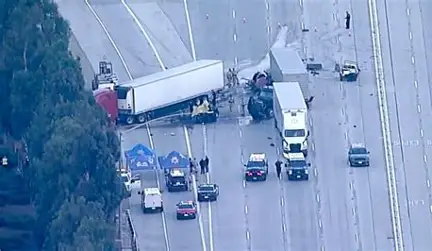
Back in the dark ages when I was in my 20’s, a girlfriend and I took a ski trip up to Lake Tahoe. We had planned on a fun-filled weekend. What we didn’t plan for was running out of gas. In her hurry to get us out of town, she had forgotten to fill up her tank. So, just east of Auburn on Highway 80 we sputtered to a stop. It was still twilight and as we stood by the car wondering what to do, a nice truck driver pulled up and offered to take us to the next gas station. We were so grateful and relieved that we hopped in the cab without a second thought. Looking back on it, we were very foolish (in more ways than one) and also very lucky. But the thing is, back then, most truck drivers were employees of a company. Which means they were in a union, had good benefits, and limits on how many hours a day they could drive. They were considered the best drivers on the road. Today, an increasing number of truck drivers are independent contractors and are paid by the job. The faster they deliver, the more jobs they can complete, and thus, earn more money. For those of us who have driven on major freeways the past decade or so, we have seen an increase in unsafe truck drivers. It’s almost like they’ve made a sport of terrorizing passenger cars. I’ve been tailgated, forced to change lanes, and had to slam on the brakes when a maniac truck driver is on a mission not only to deliver his goods, but to run down anyone who gets in his way.
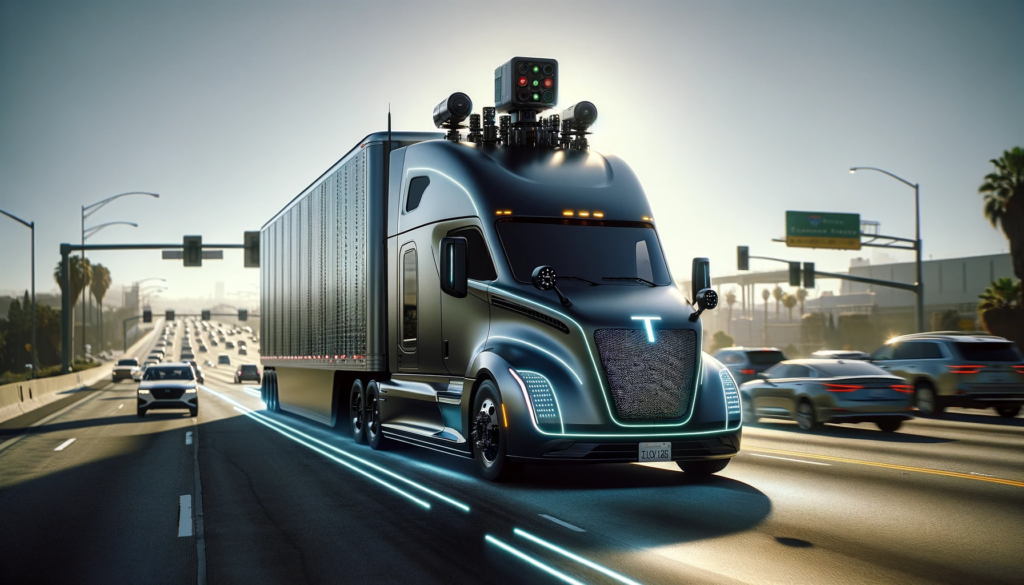
So it was with some interest that I saw a segment on a news program the other day about driverless trucks. In May 2025, Aurora launched regular commercial driverless deliveries between Dallas and Houston, using heavy-duty trucks without a human driver behind the wheel. Now there are a handful of competitors who are also testing the concept. When you think about it, long-haul routes involve thousands of relatively predictable highway miles. There are no crowded city streets or parallel parking required. The Aurora model uses a hub-to-hub model: people handle loading, local streets and customer delivery, while an automated truck covers the long middle section on the highways. The business case is pretty compelling. For corporations with truckers on the payroll the current system is constrained by driver schedules and hours-of-service rules. A driverless vehicle could spend more time moving, helping carriers use expensive equipment more efficiently and making delivery times more predictable. Automation may also add capacity on routes that are difficult to staff. For shippers, that could mean fewer disruptions and more consistent service; for consumers, it could eventually help stabilize the cost and availability of goods.
Of course, like the ongoing discussion about AI taking over jobs, there is the question of how driverless trucks might impact employees. But human workers will still be needed for first- and last-mile driving, inspections, maintenance, loading, and customer interaction. New roles are also emerging in fleet supervision, remote assistance and autonomous-vehicle service. Over time, some long-haul positions may shrink or change, but new jobs will be created. All of this doesn’t solve the problem of the independent contractors, paid by the job, who cause the majority of traffic accidents, but at least it’s a start.
There’s still a lot to figure out before we see wide-spread use of driverless trucks. But recent studies comparing the driverless Waymo cars with human drivers in Phoenix showed that Waymo has 62% fewer injury crashes than humans. Which, in part, tells you just how bad the drivers are here. But that’s a subject for another day. We can only hope that those same positive results are possible with trucks. In the meantime, I’m having my car fitted with bubble wrap next time I take to the highway.
Not to mention that AI driverless trucks can all speak English and read the traffic signs.
I love the hub to hub concept! It could really improve road safety, especially with a number of drivers with CDLs that cannot read or speak English.
I wonder how they would do in Texas? A Commedia Theatre company I was in years ago had some shows near El Paso. As the driver, I learned quickly that Texas Truckers own the fast lane. I sped up to 80 and they were passing me like I was in reverse. Maybe the automated trucks will slow down a bit…
You’ve put your finger on the problems – out of control truckers and many who don’t speak the language. I’m all for the driverless trucks!!!
A great balanced look at the future implementation of driverless trucks … coupled with your terrific sense of humor👍👍
Hi! Thanks for the comment. Sorry I haven’t been in touch – lots going on which I will catch you up on when I get back. Leave tomorrow for my trip. Fingers crossed!! xoxo