By Suzanne Sparrow Watson

We’ve all been fed a boatload of lies about Thanksgiving. But then I suspect many of you already know that. I was reminded of it last week when I attended a class entitled Saints, Strangers and Stowaways about the passengers on the Mayflower. In it, the professor mentioned that contrary to popular lore, the Pilgrims did not invent Thanksgiving. Not even close. The real first Thanksgiving was celebrated in Jamestown in 1619, a full year before the Mayflower berthed in Massachusetts. I had forgotten that fact, one I learned while watching the Masterpiece Theater series, Jamestown. The program was so well-produced that I decided to do further research and stumbled upon the book, Marooned: Jamestown, Shipwreck, and a New History of America’s Origin, by James Kelly. Not only was it an exciting tale of intrigue, human behavior and the founding of our current form of government, it contradicted just about everything I learned in school about America’s “first” colony. Turns out, like a lot of history, the story of the Mayflower settlers vs. those in Jamestown was colored by the fact that winners write the history books. So, if you’re like me, you might be interested in the following fast facts.
In 1606, King James I granted a charter to a new venture, the Virginia Company, to form a settlement in North America. They referred to the entire Atlantic Coast as “Virginia”, named after Elizabeth I, the “virgin queen”. Perhaps the most mileage anyone has ever gotten out of being a virgin. Three ships set out from England that fall with 100 settlers, all men. The group was fairly evenly divided among “gentlemen”, who had no clue about how to do anything useful, and “commoners”, who at least knew how to swing a hammer or plant a field. They landed in May 1607 at Chesapeake Bay and soon discovered the flaw in their plan – half the group was completely useless except for bickering and jockeying for power. Finally, they elected one of the sea captains, Christopher Newport, to head the governing council.
In the summer of 1607, Newport headed back to England with two ships and 40 crewmembers to give a report to the king and to gather more supplies and colonists. Those 40 crewmembers were all “gentlemen” because the “commoners” had discovered by then that they were really considered indentured servants by the Company and had no rights at all. The settlers that were left behind suffered greatly from hunger and illnesses like typhoid and dysentery. They also lived under constant threat of attack by members of local Algonquian tribes, most of which were organized into a kind of empire under Chief Powhatan.
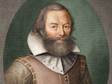
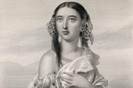
It was at this point John Smith rose as the leader of the remaining settlers and forged a relationship with the Chief and his daughter, Pocahontas. Pocahontas saved Smith’s life when he was a captive of the Algonquians and their relationship was the basis of a peaceful decade of trade between the settlers and Native Americans. You remember all those pictures you saw in textbooks of the “first” Thanksgiving in 1621? John Smith was actually the one who broke bread (okay, it was corn, but you get the idea) fourteen years prior to that.
By 1619, Company officials and investors wanted to make the colony at Jamestown permanent. They concluded that bringing over more English women, particularly women of an elevated social position, was the solution. The belief was that the presence of marriageable women would make the men work harder, invest more of themselves in the colony, and improve the poor quality of life that discouraged many settlers from making Virginia a permanent home. And, might I mention, they added a bit of common sense to the mix. If you watch the Jamestown series on Masterpiece, this is the time frame in which it is set. In 1619, the colony established a General Assembly with members elected by Virginia’s male landowners that would become a model for representative governments in later colonies.

I could go on and on but by now I know you’re weeping with boredom. Let me just finish with this – why do we celebrate the Pilgrims each November rather than the settlers of Jamestown? As I mentioned at the beginning, it is in large part due to the old adage, “the winners write history”. Jamestown, in the form of John Smith and Pocahontas, became part of southern culture. John Smith wrote a book, General History, about his experiences but by the mid-1800’s Northern scholars, mostly from Massachusetts, began attacking Smith’s credibility. In the 1840’s the discovery of William Bradford’s well-written description of the Mayflower settlement, Of Plimouth Planation, was discovered and by 1856 it was in mass production. The actual Thanksgiving holiday was first celebrated during the Civil War, in 1863, as a day to thank God for the advances of the Union army and navy. So, the holiday never had anything to do with the Mayflower or the Pilgrims.
I hope this piques your interest a bit in Jamestown. Or not. I understand not everyone is as interested in this stuff as I am. At least I’ve given you some good fodder to bore your old Uncle Henry at the dinner table. There are a lot of people who sacrificed much to establish a foothold in the New World and Thursday is as good a time as any to toast those poor souls who founded Jamestown and never got much credit. If nothing else, it’s a good excuse to have another piece of pumpkin pie.