PICTURE THIS!

By Suzanne Sparrow Watson

Like many Baby Boomers, I’m spending an increasing amount of time sorting through my “stuff”.  I’m heartbroken that some of my things will end up in the proverbial dust heap, foremost among them my Lenox china.  But the days of formal dinner parties are over, even for me. Somehow parting with my beautiful dinnerware seems like I’m giving away a part of history.  So, in an obvious “stick you head in the ground” move, I walked away from the china cabinet and tackled the photo albums and family DVDs. But even something an innocuous as photos is wrought with thorny decisions. I have too many items in too many formats.
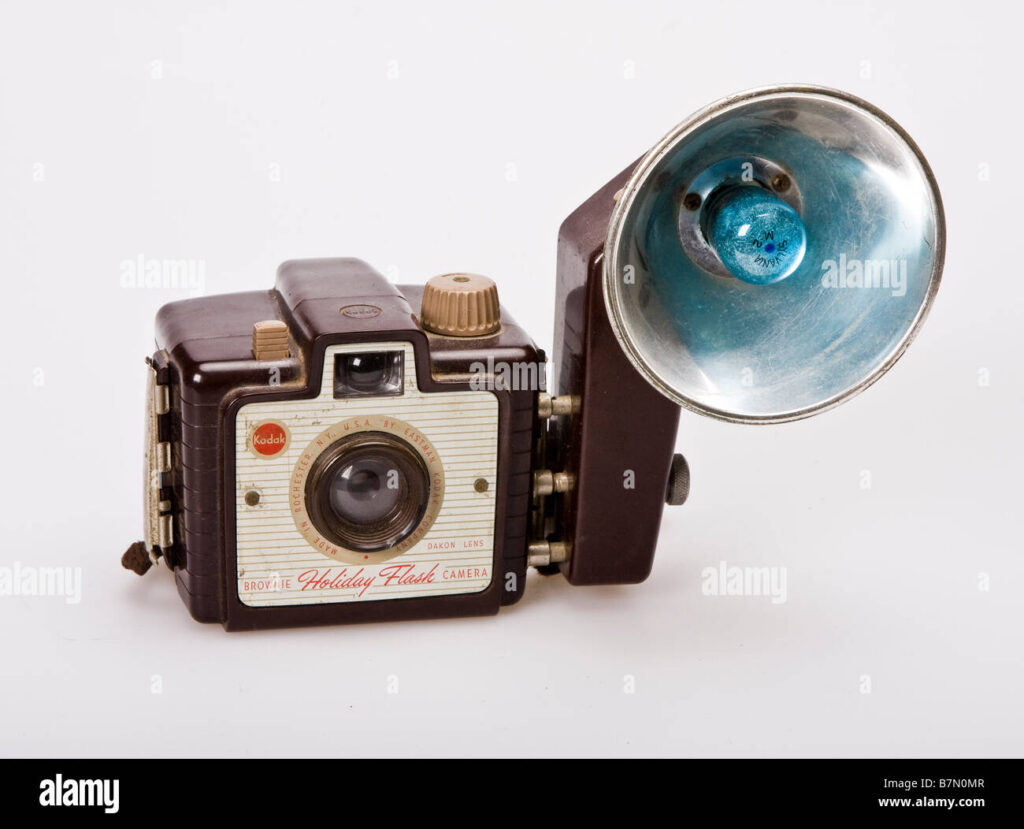
My godfather was a bachelor who spent a great deal of time with us and was an aficionado of gadgets.  He was always willing to try something new and one area he focused on was photography. I spent my childhood being blinded by the flash camera and fascinated by the melting blue bulb when it was ejected. I always raced to pick it up and invariably burned my fingers. Every time. I was not the sharpest tool in the shed. My godfather took thousands of pictures of us and until recently, I had his box of Kodak slides from the 1950s and 60’s. About fifteen years ago I had the most meaningful slides converted to DVD format. There are great pictures of our parents in their prime and us kids at various stages, from sports uniforms, scouting outfits, dance recital costumes and proms. But there was a limit to what I could put onto DVDs and I was left with a significant number of slides I just didn’t have the heart to discard.  Luckily when Bob came to visit a few months ago I mentioned the box to him and he gladly took it off my hands. Now it can take up space at his house and then someday his kids will discard them because they won’t know what to do with them either. 
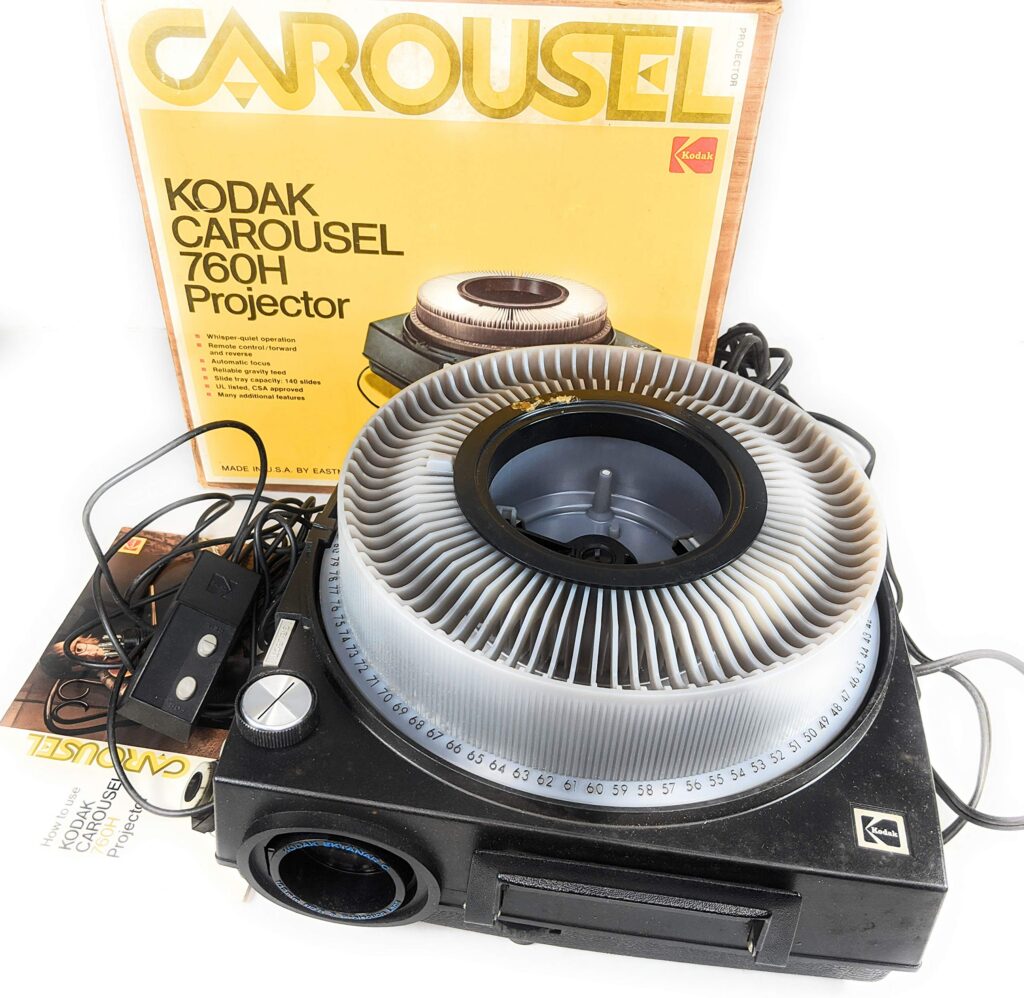
My love affair with slide photography ended in 1968 after some friends of my parents who had visited Europe came over for dinner, bringing the slides from their trip and their new carousel projector.  We spent two hours watching slide after slide of churches, cathedrals, cafes and rivers, listening to them drone on about each attraction. I’ve had anesthesia that didn’t put me to sleep as effectively. I learned a lesson from that though – no one is as interested in your vacation pictures as you are.

My treasure trove of photos mirrors the progression of photography. I have a few Polaroid photos, which was the next fad after slides, I have a LOT of photos taken with disposable cameras, and an overabundance of photos with sepia or gray lenses from when my husband went through his “artistic” phase of photography with his SLR cameras. Video cameras became popular in the 80’s and my husband jumped on that bandwagon as well. While the video camera is long gone, I was able to convert the old tapes to DVD. My box of photos ends around 2010, because like many people, we started using a phone to take pictures. Now, I have hundreds of photos in the cloud and only get a printout for a special frame or symbolic occasion.
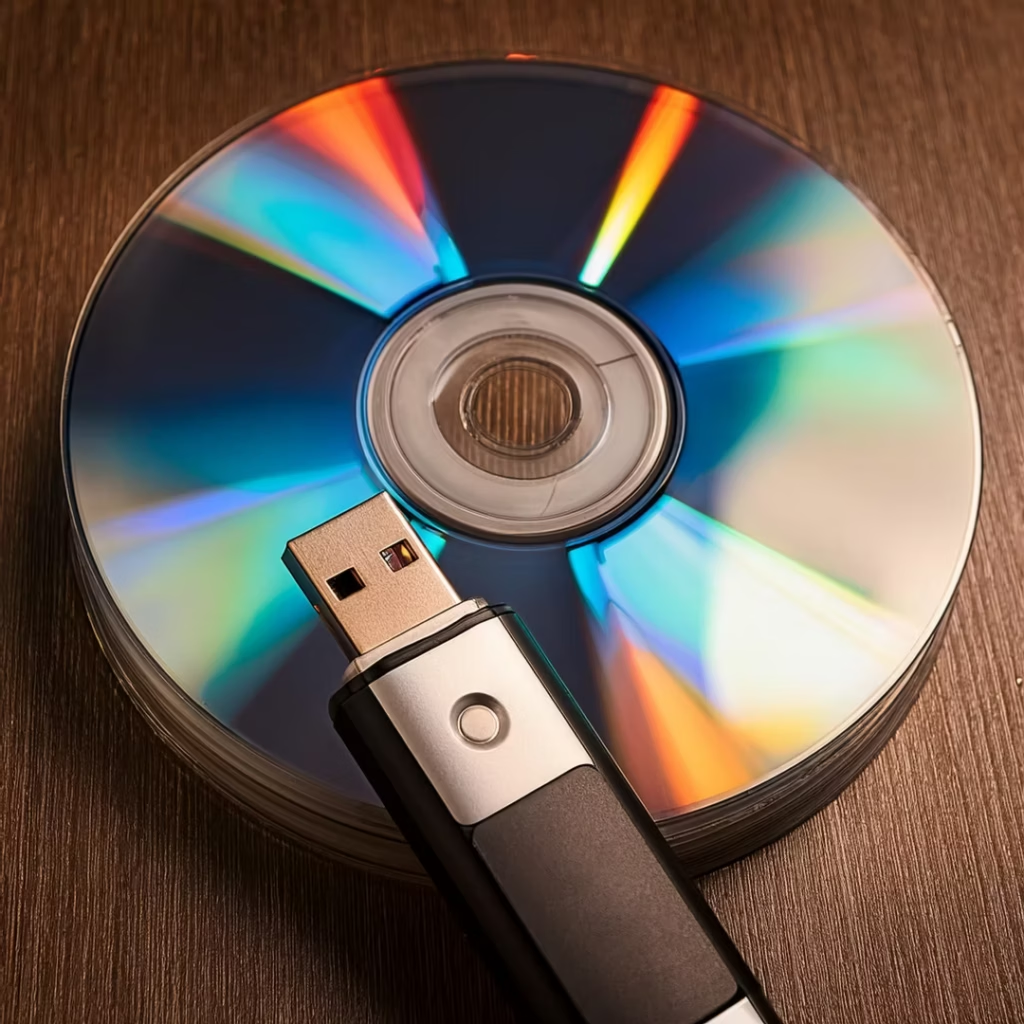
But my photo dilemma remains: what to do with the DVDs of our old slides and videotapes? I don’t own a DVD player anymore because I can stream just about any movie I want to see. Sure, I could get an optical reader to attach to my computer, but I have a feeling it would end up being one more thing I use once and ends up being clutter. My current plan is to convert the DVDs to a thumb drive and distribute them to the next generation.  I figure from that point on it’s their job to worry about what comes after thumb drives. I think I’ve had enough format changes to last a lifetime.  I will include a note to each of them about what the drive includes and who is who in all the old photos.  Oh yeah, and a reminder never to bore people with their vacation photos.
LIFE BEFORE MODERN CONVENIENCES

By Suzanne Sparrow Watson

TVI’ve just read a book by a sociologist about the divergence of the American population.  The book is alternately fascinating, frightening and boring as hell, but since I was a Sociology major in college I found it mostly interesting.  And, as an added bonus, it goes a long way toward explaining how we ended up with the current slate of Presidential candidates.  But that’s a story for another day.  What caught my interest was the author’s timeline for changes to the American culture, beginning in the early 60’s.  He described a world back then that is barely recognizable today.  It got me thinking about all of the conveniences we take for granted that are, historically speaking, really rather new.  I’ve always thought that our parents lived in the most rapidly changing time – going from Model T’s to the International Space Station – but for us Baby Boomers (and let’s face it, our subscriber base tilts to grey hair) the changes in how we live our daily lives has been just as extraordinary.   In case you’ve forgotten, here’s some reminders of what life was like 50 years ago.

Television – First of all, if you were lucky, you had a console TV with an antenna on the roof that received signals from FOUR stations.  We thought we had all the choice in the world!  At 6 pm one could watch Huntley/Brinkley, Cronkite, Amos n’ Andy or the local weather on the independent station.  For those who did not have an antenna, tin foil wrapped around the “rabbit ears” was the next best solution.  As a kid, I often had two jobs – stand at the TV and move the rabbit ears around to improve reception (which varied by the moment) and change the channel.  No remote control, no 500 channel cable packages, and no “smart” TV’s.

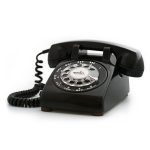
phone

Telephones – By the early 60’s almost every American household had a telephone. All of them were black with a rotary dial.  It would be a few years before we marveled at the colored “Princess” phones with touch keys.  Phone numbers started with names.  Ours was TWinbrook 2-3537 (it’s amazing I can remember that but not my current computer password).    Usually there were just one or two phones in a house, permanently secured to the wall in a central location.  As a teenager the major drawback to this was that anyone could – and did – listen in on your conversations.  Although land-line technology hasn’t changed all that much in 50 years there is one  difference in how we use phones – answering systems.  Back then if you called someone and they weren’t home, the phone just rang and rang until you gave up.  In business, you would leave your office for an hour and return to find your desk papered with those pink “While You Were Out” notices.  We somehow managed without answering machines, voicemail and cell phones.

Computers – Nothing has changed everyday life in America like the advent of the home computer.  We now can know anything.  All the information you might want is a Google search away (see Research below).  But computers have also changed the way we communicate.  Fifty years ago if you wanted to send a quick note to someone you hand wrote or typed it.  You then placed it in an envelope, put a stamp on it, deposited it in the corner mailbox and waited a week for it to arrive at its destination.  At the office you received mail once a day.  If something you needed to work on didn’t arrive in that day’s mail it was the perfect excuse to spend the day wandering around the office chatting with co-workers and taking an extra-long lunch.  The advent of email has made social interactions much easier and probably increased the national productivity tenfold.  As for looking things up…see the next section.

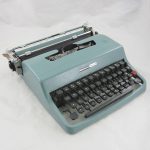
typewriterResearch –  Back in the day, when teenagers wanted to escape their parents for a few hours they would say “I’m going to the library to look something up”.  Some families were fortunate to have an Encyclopedia Britannica (sold to them by a door-to-door salesman) but most of us had to go to the library, which was code for meeting friends, goofing off and checking out some random book to take home as proof that we were actually there.  Today, 78% of homes in America have computers and we can assume that if we just counted households with children that number would be much higher.  So now kids have all the information they need at their fingertips right in the comfort of their own home.  I wonder what excuse they use these days to get out of the house?

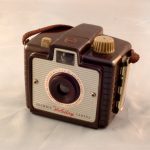
kodak_brownie_

Photography – Almost every household in the 1960’s had some model of a Kodak Brownie camera.  They required rolls of film and blue flash bulbs that usually rendered the subjects blind and resulted in pictures where everyone’s eyes were closed.  In 1963 the Polaroid camera became a sensation because the photo spewed out of the camera.  The photographer waited one minute and then pulled the negative portion away from the “positive” photo and VOILA! – you had a grainy, wet memento.  Serious photographers still use real cameras with real film, but most photos today are taken with a cell phone.  No film, no taking it down to the drugstore, waiting a week for it to be developed, and no more half a roll of useless pictures that end up in the garbage (or, in the case of our mother, kept in a drawer until she died so we could throw them in the garbage).

We’ve come a long way in 50 years.  Kids growing up today must cringe at how primitive our lives were back then.  But on the flip side, we could play outside in the neighborhood until dark and our parents didn’t have to worry.  We had more chores than homework, which instilled a good work ethic.  We learned how to read maps without GPS and to cook food without ‘nuking it.  On the whole, our lives were lived at a slower pace and without access to everything all the time.  I don’t know about you, but I wouldn’t change that for the world.