Day 12 – Nepal Diary: The Texture of Kathmandu

Kathmandu1

Kathmandu

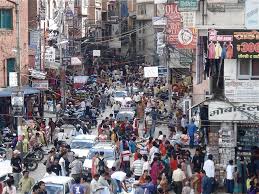
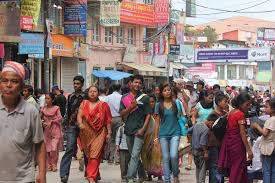
Kathmandu is without equivocation the most ‘foreign’ foreign city I have ever visited. Everything about it, its look, its feel, its sound, its smell, its texture – is different. Nepal, which is a landlocked country between China and India, is one of the poorest counties in the world and seems to be struggling with its identity, as is its capital, Kathmandu. Its infrastructure is in disrepair. Thousands of cars, motorcycles/scooters and pedestrians all trying to get somewhere, but with no traffic lights or signs and no lines in the middle of the road, the congestion in this city of four million is unimaginable. Kathmandu is a cultural fusion of varying economic means, religions and castes. Yes, it has a caste system where people are divided into four very distinct statuses, and if you were born in the bottom caste, there is no working hard and moving up; no matter what you do, you’ll remain in the bottom caste. Eighty percent of the population is Hindu, fifteen percent is Buddhist, with Muslims and Christians making up the last five percent. But it seems that religious differences are better tolerated here than in most places in the world.

Nepal dress

Nealese attire

Buildings in the city are typically low, brick or plaster facades with tile or tin roofs. Sometime they have a door; sometimes it’s just a curtain that covers the opening. Everything looks brown or gray, as most of the roads are dirt and all the traffic stirs up lots of dirt and grime. I see bamboo scaffolding on a few buildings that are being refurbished. Telephone pole spaced every few hundred yards, have hundreds of wires coming from them and going in all directions. People are dressed in various styles, most of the men are in ‘western’ attire, although the older men will wear a Dhaka topi – a hat, but the majority of women wear saris or other more traditional clothing. If a woman is married, she will wear red, single women can wear any color but red.

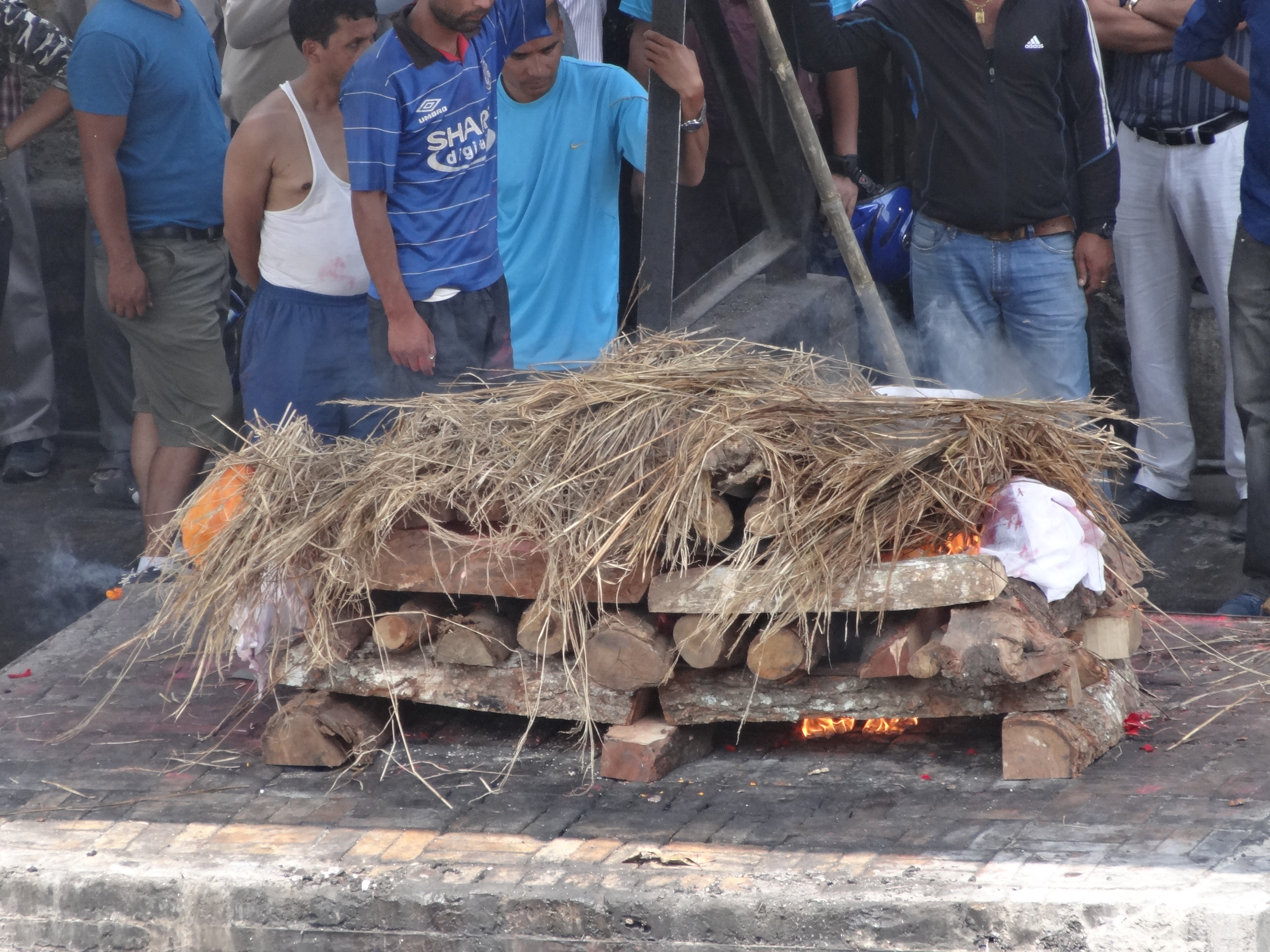
We visited Pashupatinath, the oldest Hindu temple in Nepal; it is here that we witnessed a cremation. In this case it was a young boy whose body was cover as he lay by the river. A lady, who we assumed to be the mother, was nearby wailing and being comforted by her friends, as she looked at her son for the last time. The body was taken to a spot next to the river where a funeral pyre was prepared. The body was burned and the ashes were pushed into the river. This river flows into the Ganges River in India, which the Hindus believe to be holy. It was a very moving ceremony.

DSC01426

Funeral Pyre

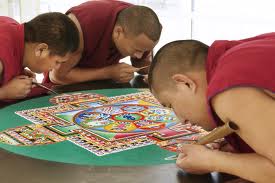
We next visited Bhaktapur, a city within Kathmandu, and the oldest city in Nepal. Its history goes back to the 7th century, when it was the capital of Nepal. The city is filled with both Hindu and Buddhist shrines and has an incredible history of kings, art and war. We attended a lecture on the art of Mandala, the use of millions of grains of colored sand used by Tibetan Monks to create a‘circle of life’ painting. It take months to complete just one piece and when it’s complete, it is dumped into a river, so it can spread its goodness to the rest of the world. The samples that we were shown were beautiful – and powerful.

Our final stop for the day was at Swayambhunath, more simply the ‘Monkey Temple’, due to the number of monkeys that inhabit the oldest of Buddha temples in Nepal, dating back to the 5th century. It tells the history of the creation of the city of Kathmandu and holds many artifacts that are particularly important to the Buddhist religion. It is high on a hill and provides a sweeping view of the Kathmandu valley.

Mandala

Mandala by Tibetan Monk

With all its foreignness, I ended up liking Kathmandu a great deal, because of the people. They were always friendly, courteous and always willing to help now matter what the circumstance. They work hard, especially the women, and cope in a world in which most of us would surly struggle.

Our incredible adventure is coming to and end, so this will be my last post from Nepal. We leave tomorrow (Friday) and get home Saturday. Since I’ll have 30+ hours on planes and in airports, I’ll try to put together some overall perspectives from Patrick and me and post them on Monday.

Thanks for following along.

Day 10/11 – Nepal Diary: The Elegant Elephant

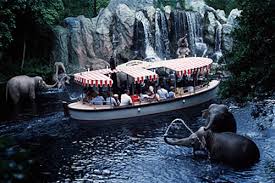
Disney Jungle Cruise

Disney it was not

Today in Chitwan was a day to explore elephants . . . in detail, but first our canoe trip down a muddy river. It did not stack up favorably to the Disney’s Jungle Cruise. No monkeys climbing trees, no hippos spitting at us, no alligators, not even some stupid jokes. Our guide did say that there was a Kingfisher bird way off in the distance somewhere, but I’ll be damn if I saw him. The canoe trip mercifully ended with nary a sighting if you don’t count the log that looked like part of an alligator.

We then headed to the EBC, the Elephant Birthing Center, which was actually fairly interesting and one of the premier elephant breading centers in the world and boasts the birthing of the world’s only set of elephant twins. There were several baby elephants wandering around the grounds that you could actually touch and feed grass to, which I did. We next headed to the elephant bathing area, where we watched the trainers lead the elephants into the river then jump on their back with a brush and give them a good scrubbing. It was sort of like an elephant car wash – I think a wax and pedicure was extra.

DSC01388

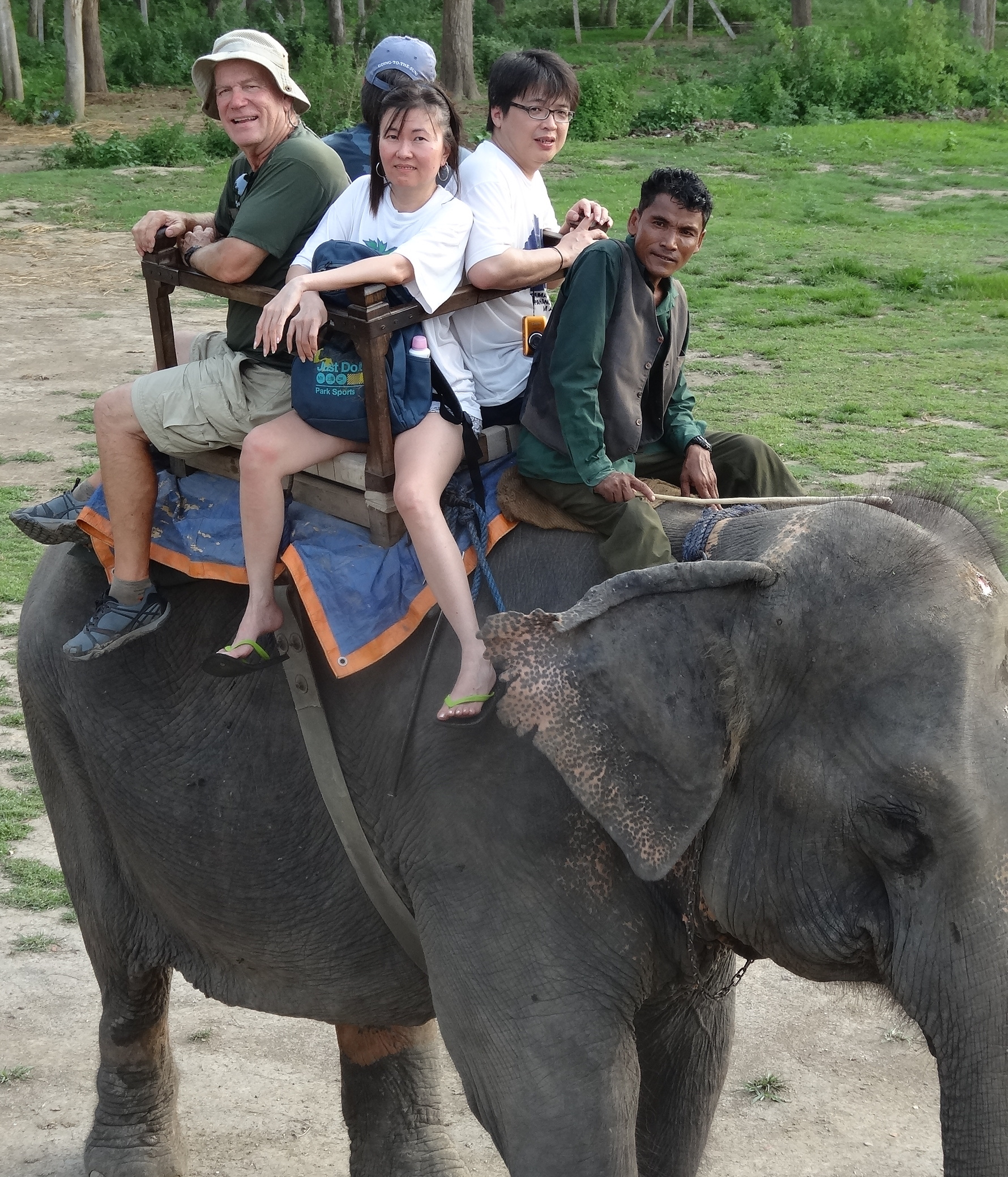
“Does this elephant have reverse?”

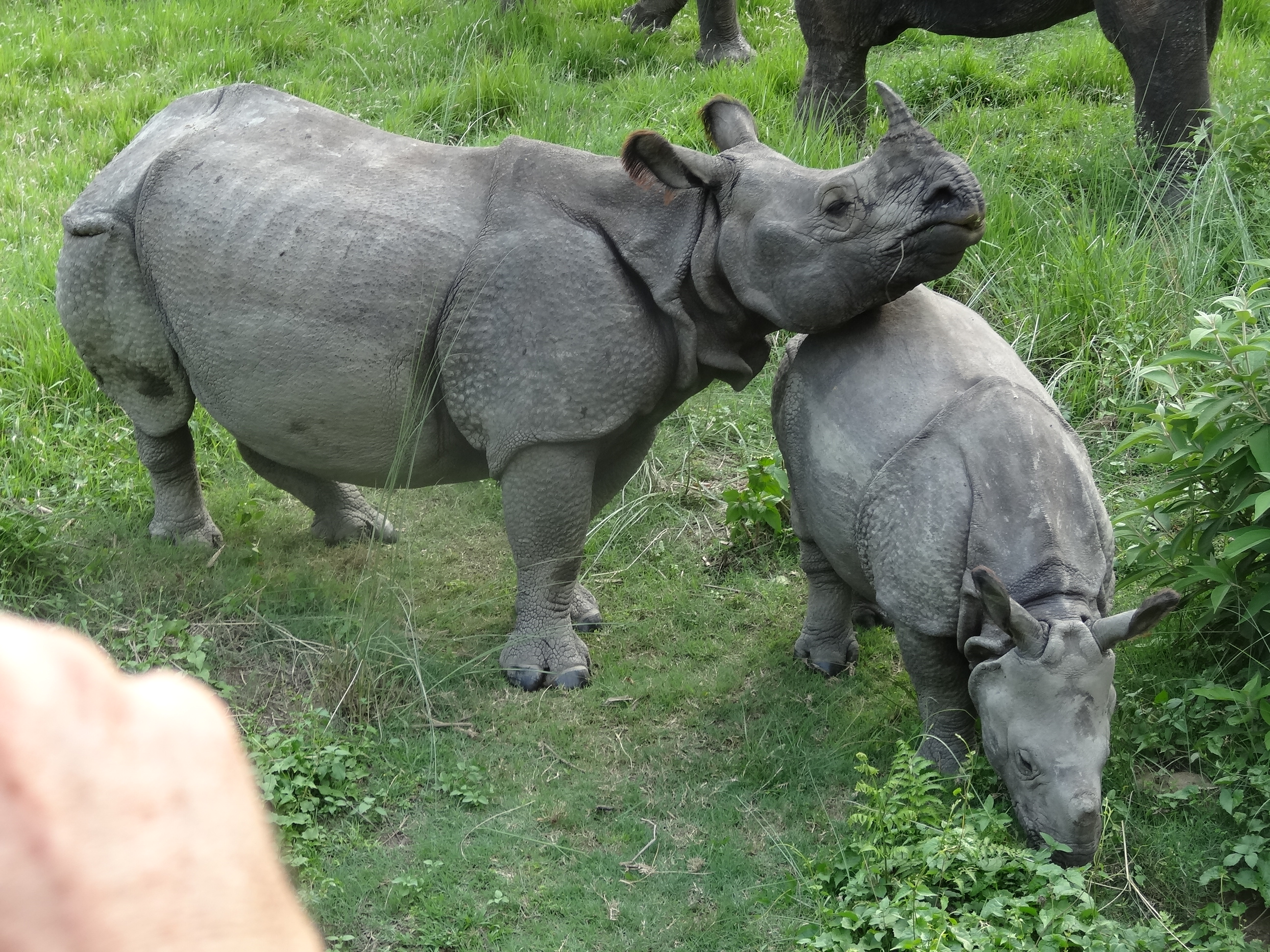
After lunch we did an elephant safari. Four people crammed into a wooden orange crate on top of an elephant – very uncomfortable, especially if your elephant needed a realignment or it’s tires rotated, which ours apparently did, as it was a very bumpy ride.  I like elephants, they may be my favorite animal, what with their size, strength and good memory, but I don’t think the elephant enjoyed this any more than we did.  We spent an hour and a half wandering through the jungle in search of wild animals. We saw a dog. I was riding facing backwards, so most of the views I had were of the elephant’s ass. Actually we did see a one-horned rhino mother with her baby. The one-horned rhinos are called Indian rhinos because they are found in the Indian/Asia area, as apposed to the two-horned rhino, which are found in Africa. Unlike the India/Africa elephant, it is easy to tell the Indian from the African rhino . . . JUST COUNT THEIR HORNS!!!

DSC01382Our safari lasted an hour-and-a-half, by which time my legs were numb and we had no more chance of seeing a Bengal Tiger than we did of seeing a Detroit Tiger, or Tiger Woods or Tony the Tiger for that matter. If elephant safaris were given as prizes and the hour-and-a-half safari was the first place prize, second prize would be a three-hour safari.

The trip was made easier by our safari mates, a very fun Malaysian couple from Kuala Lumpur. They entertained us throughout our safari as well as at dinner back at the hotel that night. He says that he is a Malaysian first and a Chinese second, but that he’s really a ‘banana’. Banana? I asked. Yes, that’s an Asian (yellow on the outside), who is really like an American (white on the inside).

DSC01394

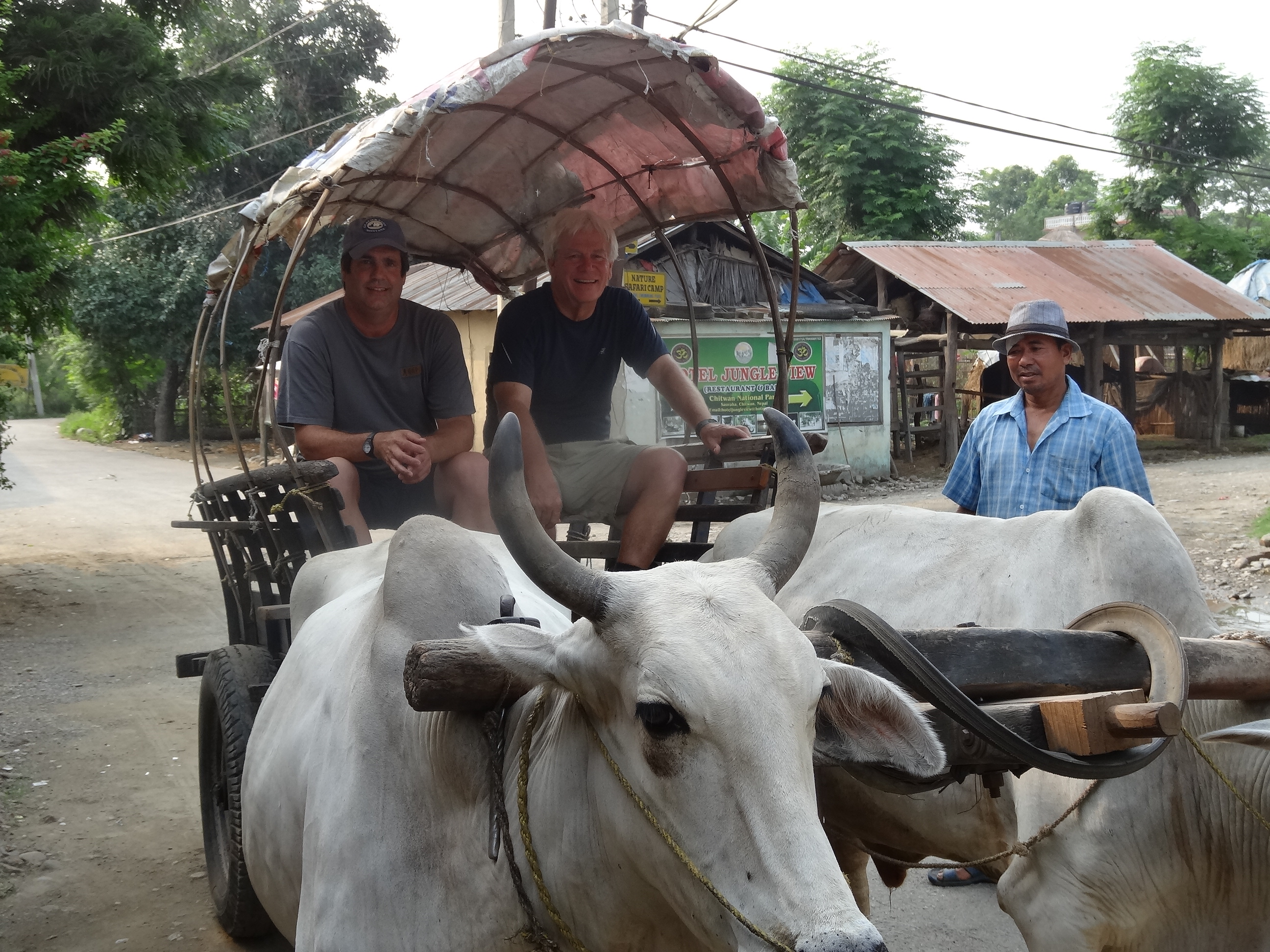
A one-cart, two-ox parade

The next morning we took an oxcart ride through several villages close to our hotel – I felt like I was a runner-up for Mr. Chitwan Congeniality, waving to the masses as we passed through their village.

We boarded Buddha Airlines for the short flight (18 minutes) to Kathmandu where we checked into the Shanker Hotel – I know it doesn’t sound healthy, but it’s actually a 5-star hotel – a far cry from the teahouses in the Himalayans that we were staying in, although I miss the teahouse’s charm.

Thank you all for your prayers and well-wishes for Dana – the last I heard she had a balloon, rather than a stint, put in and is now home and feeling great.


Day 9 – Nepal Diary: All Days Are Not Created Equal

Chitwan1

Chitwan

Patrick and I talked about this when we were planning the trip – we figured that with a two-week adventure, we’re probably going to have at least one bad day. Today wasn’t really that bad, it just wasn’t that good. To start with, our driver picked us up in Pokhara at 7:30 and took us to the drop off point for the river rafting. We’re OK so far.  Fortunately he hung around to see us off, but soon we discovered that the rafting trip was poorly organized, over-crowded and an over an hour late of the estimated time of departure . We decided that this raft ‘float’ in 90-degree temperature, with humidity to match, was not going to be that fun, so we hopped in the car and continued on to Chitwan – which, on these narrow mountain roads, was a white-knuckle adventure in itself.

About 10 miles out of Chitwan the topography changes dramatically. The majestic mountains disappeared and we found ourselves in a flat, jungle environment. Chitwan is in south Nepal, very close to the India border, and we could see a difference in the look of the people as well as a more definite Indian/Hindu influence in the culture versus the China/Tibet, Buddha influence we found in northern Nepal.

DSC01321

What, me worry?

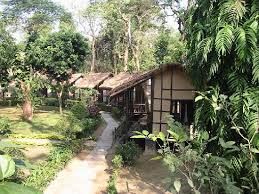
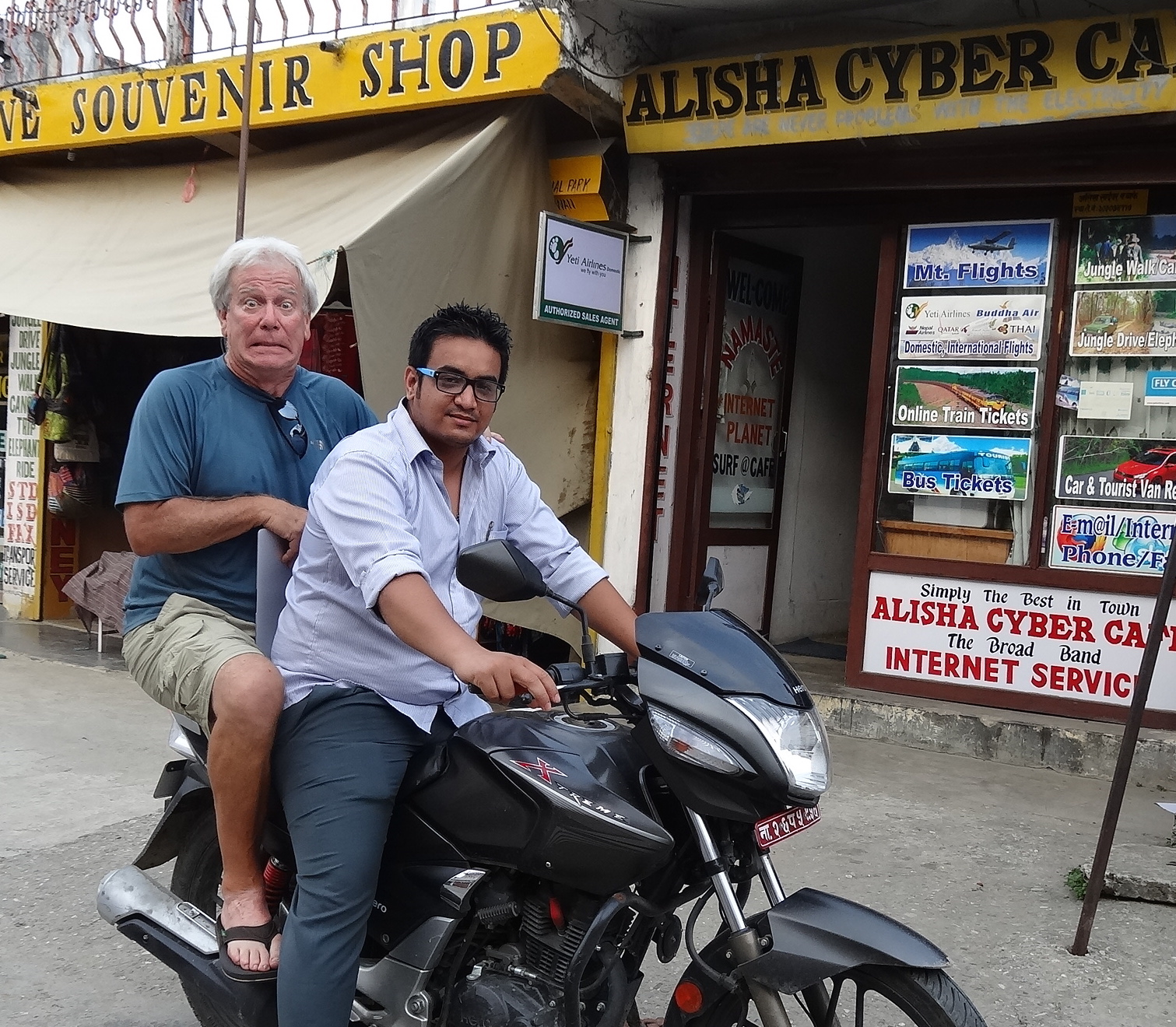
Our accommodations in Chitwan, the Parkland Hotel, were excellent; nice room, three good meals a day and beautiful grounds. The only problem was their wifi was not working and I had a deadline to meet to get this blog published. I told a hotel employee that I really needed to get on my computer and he said he would take me to a cyber-café in a neighboring village. I followed him out to the parking lot and watched as he fired up his motorcycle and motioned for me to get on the back. I checked to see if he was wearing a shirt that read on the back, “If You Can Read This, The Idiot Fell Off.” He was not, so I hopped on. It was a short ride to the cyber-café where I was able to post yesterday’s blog. I assume I’ll have to do the same for this one. What I won’t do for you guys!!!

DSC01331

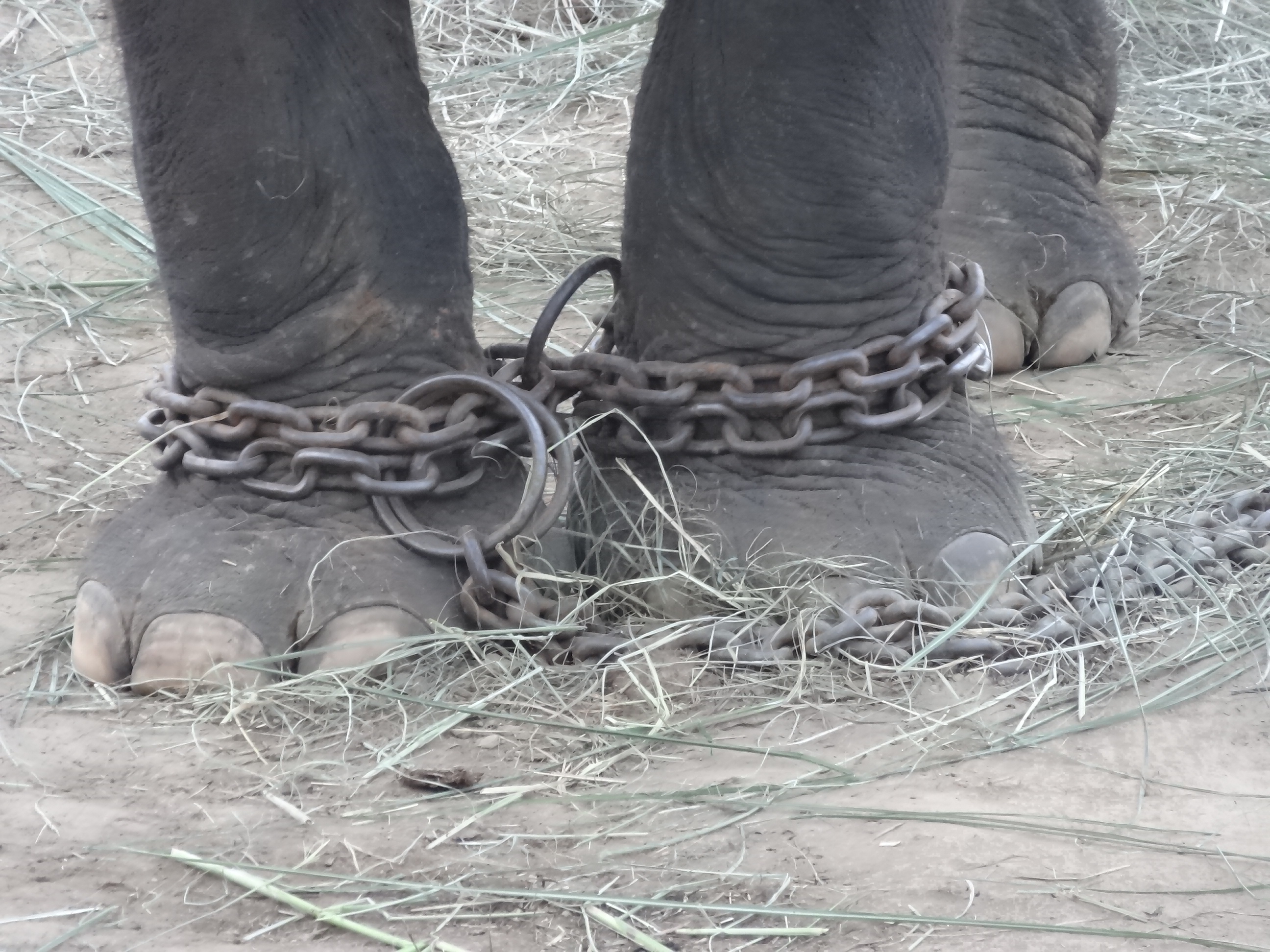
How they keep elephants still at night

Before dinner a guide took us on a nature walk to view some elephants, which was fairly interesting. What I’ve noticed from trips to both Africa and here is that guides go to great lengths to tell you the difference between an African elephant and an Indian/Asian elephant, like we were going to be quizzed on it later. After hearing all the differences I broke it down to its simplest terms: if you’re in the India/Asia area you’re going to see an India/Asia elephant and if you’re in Africa you’re going to see an African elephant.   Class dismissed. If the guide hadn’t taken so long to explain the differences we might have not got caught in a torrential downpour at the end of our walk. Everyone came back to the hotel soaked. After changing into some dry cloths and having dinner, we were driven to a neighboring village to watch a cultural dance exhibit put on by local artists. It was actually fairly good, but it made me wonder what America would do for a cultural dance – probably some mix of Gangnam style and a Moon Walk.

I sort of feel like a sloth today, no 7 mile trek before lunch.

On a personal note I must admit that my full attention was not in Nepal today, but rather thousands of miles away at Cedars-Sinai Hospital in Los Angles, where daughter, Darlin’ Dana is going in for heart surgery at 4:30 Tuesday morning. It’s not as major as her surgery last year; it’s the insertion of a stint, but no heart surgery is minor. So my thoughts, prayers and focus are there until I hear she is in post-op and doing well.


Day 8 – Nepal Diary: Descent into Pokhara

Pokhara

Pokhara

We depart Sarangkot around 7:30 a.m. and head down the mountain – more stone steps (Don’t get me started!) It is only about a two-hour trek until we reach the lake on the outskirts of Pokhara. We walk along the lakefront where there are many restaurants and bars – it’s the off-season, so things are fairly quiet. We walk to our hotel. It has been overcast all morning, which is great for trekking, but not so good for picture-taking.

I amused myself on the way down the mountain by listening to ‘The Question Man’ – Patrick. He is a very bright guy and I’m guessing part of the reason he’s so bright is that he asks a lot of questions. Over the course of the week I’m sure he asked Dom 500 questions. I can’t remember them all, but some of the more interesting ones were:

Does Nepal have earthquakes? When was the last one? What magnitude was it?

What’s the average age of people in Nepal? Tibet?

When were all these rice patties built?

Any idea what the tensile strength is of these suspension bridges?

Is this hydro plant water pipe a class 150 flange with grade 3 bolts? (Seriously?!)

Who carries those refrigerators up to those teahouses?

How come you and Kirin don’t sweat?

He would constantly ask Dom how far to the next village; the conversation would go something like this:

Patrick: How long will it take us to get to the next village?

Dom: Maybe 2 hours and 15 minutes or 2 hours and 30 minutes.

Patrick: (always the engineer) Which is it, 15 or 30?

If you need to know the answers to any of the above questions, Patrick has them.

We checked into our hotel in Pokhara; yes an actual hotel, two nice beds, carpet on the floor, enclosed shower, tv and air conditioning, which was needed as it was very humid. Aside from the clouds covering most of our views, we have been fairly lucky with the weather, never been rained on while we were trekking, but it always rained after we arrived at our destination. Today was no exception, as soon as we checked in, the monsoons started.

We rested a few hours and decided we’d try to find the ‘airplane restaurant’. We did and had a rather surreal dinner there. A two-engine prop 2014-06-07 07.14.26airplane that could carry about 8 passengers in its day, was sitting on top of the restaurant roof where you could actually sit in it and eat – because food on an airplane is always so good! So that’s what we did. There were three other people having dinner in there and while it was a little claustrophobic it was a meal I won’t soon forget.

Pokhara is the largest tourist city in Nepal due to its proximity to Himalayan trekking trails; it has a population of about 300,000 and the main street, which is filled with trekking equipment stores, looks like any other tourist town with restaurants, bars and tee shirt shops. I found it interesting to watch the traffic patterns (actually there were no patterns) There is not one stop light or stop sign in town, there are no lines on the road and there is a constant stream of cars and motor bikes looking like they are driving headlong into each other, but somehow it works.

Tenzing

Hillary & Norgay

The highlight of our time in Pokhara was a visit to the International Mountain Museum. It is the Cooperstown of Nepal. Sir Edmond Hillary and Tenzing Norgay are the Babe Ruth and Willie Mays of this place – they are deities. The museum is filled with great photos, old trekking gear and biographies of some of the greatest mountain climbers of all time. One Sherpa had ascended Everest 12 times, another had remained on top of Everest for a record 21 hours! The country with the most impressive climbers was South Korea; many climbers had multiple ascents of Everest as well as all the other 8,000-meter mountains in the world. One Korean lady had summited the tallest mountains (including Everest) on all seven continents without the aid of supplemental oxygen! The place was really awe-inspiring . . . oh to be young.

The museum also featured an exhibit on the Yeti, the mystical ‘Big Foot’ of the Himalayas. Shown here is a picture of Patrick standing next to the Yeti, can you tell which one is which?

2014-06-07 02.18.44

Which one’s the Yeti?

We have dinner (our first meal without Dom) at a Thai restaurant and get ready to start the ‘tourist’ part of our trip as we sweep out our shorts and head to the jungle region of Chitwan.

I miss the mountains already.


Day 7 – Nepal Diary: In Search of that Religious Experience

DSC01245

Annapurna I

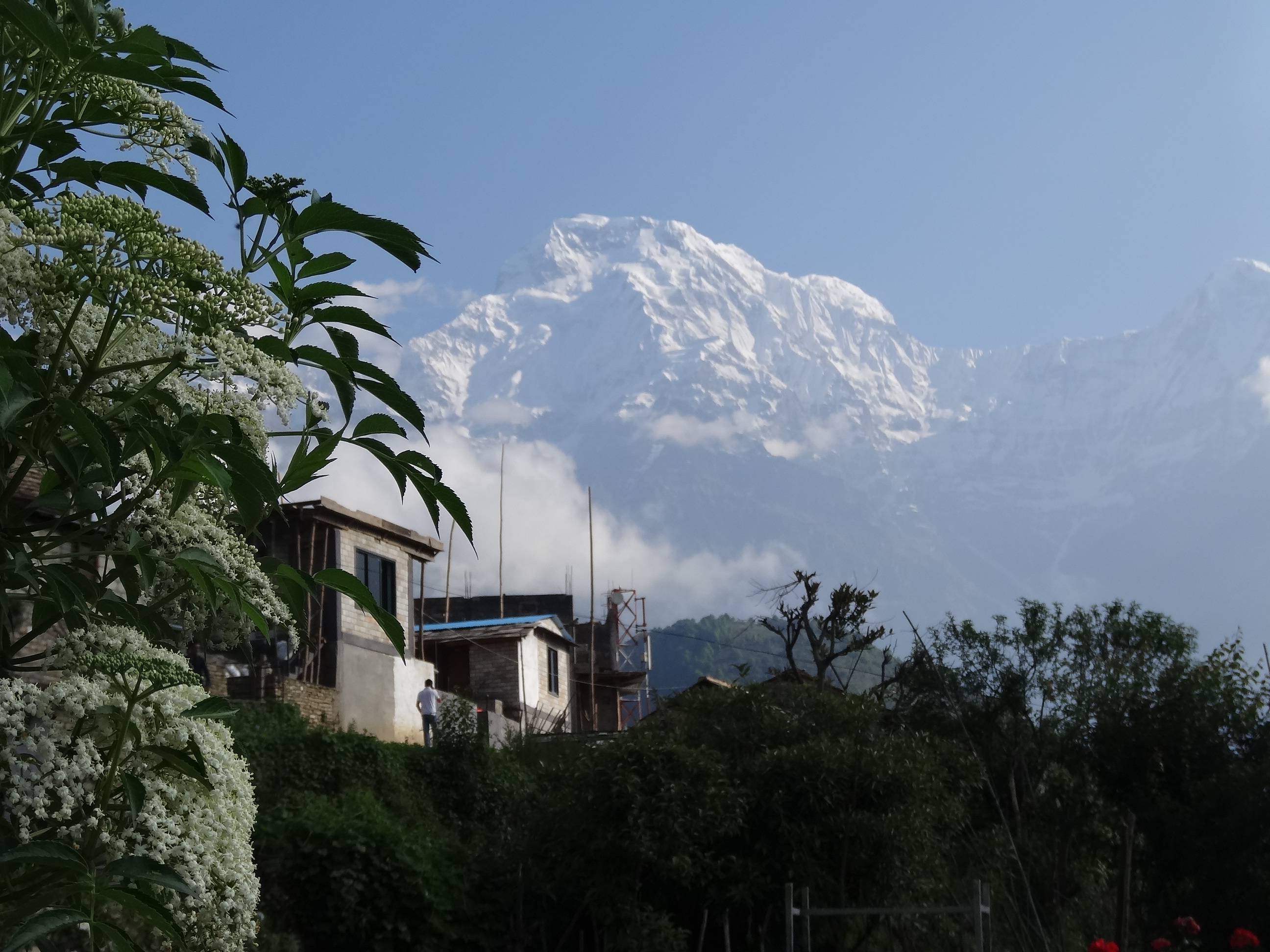
As we left Tolka, the innkeeper told us that she had a brother who owned an ‘airplane restaurant’ in Pokhara, that we should stop in and see him and have dinner. We said we’d try and headed off to the next village, but not before I got this great photo of the sunrise on Annapurna I. We trekked about 6 miles, on mostly what they refer to in Nepal as flat, a little up and a little down (the little ‘up’ was 1200 feet and the little ‘down’ was 1700 feet). The great views that we thought we were going to get by going this route were obscured by a heavy cloud cover.  We thought we’d stay in the village of Dhampus, but when we got there we were told there was no power and no wifi, so after having lunch, we continued down the mountain for another 3 miles and thousands more of those stone steps. There just seems to be no redeeming quality to those stone steps, they exhaust you if you’re going up, and pound your knees if your going down and they keep you from seeing anything else around you as your total focus must be on you next step or you’ll be doing a face plant in one of them. When I get home, I’m taking out the stone steps I have in the back yard – they’re flat, but I just don’t want the reminder!  We reached the village of Phedi at the bottom of the mountain and there was actually a road and we see moving vehicles for the first time in 6 days. At the bottom we have a decision to make; our goal is to get to the village of Sarangkot at the top of the next mountain. People from all over the world come to Sarangkot to view the spectacular sunrise over the Himalayas. They say it is like a religious experience.

Village view

Dhampus

It would indeed be a religious experience for me, because if I attempted to go that extra 8 miles, straight up, I would be meeting my maker. Dom looks at Sarangkot then looks at me and says, “Are you ready?” Then breaks out laughing and says, “We’re taking a cab to Sarangkot”. Who knew that a cab could be part of the whole trekking experience? Where were the cabs on Days 1-2?

The cab ride was an experience in itself. Four of us, plus the driver and all our gear crammed into a car the size of a refrigerator. I got to sit, knees in my face, up front with the driver, whom, I’m guessing hadn’t showered since February . . . 2013. Of course after trekking for the last 7 hours I wasn’t exactly a bouquet of roses myself. The fact that they drive on the ‘other’ side of the road didn’t help the white-knuckle experience of going up the mountain. The cabbie ultimately let us off about a half mile from the village as the road was too rutted and muddy for him to go any further. We happily walked the rest of the way in the fresh air.

Sunrise2

Sunrise from Sarankot

Sarankot offers a great view of the city of Pokhara and Lake Phewa Tal, it was a little hazy, but still a great view and a great resting place. After a cold beer and dinner we watched a movie on my computer, Into Thin Air – the story of death on Everest. Not exactly a musical-comedy, but everyone seemed to enjoy it. We settle in early and set our alarms for 5:00 a.m. so we could wake up then walk up to the observation point and watch the spectacular sunrise over the Himalayas. The alarm went off and I looked outside and I could barely see the dog that was right outside our window barking all night – everything was socked in. No spectacular sunrise today. No religious experience. I rolled over and went back to sleep.


Day 6 – Nepal Diary: Room, Board and a Himalayan Cremation

BridgeRoom

The teahouses that we stay in are all very similar, there are anywhere from 8 – 20 motel-style rooms; there is a main kitchen and dinning hall and a sitting area typically overlooking a spectacular view. The rooms are Spartan-like, 12 x 12, two single beds with a mattress that is about three inches thick (although I must admit, fairly comfortable) and usually one electrical outlet that typically doesn’t work. We always get a room with bathroom, most rooms don’t have one, but the bathroom is also very Spartan-like. It is about the size of a small closet and consists of only a toilet and a spout coming out of the wall, which is the shower; no sink and no mirror (thank god) and a drain in the middle of the room. Because there is no separation, no curtain, no anything except the spout, you could actually take a shower while you’re going to the bathroom. (Nope, haven’t tried it yet). There is one light in the bedroom about the size of a golf ball and it doesn’t work during the day when the power is shut off. There is usually a clothesline outside your door so that you can wash and rinse out the cloths you wore all day and hang them out to dry. The ‘deluxe’ room, the one with the shower, also has a Spartan-like price; on average about $6.50 a nigh!. But you don’t get a mint on your pillow, in fact sometimes you don’t get a pillow.

Board

Every food looked so foreign to us that we really couldn’t figure out what to try, so we’d order something that we thought looked good from the Beerpictures on the menu. When our food came, Dom and Kirin’s food always looked better, so next time we’d order what they had at the last meal and they’d order something different . . . that looked better than ours. One of their favorites is Dal Bhat, a combination of rice, lentil soup, potatoes with curry, chili peppers, throw in some chicken or other meat and viola! What’s interesting is they eat it with their hands – remember they don’t attend too many black-tie dinners. There is virtually the same menu throughout the Himalayas and they try to do a little bit of everything, Italian, Korean, Mexican, Japanese, Indian and American – most of the Asian dishes are the best. Some of the unusual items on the menu include:

Pie

Not your mother’s apple pie

Porridge, I thought that word died with Goldie Locks and the Three Bears. Goat cheese and Yak cheese – Patrick says, with a smile and a twinkle in his eye (which means he’s bull shiting), that he can taste the difference. Curry everything, Momo (pot stickers), Chicken lasagna, I actually tried this one and it was pretty good, although it tasted nothing like lasagna or chicken for that matter. Another fine Italian dish I tried was Tuna Pizza; don’t hold your breath waiting for is one to come to the states! any time soon.  I couldn’t bring myself to try the Himalayan burrito (who knows what’s in there?). Most of our meals, even breakfast, have some sort of noodles in them, and every place serves apple pie, although it looks nothing like apple pie – but very good. The most expense item on the menu is in the $4 range.

On the beverage side, you can get about 50 varieties of tea as well as Coke, Sprite and Orange Fanta in a bottle. Of course I had to try the local beers, two main brands, Nepal Ice, which has an alcohol content of 7%; combine that with the thin air and you’re buzzed before you’re half finished. The other beer, my favorite, is Everest, it taste really good, but what I really like is their they great marketing slogan: “Our beer is colder than your ex-wife”.

The Himalayan Cremation

glasses

R.I.P.

When we reached Tolka I discovered that I was missing my prescription glasses. I looked all through my pockets and pack and they were nowhere to be found. I remember having them the night before while reading in bed and then setting them on the window ledge next to the bed. While reaching for my watch or flashlight during the night I must have knocked them off and they ended up under the bed and out of sight. In Tolka, the lady who owned the teahouse where we stayed, called back to the teahouse in Jhinu and asked if they found the glasses. Kirin had volunteered to go back early the next morning and get them – that’s just a quick 16 miles before breakfast! I think he has lungs that could breathe on Mars. Fortunately for Kirin, but unfortunately from me, when the lady hung up the phone, she said, “They found the glasses, but they were broken, they threw them in the trash and they have already burned the trash today.”  So my glasses have been cremated and the ashes have been scattered in the Himalayas – so I guess I’ll always have that going for me.


Day 5 – Nepal Diary: The Trail

DSC01224Today we got an early start out of Jhinu with a sharp decent (more of those damn stone stairs) to the Maudi River. We then followed the river down to the town of Tolka, about 8 miles. For me it was the best day of hiking, not just because we didn’t have a lot of ‘stairways to hell’ to climb, but because we got to enjoy some beautiful scenery without breathing so hard. Sharply inclined, lush mountains on each side of the river valley, terraced rice fields, spectacular water falls (with ice cold water coming off the Himalayas), and Annapurna South peering over our shoulder. It was a great hike. The only down side was the 6-7 leaches that Dom spotted on my ankles while walking behind me. He flicked them off with a stick, but not after I gave a quart or two of blood, and I didn’t even get a little carton of orange juice or a blood-drop pin that said, ‘I Gave Blood’.

As I mentioned earlier, the path that we travel is ‘Main Street’ of the villages that it runs through and it is thus the key transportation artery that links village to village. We therefore see all kinds of thing going up and down the mountain. It is not unusual to have a team of 10-12 burros coming down the trail at us hauling supplies to a village or garbage away from it. We constantly run into a herd of goats or sheep and often have to go to one side of the path to get around a cow taking a nap or make sure we don’t step in a ‘road apple’ left by a horse. There is always a good supply of chickens running around as well as some beautiful Burmese Mountain Dogs – friendly and looking like this is where they belong. We see women speed by us going up hill with incredibly large baskets of produce or something on their heads. Men are hauling lumber or have huge bags of corn or rice strapped to their heads and act like they’re just wearing a hat.

DSC01227Another thing we find on the trail, or just off the trail is marijuana plants growing in the wild – in abundance. I’m sure they use it just for medicinal purposes, although this may be why these people have so little and are yet so happy. The Himalayan High has the Rocky Mountain High beat three ways to Sunday. Pot is illegal in Nepal, but I don’t think they can get a squad car up here to haul anyone away.

Even though the trail has been a little wet from the previous night’s rain, we have been very lucky with the weather. We’re typically up early and hike 5-6 hours in beautiful weather and then settle into the next village’s tea house just in time to watch the afternoon monsoon come in with a vengeance.

A final thing that we run into on the trail, even though it is the off-season, is other trekkers from all parts of the world. I have found that they all have two characteristics in common: 1) They all speak English, and 2) THEY ARE ALL UNDER 30!!!

Old guys definitely DO NOT RULE here in the Himalayas.


Day 4 – Nepal Diary: Let Me Introduce the Boys in the Band

(No connectivity in last location so I’m a day late and a couple of Rupees short)

First, thank you for all the wonderful responses I’ve received from those who are following this adventure. I feel I have your company as I travel to places unknown.

2014-06-02 17.47.25

Annapurna South

We leave Chomrong, but not before getting this great photo of a sunrise over Annapurna South – simply awe-inspiring.

Let me officially introduce our crew, hopefully with pictures that heretofore I’ve not been able to upload. Dom our guide, I have come to find out, is not a Sherpa. Sherpa is an ethic group from high in the Himalayans. Dom is a Tamang, which is a group from the Himalayan foothill region; he speaks very good English and has been a guide in the Himalayan for 15 years, doing many treks around Everest, although he has not summited it yet. He is extremely accommodating and a really good guy. He is 35 years old, married with 2 children who live in Kathmandu. His parents live in eastern Nepal and in order to see them he must take a bus that takes all day to get relatively close and then he must walk for another full day to get to their home. So they don’t stop by for Sunday dinner that often. We have nicknamed him, ‘El Hefe’ – the boss.

2014-06-01 23.15.59

Dom

Our porter, Kirin is 25, married with one child and they also live in Kathmandu. He is Magar, another ethnic group from the Himalayan foothills. Both Magar and Tamang are Tibetan influenced and Buddhist by religion. Kirin is about 5’3” and honestly does not weight more than 110 pounds, yet he is carrying a huge pack with most of our stuff in it weighing between 60-70 pounds with only a strap he places on his forehead. He is amazing; we have nicknamed him, ‘The Stud’.    

Today was a short trek, as we went almost straight downhill from Chomrong to Jhinu, a distance of only a couple of miles, all on thousands of stone steps, not great for old football knees. I was thinking if Linda would have given me this trip for my 80th birthday she probably could have same money and bought that one-way ticket.

2014-06-01 23.16.11

Kirin

After lunch we headed to some hot springs that are adjacent to the Maudi Chola (river) about a half mile away. Large rock pools have been built to trap the natural hot water coming up from the ground. The warm water felt good on some tired muscles and sore knees. On our hike back to our ‘tea house’ (which is what they call the small hotels we stay in) it started to rain. Then it started to really rain – we experienced our first monsoon. We sat outside our room, had a Nepal Ice beer and watched the rain. In bed by 7:30 . . . again.


Day 2-3 – Nepal Diary: In the Mountains

Tuesday, June 3 – A Change of Itinerary

When we awoke this morning, the clouds had cleared and we had an amazing view of Annapurna I. I’ll have pictures at some point, but they won’t do it justice. We left Ghandruk at 7:30 this morning feeling better than we should have. I liked Ghandruk a lot; it is a small village built on the side of a mountain. The trail we are on, which is a 5 foot wide stone path, would be considered ‘Main Street’ here. There are no cars, no motorbikes, no motor anything. There is a school somewhere in the village, but other than that, no central gathering place. Many of the homes that line the path offer food and drink for sale for hikers. While their life seems dull and meager to us, every villager I saw had a smile on their face. As we traveled out of the village we ran into young kids coming down the path we were going up, headed for school. They were neatly dressed in uniforms and I watch a group of boys about 9-10 years old stop along a creek and were laughing and having the greatest time throwing rocks a something in a tree. Not a bicycle or video game in sight. They walk 2-3 miles, one-way, to school everyday . . . with smiles on their faces.

We received our second dose of ‘ass-kicking’ today as we left around 7:30 and trekked for 7 hours with some significant ups and downs, the ups being more significant than the downs. I’ve come to understand the real definition of ‘trekking’ here in Nepal. What Patrick and I have done is ‘hiking’, we tend to meander, our trails up a mountain have switchbacks to lessen the degree of incline. In Nepal there is no lessening the degree of incline, when they build a path they use the ‘shortest distance between two points is a straight line’ theory and build a stone ‘stairway to hell’.

Exhausted (again), we ended our trek today in Chumrong, an even smaller village than Ghandruk and even closer to the Annapurna mountains. After we arrived we got a short thunderstorm and thus the clouds have covered our view, so we’re hoping that the morning is clear.

Due to the last two ‘ass-kickings’ we’ve received, we asked our Sherpa, Dom how these first couple of days compare to what is ahead. The news was not encouraging, the trail gets steeper and the air gets thinner. Dom tells us that we can actually get better views if we take a different route down the mountain rather than continuing up. That was his way of saying, “There’s no frickin’ way you guys are making it to Annapurna Base Camp and I don’t want to be carrying one of you out of here on my back (I felt him looking right at me!). We concluded that the views were the most important thing and who were we to argue with a Sherpa. Whew!!! So we changed our itinerary to something that we think will be more fun and less . . . life threatening.

We awoke this morning to beautiful views of the sun rising over the Annapurna Mountains, and with smiles on our faces we head DOWN the mountain.

Day 1 – Nepal Diary: The Ass-Kicking

By Bob Sparrow

Nepal: Monday, June 2, 2014

NOT the Four Seasons

NOT the Four Seasons

It was a long day yesterday, I guess it was two days, but we arrived on time and in one piece. The Kathmandu airport was strangely bustling at 10:00 last night. After clearing customs we looked for ‘our ride’ outside – it’s strange to see your name on a sign half way around the world, but there it was. It was not raining, but it had been most of the day, so the streets were muddy and filled with potholes. Our hotel, The Shakti Plus would not be mistaken for the Four Seasons. We climbed to the fourth floor (no elevator) and settled in to our small room. The bed had all the comfort of a pool table, which one might have slept on during college when over-served, not that I could relate to that. Given the cacophony of noise coming up from the street outside and the squadron of dive-bombing mosquitoes on the inside, sleep didn’t come. But reclining and closing my eyes was a relief from those cushy airline seats. After a hot, invigorating shower, OK cold showers are also very invigorating; we’re back to the airport for more flying. Oh boy!

We board a twin-engine prop Shirik Airline plane – I think Shirik is Nepalese for Rickshaw. The flight is actually quite smooth as we pass the Himalayan Mountains on our right. This is the first that we’ve seen them and they are magnificent! We land in Pokhara and are met by our Sherpa guide (Dom) and our porter (Kirin). We are then driven through the lakeside village of Pokhara and head up into the foothills. The scenery changes from bustling ‘city-life’ to one of spreading farms. We see cows, horses, goats, chicken, corn and lots of dry rice fields waiting for the monsoons to fill the patties terraced on the hillside. In about an hour and a half we reach our trailhead town of Nayapul.

We ‘saddle up’ our packs and the ass-kicking begins. The first part of this hike is basically straight up for about 7 miles using rock steps. Did I mention that it was ass-kicking? Six hours later we wearily stumble into the village of Ghrandruk with a spectacular view of the Annapurna mountains. Patrick and I agreed that we had never been on a more exhausting hike, not Half Dome, not Whitney – this was serious!

We get nice accommodations, for the area, take a shower and our plan was to get something to eat, but we both laid down and didn’t get up until morning to the crowing of a rooster at 3:30 – I resolved to have chicken for dinner that night.