The Inca Trail Hike – Days 2-3

by Bob Sparrow

Day 2

DWP

Dead Woman’s Pass

If I just had one word to describe the hike on Day 2 it would be, ‘hard’; if I had two words, it would be ‘very hard’, if I had more than that this blog wouldn’t be rated PG.  It is a ball-buster! It’s only about 6 miles, but it all up – very up. Patrick calculated that today’s hike is like climbing the stairs of a 30 story building . . . 10 times. We are on the trail at 7:30 and Humberto reminds us to take tiny steps to keep the heart rate down. He reminds us that there is no hurry to get to the next camp, that there is nothing to do once you get there anyway, so take our time.

The first section is 4 miles, all up, going from just under 10,000 feet elevation to just under 14,000 feet elevation at the summit at ‘Dead Woman’s Pass’ – so called because the mountains at the summit resemble a woman lying down. No women have died there to my knowledge. While we are on the subject of women, we saw a lot of them on the trail, so I asked Humberto if there were typically more women than men on the trail. He said yes.  Did you hear that Dorie Riddle?

Without a doubt there is a certain amount of euphoria when you hit Dead Woman’s Pass, but it is short-lived as the next two hours will be spent pounding down the granite stone steps – not an exercise that is particularly good for my ‘vintage’ knees. After a ‘mere’ 6 miles, we make camp at 12,000 feet, and retire early to another evening of partial sleep.

Day 3

Misty summit

Heading into the ‘rain forest’

As we awake on Day 3, there is a certain amount of relief that we had survived Day 2, but Day 3 is no walk in the park; in fact today it is rainy and cold much of the day, so I guess you could call it a walk in the parka. The day starts with another up-hill climb that lasts about two hours and then levels, which in Incan means up and down. Rain, fog, clouds and mist greet us at the summit as we now entered a more ‘rain forest’ environment – complete with rain!  As miserable as the weather sounds, we all agreed that these conditions added an almost mystical aura to the trek.

When we stopped for lunch, it was cold and windy and the soup the cooks had prepared really tasted good. We actually had soup for almost every lunch and dinner and, I know we were always tired and hungry at mealtime, but the cooks did a great job of offering a good variety of food, which always included cocoa leaf tea – I think I’m hooked; I need to find a dealer in the U.S.!  We continued on until we stopped to make camp (OK, the porters had already gone ahead and made camp for us!) and had covered nearly 12 miles. Coupled with Day 2, it was two really challenging days of hiking – without much sleep.

Since this would be our last evening on the trail, we had a little farewell ceremony with the staff, where they presented us with a bottle of wine (our first alcohol in three days, although we did have the cocoa leaves going for us), and we presented them with their tips. We wanted to present the ‘rookie’ porter with a little higher tip, as he was the one who had to carry the ‘potty’ and the gas butane tank (a bad combination), but we were told that would just spoil him and he’d always want to do that. The cook also ‘baked’ us a cake – I don’t know how he did that out in the wilderness with no oven, but it tasted pretty good!

We were excited that we would finally get to see Machu Picchu in the morning and we were also very excited at the thought of taking a hot shower and sleeping in a real bed tomorrow night!

Next: The Inca Trail – Day 4 to Machu Picchu


Moray, Salt Mines and On to the Inca Trail

by Bob Sparrow

Humberto

Inca Trail guide, Humberto

After a good night’s sleep, we wake up Tuesday and meet our guide, Humberto, at our hotel. Your guide can make or break your trip – Humberto made it, in spades! He is 54 years old, head of the Inca Trail Guide Association and has made nearly 1100 trips (yes, 1100!) up the Inca Trail to Machu Picchu; we felt fairly confident that we weren’t going to get lost. Aside from his technical skills, he had an engaging personality, and easy smile and a great sense of humor; he fit right in to our group.

Moray

Moray

Today we drive out of the city to our first stop, Moray. It is best described as an Incan agricultural laboratory. From the picture it looks like it’s just a hole in the ground with some circles dug out of it. It is that, but the location is well chosen for it topography and rain fall and the circles are intricately scribed at precise levels creating various microclimates so that a variety of vegetables can be planted to see which ones thrive best under which condition. Ingenious!

Our next stop is the salt mines. On the way we are surprised to see prickly pear cactus and agave lining the road – very desert-like. Humberto tells us that the road to the salt mines is “lined with tequila” and with the salt from the mines, all we’d need is a lime and we’d have the start of a great margarita!

salt mines

Incan Salt Mines

The salt mines were originally created by the Incas and have been a source of salt and employment ever since. We were able to actually walk through the sections of salt and see how the natural salt water coming from inside the mountain collected and produced literally tons of salt each year.

We hiked about 5 miles down the hill to our van; I think it was Humberto’s way of giving us a little test run – we all did fine; it was mostly down hill and we were starting to get acclimated to the thin air. By late afternoon we were back at our hotel for a little rest before we went to dinner at a restaurant that Humberto had recommended.  We had a glass of wine to celebrate starting the hike in the morning and to the fact that we would not have anymore wine for the next four days!

The Inca Trail – Day 1

4 start

Me, Steven, Graydon & Patrick at the start of the hike

Our ‘team’ consists of the four hikers, Patrick Michael, who is not only a hiking buddy and a neighbor, but a good friend, who reignited my interest in hiking when we hiked Mt. Whitney several years back.  We have done numerous hikes together since then including Half Dome and the Himalayas. Steven Bernardy, who I just met while training for this hike, is a successful financial planner, who’s full of life and rarely at a loss for words – good hiking companion, as there is never a dull moment. Graydon Bernardy, Steven’s 22 year old son, is a recent graduate from the University of San Francisco and an intelligent and insightful young man; and me, AND our guide, Humberto, a cook, an assistant cook and 8 porters; so yes, a cast of 15 set out on Wednesday morning.

Meal tent

Meal tent

Today’s hike will be approximately 7-8 miles that are fairly level – actually there is no ‘level’ in the Andes – ‘fairly level’ just means not crazy up hill. Our porters and cooks take off a little after we do, but quickly pass us like we were standing still. We will see them about 3-4 hours later when they have set up our ‘meal tent’ and the ‘kitchen tent’, had lunch themselves, then cooked and served our lunch. Once we finish, we head out on the trail again, while they break down the tents, clean up the pot, pans, dishes, stove, pack them up and then we see them passing us on the trail again to set up for dinner. This is how it works for the whole trip, except when they get to the spot where we’re spending the night, they also sent up our sleeping tents and the ‘potty tent’. Patrick even saw a porter carrying a woman ‘piggyback’ up the trail – that’s above and beyond the call of duty! These guys are truly amazing athletes and just great people.

cocoa leaves

Cocoa leaves – illegal in the U.S.

Due to the barren topography, low clouds and mist, there is not a lot of great sights along the trail, but it’s just as well, with our heads down, our brains oxygen-deprived and our mouths full of cocoa leaves, we probably couldn’t see anything even if there was anything to see.  But the trail has history and it is a true hiking test. Oh, the cocoa leaves?  They are offered to us to chew on, put in our tea or do with as we wish, as they help the body remain strong under stressful hiking conditions. These are the same leaves from which cocaine is made, and are against the law to grow or import into the U.S. The reality is they’re really safe and I could hardly feel the affect of them, except that one time I saw a psychedelic llama dancing with a lavender alpaca.

tent

Our luxury suites

We cover about 7.5 miles before we reached our ‘home’ for the night, which is a two-man tent on the ground; our shower is a bowl of warm water and a paper towel and our bathroom is a small tent around a seat with a bag under it – not exactly the Ritz Carlton. Sleep, even after a long, hard day of hiking, comes begrudgingly if at all.

Next: The Inca Trail – Days 2-3


The Inca Trail to Machu Picchu – Floating Down to Peru

by Bob Sparrow

“Come fly with me, let’s float down to Peru

In Llama land there’s a one-man band, who will toot his flute for you”

llama2

———“Float this!”———-

 Frank Sinatra’s Come Fly With Me has been playing in my brain throughout my flight to ‘Llama land’. Frank may have ‘floated’ down to Peru, but I’d hardly describe a cramped airline seat in the back of the plane, on a full flight, with turbulence over the Andes on a ‘red eye’ then sitting in the Lima airport waiting for our connecting flight to Cusco, as ‘floating’. We didn’t see any one-man bands either, unless you count the guy sitting next to me on the plane who had beans for lunch. I’m thinking Frank traveled First Class. After 17 hours of travel and layover, our flight arrived in Cusco at 7:30 a.m. Monday morning.  Sleep-deprived, jet-lagged and disorientated, we half expect to get from the airport to our hotel on a flatbed truck filled with pigs and goats. We were wrong – the truck was filled with Llamas and chickens. Nah, just kidding, our Global Basecamp guide was there to greet us and rushed us off to Hotel Midori in the heart of Cusco for a much-needed rest.

cusco

Cusco

We’d all been watching the weather Cusco and Machu Picchu from home over the last 2-3 weeks and it showed nothing but rain nearly every day. I figured that could be a good thing, in that it’s getting the rain out of its system before we get there; or it could be a bad thing in that it was a signal of an early start to the rainy season. We are in luck, our first day is clear, mild and in the mid-70s.

The Midori, is strategically located in the center of town, so after a little rest, we head out on foot to explore the city. But wait; did we forget something? Yes . . . air!!! The first thing we all noticed was that we couldn’t breathe! After walking just a few feet on level ground, I was panting and puffing like a lizard on a hot rock. We were quickly reminded that Cusco is over 11,000 feet in elevation – the ‘two miles high city’! In spite of its rare air, we managed to make our way through much of this streets of cuscogreat city. A majority of the economy of this city is based on tourism and thus it is filled with many charming hotels, restaurants of every description, most serving local cuisine to include llama, guinea pig and a hundred varieties of potatoes. Being the jump off point for trips to Machu Picchu, there is also a lot of trekking outfitter stores and of course your requisite t-shirt shops and street vendors plying everything from alpaca sweaters to hand carved gourds. But the best part of Cusco is its people. As a group they are very friendly, hard working, nice looking and always seem to have smile on their face; they were sincerely a joy to be around.

We visited a number of museums and churches and saw some great examples of Inca stonework that, while the more ‘modern’ Spanish buildings crumbled to the ground during three major earthquakes in Cusco, the Inca foundations of mortar-less, tight fitting stone, survived them all with flying colors. This stonework is truly amazing; you couldn’t get a razor blade in the space between these giant stones and they did it all with fairly primitive tools, or with the help of ancient aliens. Amazing!

It was only a matter of time before we found what I’ve sought out in almost every city I’ve visited . . . Paddy'san Irish Pub. We stopped for lunch at Paddy’s Irish Pub, which claims to be the highest Irish Pub in the world at 11,156 feet. Even though we had to climb a flight of stairs to get there (which was no easy task!), we enjoyed a great lunch and a cold one before we continued our tour of the city.

We opted for an early dinner at a nice, second story restaurant which over looked the main town square, where a band and group of young school children were celebrating something – it was a beautiful, but short evening, as we had been going fairly strong for the last 30 hours, and we needed our rest and our bodies to acclimate to this rarified air if we expected to hike the Inca Trail in two days.  As a matter of fact, I’m getting winded just writing this, so time for a break.

Next: Outside of Cusco and Hitting the Trail


THE DROUGHT AND THE JUNE LAKE LOOP

By Suzanne Sparrow Watson

mammothYes, it’s me again this week.  As you read this my brother is hiking Machu Picchu.  Which means he has no access to the internet.  This could be my opportunity to write something really awful about him, except that he’s a really good guy and right now I’m just hoping he has a really great time.  So instead, I’ll write about my recent trip to June Lake Loop and the ravages of the California drought.

For those of you who live in Southern California you are probably familiar with Mammoth Lakes, a renowned ski town and home of several Olympians.  It is a place that my husband has visited yearly since 1960 and we have been going there together since the mid-80’s.  As someone who grew up going to Lake Tahoe,  I always considered “the Lake” to be the most beautiful mountain retreat in the Sierras.  And truly, it IS spectacular. But there is something about the eastern escarpment of the Sierras around Mammoth Lakes that takes your breath away.  Rather than the gently sloping foothills that you see on the western side, the eastern stretch juts out at a sharp angle from the flat terrain.  Mammoth is also higher than Tahoe – the town sits at about 7800 feet and the top of the mountain (which I have been crazy enough to ski down) is at a staggering 11,000 ft.

The Aptly named "Oh" Ridge

The Aptly named “Oh” Ridge

When we travel there in the summer we usually make a point of driving the June Lake Loop, a five-mile stretch of Highway 158 that is approximately mid-way between Mammoth Lakes and Lee Vining.  The loop is literally a horseshoe-shaped road that sits between the eastern Sierras and the four lakes that rim the road: June, Gull, Silver and Grant. Six hundred and twenty-nine brave souls live along the shores of the loop as permanent residents, but the population swells to thousands during the summer and fall.  It is the ideal place for fisherman, backpackers and day hikers.  They also have added a new spa which is attractive to people like me who leave their siblings to do the “outdoor” stuff.  This year we made the trip again, partly to see how the drought had affected one of our favorite spots.  As we entered Highway 158 coming north from Mammoth Lakes the first site we came is Oh! Ridge.  As you can see from the picture (right) the ridge earned its name.  I can’t remember a time when upon coming to that point I didn’t say “OH!”.  This picture was taken from my car window as my husband was trying to avoid the jerk driver behind us who was tailgating.  So you can imagine just how gorgeous the picture would be if we had actually stopped.  Still, you get the idea.  Although we had been reading a lot about the California drought, and June Lake was definitely down from previous years, it still looked pretty good.  A bit past the ridge we entered the village of June Lake, the hub of the loop.  It is where most of the population lives, where the businesses are and is adjacent to the June Mountain ski area, a favorite of locals.  There are several good little motels and best of all, an ice cream store.

Gull Lake is a litter harder to see from the roadway but sports its own marina and is a great place for fishing.  A mile down the road is the beautiful Silver Lake.  It is situated such that it often has a reflection of the mountain on the water and is another breathtaking site.  Unfortunately we were there on a cloudy day so it wasn’t showing its best side to us but is beautiful none the less.  I always have a soft spot in my heart for the only business on the lake, the Silver Lake Resort and Café.  It has been in business since the 1920’s, making it one of the oldest recreation resorts in the Sierras.  Make no mistake, “resort” is stretching the term a bit.  It is the type of place that sells everything from tee shirts to fishing lures at the check-out counter.  But back in the late 80’s when we embarked on this trip I had had a few too many…coffees.  There wasn’t a proprietor in June Lake who would let me use a restroom.  But the kind owners of the Silver Lake Resort saved the day, and my bladder, and I will always be grateful.  Again, Silver Lake looked a bit recessed but not alarmingly so.

The depleted Grant Lake

The depleted Grant Lake

The last lake on the loop is Grant Lake, by far the largest of the four.  It serves as part of the Los Angeles Aqueduct so its level is constantly changing depending on how much water is being sucked out of it to head south.  Given the relatively good conditions at June and Silver Lakes we were not prepared for what we saw as we rounded the bend and Grant came into view.  While the photo I took (left) shows some beautiful colors, I quickly realized that I was looking at brush and other flora that used to be underwater.  Trucks and boats were parked on its shores where water used to be.    The marina, which previously sat at the center point of the shoreline is now at its most northern edge.  After spending much of our summer traveling California this was the first time we came face to face with the ravages of the drought.

Snow!

Snow in October!

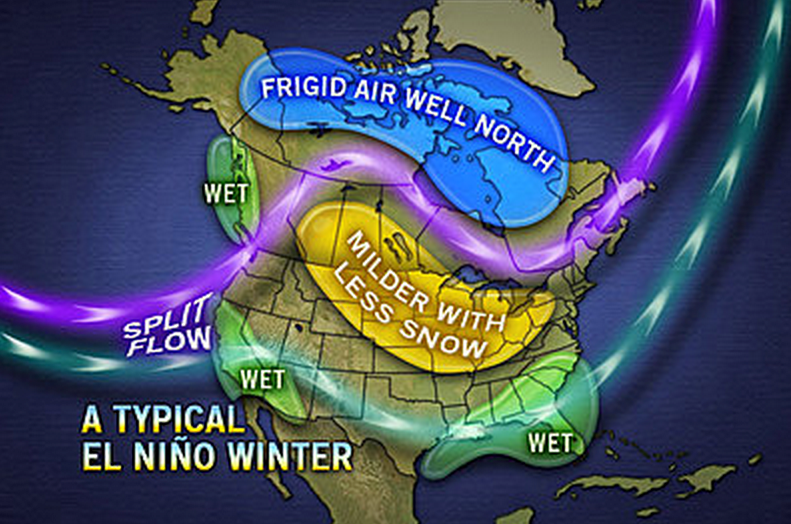
We left “the Loop” and headed north to Lee Vining to see what Mono Lake looked like.  In past years when the water is low the two islands in the middle of the lake seem to be attached.  As Mono came into view it was clear that not only were the two islands seemingly connected, you could walk from one to the other without so much as getting your toes wet.  We headed back to Mammoth Lakes very depressed by what we had seen.  I’m not sure there’s enough water conservation techniques in the world that can bring Grant and Mono Lakes back up to normal levels.  The weather nerds are predicting a record-breaking El Nino this year and I sure hope they are right.  I won’t mind cancelling a few plans if it means the Sierras get dumped with snow. 

The next day, perhaps a portent of things to come, it started to rain.  The following morning we awoke to snow on the mountaintops.  We can only hope there is much more on the way.

LIVING WITH A NAG

My very first nag

My very first nag

By Suzanne Sparrow Watson

I’ve been thinking about my brother this past weekend, what with him scaling Machu Picchu and all.  We both like to walk, although putting our “walking” in the same category is like comparing Kohl’s to Nordstrom.  He goes for the big stuff (who can forget his wonderful posts from the Himalayas?) while I’m a bit more lazy down to earth.  I huff and puff riding up an escalator, so climbing mountains is definitely not my thing.  But for the past five years I have worn, in succession, an Omron pedometer, Jawbone Up band and a Fitbit Charge.  My goal with each of them is to walk 10,000 steps per day, which works out to about 4.5 miles.  Although the technology has varied among these devices, they do have one thing in common: they all nag.  There is nothing worse than checking my Fitbit mid-day only to discover that I’ve walked a measly 4500 steps.  How can I sit down to read or knit or watch a movie when “the nag” on my wrist is shouting “Get Off Your Ass!”?  Okay, maybe it isn’t really shouting at me but that’s what I hear in my head.  In general, it’s a good motivator.   I tell myself that by walking extra steps I am able to indulge in more cake, although I’m not sure that’s the intent.  The other day I got to wondering what is so magical about the 10,000 step standard.  The results of my research were surprising – and ultimately, depressing.  So, I thought, why not share it with our readers so I won’t suffer alone?

The beginning of the craze

The beginning of the      craze

It turns out that the origin of 10,000 steps per day as a health guideline started in Japan in the 1960’s, right around the time of the 1964 Tokyo Olympics.  Apparently walking became a national “sport”, perhaps to show the world how athletic and health conscious they were.  At the time Japan was blessedly free of the U.S.-based fast food joints.  They consumed much less animal fat and fewer calories overall than most nations.  Even today, with the advent of a McDonald’s on the Ginza, the Japanese eat a healthier diet than we do;  I think it’s safe to say that Japanese television doesn’t advertise Triple Bacon Chili Cheese Deep Fried Taco Burgers.    Anyway…back to the 10,000 steps.  With the advent of the walking clubs a daily walking goal was proposed as a marketing gimmick by a company that invented a pedometer, or as it’s known there, a man-po-kei. “Man” stands for ‘10,000,’ “po” stands for ‘step,’ and “kei” stands for ‘meter’. Ten thousand, it turns out, is a very auspicious number in Japanese culture so people thought it good luck to walk that many steps.  For the Japanese, who consumed about 2600 calories per day back then, it magically resulted in improved overall health and weight loss.

Probably should be illegal in 47 states

Probably should be illegal in 47 states

The 10,000 step craze started picking up steam in the U.S. about 20 years ago when that pesky Surgeon General said that, as a nation, we were becoming too fat.  That led to the “30 minutes of exercise a day” suggestion and then it was a quick downhill slide to the 10,000 steps phenomenon.  Americans started walking more, buying pedometers, and expecting to lose weight.  But there was one snag: the average American consumes about 3800 calories every day, much of them unhealthy calories.  Which leads one quickly to the conclusion that if we’re consuming 30% more calories than the Japanese did in 1964, then we need to commensurately increase the number of steps we walk if we want the same results.  I consulted with the fitness instructor at our club, hoping she could make sense of it.  Alas, when I told her I was walking 10,000 steps a day she said, “Well, that’s good. But if you really want to lose weight, you’re going to have to walk at least 13,000.”

I can tell you right now, I’m not going to walk 13,000 steps per day.  And I’m going to continue to eat cake.  I’d rather be nagged by the device on my wrist than be like all those people on the Titanic whose last thoughts were “Damn!  I wish I hadn’t passed on dessert.”

The Hike

by Bob Sparrow

Machu Picchu

—————-The ‘Lost City’—————–

It is the most famous hike in South America, perhaps the world; it is said to be life changing. Making the four-day trek on the Inca Trail through the Sacred Valley to the spectacular lost city of Machu Picchu is said to be the perfect travel combination of the excitement of the journey and the joy of the destination. It is an experience that is both arduous and awe-inspiring.

In two weeks our flight will take us from Los Angeles to Lima, Peru and then on to Cusco, located near the Urubamba Valley where the snow capped Andes Mountains gives way to the lush Amazon jungle. It’s also not far from Lake Titicaca, not that that’s important, I just wanted to get the word ‘Titicaca’ into the conversation.

The ‘us’ on this trip include, of course my hiking buddy and good friend, Patrick ‘Trail Boss’ Michael, newbie Steven ‘Yogi’ Bernardy, a friend of Patrick’s’ since childhood and Steven’s son, Graydon (No Nick Name Yet), a recent graduate of University of San Francisco, who is headed to Med School.

Ironically, we arrive in Peru on Columbus Day and since Columbus’ explorations led to the subsequent colonization of the New World and specifically to nefarious Spanish Conquistador Francisco Pizzaro and his three barbaric brothers’ conquering of the Incas, it is not a particularly joyous day in Peru. They celebrate Columbus Day in South America with the same enthusiasm the British celebrate the 4th of July in England.

Our first order of business upon arriving in Cusco, the ancient capital of the Inca Empire which sits at 11,000 feet in elevation, will be to ‘acclimate’ to the altitude; as our four-day hike will take us to nearly 14,000 feet. Below is a graphic that’s been haunting me ever since I saw it . . .

Inca_Trail_Elevation_Profile

–After seeing this, I started looking at bus schedules–

Our hike is scheduled as follows:

Day 1 is about 7.5 miles of slightly up-hill hiking, that evening we will sleep in a tent and have no shower facilities.

Dreaded Day 2, as you can see by the graphic, has a lot of ‘up’ in the 5.5 miles we cover going over ‘Dead Woman’s Pass’ (more on that later) – it is by far our toughest day. We will try to keep in mind that getting there is half the fun! We sleep in a tent that night and have showers, but there is no hot water. I suspect we all may be a bit ‘gamey’ after two days of no hot showers.

Incatrail_in_Peru

–Mist Shrouded Inca Trail–

Day 3 is a little up and a lot of down, covering about 8.5 miles; our tent accommodations do have warm water showers after the hike – for a price.

Day 4 is only three fairly flat miles, but we’ll be getting up between 4:00 – 5:00 a.m. so that we can see the sun rise over Machu Picchu. The remainder of Day 4 will be spent exploring the lost city with our guide.  At the end of the day we will board a bus that will take us to the train station where we will head to the Sacred Valley. The Sacred Valley is a collection of small towns and archaeological sites that offers both a glimpse into daily Peruvian life as well as a full picture of the accomplishments and operation of the once-glorious Inca Empire.

After a night’s stay there we will head back to Cusco and try to find all the things we left there before we embarked on our hike. We will spend the night and then leave for home the following morning.

It shouldn’t surprise any of you to know that there are no cell towers, Wi-Fi or any other kind of connectivity along the Inca Trail, so this will be the last blog you’ll get from me until I’m back in some form of civilization. I promise to take notes with a pencil and pad (if I still remember how to use them) at the end of each day and get them into the blog when time and connectivity allow.

I know that some of our readers have been to Machu Picchu, so please let me know if there is anything I should make sure to see or anything I should make sure to avoid. Thank you!

DON’T JUDGE A BOOK BY ITS OVERALLS

By Suzanne Sparrow Watson

Don't be fooled

Don’t be fooled

As I recently mentioned, my first job after college was as the advertising and marketing director for an upscale condominium development in Fair Oaks, California.  Why they hired me, I’ll never know.  My only experience in either field consisted of placing a want ad to sell my 1965 Renault, a car that featured a push-button gear shift. It was so under-powered that Bob used to ask me whether I put it in “puree” or “blend” to climb up a hill.  I suppose that my ability to craft an ad that actually resulted in its sale did take a certain amount of talent.  And being part Irish gives me a significant leg up when it comes to shoveling out the blarney.  I suspect, however, that they hired me because I was willing to work for peanuts.  I learned a lot during my tenure at that job – newspaper ad positioning, how to write copy that lured in customers, how to drink coffee for 8 hours straight. But mostly, I learned about people.

My office was upstairs from the sales office and since they had the coffee pot I wandered down to sit with them quite often.  Have I mentioned that my boss was 400 miles away?  Anyway, there were three wizened sales people who were kind enough to take me under their wing and teach me a bit about real estate and what people look for when they’re searching for a new home.  I spent a lot of time listening to them transfix customers with their “spiel”.  I thought I had developed a sense for who was a “buyer” and who was a “tire kicker” until the day an older couple (probably younger than me now!) walked in to the office. They were both wearing overalls; he had a cowlick and she was devoid of make-up with a shock of unruly gray curls.  They had literally just walked in “off the farm”. I went back up to my office while the saleswoman took them out on tour.   When she returned  I said, “Boy, that must have been a waste of time; they couldn’t possibly afford to buy in here.”  Which shows just how judgemental and stupid I was. They signed the papers that day for the biggest, most expensive unit we had, with magnificent views of the American River.

A Shining Example

A Shining Example

I have been thinking about that incident a lot lately – how I judged people by their outward appearance before I bothered to learn anything about them as individuals. It was a very good lesson to learn early in life and it helped me in my subsequent career as a Human Resources professional.  Not that I don’t judge people any more.  I have plenty to say about the Kardashians without ever having met any of them and I’m pretty sure that my impressions are spot on.  But it seems to me that we as a society are increasingly judging people using broad stereotypes. Black, white, Hispanic, cops, youth, Christians, gays, Democrats, Republicans…the list goes on and on.  When did that happen?  Or, more importantly, why? I’m not sure there is any one answer and certainly it would take someone above my pay grade (which is $0) to figure it out.  If I had to guess I’d say it has something to do with the advent of 24 hour cable news and the internet, both of which derive income by staking out corners in the far reaches of an ideology and then catering to people who reside there.  My experience tells me that the vast majority of Americans judge people as people, regardless of their race, creed, religion, sexual preference or whether they drink Chardonnay or Budweiser.  But these days it seems my Facebook feed is bombarded with posts, or more accurately re-posts, of some half-truth that generalizes and paints an ugly picture of some group.  As a rule of thumb, any group that has “Occupy” or “Tea Party” in its name is not going to provide a completely truthful analysis.  I’m on Facebook less and less because of this problem and will be un-friending people who continue to “share” those posts.  I don’t even want to think about how much more vitriolic social media will become as we inch toward the 2016 election.  And you’d best believe that the people who are running the campaigns will count on the masses to spread the half-truths to further their cause.

So I say we just STOP!  Let’s not be manipulated by people who have an agenda.  Let’s refrain from posting or forwarding information that is partisan or with an obvious bias.  Let’s not lump everyone into an amorphous group – let’s think about people as the individuals that they are.  Except when it comes to contractors.  Given my recent experience with our bathroom remodel, they deserve every bad thing ever said about them.


How Long Can We Do This?

by Bob Sparrow

masthead_4_copy.png   While Suzanne was enjoying the cooler environs of Nipomo and I was trying to sneak into Russia, this past August marked a small blog milestone – our 4-year anniversary. Those of you who have been with us for the entire ride may remember that our blog started in August 2011 – we certainly don’t remember back that far! Initially it was a way to use social media to drive visitors to our ill-fated tribute poem writing business, Red Posey. The blog was then entitled Morning News in Verse and we would follow a USA Today newspaper format by writing four rhyming stanzas about topical news – one stanza each about Headlines, Business, Sports and Entertainment. Suzanne and I would alternate publishing a poem EVERYDAY!   That everyday thing lasted for about two months, when we realized that it was occupying way too much of our life – like all of it; so we cut back to twice a week. Every once in a while we would deviate from the poetic format, as deviates are wont to do, and write prose about various subjects. An example of this occurred in September of 2011, the 10th anniversary of 9/11, when Suzanne wrote a moving piece entitled, Small Moments – A 9/11 Tribute, World Trade Center 9/11/01which received a large number of hits and many great comments – it is still to this day, probably the most visited blog in our archives. We eventually noticed that our number of blog hits and comments would increase when we scrapped the iambic pentameter and just wrote prose, not like pros, but prose nonetheless. While we immediately noticed the increase in interest when we scraped the poetry format, it took us until March of the next year to officially change our content and format to what it is currently. And since we weren’t rhyming any more we changed our name – not to Morning News Without Verse, but to ‘From A Bird’s Eye View’, a name borrowed from a newspaper column our mother wrote for the Novato Advance back when our dad was owner, editor and publisher of that paper in the 1940 and 50s.

We continued to post a blog twice a week, on Tuesdays and Fridays, until July 2012. Then, either sensing that we were running out of ideas or audience, or both, we switched to our current schedule of every Monday morning. Whether the deadline was everyday, twice a week or once a week, I am happy to report that we have not missed a scheduled posting since starting this back in August 2011; I guess that’s due in part to our father’s newspaper blood coursing through our veins, where missing a deadline just isn’t an option.

Novato Advance

Dad & Mom in front of the Novato Advance

Over these past four years we have published over 300 blogs, which have generated over 25,000 ‘views’ and nearly 1,000 comments (A special thank you to those who comment and let us know that our words don’t just fly off into cyber space). Our biggest day came last December when 388 people clicked on Suzanne’s ‘A TRIBUTE TO MY FIRST BEST FRIEND’ about her friend Leslie Sherman.  And if you Google ‘From a Bird’s Eye View blog’, you will find about 530 results over 12 pages – we are fortunate enough to be found . . . on the first page!!!

I’ve been lucky enough to visit a lot of remarkable places and meet a number of interesting people; and I am thankful for staying awake in English class long enough to understand how to put a sentence together without dangling a modifier . . . most of the time. But the best part of all this is working with my sister, Suzanne. While our styles are a bit different, we enjoy reading and editing each other’s posts prior to publishing (OK, she edits mine a whole lot more than I edit hers!), discussing subject matter, travel schedules and just plain catching up with each other on a much more regular basis than before we started writing together.

So as we try to avoid breaking our arms from patting ourselves on the back, we’d mostly like to thank you loyal ‘bird watchers’ for tuning in. As you know, we have written about everything from the ridiculous to the sublime (mostly me the ridiculous and Suzanne the sublime), so thank you for tolerating the expression of our thoughts, opinions and experiences.

How long can we do this? As long as you keep reading, we’ll keep writing.

Suz-Bob

Thank you!!


THE “OTHER” WINE COUNTRY

By Suzanne Sparrow Watson

The Beautiful Central Coast

The Beautiful Central Coast

Each year we spend some part of the summer in the Central Coast region of California.  It’s beautiful beaches, oak-studded hills and temperate climes make it the perfect place to escape the heat of Scottsdale in July and August.   Well, let’s face it, anyplace that has temperatures less than 105 is the perfect place.  But literally, the Central Coast has been designated as having the most consistent weather in. the U.S.  In the last dozen years it’s also become known for something else – wine!   The San Luis Obispo and Santa Barbara county wine-makers are giving their northern brethren a run for their money.    They have a long way to go, but having grown up in Northern California, I can remember when Sonoma and Napa were best known for dairy farmers and ranchers.  The Gallos were the biggest wine makers back in the day, generating their huge bottles of Italian reds that were cheap even then.  Once the Mondavis and Beringers began cultivating serious wine grapes, well, the rest is history.

On the Central Coast our ventures out to the wine trail usually take us to the vineyards of Santa Barbara County for reasons that will become evident later.  The first recorded wine-maker in the area was none other than Junipero Serra, who planted the first vines back in 1872.  I must say, between founding missions and exploring the El Camino Real, Father Serra was a pretty busy guy.  In any event, over the following 100 years the area gained  sixteen more vintners and grew to over 260 acres of grapes.

Sadly, during the Depression the Prohibition buzzkills burned many of these historic vineyard sites and mostly put an end to winemaking in the Central Coast.  Fortunately,there are always those that find their way around any ridiculous law so the passion for wine making was carried on by a group of scofflaws.  From that small seed, or vine as the case may be, grew the abundant grape-growing region that exists today.  In large part, the recent popularity of Santa Barbara County wineries can be attributed to the wonderful little movie, “Sideways” which was filmed in and around several of the local venues.  The popularity of the movie turned out to be a boon for tourism and local wine, especially the Pinot noir that the region is famous for.  (For those of you who have seen the movie I can attest that it is possible to get a bottle of Merlot here too!).

Fess, in his Davy Crockett days

Fess, in his Davy Crockett days

So why do we frequent the Santa Barbara County wineries? Because our brother, Jack Sparrow, works for the Fess Parker Winery.  Lucky?  You bet!  But we have a long history in our family of having fun retirement jobs.  When our dad quit his day job he worked at Sonoma National and then his local golf course as a starter until he was in his early 80’s.  Our mom, who was rivaled only by the Queen of England in her love for jewelry, retired from the local school district and worked at a jewelry store until she was 90.  Brother Bob helps people, which is his passion, in both volunteer and part-time jobs, and as a life-long fiber enthusiast, I have been lucky enough to work part-time in a knitting shop for 13 years.  But it is brother Jack who really lucked out.  He spent most of his career in the restaurant business, even owning his own place in Tahoe for a few years.  So he knows his way around food and wine (as opposed to the rest of the family that just consumes lots of both).

Jack, displaying his wares

Jack, displaying his wares

Ten years ago when Jack and his wife Sharon moved to the Central Coast Jack went in search of a fun retirement job.  He was hired at Fess Parker Winery and soon met “the man” himself.  For those of a certain age, we remember him best for his portrayal of Davey Crockett.   Jack spent many hours with Fess, hearing about his days in Hollywood and with Disney.  But it was Fess’ love of wine-making that captured Jack’s attention.  He absorbed all that he could until Fess died in 2010.  Now, every Monday, Wednesday and Friday you can find Jack behind the bar in the tasting room, regaling customers with stories about Fess, the winery and the wines.  Jack’s great oratory skills (we have another name for that in the family) are evident in the rapt attention that his audience gives him. Seriously, although I’m the one working in a knit shop, it is Jack that spins a good yarn.  My husband says that the most fun he has is sitting quietly in a corner of the tasting room, watching Jack work his magic.  It is no coincidence that he has been the top seller of wine club memberships for several years running.

The Fess Parker Winery

The Fess Parker Winery

By the time you read this we will be home inspecting our remodeling project and, thus, drinking lots of wine.  If your travels take you to California I highly recommend a stop in the Central Coast.   Just one warning:  if you go to the Fess Parker winery when Jack is working, reconcile yourself to walking out of there a wine club member!


Baltic Cruizin’ – Epilogue and ‘Don’t & Dos’ of a Baltic Cruise

by Bob Sparrow

Home at last after 13 fun-filled days – OK, maybe only 11 were fun-filled; the getting there and coming home weren’t that filled with fun. But the fun included traveling with three most enjoyable couples (Billhams, Budds and VanBoxmeers),

Mary

John & Mary at Peterhof, Russia


Jack & JJ

Jack & JJ in Tallinn, Estonia

Judy

John & Judy in Copenhagen

visiting six very interesting and diverse countries, ‘sneaking’ into Russia, cruising on a great ship with so many restaurants that we couldn’t get to them all, imbibing on the ‘Unlimited Drink Package’ and of course, meeting up with our former Finish au pair, Mira in Helsinki.

no photos

Photo of the ‘No Photos’ sign at Russian customs

We enjoyed such a variety of experiences, from our two pre-cruise days in Copenhagen, to the sobering experience of visiting a concentration camp in Germany, to the antiquity of Tallinn, Estonia, to the historical grandeur of St. Petersburg and the pristine waterfront cities of Helsinki and Stockholm.

But if you’re planning a Baltic cruise in the near future, I’ve asked my travel mates to help me put together a list of ‘Don’t and Dos’ to help make your trip more enjoyable. Here you go . . .


Don’t:   Bring your workout clothes

Do:      Buy and bring clothes a couple of sizes larger; you’re going to gain weight

cannon

Me getting an up-close look at a cannon in Finland

Don’t:   Go to the public WC (Water Closet)(bathroom) in Estonia  – it cost me 2 Euros          Do:        Go in Stockholm, it’s free (if you can hold it that long)

Don’t:   Expect the Russians to understand anything you say

Do:      Understand that they started learning English in the first grade; they just don’t want to give you the satisfaction of knowing that they learned our language. Yes, the old Cold War is heating up.

Don’t:   Fret over what you should drink next or what it will cost

Do:      Get the ‘Unlimited Drink Package’ and try everything

Don’t:   Get Tatiana, the Alla Tour guide, for St. Petersburg, she walks and talks too fast

Do:      Get Slava, who took our friends the Houstons and Despies to the top vodka bars in St. Petersburg

Don’t:   Be an ugly American

Do:      When you’re going to do something rude or stupid, say your ‘outs’ and ‘abouts’ funny and tell them you’re from Canada

Mira Dana

Mira and Dana circa 1985

Finally, a couple of THANK YOUS . . .

Thanks to Suzanne for editing and putting photos in my blogs. Because she was in Nipomo and away from her computer, she had to use her iPad to laboriously insert photos into my blogs; I thus limited the blogs to one picture, which is why I’ve included some more here.

Thanks to Louise at Alla Tours, who, when I was apoplectic about getting my passport Russian-ready, made multiple calls and ultimately assured me that I was good to go.

I really love to travel AND I really love getting home, albeit with a pocket full of change in rubles, krona and Euros. Oh well, great ball markers for golf.

Hope you enjoyed the trip.