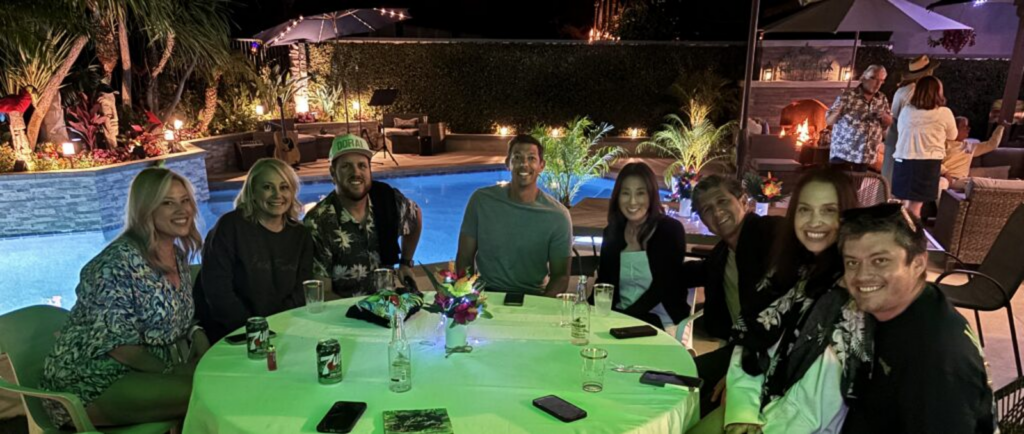
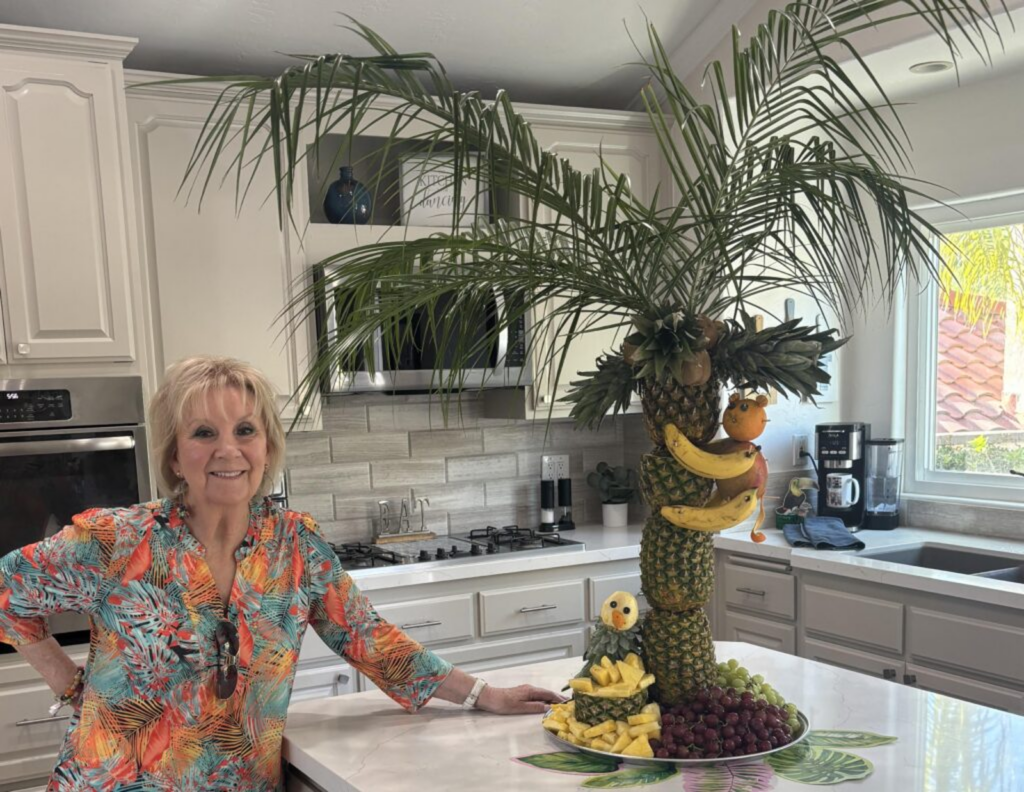
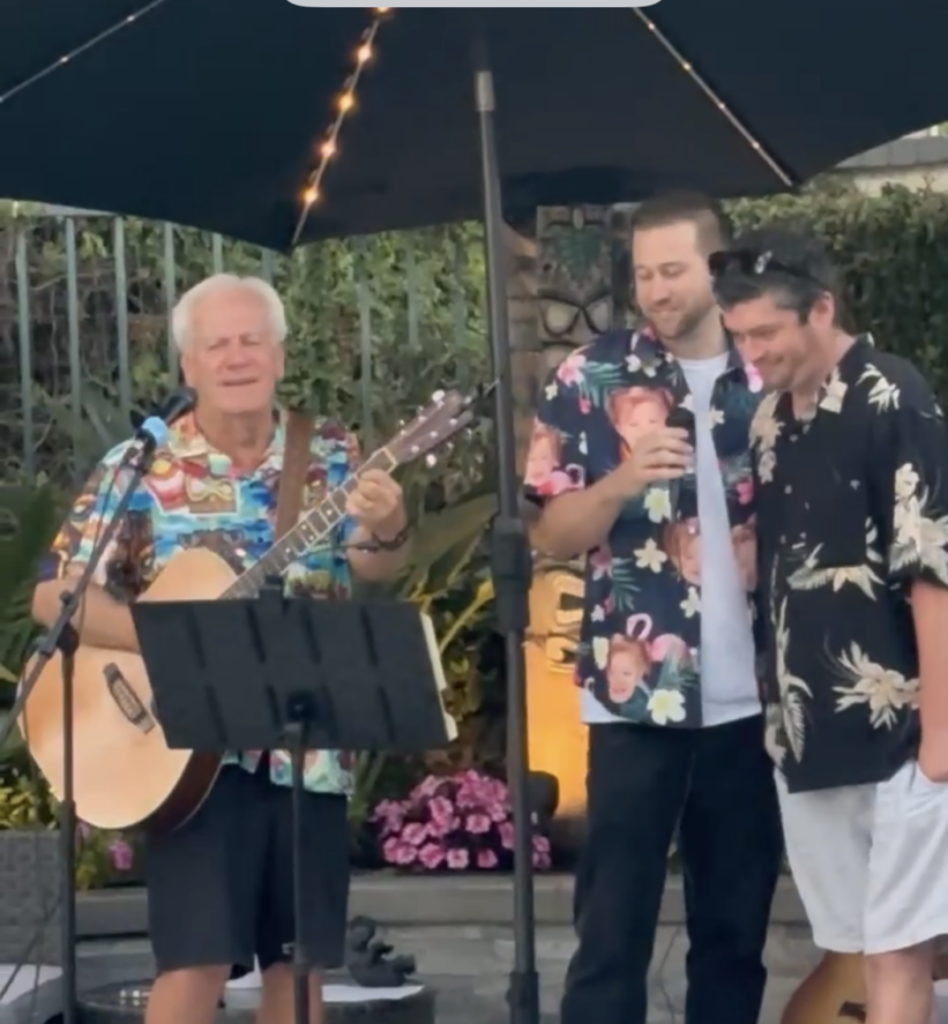
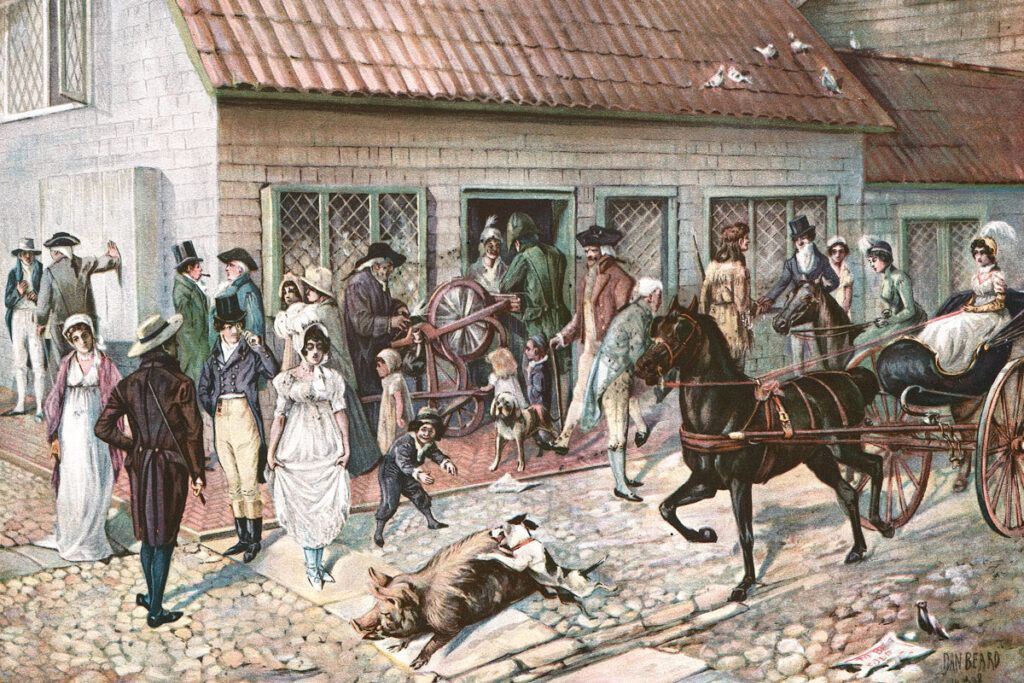
I’m sorry, but I can’t take you to someplace new EVERY two weeks, so I’m staying home and recognizing some historical and some not-so-historical personal events that took place this week.
June 1, 1967: Sgt. Pepper Released: The Beatles released their groundbreaking album Sgt. Pepper’s Lonely Hearts Club Band in the United States.
On June 1, 1961: I was first pepper sprayed for getting too fresh on a first date
Birthday wishes today go out to Marylin Monroe and Brigham Young – a great couple!
June 2, 1953: Coronation of Queen Elizabeth II: Following her accession in 1952, Queen Elizabeth II was officially crowned at Westminster Abbey, marking the first coronation to be televised.
On June 2, 1968: I graduated from Westminster College and was crowned the ‘most likely to embarrass himself in a job interview’, which I did, but it was thankfully not televised.
Many of you sickos will be wishing Marquis de Sade a Happy Birthday today, but I’m going to wish my granddaughter, Addison Sparrow Borrelli a happy 9th birthday!
Astronaut Ed White, Space Walking
June 3, 1965: First US Spacewalk: Astronaut Ed White became the first American to walk in space during the Gemini 4 mission, lasting 22 minutes.
On June 3,1971: It took me 22 minutes to complete a sobriety field test walk of ten feet. I may have not been walking in space, but I was feeling spaced as I walked.
Another birthday today for anti-Civil Right leader Jefferson Davis – Confederate President
June 4, 1942: Battle of Midway Begins: A pivotal naval battle in the Pacific Theater of WWII began, shifting the advantage to the United States.
On June 4, 2000: I lost the battle searching my mid-drift for my naval at the Pacific gym as I weighed in at 240 pounds, shifting the advantage to expansive underwear.
It is the king we fought in our Revolutionary War’s birthday today, King George III – “The British Are Coming”; (But they won’t stay for dinner.)
June 5, 1967: Six-Day War Begins: Conflicts began between Israel and its neighbors (Egypt, Jordan, and Syria).
On June 5, 1986: the beginning of the six-day battle with three neighbors over which dog left his ‘greeting card’ on my front porch.
D-Day
Fall asleep tonight with some soft alto saxophone music on Kenny G’s birthday
June 6, 1944: D-Day (Operation Overlord): Allied forces launched a massive invasion of Normandy, France, during WWII, opening the Western Front.
On June 6, 2003: Operation Overbearing was launched when I had to listen to some French woman talk about her Western Front – I reminded her that she’d be speaking German if not for us.
The Dalai Lama is 91 today – Namaste
Gauguin’s ‘Road in Tahiti’
June 7, 1929: Vatican City Recognized: Vatican City became a sovereign state following the exchange of documents ratifying the Lateran Treaty.
On June 7, 1966: I was recognized as a ‘person of interest’ in a sorority panty-raid, when I was caught with said garmet on my head.
French Post-Impressionist painter, Paul Gauguin’s birthday party today, he won’t be attending – he died in 1903
Yeah, I know; I hope I’ll be traveling somewhere soon too!
This annual Memorial Day post is written in remembrance of the soldiers from my high school who died in the Vietnam war. I first published this in 2014, and each year since then I hear from people who relate similar stories about the losses suffered in their hometowns or, worse, their families. This Memorial Day please take a moment to remember all of the brave young men and women we’ve lost in conflict.
Five boys from my high school were killed in the Vietnam War. For a small town like Novato, that was an enormous number. We were such a close-knit community that even if we didn’t know one of them personally, we knew a sibling or friend. So when I planned my trip to Washington D.C. last month, I scheduled time to visit the Vietnam Veterans Memorial to see their names on “The Wall”.
To refresh my memory, I pulled out my high school yearbooks and found them all – smiling for a formal portrait or posing for a team picture. Each image reflected a boy, fresh-faced and full of hope, his life stretching out before him. I looked at those young faces and found it hard to believe that their lives ended so soon after the bucolic days captured in the photos. None of them reached the age of 22, their dreams extinguished on the battlefield. While we, their classmates, lived long enough to enjoy the internet, smart phones and streaming movies, most of them didn’t live long enough to see color television.
I reflected on the stories I’ve read of WWII vets who speak so reverently of the “boys who didn’t come home”. As I perused the yearbooks, I finally understood their sentiment. It is only when looking back through a 50-year lens that one can appreciate just how young these soldiers were and how many of life’s milestones they missed. So, on this Memorial Day, I’d like to pay tribute to “The Boys from Novato.”
Robert Johnson Bob Johnson joined the Army in the fall of 1965, in what would have been his Senior year in high school. I remember him as a very nice, quiet guy. Before he enlisted, he asked his high school sweetheart to marry him – they wanted something to hang on to while he was gone. His entry into the service occurred just as the war was escalating. He was sent to Vietnam in March of 1966 and three weeks later he was killed by enemy gunfire during “Operation Abilene” in Phuoc Tuy Province. As his former classmates excitedly anticipated their Senior prom and graduation, Robert had already made the ultimate sacrifice. In the 1966 yearbook, where his senior portrait would have been, his mother placed this photo of him in uniform along with a tribute. He was the first Vietnam casualty from Novato.
Mike Tandy
Mike Tandy graduated from NHS in 1965. His sisters, Sue and Sarah also attended NHS. Mike was a good student, who participated in the first swim team our high school fielded. He was an Eagle Scout and according to his friend Neil Cuzner, “he was highly intelligent, a great guy and an excellent scout. He was in the Senior Patrol and a young leader of our troop. He led by example.” After graduation Mike joined the Marine reserves and was called up in January 1966. He was sent to Vietnam shortly after that. On September 8th he was on patrol in Quang Nam with another soldier when his footfall detonated a landmine. He was killed instantly. He had celebrated his 19th birthday just five days prior. His classmates had moved on – either to college or working – but the Tandy family was left to grieve the loss of their son and brother. In 2005 Sarah posted to the virtual Vietnam Wall: “Thanks to all of you who come here and remember Mike. All of our lives were changed, and I thank you for not forgetting.”
Allan Nelson
Allan Nelson played football at College of Marin with my brother, Bob. Allan’s sister, Joanne, was in Bob’s class in high school and his brother, Steve, was in mine. So we were well aware when Allan was drafted into the Army and sent to Vietnam in July 1966 at the age of 20. Five months later, on December 1, we were devastated to learn he had been killed by gunfire during a battle in Binh Dinh Province. I still remember the day Steve came back to school after Allan’s death; red-faced with tears streaming down his cheeks. He had always been such a happy guy but was now changed in ways that were hard for his 16-year-old friends to understand. As I look back now, I can’t imagine what it must have been like for him to go home from school each day, to face parents who were shattered by grief. Joanne posted the following on a memorial page and perhaps sums it up the best: “Allan was my brother, not just a brother, he was my best friend. All I know is December 1, 1966, was the saddest time for me and my family. My family loved each other so much, but when Al was killed the joy died in my family. Allan had his whole life planned. He had just turned 21 on Oct. 20th. When we were young, he couldn’t wait to be 21. I am so sorry for all the families that lost a son and a brother. It will be 33 years in Dec. The everyday sad feelings of loss are gone but on special days it still hurts.”
Jim Gribbin
Jim Gribbin graduated from NHS in 1966. He was on the football team, very active in school clubs and was well-liked by everyone he met. He joined the Army Reserves and when called up, became part of the Special Forces, where he rose to the rank of Captain. He served two tours of duty in an elite MIKE unit. In March 1970 his unit was on a night defensive mission in Kontum Province when they were ambushed by enemy troops. Jim sacrificed his own safety by running into open territory – twice – to aid and retrieve wounded soldiers under his command. He was shot both times and taken to a rear medical facility where he died from his wounds. Ironically, for this affable Irishman, he succumbed on St. Patrick’s Day. He was awarded the Silver Star and the Bronze Star for Valor. Jim’s dad was a veteran of WWII and when he died in 2011, he requested that he be buried in Jim’s grave, with his name and vitals carved on the back of Jim’s headstone. One can only imagine the grief that he carried all those years. Hopefully he is at peace now that they are forever reunited.
In 2018 I was contacted by a woman in New York who signed up for a grueling physical event that honors Vietnam veterans. She chose to represent Jim. She had found my Memorial Day tribute and wanted to know more about him. You can read my post about her and the event here: https://fromabirdseyeview.com/?p=7111
Wayne Bethards
Wayne “Ed” Bethards was in my graduating class, but I didn’t know him well. His family moved to Novato just before the start of our senior year. His mother, Betty Bethards, was the author of the international best-seller, “The Dream Book”. Again, Neil Cuzner has provided a bit more insight: “Wayne was a good person. He had a great love of baseball and had actually started a small league while over in ‘Nam. He was sharing his love of baseball with the Vietnamese children.” Cuzner went on to say that Wayne was a religious person and did not want to kill anyone; he struggled greatly with his deployment. He was drafted into the Army and was sent to Vietnam in October of 1970. In January 1971, he was killed while on patrol by the accidental detonation of a mechanical device in Quang Tin Province. He was the last boy from Novato High School to die in the war.
Jerry Sims
In April 2017, I heard from a former schoolmate, Dennis Welsh, about Jerry Sims. When he died in Vietnam the Army listed his hometown as Novato. I found in my research that sometimes the Novato “hometown” designation was for those who had lived at Hamilton Air Force Base, not necessarily a graduate of Novato High School. Since I couldn’t find any records of Jerry from NHS, I assumed he lived at the base, but that was not the case. Dennis told me that Jerry moved to Novato from Texas in the Spring of 1966 to live with his sister. He tried out for the football team during spring training and made the squad. But despite that automatic inclusion into a social group, he was unhappy living in California and being the “new kid” going into his Senior year. Dennis told me he never saw Jerry again after football tryouts and didn’t learn of his fate until he spotted Jerry’s name on “The Wall”. I learned that after Jerry left Novato in June 1966, he joined the Army and was sent to Vietnam in November. On February 6, 1968, he and several others in his unit were killed by small arms fire in Gia Dinh province. Jerry was 19 years old. His former platoon leader wrote this on his memorial page: “I was Jerry’s platoon leader on the day he died. He didn’t have to be there, since he had a job elsewhere in Vietnam, but requested a transfer to our unit. He had already spent a year with the Wolfhounds, but for reasons all his own, he wanted to come back to this unit. He died doing his job as a squad leader in my platoon.” It would seem Jerry finally found his home – and some peace – with his Army brethren.
Jim Wright
Update May 2022: Each year this annual tribute receives a lot of viewings around Memorial Day. This year I was fortunate to hear from Bill Sauber, a 1966 graduate of NHS, who told me of another NHS connection: Jim Wright.
Jim celebrated his 18th birthday in January 1966 and was drafted into the Army shortly thereafter. I suspect that he had dropped out of school, as he was in his sophomore year in the spring of 1966, so would not otherwise be eligible for the draft. After basic training he was sent to Vietnam in May as part of the 27th Infantry, known as the Wolfhounds. On November 5, 1966, he was killed by enemy gunfire in Darlac province. He posthumously received a Silver Star. His official records indicate that by the time Jim died, his father was not living in Novato, his mother could not be located, and he had married a woman named Linda. It is hard to imagine that in the space of one year Jim celebrated his 18th birthday, was drafted, married, and ultimately, killed. As with Bob Johnson and Jim Gribbin, he lies at rest in Golden Gate National Cemetery. I am hopeful that someone reading this post knew him and can provide more insight into his time at Novato High School.
When I visited “The Wall” I found the boys from Novato, each name etched on that long expanse of granite. I thought about their families and the sorrow they endured. It was overwhelming to realize that sorrow had been replicated 58,286 times. Each of the names on that black, shiny surface represent a family forever destroyed. As I walked along the pathway, I looked at all of the mementos that were left as tributes to the fallen – notes, flowers and flags mostly. But then I spotted something different – a tribute from Jim Dart to his brother, Larry. It was a Kingston Trio album, along with a note about the good times they shared learning the guitar and singing songs together. I was overcome with emotion reading Jim’s note. My brother, Bob, owned that same album. He and his best friend, Don, often entertained our family playing their guitars and singing songs from that record. Bob was a Naval officer in Japan during the Vietnam war and was safely returned to us. I wept as I stood looking at the album, realizing that but for the grace of God – and military orders – how easily it could have been Bob’s name on that wall and me leaving a Kingston Trio album in his memory. I can’t imagine our family without his presence all of these years. I ached for Sue and Sarah and Joanne and Steve and all the other siblings who never got to see gray hair on their brothers’ heads; their family gatherings forever marred by a gaping hole where their brother should have been. When I stooped down to take the photo, I noticed that several other visitors had stopped to look at it too. As I glanced at those who were of a certain age, I could see my own feelings reflected in their eyes. We know how much of life these boys missed. We mourn their loss – and ours.
It’s tough to escape the news these days. It is seemingly everywhere and with today’s 24-hour news cycle, it feels like notable events are happening every second. With the death of Ted Turner, arguably the inventor of 24-hour news, there were several articles published about his impact on news. One article noted that it would be a welcome respite if, for just one day, we didn’t have ANY news, as happened on April 18, 1930, when the BBC announced that nothing newsworthy had occurred that day. At the start of its regular news broadcast at 8:45 p.m., the BBC announced, “Good evening. Today is Good Friday. There is no news.” The BBC had a reputation to uphold – it had traditionally decried sensationalist news reporting. They shied away from covering local automobile accidents and fires in favor of big-picture affairs that had global repercussions. So, when they assumed there was no news, they kept the bar high, axed the nightly news, and played piano music in its place.
As it turned out, the news department made an ill-informed, or rather, non-informed, mistake. In reality, that day was a very notable news day, as nationalist rebels conducted a raid on British commonwealth forces in India. But communication lines were cut during the attack, making it impossible for the BBC to be aware of the news. Under the impression there were no major headlines that day, the network felt no need to lower its broadcast standards solely to fill time.
Huntley and Brinkley back in the day
Imagine that – a news network deeming to not lower its standards just to fill airtime. According to the latest Pew research, most nightly newscasts devote a surprisingly small share, often only 5–25%, to what most people would consider “important” or high‑impact news. The rest is typically softer material: human‑interest stories, consumer tips, health trends, weather, and promotional segments. And of course, many of the cable channels are rife with opinion and low on accurate information.
While exact percentages vary by network and by day, long-term content analyses show the following patterns for local newscasts:
Hard news (politics, world events, economics): 5–25%
Hard news has steadily declined over decades as networks chase broader audiences and advertiser‑friendly demographics.
Soft news (health, lifestyle, human interest): 30–50%
These segments are cheaper to produce and more reliably “pleasant” for viewers.
Weather: 10–15%
Weather is one of the most-watched parts of any broadcast.
Crime stories: 10–20%
Crime is often overrepresented relative to actual crime rates.
Network promotion (teasers for upcoming shows, cross‑promotion): 5–10%
However, the times, they are a changin’. Only around 20% of adults under 30 regularly watch TV news. Gone are the days when the family gathered around a TV to watch anything, much less news. Younger people prefer to get their news digitally. Most read news on their phones. If they are watching anything it is online (You Tube or Tik Tok), or they listen to news on podcasts. God help the person getting news from Facebook and Instagram, the home of bots and third-grade name calling. Bottom line: young adults overwhelmingly get news from social media, more than any other age group.
All of this is happening at a time when AI is changing the landscape of just about everything. I don’t think it’s too far-fetched to assume that soon an AI program will determine what goes into a newsfeed. And for that matter, have an AI robot deliver the news. All I can hope is that whoever is programming the AI looks to the BBC on April 18, 1930, to establish its standards. I know, wishful thinking.
We disembarked in the port of Piraeus at 8:30 in the morning and had about a 45-minute ride through Athens, a clean city that looked a bit tired except for the fresh graffiti, to Hotel Grande Bretagne, which is five-star and in a great location across from Syntagma Square, a major park in Athens. After checking in and freshening up, we were met at the hotel with two, four-passenger golf carts for our tour and introduction to Athens. It often seemed like we took our life in our own hands by riding a golf cart in this very heavily trafficked city. But our guide was used to it, so we survived. Our guide was not only a good driver, but very knowledgeable about Greek history; not only knowledgeable, but passionate about it.
Notice circles of swastikas
It was a three-hour tour that covered virtually all the city, including the Parliament, with the swastikas on the gate – yes, swastikas. It seems the Nazis stole this symbol, that ironically means peace, from the Greeks. We were told that marble is abundant in Greece and in fact the street curbs are all made of marble. So, it has that going for it. We were taken to the top of Lycabettus mountain that provided us with a panoramic view of the entire city. While we got closer in distance to the Parthenon and Acropolis, this distant view of it was as good as we were going to get of this historic site. Our guide told us that the Parthenon and Acropolis are on a different tour and downplayed it saying that they’re just really old buildings. So, my hope of seeing the only thing I had some knowledge about in Greece was dashed. But hey, I was told they just look really old; I can look in the mirror and see that! We ended our tour in the bustling market district that housed lots of shops and restaurants, and had lunch.
Budds, Sparrows, Sagers on Lycabettus Mt.
Back to our hotel for a little rest before we went to the rooftop bar and restaurant, but since we had just eaten, we had a drink and actually had to pay for it – our cruise drink package was no longer valid!
That was our quick tour of Athens. The next morning came the easy part for you and the not-so-fun part for us – a long flight home, but fortunately for both of us it was uneventful.
I need a quick review, as I seem to be in a space-time continuum. Our last stop in Italy was on the island of Sicily at the port town of Catania. We had set up a walking/food tour through the city as we thought that we’d never seen food walking before, so we were very excited, only to find out that we walked and the food just sat there. Our guide was a young lady who talked very quietly with no amplification, so I can’t tell you what she said or what we saw, but I can tell you that the food was very good. We walked through the largest fish market I’ve ever seen, featuring fish that I’ve seen. We didn’t have any. The only two things I remember consuming were a cannoli and some red wine.
The first Greek island we hit was Katakolon, and island that several of us had visited before, and we still weren’t sure why a cruise ship stopped there. There are only two main streets, which, if you’re not looking for women’s apparel, can be walked in about 20 minutes. The ladies stayed a little longer, but the guys were back on board enjoying the ‘drink package’ for lunch.
Snow-capped mountains, right? Nope!
Sunset on Santorini
Our next stop is, for some, the island that epitomizes Greek islands, Santorini. As we approached the island it looked like there was snow on top of the mountains; it turned out to be all white houses and shops. There was a long delay (3 hours) waiting for our tender to take us ashore as we had booked a tour with a private company, not Oceania, and Oceania didn’t like that, so they made anyone who booked a private tour go last in getting ashore. The seas were rough and the winds were high and our tender nearly capsized, but we made it ashore and were met by our tour guide, another soft-spoken woman without any amplification devices, so again, I really can’t tell you that much about Santorini other than it is beautiful, unique and filled with restaurants, shops and people. After weaving our way through the labyrinth of shope, we had dinner at a cliff-side restaurant that provided us with a beautiful sunset view before heading back to the ship.
On board there was great entertainment each night ranging from comedians to Broadway musicals.
Next day, new island – Milos. Which again raised the question, why do cruise ships stop here? There was only one main street with a variety of shops – again the ladies needed more time to browse the shops, while the guys tasted some Greek beer. Next!
A main street in Milos
Our final island stop before our cruise ends in Athens is Mykonos, the party island – except we were there too early for the parties. We did have perfect weather. What was most noticeable about these Greek islands is that there are very few trees and the land is brown; this place will never be mistaken for the Hawaiian Islands. Why does it look like this? Several reasons.
Windmills on Mykonos
Ancient civilizations and later inhabitants used vast amounts of wood for shipbuilding, fuel, and land clearing
Intense grazing by goats
Poor volcanic soil
Dry, semi-arid Mediterranean climate with limited summer rainfall
In Mykonos
Back to the tour: we had a great guide, meaning we could hear him and he was very knowledgeable. We toured a good part of the whole island, visiting an old light house, some windmills and a section of town on the water called ‘Little Venice’. Mykonos is filled with very expensive housing (some with helicopter pads), sand beaches, and a few olive trees. We stopped midway through our tour for some classic Greek baklava – very good!
Next Monday: Disembark and our time in ancient city of Athens
I’m not sure if all roads lead to Rome, but ours did last Tuesday, prior to getting on our cruise on Thursday. We had decided that because we had been to Rome on several previous occasions that we would only spend about a day there before boarding our cruise. In retrospect, probably a mistake, as Rome is such an amazing city, it deserves as much time as you can give it.
Our driver picked us (the Budds & Sagers) from the airport and drove us to our hotel, Sina Bernini Bristol, which was conveniently located withing walking distance of several of Rome’s main attractions. But first, as we waited for our room to be ready, we had lunch at Arte e Sfizio, not sure of the spelling but it was fantastic. We were welcomed by the owner, Johnny like we were old, long-lost friends (well, we were old!). He brought us out an appetizer tray that was killer! It was a wonderful way to be welcomed to Italy – great hospitality, great food.
From left: Reddy’s, Budds, Helmles, Sagers and Sparrows
After lunch, our rooms were ready, so we checked in and went to the rooftop bar to enjoy some great Italian wine and a spectacular view of the city. Like the tourists that we were, we decided to walk to two iconic Italian sites that were close by, Trevi Fountain and the Spanish Steps. Both just a short walking distance from our hotel and both were very crowded but were still enjoyable to see. We were stuffed from lunch, but by dinner time, we decided to head up to the rooftop restaurant and enjoy some ‘little Italian bites’ which happened to be more like little Japanese bites and some more wine. We finished the evening with a short walk from the hotel to an amazing Gelato place. There is nothing like Italian gelato! A great way to end our first and only day in Rome.
The next morning, we had about an hour and a half drive from our hotel to the ship, but it seemed like just minutes as our driver was a singer and he sang some great Italian and American songs all the way. We of course joined in, making the ride seem like only a few minutes.
The suite!
The ship was magnificent. It is Oceana’s newest ship, Alura, which just turned a year old this month. It has a rather small capacity of 1,200 passengers. One couple in our group, the Helmles, got a room on the ship like I’ve never seen before. It was at the aft of the ship and the room, which was 2400 square feet, went from one side of the ship to the other – simply unbelievable!!! We became regular guests there!
First stop, the Amalfi Coast. We had arranged for two vans to pick up the ten of us for the picturesque and often life-threatening ride up the mountain. It is truly one of the most picturesque coastlines in the world. It just so happened that our driver was also an opera singer, so we were serenaded with both Italian and American classics through the entire trip. We were dropped in the middle of Amalfi and did some shopping and had lunch (amazing spaghetti bolognese) before returning to the ship.
Travel tip: If you’ve never been to the Amalfi Coast, shame on you – go!! And try to find a driver that sings Italian operas!
Our last stop in Italy is on the island of Sicily in the port city of Catania, where the still active volcano, Mt. Etna is an iconic landmark. We did a food/walking tour of this home of many of Italy’s famous artists and writers. We had two guides take us through a huge fish market and throughout town stopping for . . . I don’t know what we ate, but it was all good. We finished the day back on board at the Asian specialty restaurant for a delicious dinner.
On Tuesday of this week I’ll be heading to the Mediterranean. No, I have not been called back into the Navy and sent to the Straight of Hormuz to settle that little spat. Rather, Linda and I will be meeting up with the Budds, Helmles, Reddys and Sagers in Rome. Some folks are getting there a few days early to hang in Rome, which is one of my favorite cities in the world, but we’re getting there just a day before we jump on the Oceana cruise ship, Allura, in the port of Civitavecchia.
The beautiful Amalfi Coast
We’ll cruise several miles south to the beautiful Amalfi coast and visit the towns of Amalfi and Positano. Then back on board for a short cruise to the east side of the island of Sicily, where we’ll do a walking tour of the town of Catania. From there we were supposed to go to Corfu, but that was scratched from the itinerary, so I searched to see why and only found some general information like port congestion, maintenance work, and the need to reduce fuel consumption. So goodbye to seeing the unique blend of Venetian, French, and British architecture versus the typical Greek, white-washed houses. We’ll also miss the millions of olive trees but may see the three U.S. aircraft carriers that have now been deployed to the Eastern Mediterranean. Yikes!!
Hopefully avoiding that little disagreement, we’ll next hit several Greek islands:
Santorini
Katakolon – this is the only Greek island that we have previously seen on an Adriatic cruise several years ago. It is the site of the first Olympic games. where the first organized marathon was run. The first organized marathon was run in the modern Olympics in 1896. Perhaps we’ll see the laggers just finishing.
Santorini – known for its beautiful sunsets; it is a popular honeymoon destination. That ship has sailed!
Milos – known for its stunning beaches, volcanic landscapes, and the Venus de Milo, the famous sculpture was discovered on this island. Perhaps we’ll be on a tour that searches for her arms.
Mykonos – apparently, it’s known for its great night life, but we’re there from 7 a.m. to 5 p.m. I guess the cruise lines know that night lift for us old fogies ends around 4:30!
The Acopolis
We’ll then hit the Port of Piraeus and disembark in our destination city of Athens, where we have a golfcart tour of this historic city. Fellow traveler, Chuck Sager was stationed in Greece during his time in the service, so I’m sure he’ll have a few stories to tell us and perhaps he’ll get to visit with some of the children he didn’t know he had.
That’s the plan. If you want to come along, I’ll provide some up-dates on our adventures next Monday.
Twenty-seven years ago I underwent LASIK surgery to correct my vision. At the time, I couldn’t read the big E on the eye chart with my left eye. I had worn glasses or contacts since I was 10 years old. Not Coke-bottle thickness, but I was headed in that direction. LASIK was a miracle for me. Afterwards I had 20/20 vision that lasted for many years. But as with other body parts, Father Time eventually caught up, and I learned that LASIK was not intended to last forever. At first, I wore “cheaters” from the drug store but eventually my distance vision deteriorated to the point I couldn’t read road signs. This made for some lively discussions on the road trips that my husband and I used to take, where he relied on me for navigation. I finally gave in and started wearing progressive glasses, which give all the satisfaction of a warm shower. My head had to be tilted in just the right way to see or read. And frankly, my vision wasn’t crisp at any angle. That came in handy when I looked in the mirror, but was exceedingly annoying when reading or watching TV.
Luckily, one of the few advantages of getting older is that I started to develop cataracts. My ophthalmologist and I have been discussing surgery for a few years. Because of my LASIK surgery he couldn’t guarantee that traditional lenses would give me perfect vision. In 2021 he told me about light-adjustable lenses (LAL’s) that were being used in Europe for people that previously had LASIK. Unlike traditional lenses that are permanently fixed in their refractive power, he told me LAL’s can be adjusted postoperatively using specialized light treatments.
That seemed a little daunting to me. I wondered exactly what kind of torture they put you through for the adjustments. Turns out that the LAL’s are made of specialized photosensitive material that contain light-reactive molecules. After the lens is implanted, the surgeon uses a light delivery device to expose the lens to specific patterns of UV light. That exposure gradually alters the lens’s shape and optical power, allowing for adjustments over several weeks. Okay – that’s the scientific stuff. But I needed to know how it worked in practice. So I talked with a few friends that had the procedure and they raved about it. Colors were brighter, vision was clear, and they could read a menu without a floodlight streaming down on it.
So, earlier this month I had the LAL’s implanted in both eyes. I did them on consecutive days, which caused some people to question my sanity (not a new phenomenon), but I wanted this process to be done ASAP. The surgeon said it takes 2-4 months for the light treatments and then the final “lock-in” and until that time, one must live as a vampire. Sunlight is a killer for these lenses so even when I take Dooley out to the dog run, I have to don a very “attractive” pair of UV-blocking sunglasses. They also provide a clear pair to wear inside, that fortunately have “cheaters” built in. For the first week I was to stay off of electronic devices. Luckily The Masters was on TV so I was entertained.
Thus far, I’m pretty happy. The day after my second surgery I drove myself to the doctor’s office. I could not read anything on the instrument panel of my car, much less street signs. I questioned whether I should have been driving, but after a vision test the doctor said I was legal by Arizona standards. ‘Nuff said. At one week they checked me again and it looks like 20/20 vision will be possible. Eventually. The computer is still blurry – over time this will subside but for now I can only spend 10-15 minutes on it before I have to take a break.
My glasses collection
Overall, I’m glad I did it. The prospect of good vision again is uplifting. My glasses will go to the Lion’s Club donation program so hopefully someone else will enjoy them. A big benefit that I didn’t anticipate? After a week away from electronic devices, my bad habit of constantly checking them is gone. I may not be able to keep up with influencers, but I read more often now, and I think that’s a VERY good trade-off.
Last Saturday evening we had the pleasure of seeing the final performance of the Eagles at the Sphere in Las Vegas – it was way past awesome! The sound system alone is incredible, featuring 167,000 speakers! Seeing your favorite band of all time is one thing, seeing it in a $2.3 billion highest-tech venue in the world is definitely quite another. To make the experience even better, the Sphere has haptic seats, so when there was a thunderstorm surrounding you on screen, your seat would vibrate. The songs, featuring their tight harmonies, were all familiar, the surroundings, featuring beautiful land and seascapes of all types, were mind-blowing!
We were told by friends who just saw the previous night’s show that the Eagles would suggest to the audience to see ‘The Third Encore’ after the show, which is a room of Eagle memorabilia, connected to the adjoining Venetian Hotel. We were told to go before the show to avoid the crowds. We did and got to see what the Hotel California looked like and we were going to check in, but we knew we could never leave!
With Debbie & Clint Shafer
An added surprise at this event, was that as we were traversing the escalator to our seats, which were in the middle of the of the 18,600-seat Sphere and were all full; I no sooner got the words out of my mouth that we’d probably see someone we know, than we ran into neighbors from our ‘hood, Clint and Debbie Shafer. They live about a seven-iron from us. I had to throw the golf analogy in since it was the week of the Masters.
The April 11, 2026 show was their final performance of the Eagles’ 58-show residency at the Sphere in Las Vegas. It concludes their “Long Goodbye” tour run at the venue, which was extended to include April dates after previous “final” announcements. The band has one other show on the books at the New Orleans Jazz & Heritage Festival on May 2, maybe their last ever.
Sphere backdrop for Eagles concert
Don Henley, one of the two founders of the group in 1971, is the only remaining original band member, but all the current members are incredible. Guitar player, Deacon Frye, who has an incredible voice, is the son of the other founding member of the Eagles, Glen Frye, who passed away 2016. Rocker Joe Walsh joined the Eagles in 1975. Timothy B. Schmit replaced original bass player, Randy Meisner in 1977, and Vince Gill, who was already an established country singer and song writer, joined the band in 2017, he sings most the songs that Glen Frye sang. Gill has a great voice and is a very accomplished guitar player.
A very, very memorable experience!
To cap our musical weekend off, on Sunday night we saw the rock band, the Bronx Wanderers at the South Point Resort. I’ve written about them before here, as this was our fourth time seeing them. They are a great band that includes a father and his two sons. They do songs from the 60s, 70s and 80s and do a killer job on Bohemian Rapsody.
The rest of the week in Vegas, through Thursday, was dedicated to our Yorba Linda annual golf outing – always fun!
Caution: If you get a call or text from me this week, ignore it, it’s probably me asking for money, as I’ve never had to be in Vegas for six days straight!
There are two camps of people rejoicing this week. No, not because of the upcoming Passover and Easter holidays. I’m referring to baseball fans and those of us who live in Spring Training cities. The month of March is typically known for the “madness” around college basketball. While the NCAA tournament has been exciting so far, it doesn’t rise to the level of watching Spring Training tourists drive. In the past month I have witnessed more sudden lane changes onto exit ramps than I care to think about. All I can say is I’m glad I have a good braking system in my car. March also brings the baseball fans whose indicator light bears no resemblance to the direction the person actually turns, and the ones who fail to move forward when the light turns green because they’re hopelessly lost and consulting Google Maps.
So, I welcome April this week not only because the crowds will thin out and it’s safer to drive, but also because I enjoy the beginning of baseball season. I stress – the beginning – because after April I lose complete interest until the World Series. But at the beginning of the season I enjoy the beautiful green grass, the hopefulness that imbues each team, and the music. Yes, I love baseball music. My dad and his mother were huge Giants fans. Right up until her death, my grandmother would listen to the games on the radio with a team cap perched on her head and a box of See’s Candy on her end table. I don’t have to wonder where I got my sweet tooth. All summer long my dad had his transistor radio tuned to the Giants games. And much to my mother’s chagrin, during one World Series run he hid the radio in his jacket pocket and used a wired earpiece to listen to a game during a church service!
Harry Caray
So unsurprisingly, the song “Take Me Out to the Ballgame” was one of the first songs I learned. Written in 1908 by songwriter Jack Norworth and composer Albert Von Tilzer, the tune was one of many popular baseball songs that made waves at the time. But unlike the others, their composition went on to become a cultural fixture, still played today in many stadiums during the game’s seventh-inning stretch. You would think this legendary tribute to America’s pastime would be written by a diehard baseball fan, but the truth is that neither Norworth nor Von Tilzer had ever seen a baseball game when they penned the song! Norworth wrote the lyrics when he saw a poster for a NY Giants game while riding a NYC subway. Von Tilzer wrote the music, and they registered the copyright for the tune in 1908. Although it was a popular song, it was not played at a professional baseball game until 1934. Even then, it didn’t really gain any traction. But in 1971 Chicago White Sox owner Bill Veeck caught legendary announcer Harry Caray singing the song to the entire stadium. From that point forward it became an essential singalong tradition in almost every ballpark.
Diamond at Fenway
Today, many teams have adopted other anthems to play during games. “Sweet Caroline” by Neil Diamond is played at Redsox games, the Giants play Journey’s “Don’t Stop Believin“, and the Pirates’ fans sing along to Sister Sledge’s “We Are Family”. It’s fun to hear these songs played during games and is a lovely way to bring a large, diverse crowd together. God knows we can use more of that. So I say, “Play Ball!”
P.S. Jack Norworth finally attended his first baseball game – in 1940!!