Buffett Philosophy

M Casino & ResortNo, this isn’t about how billionaire, Warren would invest your money, but rather about another Buffett, one who has a decent net worth himself – somewhere north of $450 million – and invests so little in his concert attire that he doesn’t even wear shoes.  Yes, I’m talking about Jimmy.

I got a chance to see Mr. Buffett for the umpteenth time two weeks ago in the Hollywood Bowl and once again came away totally entertained by this man whose voice has been likened to that of a carnival barker.  So what is the attraction you ask?  A little history is probably in order . . .

scan0540-1

———–Don———-

I was turned on to Buffett’s music by my late, great best friend, Don Klapperich, back in the 80s when he was in Saudi Arabia, and prior to the common use of the Internet, we regularly  communicated by exchanging cassette tapes filled with music and patter.  Like most casual fans of music, I was familiar with the songs Margaritaville and Come Monday, but probably couldn’t have told you who sang them.  Don sent me a Buffett song called Somewhere Over China, a song with interesting lyrics that I asked him about, which apparently was his cue to start sending me more Buffett.  He did, and implored me to listen to the philosophical lyrics.

Philosophical lyrics?!!  To me, and perhaps to most casual fan of Jimmy, philosophy and Buffett didn’t seem to go together – what deep meaning or life lesson was I supposed to garner from “wastin’ away again in Margaritaville” or “having a cheeseburger in paradise”?  But between the songs Don sent me and the ones I subsequently purchased, I started to learn and appreciate the ‘Buffett philosophy’.  Now don’t get me wrong, he’s no Confucius or Descartes, but he is a fairly accomplished individual.

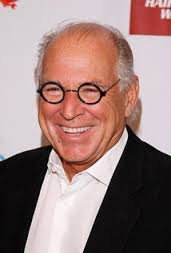
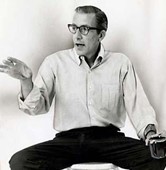
Serious Jimmy

Businessman Buffett

fun Jimmy

Balladeer Buffett

At 68, Jimmy not only still plays over 20 U.S. concert dates and several foreign locales each summer, but he is the head of a juggernaut business enterprise.  He has turned the brand ‘Margaritaville’ into resorts, casinos, restaurants, clothing and record labels, tequila and more.  You can thank Jimmy if you’re ever had a Landshark Beer in a Cheeseburger in Paradise restaurant. He’s written numerous books and appears frequently on TV and in movies, and does a ton of charity work.  He’s a veteran pilot who occasionally ‘buzzes’ his concert parking lots, which are filled with partying Parrotheads, prior to his concerts in his seaplane, the ‘Hemisphere Dancer’.

So here’s a primer of his philosophy from the songs and books of this Renaissance man . . .

On a general philosophy of life . . .

“Searching is half the fun: life is much more manageable when thought of as a scavenger hunt as opposed to a surprise party. ”

Hemisphere Dancer

‘Hemisphere Dancer’

On staying young and living life in the ‘now’ and not worrying about how you’re thought of after you die . . .

“I’m growing older, but not up, my metabolic rate is pleasantly stuck, let those winds of time blow over my head, I’d rather die while I’m living than live when I’m dead”

On self-inspection . . .

“We are the people our parents warned us about”

On keeping a good attitude when life brings changes . . .

“It’s those changes in attitudes, changes in latitudes, nothing remains quite the same.  For all of our running and all of our cunning, if we couldn’t laugh and if we weren’t all crazy, we would all go insane”

On being in the right place with the wrong person . . .

“The weather is here, I wish you were beautiful”Landshark

On birthdays . . .

“It’s just another trip around the sun”

On why you should travel . . .

“You do it for the stories you can tell”

On looking back at a full life . . .

“Through 86 years of perpetual motion, if he likes you he’ll smile and he’ll say, some of it’s magic, some of it’s tragic, but I had a good life all the way.

On rationalizing a drink before the cocktail hour . . .

“It’s 5 o’clock somewhere”

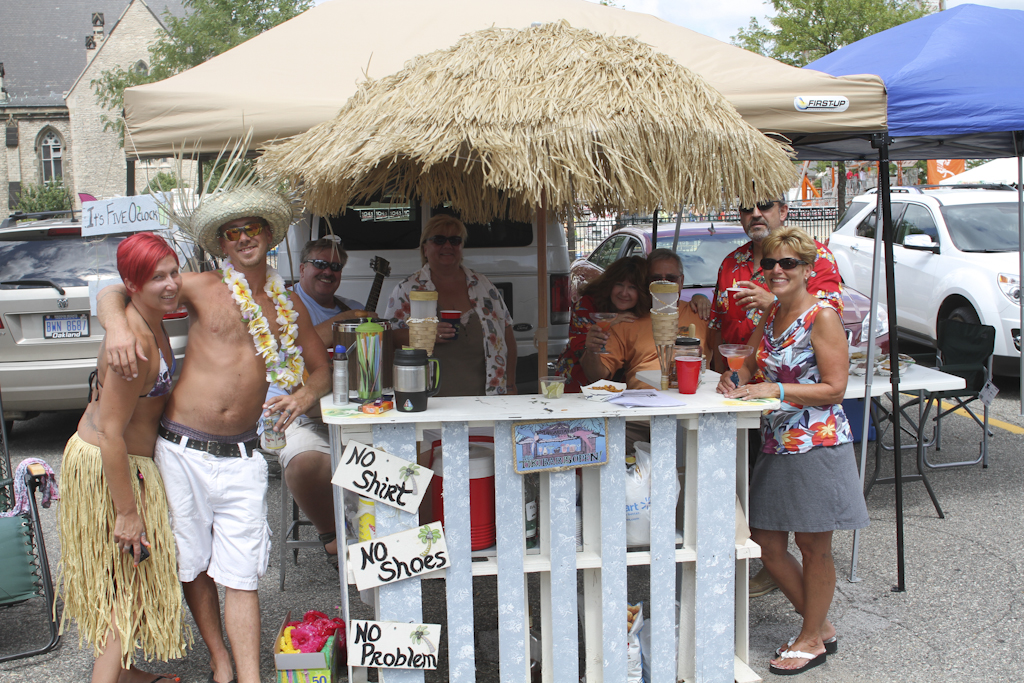
104.3 WOMC partied with Parrot Heads at The Loungin On The Lagoon Beach party before the Jimmy Buffett concert at Comerica Park on Saturday, July 28th 2012 (Photo by Steve Wiseman / 104.3 WOMC)

Pre-concert parking lot party

From the mouth of Buffett . . .

“We’re all somewhere over China, heading east or heading west.”

“Yes I am a pirate, 200 years too late.”

“If the phone doesn’t ring, it’s me.”

I will admit that most of his philosophical stuff gives way to Fins, Cheeseburgers, Volcanos and Margaritas during his concerts, and that’s OK, as having a good time is a very big part of Buffett’s philosophy, but in a rare quiet moment, I still enjoy putting in an old cassette tape and listening to Don introduce a philosophical Buffett song.

Fins up!

THE SOUND OF THE CITY

By Suzanne Sparrow Watson
 

The Golden Gate

The Golden Gate

Our ancestor, Joseph Billiou, first ventured to Northern California in 1856, long after the gold rush had peaked and the “easy money” was gone.  Thus creating the family motto:  “Always a day late and a dollar short”.  Despite failing to make his fortune, Joseph set down roots and our family became one of the lucky ones who could call the Bay Area “home”.  To us, and most other families in the region, San Francisco was the centerpiece of cultural, sporting and culinary experiences. I was also fortunate enough to earn a living in the Financial District for more than 20 years.  San Francisco has always had a unique vibe – welcoming people with divergent backgrounds and talents while maintaining a sense of unity and cohesiveness.  But it would appear “The City” is changing, in large part due to a 2011 decision by the supervisors to offer generous tax breaks to any tech company willing to relocate to San Francisco.  As a result, the companies are gobbling up real estate to establish a presence there.  Thousands of “techies” are moving to the area for work.   The result is that the housing market, which has always been expensive, is now downright ridiculous.  New condos are going up in some of the older, “less desirable” neighborhoods which has resulted in evictions of people who have lived there for generations.  And to add insult to injury, there is no affordable place for them to go.  San Francisco, it would seem, is on the brink of reaching Venezuelan levels of wealth inequality.  In the past four months I’ve seen three documentaries covering the changing dynamics – all of them were depressing.   After watching the last one I became nostalgic for the city that once was.  And for some reason, I thought about the song that was an anthem for San Francisco for more than 30 years – “The Sound of the City”.

KSFO in its heyday

KSFO in its heyday

The song actually wasn’t a song at all.  It was the jingle for what was then the powerhouse radio station in the region – KSFO.  From the late 50’s until the early 80’s the station was owned by the singing cowboy, Gene Autry, and was billed as “The World’s Greatest Radio Station.  Particularly in San Francisco”.   In those days San Francisco had five TV stations and AM radio to cover news, sports and entertainment.  Autry quickly maximized his crown jewel by hiring a Murderer’s Row of disc jockeys:  Don Sherwood, Jim Lange, Del Courtney, Jack Carney and Al “Jazzbeaux” Collins.  Autry negotiated broadcasting rights with the 49ers and the Giants and had two legends, Lon Simmons and Russ Hodges, call the games.  Back then TV and radio stations had the good sense to sign off for a few hours in the wee hours of the morning and Autry wanted a jingle to use as the station went dark each night.  So in 1960 he commissioned the multi-talented Johnny Mann to write one for him.  When the song was first aired people thought it had been recorded by the Four Freshman, but in fact it was sung by eight studio singers in Hollywood, the most famous of whom went on to be the voice of Tony the Tiger.  The result was a beautiful masterpiece: the Sound of the City .  When you click on the link you will hear a lyrical song, reminiscent of a softer time when fun and bonhomie reigned supreme.  It is now the ringtone on my phone and each time I play it for a native of the Bay Area the person becomes misty-eyed.

The inimitable Don Sherwood

The inimitable Don   Sherwood

How did a song – and a radio station – become so ingrained in our psyches?  Well for starters, as I said, our entertainment choices were pretty limited.  But more importantly it is estimated that two-thirds of people living in the Bay Area during the 1960’s tuned in to listen to the bibulous Don Sherwood every weekday morning.  He was the Pied Piper of the Bay Area, with his throaty, cigarette-tinged chuckle that made even his reading of a Yami Yogurt commercial sound just the slightest bit dirty.  Each morning people gathered around the water cooler or the gym locker to talk about what prank Sherwood had pulled off during the morning commute.  That’s assuming, of course, that he had even bothered to show up for work.  A native-born San Franciscan, he was the product of two alcoholic parents and suffered from the disease himself.  It was a crapshoot each morning as to whether Mr. Sherwood was “not feeling well” that day.  But his show was so popular that even on the days he didn’t show up for work, his sidekick Carter B. Smith garnered higher ratings than the competitors.  Sherwood’s manic personality was hard for management to control and his wisest bosses never tried to make  “Donny Babe” conform.  After all, part of his appeal was his irreverent humor and his running gags.   No idea was too outrageous.  He once instructed everyone to crank down their car window and turn the radio up full blast.  He then broadcast the blare of a police siren.  Law enforcement reported a spike in fender-benders that morning but the gag had everyone laughing for weeks.  On another occasion he told drivers that on his command they should all turn left.  That stunt created havoc all over the Bay Area, particularly for the foolhardy souls who were crossing the Golden Gate Bridge at the time.  In 1961, when he challenged the young Jim Lange to a foot race from Stinson Beach to the Ferry Building in downtown SF, more than 60,000 people lined the route.  What was the attraction?  It was because KSFO, and Sherwood in particular, made people feel like they “belonged” to a community, regardless of their socioeconomic status.

The recent documentaries I watched report that San Francisco is becoming the epicenter of the “sharing” economy.  Which is somewhat ironic given that every picture I saw of the new “techies” featured them with headphones stuck in their ears, eyes cast downward at their phones, oblivious to the people and culture around them.  San Francisco has always been a city that changes and evolves but personally, I’ll take the “sharing” of 50 years ago – outstanding radio, a beautiful song and every once in a while, everyone turning left.

The Inca Trail – Day 4 Machu Picchu

by Bob Sparrow

stones 3We had an early wake-up at 5:00 a.m. At breakfast we could see other groups in camp heading down to the trail and turning left toward Machu Picchu, when we got to the trail, Humberto turned right. We looked at each other quizzically, as we knew he knew that Machu Picchu was the other way, but we also knew that Humberto wasn’t lost, so we followed. After a fairly short hike, we came to a clearing and to a placed called Winaywayna. I’ll come back to explain more.

G killer

Pat and me on the ‘Gringo Killer’

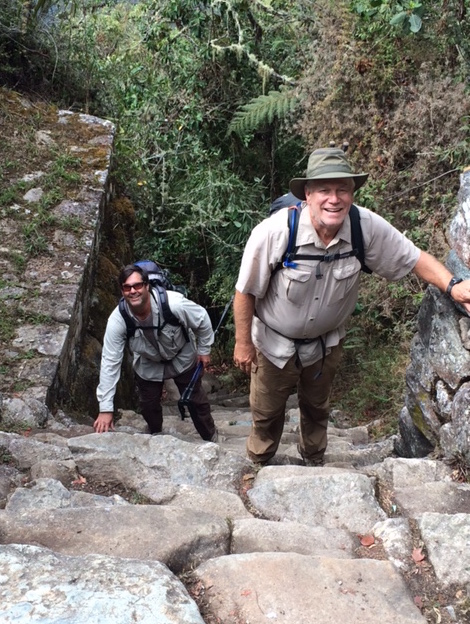
We turned around and headed for Machu Picchu, but just prior to getting there Humberto tells us to go ahead of him, that he wants us to experience this on our own. So we round the next bend in the trail and are confronted with what is known as ‘The Gringo Killer’. It is the trail, or more aptly a ladder, of granite stones going straight up that requires hand-over-hand climbing to scale them. About half way up we look back to see Humberto standing there with a big grin on his face.

Shortly after ‘The Gringo Killer’ we come to the Sun Gate, which is the unofficial entrance to Machu Picchu from the Inca Trail; we renamed it ‘Rain Gate’ since it had started to rain again. The Sun Gate is on a ridge above Machu Picchu and was built by the Incas in such a way that the sun would shine through a hole in the stone and onto Machu Picchu on December 21, their summer solstice that marks the half way point of their year.

sun gate

Sun (or Water) Gate

From the Sun Gate, for the first time, we see the vast expanse of Machu Picchu, the mountains that surround it and the incredible stonework that the Incas crafted. The many pictures of it that I’ve seen since booking this trip, and the many descriptions I’ve read, all pale in comparison to standing there and taking it all in. It is such an incredible work of architecture and art that it just boggles the mind to think about how it was all put together. I try to envision how it was back then, the movement and placement of the stones, the terracing of the steep mountain slopes for crop-growing, the creation of intricate irrigation systems for drinking, bathing and nurturing the crops. I try to envision the approximate 400 inhabitants going about their daily lives in this Andean paradise.

CRoWDS

‘Mucho’ Picchu

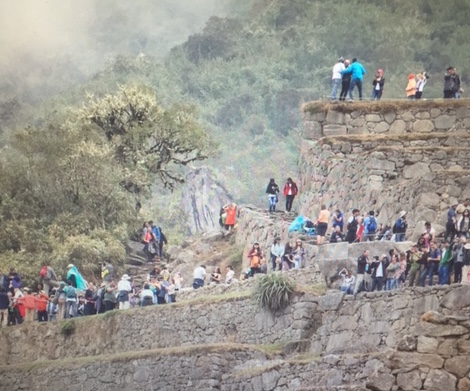
But it’s hard, when I look down and see hundreds of tourists milling around through the complex. Unfortunately we arrived on a Saturday and the place was shoulder-to-shoulder with people from all over the world, who had come early by train to see a sun rise over the Sun Gate on this rainy day. That’s not to say that it ruined our experience, it didn’t, it just colored it a little differently than we would have liked.

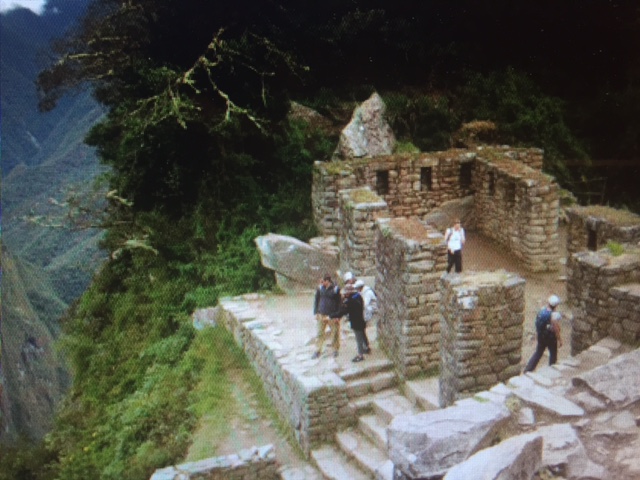
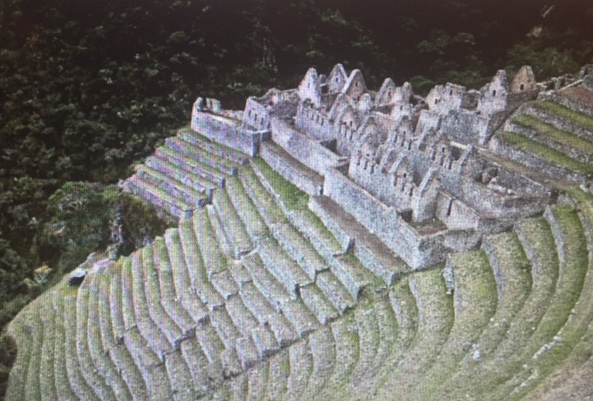
Back to Winaywayna – when we left camp and turned right, Humberto wanted us to experience something very special. As we came around the corner to Winaywayna (it means ‘forever young’), we all just stood there in awe and said, “Wow”. It is a complex similar to Machu Picchu, only much smaller – stone wall terraces, stone buildings, and irrigation systems that were still working, while several llama were grazing on the terraces. And on this beautiful mist-covered morning, we were the only ones there. The only ones there! We would appreciate that much more when when got to Machu Picchu.  We walked out on several terraces, examined the water features for irrigation and bathing and looked at the living quarters, all made of stone that will be there for centuries to come. The four of us talked about it later and concluded that being at Winaywayna that morning was on all of our ‘top 2-3 highlights’ of the trip. I can’t speak for the others, but for me it was somehow an incredibly spiritual experience.

WW

Winawayna

We spent about three hours touring through Machu Picchu as Humberto gave us vivid and detailed accounts of Incan life here during the 15th century. I mentioned earlier that your guide can make or break your trip – we were extremely lucky to have someone with the knowledge and wisdom of Humberto – he made our trip!

From Machu Picchu we take a train into the Sacred Valley where we meet our van that takes us to the Sol & Luna Hotel, where we have our first shower in four days – you can imagine that our van didn’t exactly smell like a bouquet of roses! We had dinner at the hotel and, exhausted from four exhilarating days in the Andes, we were all anxious to get into a real bed.

The next day we went into Cusco for our last day in Peru. As our van came through the hills over-looking Cusco, we were reminded of the ever-present poverty that exists in this country. Ironically the homes on the hillside that have spectacular views of the city and the Andes, are the most impoverished, as the higher up on the hill a home is, the colder and windier it gets, and thus less desirable.

We knew we were ready to come home when we spent our last afternoon in Cusco in Paddy’s IrishMP best Pub, having a beer and a cheeseburger while watching the 49ers beat the Ravens.

It was an incredible adventure; one I’m glad I didn’t wait too much longer to do.  Thank you to Patrick, Steven and Graydon for sharing this awesome, life-time experience and thanks to those of you who followed along vicariously; as you know, you’re the reason I do this crazy stuff.

The Inca Trail Hike – Days 2-3

by Bob Sparrow

Day 2

DWP

Dead Woman’s Pass

If I just had one word to describe the hike on Day 2 it would be, ‘hard’; if I had two words, it would be ‘very hard’, if I had more than that this blog wouldn’t be rated PG.  It is a ball-buster! It’s only about 6 miles, but it all up – very up. Patrick calculated that today’s hike is like climbing the stairs of a 30 story building . . . 10 times. We are on the trail at 7:30 and Humberto reminds us to take tiny steps to keep the heart rate down. He reminds us that there is no hurry to get to the next camp, that there is nothing to do once you get there anyway, so take our time.

The first section is 4 miles, all up, going from just under 10,000 feet elevation to just under 14,000 feet elevation at the summit at ‘Dead Woman’s Pass’ – so called because the mountains at the summit resemble a woman lying down. No women have died there to my knowledge. While we are on the subject of women, we saw a lot of them on the trail, so I asked Humberto if there were typically more women than men on the trail. He said yes.  Did you hear that Dorie Riddle?

Without a doubt there is a certain amount of euphoria when you hit Dead Woman’s Pass, but it is short-lived as the next two hours will be spent pounding down the granite stone steps – not an exercise that is particularly good for my ‘vintage’ knees. After a ‘mere’ 6 miles, we make camp at 12,000 feet, and retire early to another evening of partial sleep.

Day 3

Misty summit

Heading into the ‘rain forest’

As we awake on Day 3, there is a certain amount of relief that we had survived Day 2, but Day 3 is no walk in the park; in fact today it is rainy and cold much of the day, so I guess you could call it a walk in the parka. The day starts with another up-hill climb that lasts about two hours and then levels, which in Incan means up and down. Rain, fog, clouds and mist greet us at the summit as we now entered a more ‘rain forest’ environment – complete with rain!  As miserable as the weather sounds, we all agreed that these conditions added an almost mystical aura to the trek.

When we stopped for lunch, it was cold and windy and the soup the cooks had prepared really tasted good. We actually had soup for almost every lunch and dinner and, I know we were always tired and hungry at mealtime, but the cooks did a great job of offering a good variety of food, which always included cocoa leaf tea – I think I’m hooked; I need to find a dealer in the U.S.!  We continued on until we stopped to make camp (OK, the porters had already gone ahead and made camp for us!) and had covered nearly 12 miles. Coupled with Day 2, it was two really challenging days of hiking – without much sleep.

Since this would be our last evening on the trail, we had a little farewell ceremony with the staff, where they presented us with a bottle of wine (our first alcohol in three days, although we did have the cocoa leaves going for us), and we presented them with their tips. We wanted to present the ‘rookie’ porter with a little higher tip, as he was the one who had to carry the ‘potty’ and the gas butane tank (a bad combination), but we were told that would just spoil him and he’d always want to do that. The cook also ‘baked’ us a cake – I don’t know how he did that out in the wilderness with no oven, but it tasted pretty good!

We were excited that we would finally get to see Machu Picchu in the morning and we were also very excited at the thought of taking a hot shower and sleeping in a real bed tomorrow night!

Next: The Inca Trail – Day 4 to Machu Picchu


Moray, Salt Mines and On to the Inca Trail

by Bob Sparrow

Humberto

Inca Trail guide, Humberto

After a good night’s sleep, we wake up Tuesday and meet our guide, Humberto, at our hotel. Your guide can make or break your trip – Humberto made it, in spades! He is 54 years old, head of the Inca Trail Guide Association and has made nearly 1100 trips (yes, 1100!) up the Inca Trail to Machu Picchu; we felt fairly confident that we weren’t going to get lost. Aside from his technical skills, he had an engaging personality, and easy smile and a great sense of humor; he fit right in to our group.

Moray

Moray

Today we drive out of the city to our first stop, Moray. It is best described as an Incan agricultural laboratory. From the picture it looks like it’s just a hole in the ground with some circles dug out of it. It is that, but the location is well chosen for it topography and rain fall and the circles are intricately scribed at precise levels creating various microclimates so that a variety of vegetables can be planted to see which ones thrive best under which condition. Ingenious!

Our next stop is the salt mines. On the way we are surprised to see prickly pear cactus and agave lining the road – very desert-like. Humberto tells us that the road to the salt mines is “lined with tequila” and with the salt from the mines, all we’d need is a lime and we’d have the start of a great margarita!

salt mines

Incan Salt Mines

The salt mines were originally created by the Incas and have been a source of salt and employment ever since. We were able to actually walk through the sections of salt and see how the natural salt water coming from inside the mountain collected and produced literally tons of salt each year.

We hiked about 5 miles down the hill to our van; I think it was Humberto’s way of giving us a little test run – we all did fine; it was mostly down hill and we were starting to get acclimated to the thin air. By late afternoon we were back at our hotel for a little rest before we went to dinner at a restaurant that Humberto had recommended.  We had a glass of wine to celebrate starting the hike in the morning and to the fact that we would not have anymore wine for the next four days!

The Inca Trail – Day 1

4 start

Me, Steven, Graydon & Patrick at the start of the hike

Our ‘team’ consists of the four hikers, Patrick Michael, who is not only a hiking buddy and a neighbor, but a good friend, who reignited my interest in hiking when we hiked Mt. Whitney several years back.  We have done numerous hikes together since then including Half Dome and the Himalayas. Steven Bernardy, who I just met while training for this hike, is a successful financial planner, who’s full of life and rarely at a loss for words – good hiking companion, as there is never a dull moment. Graydon Bernardy, Steven’s 22 year old son, is a recent graduate from the University of San Francisco and an intelligent and insightful young man; and me, AND our guide, Humberto, a cook, an assistant cook and 8 porters; so yes, a cast of 15 set out on Wednesday morning.

Meal tent

Meal tent

Today’s hike will be approximately 7-8 miles that are fairly level – actually there is no ‘level’ in the Andes – ‘fairly level’ just means not crazy up hill. Our porters and cooks take off a little after we do, but quickly pass us like we were standing still. We will see them about 3-4 hours later when they have set up our ‘meal tent’ and the ‘kitchen tent’, had lunch themselves, then cooked and served our lunch. Once we finish, we head out on the trail again, while they break down the tents, clean up the pot, pans, dishes, stove, pack them up and then we see them passing us on the trail again to set up for dinner. This is how it works for the whole trip, except when they get to the spot where we’re spending the night, they also sent up our sleeping tents and the ‘potty tent’. Patrick even saw a porter carrying a woman ‘piggyback’ up the trail – that’s above and beyond the call of duty! These guys are truly amazing athletes and just great people.

cocoa leaves

Cocoa leaves – illegal in the U.S.

Due to the barren topography, low clouds and mist, there is not a lot of great sights along the trail, but it’s just as well, with our heads down, our brains oxygen-deprived and our mouths full of cocoa leaves, we probably couldn’t see anything even if there was anything to see.  But the trail has history and it is a true hiking test. Oh, the cocoa leaves?  They are offered to us to chew on, put in our tea or do with as we wish, as they help the body remain strong under stressful hiking conditions. These are the same leaves from which cocaine is made, and are against the law to grow or import into the U.S. The reality is they’re really safe and I could hardly feel the affect of them, except that one time I saw a psychedelic llama dancing with a lavender alpaca.

tent

Our luxury suites

We cover about 7.5 miles before we reached our ‘home’ for the night, which is a two-man tent on the ground; our shower is a bowl of warm water and a paper towel and our bathroom is a small tent around a seat with a bag under it – not exactly the Ritz Carlton. Sleep, even after a long, hard day of hiking, comes begrudgingly if at all.

Next: The Inca Trail – Days 2-3


The Inca Trail to Machu Picchu – Floating Down to Peru

by Bob Sparrow

“Come fly with me, let’s float down to Peru

In Llama land there’s a one-man band, who will toot his flute for you”

llama2

———“Float this!”———-

 Frank Sinatra’s Come Fly With Me has been playing in my brain throughout my flight to ‘Llama land’. Frank may have ‘floated’ down to Peru, but I’d hardly describe a cramped airline seat in the back of the plane, on a full flight, with turbulence over the Andes on a ‘red eye’ then sitting in the Lima airport waiting for our connecting flight to Cusco, as ‘floating’. We didn’t see any one-man bands either, unless you count the guy sitting next to me on the plane who had beans for lunch. I’m thinking Frank traveled First Class. After 17 hours of travel and layover, our flight arrived in Cusco at 7:30 a.m. Monday morning.  Sleep-deprived, jet-lagged and disorientated, we half expect to get from the airport to our hotel on a flatbed truck filled with pigs and goats. We were wrong – the truck was filled with Llamas and chickens. Nah, just kidding, our Global Basecamp guide was there to greet us and rushed us off to Hotel Midori in the heart of Cusco for a much-needed rest.

cusco

Cusco

We’d all been watching the weather Cusco and Machu Picchu from home over the last 2-3 weeks and it showed nothing but rain nearly every day. I figured that could be a good thing, in that it’s getting the rain out of its system before we get there; or it could be a bad thing in that it was a signal of an early start to the rainy season. We are in luck, our first day is clear, mild and in the mid-70s.

The Midori, is strategically located in the center of town, so after a little rest, we head out on foot to explore the city. But wait; did we forget something? Yes . . . air!!! The first thing we all noticed was that we couldn’t breathe! After walking just a few feet on level ground, I was panting and puffing like a lizard on a hot rock. We were quickly reminded that Cusco is over 11,000 feet in elevation – the ‘two miles high city’! In spite of its rare air, we managed to make our way through much of this streets of cuscogreat city. A majority of the economy of this city is based on tourism and thus it is filled with many charming hotels, restaurants of every description, most serving local cuisine to include llama, guinea pig and a hundred varieties of potatoes. Being the jump off point for trips to Machu Picchu, there is also a lot of trekking outfitter stores and of course your requisite t-shirt shops and street vendors plying everything from alpaca sweaters to hand carved gourds. But the best part of Cusco is its people. As a group they are very friendly, hard working, nice looking and always seem to have smile on their face; they were sincerely a joy to be around.

We visited a number of museums and churches and saw some great examples of Inca stonework that, while the more ‘modern’ Spanish buildings crumbled to the ground during three major earthquakes in Cusco, the Inca foundations of mortar-less, tight fitting stone, survived them all with flying colors. This stonework is truly amazing; you couldn’t get a razor blade in the space between these giant stones and they did it all with fairly primitive tools, or with the help of ancient aliens. Amazing!

It was only a matter of time before we found what I’ve sought out in almost every city I’ve visited . . . Paddy'san Irish Pub. We stopped for lunch at Paddy’s Irish Pub, which claims to be the highest Irish Pub in the world at 11,156 feet. Even though we had to climb a flight of stairs to get there (which was no easy task!), we enjoyed a great lunch and a cold one before we continued our tour of the city.

We opted for an early dinner at a nice, second story restaurant which over looked the main town square, where a band and group of young school children were celebrating something – it was a beautiful, but short evening, as we had been going fairly strong for the last 30 hours, and we needed our rest and our bodies to acclimate to this rarified air if we expected to hike the Inca Trail in two days.  As a matter of fact, I’m getting winded just writing this, so time for a break.

Next: Outside of Cusco and Hitting the Trail


THE DROUGHT AND THE JUNE LAKE LOOP

By Suzanne Sparrow Watson

mammothYes, it’s me again this week.  As you read this my brother is hiking Machu Picchu.  Which means he has no access to the internet.  This could be my opportunity to write something really awful about him, except that he’s a really good guy and right now I’m just hoping he has a really great time.  So instead, I’ll write about my recent trip to June Lake Loop and the ravages of the California drought.

For those of you who live in Southern California you are probably familiar with Mammoth Lakes, a renowned ski town and home of several Olympians.  It is a place that my husband has visited yearly since 1960 and we have been going there together since the mid-80’s.  As someone who grew up going to Lake Tahoe,  I always considered “the Lake” to be the most beautiful mountain retreat in the Sierras.  And truly, it IS spectacular. But there is something about the eastern escarpment of the Sierras around Mammoth Lakes that takes your breath away.  Rather than the gently sloping foothills that you see on the western side, the eastern stretch juts out at a sharp angle from the flat terrain.  Mammoth is also higher than Tahoe – the town sits at about 7800 feet and the top of the mountain (which I have been crazy enough to ski down) is at a staggering 11,000 ft.

The Aptly named "Oh" Ridge

The Aptly named “Oh” Ridge

When we travel there in the summer we usually make a point of driving the June Lake Loop, a five-mile stretch of Highway 158 that is approximately mid-way between Mammoth Lakes and Lee Vining.  The loop is literally a horseshoe-shaped road that sits between the eastern Sierras and the four lakes that rim the road: June, Gull, Silver and Grant. Six hundred and twenty-nine brave souls live along the shores of the loop as permanent residents, but the population swells to thousands during the summer and fall.  It is the ideal place for fisherman, backpackers and day hikers.  They also have added a new spa which is attractive to people like me who leave their siblings to do the “outdoor” stuff.  This year we made the trip again, partly to see how the drought had affected one of our favorite spots.  As we entered Highway 158 coming north from Mammoth Lakes the first site we came is Oh! Ridge.  As you can see from the picture (right) the ridge earned its name.  I can’t remember a time when upon coming to that point I didn’t say “OH!”.  This picture was taken from my car window as my husband was trying to avoid the jerk driver behind us who was tailgating.  So you can imagine just how gorgeous the picture would be if we had actually stopped.  Still, you get the idea.  Although we had been reading a lot about the California drought, and June Lake was definitely down from previous years, it still looked pretty good.  A bit past the ridge we entered the village of June Lake, the hub of the loop.  It is where most of the population lives, where the businesses are and is adjacent to the June Mountain ski area, a favorite of locals.  There are several good little motels and best of all, an ice cream store.

Gull Lake is a litter harder to see from the roadway but sports its own marina and is a great place for fishing.  A mile down the road is the beautiful Silver Lake.  It is situated such that it often has a reflection of the mountain on the water and is another breathtaking site.  Unfortunately we were there on a cloudy day so it wasn’t showing its best side to us but is beautiful none the less.  I always have a soft spot in my heart for the only business on the lake, the Silver Lake Resort and Café.  It has been in business since the 1920’s, making it one of the oldest recreation resorts in the Sierras.  Make no mistake, “resort” is stretching the term a bit.  It is the type of place that sells everything from tee shirts to fishing lures at the check-out counter.  But back in the late 80’s when we embarked on this trip I had had a few too many…coffees.  There wasn’t a proprietor in June Lake who would let me use a restroom.  But the kind owners of the Silver Lake Resort saved the day, and my bladder, and I will always be grateful.  Again, Silver Lake looked a bit recessed but not alarmingly so.

The depleted Grant Lake

The depleted Grant Lake

The last lake on the loop is Grant Lake, by far the largest of the four.  It serves as part of the Los Angeles Aqueduct so its level is constantly changing depending on how much water is being sucked out of it to head south.  Given the relatively good conditions at June and Silver Lakes we were not prepared for what we saw as we rounded the bend and Grant came into view.  While the photo I took (left) shows some beautiful colors, I quickly realized that I was looking at brush and other flora that used to be underwater.  Trucks and boats were parked on its shores where water used to be.    The marina, which previously sat at the center point of the shoreline is now at its most northern edge.  After spending much of our summer traveling California this was the first time we came face to face with the ravages of the drought.

Snow!

Snow in October!

We left “the Loop” and headed north to Lee Vining to see what Mono Lake looked like.  In past years when the water is low the two islands in the middle of the lake seem to be attached.  As Mono came into view it was clear that not only were the two islands seemingly connected, you could walk from one to the other without so much as getting your toes wet.  We headed back to Mammoth Lakes very depressed by what we had seen.  I’m not sure there’s enough water conservation techniques in the world that can bring Grant and Mono Lakes back up to normal levels.  The weather nerds are predicting a record-breaking El Nino this year and I sure hope they are right.  I won’t mind cancelling a few plans if it means the Sierras get dumped with snow. 

The next day, perhaps a portent of things to come, it started to rain.  The following morning we awoke to snow on the mountaintops.  We can only hope there is much more on the way.

LIVING WITH A NAG

My very first nag

My very first nag

By Suzanne Sparrow Watson

I’ve been thinking about my brother this past weekend, what with him scaling Machu Picchu and all.  We both like to walk, although putting our “walking” in the same category is like comparing Kohl’s to Nordstrom.  He goes for the big stuff (who can forget his wonderful posts from the Himalayas?) while I’m a bit more lazy down to earth.  I huff and puff riding up an escalator, so climbing mountains is definitely not my thing.  But for the past five years I have worn, in succession, an Omron pedometer, Jawbone Up band and a Fitbit Charge.  My goal with each of them is to walk 10,000 steps per day, which works out to about 4.5 miles.  Although the technology has varied among these devices, they do have one thing in common: they all nag.  There is nothing worse than checking my Fitbit mid-day only to discover that I’ve walked a measly 4500 steps.  How can I sit down to read or knit or watch a movie when “the nag” on my wrist is shouting “Get Off Your Ass!”?  Okay, maybe it isn’t really shouting at me but that’s what I hear in my head.  In general, it’s a good motivator.   I tell myself that by walking extra steps I am able to indulge in more cake, although I’m not sure that’s the intent.  The other day I got to wondering what is so magical about the 10,000 step standard.  The results of my research were surprising – and ultimately, depressing.  So, I thought, why not share it with our readers so I won’t suffer alone?
The beginning of the craze

The beginning of the      craze

It turns out that the origin of 10,000 steps per day as a health guideline started in Japan in the 1960’s, right around the time of the 1964 Tokyo Olympics.  Apparently walking became a national “sport”, perhaps to show the world how athletic and health conscious they were.  At the time Japan was blessedly free of the U.S.-based fast food joints.  They consumed much less animal fat and fewer calories overall than most nations.  Even today, with the advent of a McDonald’s on the Ginza, the Japanese eat a healthier diet than we do;  I think it’s safe to say that Japanese television doesn’t advertise Triple Bacon Chili Cheese Deep Fried Taco Burgers.    Anyway…back to the 10,000 steps.  With the advent of the walking clubs a daily walking goal was proposed as a marketing gimmick by a company that invented a pedometer, or as it’s known there, a man-po-kei. “Man” stands for ‘10,000,’ “po” stands for ‘step,’ and “kei” stands for ‘meter’. Ten thousand, it turns out, is a very auspicious number in Japanese culture so people thought it good luck to walk that many steps.  For the Japanese, who consumed about 2600 calories per day back then, it magically resulted in improved overall health and weight loss.

Probably should be illegal in 47 states

Probably should be illegal in 47 states

The 10,000 step craze started picking up steam in the U.S. about 20 years ago when that pesky Surgeon General said that, as a nation, we were becoming too fat.  That led to the “30 minutes of exercise a day” suggestion and then it was a quick downhill slide to the 10,000 steps phenomenon.  Americans started walking more, buying pedometers, and expecting to lose weight.  But there was one snag: the average American consumes about 3800 calories every day, much of them unhealthy calories.  Which leads one quickly to the conclusion that if we’re consuming 30% more calories than the Japanese did in 1964, then we need to commensurately increase the number of steps we walk if we want the same results.  I consulted with the fitness instructor at our club, hoping she could make sense of it.  Alas, when I told her I was walking 10,000 steps a day she said, “Well, that’s good. But if you really want to lose weight, you’re going to have to walk at least 13,000.”

I can tell you right now, I’m not going to walk 13,000 steps per day.  And I’m going to continue to eat cake.  I’d rather be nagged by the device on my wrist than be like all those people on the Titanic whose last thoughts were “Damn!  I wish I hadn’t passed on dessert.”

The Hike

by Bob Sparrow

Machu Picchu

—————-The ‘Lost City’—————–

It is the most famous hike in South America, perhaps the world; it is said to be life changing. Making the four-day trek on the Inca Trail through the Sacred Valley to the spectacular lost city of Machu Picchu is said to be the perfect travel combination of the excitement of the journey and the joy of the destination. It is an experience that is both arduous and awe-inspiring.

In two weeks our flight will take us from Los Angeles to Lima, Peru and then on to Cusco, located near the Urubamba Valley where the snow capped Andes Mountains gives way to the lush Amazon jungle. It’s also not far from Lake Titicaca, not that that’s important, I just wanted to get the word ‘Titicaca’ into the conversation.

The ‘us’ on this trip include, of course my hiking buddy and good friend, Patrick ‘Trail Boss’ Michael, newbie Steven ‘Yogi’ Bernardy, a friend of Patrick’s’ since childhood and Steven’s son, Graydon (No Nick Name Yet), a recent graduate of University of San Francisco, who is headed to Med School.

Ironically, we arrive in Peru on Columbus Day and since Columbus’ explorations led to the subsequent colonization of the New World and specifically to nefarious Spanish Conquistador Francisco Pizzaro and his three barbaric brothers’ conquering of the Incas, it is not a particularly joyous day in Peru. They celebrate Columbus Day in South America with the same enthusiasm the British celebrate the 4th of July in England.

Our first order of business upon arriving in Cusco, the ancient capital of the Inca Empire which sits at 11,000 feet in elevation, will be to ‘acclimate’ to the altitude; as our four-day hike will take us to nearly 14,000 feet. Below is a graphic that’s been haunting me ever since I saw it . . .

Inca_Trail_Elevation_Profile

–After seeing this, I started looking at bus schedules–

Our hike is scheduled as follows:

Day 1 is about 7.5 miles of slightly up-hill hiking, that evening we will sleep in a tent and have no shower facilities.

Dreaded Day 2, as you can see by the graphic, has a lot of ‘up’ in the 5.5 miles we cover going over ‘Dead Woman’s Pass’ (more on that later) – it is by far our toughest day. We will try to keep in mind that getting there is half the fun! We sleep in a tent that night and have showers, but there is no hot water. I suspect we all may be a bit ‘gamey’ after two days of no hot showers.

Incatrail_in_Peru

–Mist Shrouded Inca Trail–

Day 3 is a little up and a lot of down, covering about 8.5 miles; our tent accommodations do have warm water showers after the hike – for a price.

Day 4 is only three fairly flat miles, but we’ll be getting up between 4:00 – 5:00 a.m. so that we can see the sun rise over Machu Picchu. The remainder of Day 4 will be spent exploring the lost city with our guide.  At the end of the day we will board a bus that will take us to the train station where we will head to the Sacred Valley. The Sacred Valley is a collection of small towns and archaeological sites that offers both a glimpse into daily Peruvian life as well as a full picture of the accomplishments and operation of the once-glorious Inca Empire.

After a night’s stay there we will head back to Cusco and try to find all the things we left there before we embarked on our hike. We will spend the night and then leave for home the following morning.

It shouldn’t surprise any of you to know that there are no cell towers, Wi-Fi or any other kind of connectivity along the Inca Trail, so this will be the last blog you’ll get from me until I’m back in some form of civilization. I promise to take notes with a pencil and pad (if I still remember how to use them) at the end of each day and get them into the blog when time and connectivity allow.

I know that some of our readers have been to Machu Picchu, so please let me know if there is anything I should make sure to see or anything I should make sure to avoid. Thank you!

DON’T JUDGE A BOOK BY ITS OVERALLS

By Suzanne Sparrow Watson

Don't be fooled

Don’t be fooled

As I recently mentioned, my first job after college was as the advertising and marketing director for an upscale condominium development in Fair Oaks, California.  Why they hired me, I’ll never know.  My only experience in either field consisted of placing a want ad to sell my 1965 Renault, a car that featured a push-button gear shift. It was so under-powered that Bob used to ask me whether I put it in “puree” or “blend” to climb up a hill.  I suppose that my ability to craft an ad that actually resulted in its sale did take a certain amount of talent.  And being part Irish gives me a significant leg up when it comes to shoveling out the blarney.  I suspect, however, that they hired me because I was willing to work for peanuts.  I learned a lot during my tenure at that job – newspaper ad positioning, how to write copy that lured in customers, how to drink coffee for 8 hours straight. But mostly, I learned about people.

My office was upstairs from the sales office and since they had the coffee pot I wandered down to sit with them quite often.  Have I mentioned that my boss was 400 miles away?  Anyway, there were three wizened sales people who were kind enough to take me under their wing and teach me a bit about real estate and what people look for when they’re searching for a new home.  I spent a lot of time listening to them transfix customers with their “spiel”.  I thought I had developed a sense for who was a “buyer” and who was a “tire kicker” until the day an older couple (probably younger than me now!) walked in to the office. They were both wearing overalls; he had a cowlick and she was devoid of make-up with a shock of unruly gray curls.  They had literally just walked in “off the farm”. I went back up to my office while the saleswoman took them out on tour.   When she returned  I said, “Boy, that must have been a waste of time; they couldn’t possibly afford to buy in here.”  Which shows just how judgemental and stupid I was. They signed the papers that day for the biggest, most expensive unit we had, with magnificent views of the American River.

A Shining Example

A Shining Example

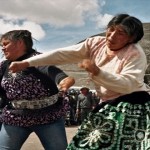
I have been thinking about that incident a lot lately – how I judged people by their outward appearance before I bothered to learn anything about them as individuals. It was a very good lesson to learn early in life and it helped me in my subsequent career as a Human Resources professional.  Not that I don’t judge people any more.  I have plenty to say about the Kardashians without ever having met any of them and I’m pretty sure that my impressions are spot on.  But it seems to me that we as a society are increasingly judging people using broad stereotypes. Black, white, Hispanic, cops, youth, Christians, gays, Democrats, Republicans…the list goes on and on.  When did that happen?  Or, more importantly, why? I’m not sure there is any one answer and certainly it would take someone above my pay grade (which is $0) to figure it out.  If I had to guess I’d say it has something to do with the advent of 24 hour cable news and the internet, both of which derive income by staking out corners in the far reaches of an ideology and then catering to people who reside there.  My experience tells me that the vast majority of Americans judge people as people, regardless of their race, creed, religion, sexual preference or whether they drink Chardonnay or Budweiser.  But these days it seems my Facebook feed is bombarded with posts, or more accurately re-posts, of some half-truth that generalizes and paints an ugly picture of some group.  As a rule of thumb, any group that has “Occupy” or “Tea Party” in its name is not going to provide a completely truthful analysis.  I’m on Facebook less and less because of this problem and will be un-friending people who continue to “share” those posts.  I don’t even want to think about how much more vitriolic social media will become as we inch toward the 2016 election.  And you’d best believe that the people who are running the campaigns will count on the masses to spread the half-truths to further their cause.

So I say we just STOP!  Let’s not be manipulated by people who have an agenda.  Let’s refrain from posting or forwarding information that is partisan or with an obvious bias.  Let’s not lump everyone into an amorphous group – let’s think about people as the individuals that they are.  Except when it comes to contractors.  Given my recent experience with our bathroom remodel, they deserve every bad thing ever said about them.